The new world of tech part 1 | Dan'l Lewin
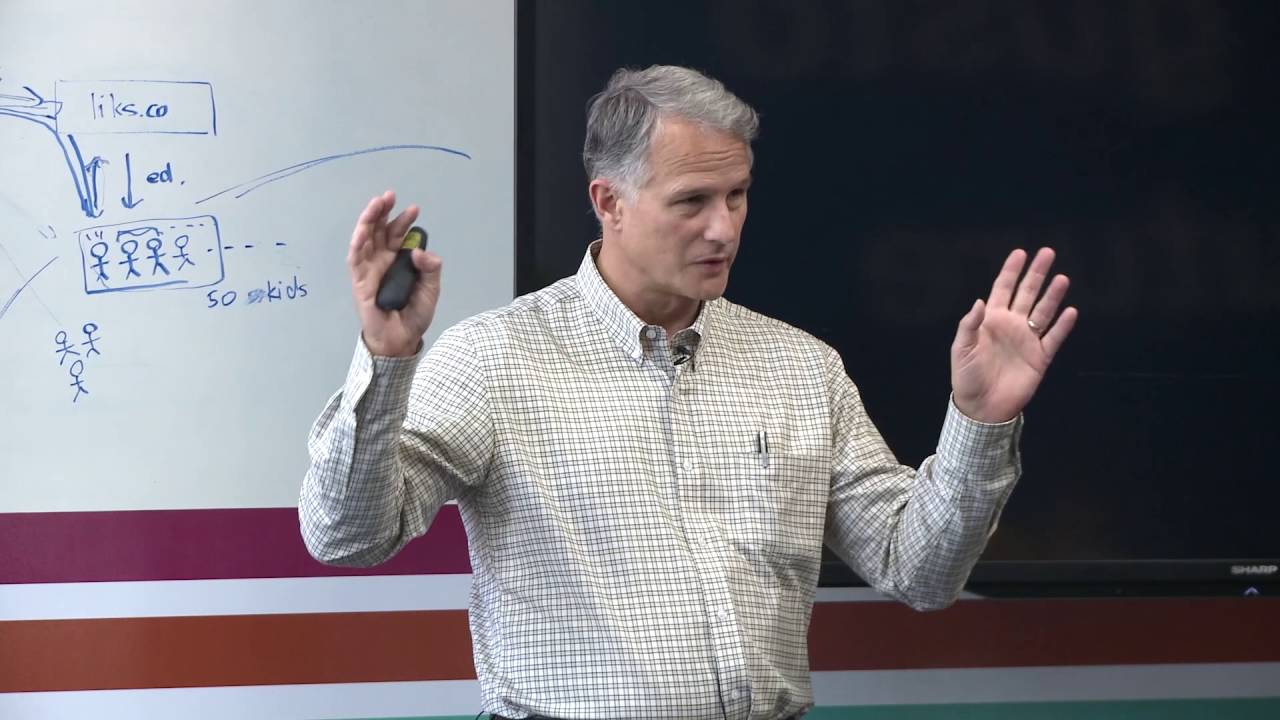
Dan'l Lewin demos Microsoft HoloLens and walks through its sensor array, Kinect heritage, and developer kit pricing. He estimates consumer adoption in roughly 36 months and discusses potential form factors and use cases for augmented reality.
Chapters
On the new world of tech, there is a lot that's happening. And there are several directions, really 2 directions that are emerging. One is around virtual reality, and the other is really around augmented systems. And there are debates. about which will play out most aggressively as a market success or a market phenomenon. I think the long-term thinkers are betting most on augmented reality. That's where we're going. There'll be VR kinds of things, but we're betting long, and so we've made some pretty aggressive investments in that area. So as a way to sort of stimulate that, a little bit of conversation, and then we'll We'll wind this down in the next 5 or 10 minutes and then it's yours. So get ready for whatever you want to talk about. Because otherwise you guys can take a nap. There was somebody sleeping here when I came in here. But I'm here to help and give you guidance in any way that I can based upon my accumulated experience. And so I hope you have questions. But if you look at— if you look at what we're doing with HoloLens, I want to play this video for you. Yes.
Technology is all around us. We use it in every aspect of our lives. It enables us to do amazing things. But what if we could go further? What if we could go beyond the screen, where your digital world is blended with your real world? Now we can. This is the world of holograms. What will they enable us to do? New ways to visualize our work.
I have an idea for the fuel tank.
New ways to share ideas with each other.
How are things going your way? I just put the images in OneDrive.
More immersive ways to play. New ways to teach and learn.
So put the new trap in the place of the old one.
No.
And tighten here and here.
New ways to collaborate and explore the places we've never been.
Look at this formation. Let's take a closer look.
And new ways to create the things we imagine. Because when you change the way you see the world, You can change the world you see. This is Microsoft HoloLens.
Cool.
Great.
It's cool, isn't it? It's about, I don't know how many years ago, maybe 4 years ago or so.
That was the new one with the kid, the little girl?
Yeah? Oh, I don't have that on this. No, but isn't that special? Yeah, there's one where the guy's— it's one of our researchers, obviously. He's at work and it's whatever, 6 o'clock, and he's not going to get— it's like, I don't know, when I was working late, the idea was Either get home by 6:00 or 6:30 because we're going to, quote unquote, put the kids to bed by 7:30. And if you come home, they're going to go crazy because when they come home, they're going to be excited. So either show up by this time or stay late and come home later after they're asleep kind of thing. And so that was that kind of conversation where his daughter surfaced and she was— there was a little hassock there and she was jumping around on it and he's talking to her. And they actually carried on a very effective conversation for, you know, goodnight daddy kind of thing. This little girl and this guy was great. She's not actually there. What's that?
She's not actually there.
It's a preview.
That's right. She's not there, but she's sensing him. And it's very spooky how interesting this could turn into be. You can see for the work collaboration, we're— since we announced, the development kits are available now, just so you know. So you can quote unquote get in line and order those things. And they're running out like hotcakes. But we organized an internal— we've got 40,000 people in the Redmond area, in Washington, Bellevue, and Seattle, and Redmond. And one of the buildings was set aside to do development work with a number of partners. And so you might imagine entertainment companies, you might imagine space organizations, and all kinds of medical— because the idea is to be able to come forward with visualizations and examples that will inspire people to think about use cases. And then now they're in the hands of professors teaching AR/VR stuff at universities and obviously gaming groups and those kinds of things as well. So we're really excited. You had a question?
How long do you think it will be until that's like a consumer product?
Yeah. Fair question that I wish I could give you an— at one level, it's kind of a consumer product now because There's a lot of consumers that are spending $1,000, $1,500 on a PC, and a lot of people spending $600, $700 on a phone, whether you know it or not, right? Depending upon how you price it, whether it's an embedded service fee or— in many markets you don't have a contract-based phone. You basically just buy a phone and then— right? So I would say 36 months, probably pretty broad, because you'll see a couple of turns on the hardware. And then you'll start to see volume, and once you hit volume, this stuff is— because it's really an extension of what we started to do with Kinect sensors, right? And people know about Kinect with Xbox, right? So that's the ability to walk in the room, it knows it's you, and so it's responding to you, and you can play dance games and all kinds of stuff. So there's— Is it coming out?
Is it a camera array?
Yeah, it's a camera array, a sensor array and a camera, it's a whole series. So it's, again, the core techniques come from the notion of the Kinect early IP. So we've got obviously a big IP framework around this, but actually the implementation, the kind of software development relates to the sensors and being able to track skeletal and frame kinds of things. The HoloLens brings a whole other set of overlay, but it is a, I don't remember, Off the top of my head, so I won't quote you. You can go to the web and figure it out. I don't know exactly what— the development kits are what, a couple thousand bucks?
$3,000.
$3,000, yeah. Right, right. So that includes all the tools and support and all the rest. So the devices, I don't know, it's probably $1,000. So again, just the headset itself, I don't think is— The development kit? Yeah.
$3,000.
Yeah, but the device itself, just the lens and the headset.
Oh, what your retail price is?
Yeah.
Oh, definitely not as much as—
Yeah, no, no, no, that I know. That's what I mean. So it's sub that. So in any event, in terms of my general expectations, when you start to hit a volume curve and use cases and stuff like that, and then you start to go global and you start to layer in the capabilities of a Skype translator where, you know, okay, you got voice translation going on in real time or instant message translation going on in real time, and then you want to have some sort of a group meeting, particularly after you've met people for the first time and you know who they are and you want to organize and start to collaborate on projects and things. So it's moving pretty quickly. And then that plays into additive manufacturing and then doing everything locally, right, when you can start to do the design and then print and have output that's physical good.
So like in terms of like we all carry our phones with us.
Yep.
Do you see everyone wearing these headsets, or do you think it won't be that? Do you think it'll be like a contact lens?
Yeah, that's a good question.
I think that just everyone—
you can see through it. It's not a VR headset, it's an AR headset.
Correct.
So you can see through it, and it just manipulates your actual reality.
Right, so you're doing a projection and an overlay into the environment with the—
I'm Christian.
Yeah, I know you. So the answer to your question is, I don't know how it's gonna manifest itself in the long run. Whether it's going to be sort of a natural extension to the edge of your eyeglasses, right? A little bit like what Google did the first time around with Glass. I got to play with that when they were first out. The guy that was doing the outreach stuff, I was at a Draper Venture offsite thing up in Napa for a weekend, and he had it. And they couldn't take pictures of me wearing it, but I could try it, right? That kind of a thing. And so, because it was just early, early. So, All of those early experiments that kind of draw a lot of buzz but then go away, they're indicators of where I think the form factor will go. How they get deployed and what the use cases are, whether they'll be purpose-built for walking into a room and wearing something at a moment in time, or whether you'll carry them with you all the time, I don't know. I don't know. I don't have a good sense of that.
Yep.
More from Tim


He Sold His Car to Build This Startup, Then Pitched It for $1M 😳 #Startups #AI

This Startup Moves Your Crypto BEFORE Hackers Can Steal It 😳 #Crypto #Cybersecurity




15 Months Without Refrigeration?! This Startup Thinks It Can Go Global 🥥 #FoodTech #Startups



