The Octalysis 8 Core Drives Pt 2 | Yu-kai Chou
Yu-kai Chou breaks down three core drives of his Octalysis framework: creativity and feedback (why Lego and Magic keep people engaged long-term), ownership (why people protect virtual goods and collections), and social influence (how Groupon and Opower use group dynamics to change behavior). He shows how each drive works in games and real products, and warns when misapplied they backfire.
Chapters
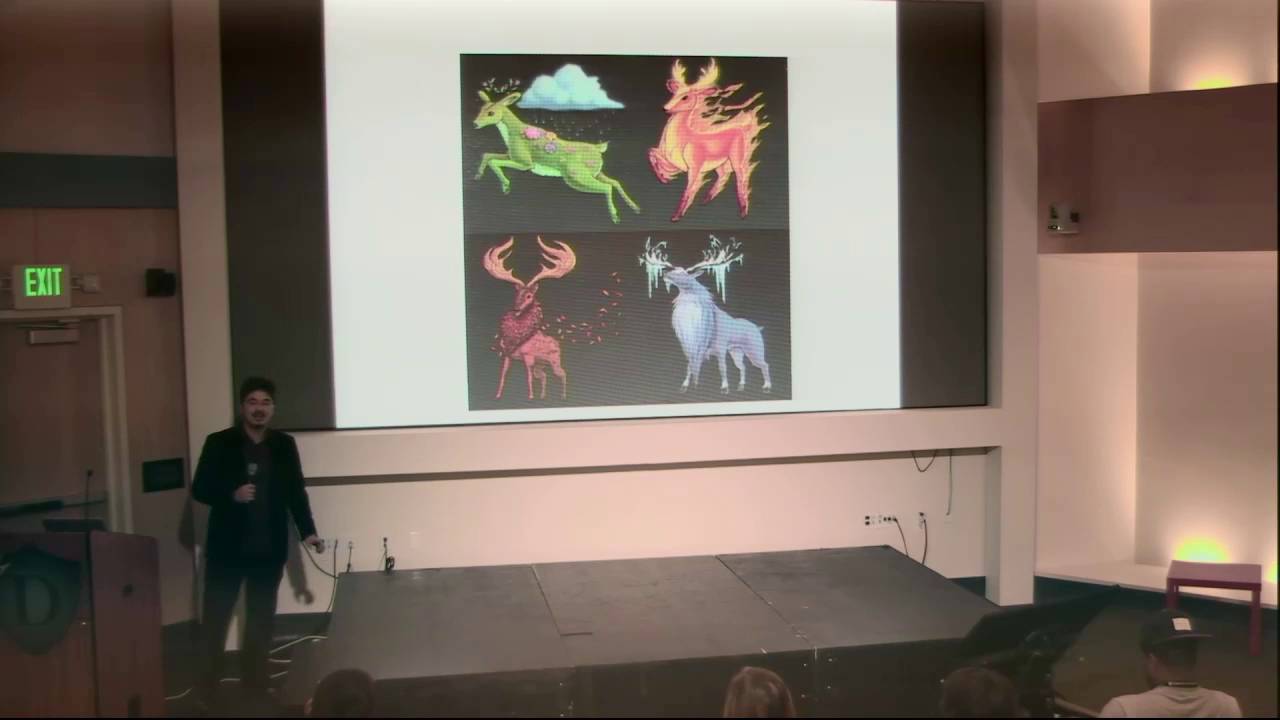
Core Drive 3 is empowerment of creativity and feedback. So this is kind of like Lego. So you give users the basic building blocks, and there's an infinite amount of ways for them to use their creativity, see different combos, try different strategies, see feedback, and then go back and adjust. And that's a very engaging process. And you'll see later that this is on the right top, which means the white hat and intrinsic core drive, right brain core drive, which is kind of like evergreen mechanic. It's a timeless design. So a lot of people ask me, hey, Yookai, a lot of people play games for 2 to 4 months, and then they quit the game. They play another game. So would I be shooting myself in the foot if I gamified my product? Wouldn't people just quit? And the answer is no, for 2 reasons. The first one is, remember I said earlier that there's absolutely no reason to play in a game, right? The moment you don't enjoy a game, you leave the game. So, but hopefully for your product, You have some kind of usefulness. There's a function to it. There's a purpose to it, right? So even if it's boring, people probably still should use it. In fact, the chances is that right now it's pretty boring. It's not exciting. It's not fun. And people are using it, hopefully, or maybe not. But making it more fun does not create people— create the incentive for people to leave afterwards. The second thing we're going to talk about later, which is a lot of these games don't have good endgame design. And this is— but when you have games that have core drive 3, empowerment of creativity and feedback, you have that timeless design. So it's kind of like chess, right? Every timeless game like poker or chess, you know, has this core drive. And chess, it's a very simple game, right? There's only 32 pieces, 64 squares. But people have been studying for centuries. And it's still fun because our brains are just entertaining itself. We're still seeing different combos. Chess doesn't have to be like every week, hey, here's a new map. Here's a new board. Here's a new piece. new hero into the board, right? They don't have to do that, right? It's just fun because it's all these creative dynamics. So this game is called StarCraft. This is StarCraft II. But when StarCraft I came out in 1998, everyone's playing that. And in 2011, I think, almost 15 years later, a lot of people were still playing StarCraft I, and they refused to move to StarCraft II. It became so popular that it became a national sport in Korea, or South Korea, where there are TV channels dedicated dedicated StarCraft competitions. There are full-time StarCraft players making over $300,000 a year. And there's full-time commentators. So that really launched the esports industry, where you have people paying for tickets to watch— kind of like, it looks like a rock star concert, but it's actually just people on stage playing video games against each other. And you see prize— win prizes of millions of dollars through that. But when you have a timeless game, And you have core drive through empowerment of creativity and feedback, it's not just, oh, I'm gonna do this for 2, 4 months and then I'm gonna be gone. It's really about how you design for the endgame. Now, this is very important in the realm of education. Kids who play card games like Magic: The Gathering or Pokémon or whatnot, they have to memorize a lot of information, right? There's like over 1,000 cards. Each card has different stats and numbers, your attack, HP, all that stuff. And the kids who play this well, they not only have to memorize every card, they remember things like, oh, my card counters your card counters his card. And it's mind-blowing. If you think about it, that's actually more information than the periodic table, right. And it's like these kids not only memorize every single element, they memorize the exact weight, the exact placement, and exactly how every single element interacts with every other element. So they'll know things like, oh, this plus this plus this is a granite combo. That's right. But if you switch it around, it becomes a diamond combo. It's more powerful, right? And so it's mind-blowing. It's genius. But if you ask the same kid, so what's the 3rd element? They're like, nitrogen, oxygen, I don't know, right? And it's not like this kid suddenly went from a genius to an idiot. It's because of the difference in motivation, right? When they're studying the periodic table, they're just trying to, you know, get an acceptable grade, not piss off their parents, you know, trying to get a good grade. And so they study enough to get their acceptable grade, whatever it is, C, B, A, whatever student they think they are. And then they stop and they go out and play games, right. But when they, when they study the Magic: The Gathering cards, every card allows them to try new strategies, to beat their friends, to become more powerful. So if as a means to an end they have to memorize a lot of information, that's not only acceptable, that's enjoyable, right. Because everything they learn, they understand how this makes me awesome, right. Sometimes in school you learn things like, oh, what is the point? Just to get a grade, you know. Just like learning sine, cosine. Well— It's all so abstract. Like, it's just this mathematic class world. But then later on in life, it's like, well, no one told me that if you want to be a scientist, you want to study sound waves, you want to, you know, do this all, you actually need to know this stuff. Like, I didn't know what it was for. Now I understand. Right? So it's like, you want to allow people to understand that what you're learning allows them to be more creative and try new strategies. Which hopefully is what you guys are learning here at Draper University. Core Drive 4 is ownership and possession. And this is a drive that says, because we feel like we own something, we want to improve it, we want to protect it, and we want to get more of it. And so this deals with things like virtual goods, virtual currencies. It's also the drive that makes us want to accumulate wealth, make money, or collect stamps, things like that. But it also deals with things that are a little more abstract, like if you spend a lot of time customizing your profile, customizing your Dropbox folders, or customizing your avatar, you feel a stronger attachment to it, and you don't want to switch systems. There's also this thing called the Alfred effect, which is if a system's always learning about your preference, what you like, what you love, and it's optimizing for that, and it's always just showing you what you want, right before— even before you ask for it, then even if a new technology comes out— you have a question? Yeah. Sure. How do you think to do that? Yeah, when I was in high school, I actually started drawing little comic characters for each element. And I have to remember some of that. So there's the noble family, which is the noble gases, and they're really stuck up. So all of them have personalities. I remember Ar, that's the fat lady, which is A. And I draw little arms and head on top of the A. And the R is— I forgot what that was. The halogen family, those are poisonous gases. So I draw them into monsters. So the F, I draw a little head, so it's like a zombie on top floating. And then the Cl, I draw this little evil fish head with a little light thing in the front, you know, the sea monster. So then I had— then I drew— I didn't spend enough time doing it because it was just fun and I was experimenting with it. But then it's like, oh, then I came up with little stories about, oh, well, The, you know, how these characters interact with each other. So, you know, that's one idea, but the key is also you can think about how to make it more— you can actually turn it into a software type of way of interacting and seeing things happen, right? So there's a few different ways, and there's actually a game called DragonBox, which actually amazingly makes kids between 6 to 12 years old addicted to solving hundreds of algebra questions. And they don't even know they're doing math. They think they're trying to feed a dragon. But, you know, somehow dragons, you know, they like to be isolated, so they're the x, and they— so they want every other number on the other side of the equation. And the dragons don't like irrational numbers and all that stuff. But, you know, there's a lot of these cool examples. So the Alfred effect is something that if the system constantly learns about you and serves that to you, then even if a new system that's smarter, that's more clever, show comes up, you don't want to switch because that's what you know. That system doesn't understand you. This one does. This is my system. I call it the Alfred effect. It's kind of like Batman and Alfred, right? It's like if someone knocks on Batman's door and is like, hey, you know, I can replace Alfred because I'm like more young, I'm efficient. You know, Batman's not going to switch because he's like, well, you didn't grow up with me. You don't know what I want. You know, you're not Alfred. So one example in Core Drive 4, Ownership Possession, is the collection set. So, you know, McDonald's, they're trying to get more people to buy more French fries and drinks, and because they have more margins on it. So they launched this McDonald's Monopoly game where every time you do the desired action, where you buy these things, they give you a little piece of property on the McDonald's Monopoly board. And if you collect all of them, you get a major prize. So a lot of people reportedly said they don't even care about the burgers, but they go— or the food— but they go to McDonald's just so they can collect more. People spend real money to buy some of these parts from other people, even though by itself it's kind of worthless. But we just like to collect. And these collection sets are oftentimes designs you see in gamified solutions. I used to be an advisor for this gaming company called Looky Studios. They had a game called Geomon, which is kind of like Pokémon, but you kind of have to capture monsters in the real location. So if you're next to the river, like based on your phone, you can capture water monsters. If you're on a mountain, capture mountain monsters. Someone raising their hands? I'm raising my hand. Pokémon Go. You can see my head. OK. Yeah. And so you have to physically be there. Now in Geomon, there's the theme of the 4-season deer. You have the summer fire deer, the winter ice deer. And the thing about those deer is that Pokémon Go came out much, much later, but this is probably like 6, 7 years ago. They got bought by Yahoo, and Yahoo shut it down. So it's very, very sad. The thing about the 4-season deer is once you have 2 or 3 of the 4-season deer, you automatically want them all, right? It's kind of awkward to have just 2 or 3 of the 4-season deer. Now the problem is that you actually have to wait for that season before you can capture these deer. And, you know, sometimes you have to wait for 3 to 6 months. And for a gamer, that's a very long time. So people were all obsessed about these deers, and they're willing to trade heavily with it. They were willing to spend real money and just to get them. And the thing is that these deers aren't even that powerful. You don't use them in battle. So people want it just so they can complete the collection. And this ownership possession is really important because when Yahoo wanted to shut it down, the gamers in the community all thought that they were running out of money. So they banded together and they raised a commitment of $700,000, all these little gamers, just to try to keep the game alive because, you know, they spent all this time accumulating all their things. And unfortunately Yahoo really doesn't care, so Yahoo just kind of shut down. They— Cool. Core Drive 5 is social influence and relatedness. So this is the drive based— it's pretty simple. It's everything we do based on what other people do, think, or say. So that deals with things like competition, collaboration, gifting, which is social treasure, group quests. But it also has this relatedness part, which is basically things like nostalgia. Like if you see a product that reminds you of your childhood, you have a higher chance of buying the product. If you meet someone from the same hometown, you have a higher chance of striking up a deal with that person. And one very common theme in social influence release is what we call the group quest. So group quest has been in games for a very long time. Basically, it's like, hey, if you beat the boss, you reach a win state, and you can have a very, very good reward. However, the only way to reach the win state is if you have a lot of players participating together. So again, this has been in games for a long time. And then slightly more recently, businesses said, oh wow, we can actually apply this concept of group quests into business. So then you have things like Groupon where they say, well, if you reach the win state, you have a major reward, which is a 50% off discount. However, the only way to reach the win state is if enough people participate in it. And so they have the group coupon. And Groupon was allegedly the fastest company to reach $1 billion in valuation. And unfortunately, because of operational issues, it didn't reach the potential everyone wanted. But I think last year it still made $1 or $2 billion. And we know from that Kickstarter and Indiegogo still utilizes the group quest design mechanic very effectively. So, and this is why sometimes studying gamification is so powerful, because sometimes there are all these other you know, amazing ideas in games that have been in games for a long time. And if you just were able to identify what they were and apply them to business, you potentially would have the next billion-dollar idea. Now, another thing about social influence is social norming. Basically behaving like people similar to you. So Opower is a SaaS utility company. And they're trying to get people to use less energy. And they tried a lot of things. They send little messages, hey, look, this is how much money you would save. if you use less energy. People don't change their behavior. They say, hey, you know, this is responsible for the environment. Please do that. People don't change their behavior. What they saw work really, really well is when they show a chart that says, hey, this is where you're at. This is where your average neighbor's at. And this is where your best neighbor's at. And when people see that, oh crap, I'm actually below average in my neighborhood, that's when they seriously change their behavior. Because a lot of people think, well, you know, I'm not Superman. I'm not super awesome. But I can't lose to Bob. Why am I below Bob? That makes no sense. So people change their behavior. And this design actually saved about $200 million of energy savings per year a couple years after launch. So that's a lot of utility energy bills. We also know that Amazon utilizes Core Drive a lot. So a lot of people are like, oh yeah, sure, there's gamification in eBay, but what about Amazon? In Amazon, there's also a lot of gamified elements, but They're a little more subtle. And I have a whole piece about all of that. But the relevancy here is one of the most successful features of Amazon is called— is the recommendation engine, right? And so Amazon reports that 60% of the revenue, 60% of everyone buying, came after clicking one of those links. And what does the link say? Customers who bought this item also bought. So Amazon is saying, hey, people just like you who love this book or bought these things, also spent their money here. So you maybe want to spend your money here. All right. It's that social influence. And of course, we also know another popular thing about Amazon is the reviews, right? You have the 3-star, 5-star. You have the, oh, people found this follow-up helpful. You can't— you probably can't see it, but you have Jack as a top 1,000 reviewer. So there's actually a leaderboard of reviewers kind of competing with each other to see who can be a better reviewer and gain more influence. gain more people that are following this, this, their helpful reviews. Now, what's interesting about this is that science studies have shown that we care about, uh, well, we don't trust the critiques, the critics, you know, even though we trust these comments more, even though the critics have dedicated their lives, right, to give you, you know, give you good, good, well-thought-out pieces about what you should like, what you shouldn't. They spend a lot of time on it, and technically we should, we should trust that more, right? But We don't trust those critics. We trust like average Joe who's like, oh, I think it's an awesome book. I think that's a great product. And then we're like, yeah, we believe in him more. It's kind of like someone saying like, oh, you know, my friend Michael says the doctor is wrong. And Michael reads a lot of health magazines. And it's like, well, why would you think someone who reads a lot of health magazines is someone better than a guy who's dedicated his life to medicine, went through med school, and all that stuff? But again, we usually like to trust the opinions of people who are similar to us. Not necessarily the authorities. Now, you want to be very careful when you design for social influence and social norming, because it could go both ways. There's— in Arizona, there is a national park that has been dealing with petrified wood theft. So people stealing their petrified wood. So they did an experiment. They put up 3 different types of signs to see how people would behave. So the first sign basically says, many past visitors have been stealing our wood. You know, it's terrible. It destroys the environment. Basically, just don't do it. The second one just says, please don't steal from us. And the third one, there's no sign. That's the control group. See what people do without the sign. And then afterwards, they threw a lot of easy-to-steal petrified wood around and see, you know, how many people would steal. So the results were kind of surprising for many. If you look at the bottom, when there's no sign at all, about 3% of the people stole. But when they just— when they had a sign that says, please don't steal from us, then it almost cut it by half, 1.67%. People's like, okay, well, they asked me not to steal. I'm not going to steal. The top one that says, many passengers have been stealing, it's terrible, don't steal, that's when the crime rate actually went up to 7.9%. So that sign at the top not only does not deter crime, it promotes crime. It almost triples the people who want to steal. And it's because people are saying, whoa, it seems to be the crushing norm that everyone is stealing, maybe I should get mine too. You know, and so you want to be careful about social norming. You want a social norm to the positive, not to the negative. Oh, everyone else is doing, like, bad things, so you might want to be different. Now, keep in mind, in a few things in our life, we want to be special, we want to be different, we want to be unique. But for everything else that's on autopilot, like, oh, what toothpaste do I use? Oh, which car do I go? You know, a lot of these things, we kind of go with the social norm. Thank you.
More from Tim


He Sold His Car to Build This Startup, Then Pitched It for $1M 😳 #Startups #AI

This Startup Moves Your Crypto BEFORE Hackers Can Steal It 😳 #Crypto #Cybersecurity




15 Months Without Refrigeration?! This Startup Thinks It Can Go Global 🥥 #FoodTech #Startups



