The Startup Hero Episode 3: Ben Lazano
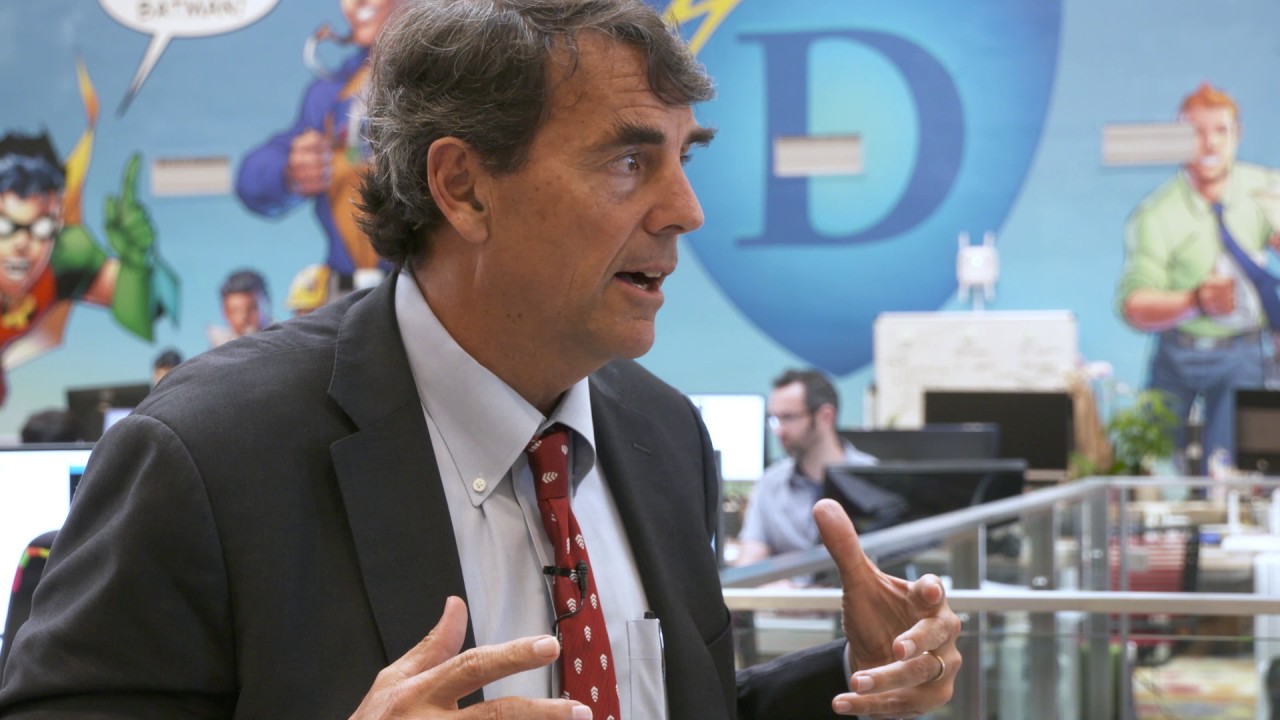
Ben Lozano is building the San Francisco Stock and Bond Exchange, a platform for small businesses to issue bonds on Ethereum. His startup targets $1-2 trillion in loan volume, charges 2% of offerings, and plans to launch in September after raising $1.5 million for the prototype.
Chapters
Welcome again to Startup Hero. I have my guest here. Why don't you introduce yourself and tell us what you do?
Sure. Thanks, Tim. My name is Ben Lozano. I'm the CEO and co-founder of TrueNorth, and we're building the San Francisco Stock Exchange. It's the world's first small business public capital market.
So this stock exchange— wait, the first what capital market?
The world's first small business public capital market. It's a public marketplace for buying and selling U.S. small business financial securities.
Yeah, but you're not the first. There's the Toronto Stock Exchange. There are all these— tons of these stock exchanges. Public exchanges.
Yeah, for small businesses. We're the New York Stock Exchange for small businesses.
Right, but there are a lot, like Toronto, those are pretty small businesses. And so are, you know, NASDAQ used to be that.
Yeah, you're right, you would consider those pre-IPO businesses.
So you probably don't want to call it the world's first.
You could say that, but if I should clarify, Stocks and convertible notes is something that we provide, but really our bread and butter is bonds. So if we have it our way in the future—
Oh, small businesses, bonds.
Small businesses, mom-and-pop Main Street businesses will be issuing bonds on the San Francisco Stock Exchange instead of loans from their private bank.
So, okay, so tell me, you know, I was reading through it earlier and I understood you were using smart contracts to do this.
That's right, yeah.
And electronic shares, or just smart contracts?
So, 2 questions there. We did build the world's first smart contract-driven securities auction. We simulated—
And how did that go?
Well, it's good. It's running on our own private Ethereum network right now, and we have a lot of innovations we're thinking about rolling out with that later on.
But it's not quite working, is that what I'm hearing?
No, absolutely it's working, yeah. I'd be delighted to demo it to you.
So, but why wouldn't it— why are you looking at it like, oh, but it's this thing that we're kind of working on?
Oh no, the auction itself works, absolutely. The technology itself works. We've tested it.
Oh, I see.
It's the technology, the smart contracts that we're intending to build on later on. It's just one plank in the building we're building.
Oh, I see. Okay. So what got you thinking about this? Why are you thinking about a new stock market?
Okay. So for the last 80 years of modern securities law, small businesses have had access to one funding source, private funding channels. Private equity, yes, but mostly bank loans, right? Okay. Last year, a new law called Title III went into effect, which allows small businesses to raise up to $1 million a year from the general public without having to comply with modern securities law. Now, most people are talking about Title III as equity crowdfunding, but we think that's a little bit shortsighted. We discovered that you could use the new legal space cleared out by Title III and combine it with a broker-dealer license and create the world's first small business public market, not just for startups, but Main Street businesses issuing I see.
So that's what you're— why you're the first. It's just that you're taking advantage of Title III.
The regulatory opportunity.
From the JOBS Act. Well, now with that, you have all sorts of limitations. You can— individuals can only invest $5,000, and companies can only accept about $1 million. Am I right?
You're right absolutely on the second thing. Small businesses under Title III can only raise up to $1 million on an annual basis. Each year they can raise up to $1 million. Our target businesses are okay with that. The average SBA loan last year was $371,000, so that's kind of what we're looking at. Now, as far as the investment limits for investors, the minimum amount would be $5,000 depending on your your, um, your in— you know, a certain set of qualifications, either your investable wealth or your annual income. And that is a little bit restrictive.
Oh wait, you're saying $5,000 is a minimum?
It's the minimum, yeah. The investment limits go up much higher than that for people who earn more income.
Well, no, if you're, if you're high net worth or, or a public pension or something, you can You can invest as much as you want in whatever you want, right? But I thought what you were doing is taking advantage of the opportunity for the little investor who's, you know, making $50,000, $60,000 a year and can put away $1,000 or whatever.
Well, that's right.
As I understood it, there are some limitations on what they are allowed to invest. They are.
You're absolutely right. And the minimum amount they can invest would be $5,000.
I thought it was a maximum.
No, that's not correct. If they make $100,000 a year, they may not be an accredited investor, and they would have a higher investment limit. I think it would be like $6,500, and then it would go up. So there is higher bounds than that.
So it's a minimum.
That's correct.
What is the government thinking? They're putting a minimum on these guys who are—
No, no, no. The minimum meaning they can at least invest $5,000 no matter— if you made $25,000 last year, you can at least—
Oh, no. That's the maximum they can invest. In that, like, they can invest $500.
They can invest $500.
No problem.
Yeah, they could also invest $5,000, but then if they make under, I think it's $50,000 a year, then that's where it would have to stop, right? But if they made $75,000, $100,000, then they could invest a little more.
Then they move a different— exactly right. Okay, well, we had different views of minimum and maximum there.
Okay, sorry about that.
Um, so you've got this, um, This market, have you opened it?
No, we need to do this in a certain order. You know, biotech and finance are 2 heavily regulated industries. So what we wanted to do first was build out the technology, you know, lay our blockchain down, build out the smart contract functionality, demonstrate its superiority in terms of operations costs and business model, put that on a mobile app, right? It's running on our iPhone mobile app. And then once we do that—
You're going to do that with Robinhood or? Or are you going to try to do your own mobile app?
We built our own. In fact, I think what the San Francisco Stock Exchange is really going for is building a capital market that has an entire set of investment banking services and a technology stack supporting it. So everything in one place. I intended to monopolize the entire—
Now you're calling it the— what's it called?
The San Francisco Stock Exchange, or more fully, the San Francisco Stock and Bond Exchange.
So if you're a stock exchange, then the SEC SEC is all over you, right? Anything you call an exchange, they need to regulate. So what are you doing there?
So we will be regulated as an ATS, and the 2 regulatory agencies— Alternative Trading System. Yeah. We see ourselves as falling under Reg ATS and Title III, and the idea is we can put Reg ATS together with Title III and create a superior business model, and that's what we're going to use to consolidate the entire small business funding market.
So are you regulated by the SEC then?
Under Title III, we are. Under Reg ATS, we're regulated by the SEC, yes, but really FINRA.
Yeah, FINRA is a little easier to work with.
Yes, yeah.
But you are regulated. Have you gone through all that? Are you like a Series 7 and a Series 63? And have you passed all these tests? In order to have that happen.
Right, so our first step, just because we want to get to market, is to partner with a broker-dealer who has an ATS license. Now, I can't do that until I finish building out the platform, and that's why the first step was to build the prototype. Now we have the functioning prototype out, now we're raising a seed round, and with those 2 things in hand, I'm going to go out and I'm going to do the business development necessary to pass through that legal hurdle.
Is there demand? Have you found demand? Are there people, are there small businesses that are saying, yeah, I want a whole bunch of little investors in my company, or what's going on there?
Right. So my background is growing up watching my family's boutique financial accounting firm walk small business after small business through the friction-filled process of getting an SBA bank loan. So I know the plight of small businesses. business owners well. They're looking for good borrowing terms, value-added capital if they can get it, which by the way, they can really only get on a public marketplace where your investors would potentially become your customers, right? But they're also looking for a better user experience. Now, the digital lending platforms like Lending Club have provided a better underwriting and application process for them, but the borrowing rates are too high, and that's because they're working under a different legal space, a different legal paradigm.
What do you mean by the borrowing rates are too high? You mean the amount that Is that correct?
Yeah, for the small business. Maybe you're getting 7% or 12% on the San Francisco Stock Exchange, which is still considerably high, but it has to do with your risk profile, right? Whereas you would go on OnDeck or Lending Club and maybe get charged 5% or 7% or 10% more. Now, it's not that they want to do that. They have to do that because their operations model is inefficient. Because it's an outdated private lending model, and they're working with different regulatory—
Now, I've heard the name San Francisco Stock Exchange for 20, 50 years. Are you taking over something that exists? Was it bankrupt, or what? How did you end up with that name?
So at the turn of the century, there was a San Francisco Stock Exchange, and then it became the Pacific Stock Exchange when it combined with the Los Angeles and in San Francisco. In fact, now it's the Equinox Building in downtown San Francisco. It's a beautiful building. It's a gym.
Right, right.
But, um, but so, um, so we coined the term, obviously knowing that it had been used, and I actually went to try and trademark it and found that it actually hasn't been trademarked, and we are going through the process of trademarking it right now. Now, at the end of the day, I may not be able to trademark it.
And the Pacific Stock Exchange doesn't care?
It disbanded in the 1980s.
Oh, so they're not in business anymore?
Yeah, it's the Equinox building now. Maybe we'll move in there later on though, who knows.
And, um, I mean, so you got a good name.
Thank you.
But you've got to get the business, um, started. So what are all the steps you have to go through before I can go and buy, or I or somebody who's not a high net worth individual can go And buy a bond for Porterhouse or Social Stack or Three.
How do they do that? So we're going live in September. We built out the prototype. In the next few months, we'll just be converting it into something that's product ready, stress testing and all the things so it can handle the weight of a fully functioning capital market. We built out the primary market, the secondary market, all that stuff.
You have done that?
We've built that out, yeah.
And it's working?
Yeah.
All the way?
Well, the secondary market is something that we're finishing up here in the month of March, but yeah, the portfolio, the auction, these are all things we've beta tested. It's running.
Now, do I have to have a separate account with the San Francisco Stock Exchange, or can I just use my other accounts, my Robinhood or my Morgan Stanley?
I like the way you're thinking, because initially, yeah, you're gonna have to have an account. You'll download the app, and you'll only be able to invest with the app. That's our MVP. But later on, Robinhood, Wealthfront, Betterment, Motif, all these investment platforms, their customers are going to come to them and say, I can only get this access to this asset class on your platform. And that's when we build out our APIs. And if we're a blockchain, right, we back our way into possibly being the industry standard.
Interesting. So how would you do that if you're blockchain? How do you do that? How does that work?
So we'll build out an API, and later we give them a node.
Later you give them—
We give them a node.
A node?
A node on your system.
I see.
On our blockchain.
And so then you end up— I see. So they're a node, and then you're building a blockchain, and then slowly they say, hey, you know, this blockchain thing, it's sort of the standard now. Let's do it for the public companies, or big public companies, and let's do And we'll do it on your IP. That's interesting. Oh, that's an interesting scenario.
Thank you. I knew you'd get it. I knew you'd get it.
Yeah. So how do you get the world to learn about this? Well, first you've got to get approvals. Who are the people who are going to give you the approvals and who are the people who will get in the way of you getting approvals?
Yeah, these are the things that worry me at night. So we need to get SEC approval to be a registered broker-dealer as a Title III— in Title III capacity. Now that is a matter of opening up our backend.
Is this as big a deal as being regulated, like, as the New York Stock Exchange?
No, absolutely not. Way lower compliance requirements.
So somehow through the Title III thing, They've got a reduced form.
It's a regulatory arbitrage. Yeah, we have one form we have to file called Form C, and that's for every business that files. Now, we'll have stricter underwriting standards than what Form C requires, just because we think that, from a business logic point of view, makes sense. But we do need to get— so that's one thing. We do need to get SEC approval. What we need to do is open up our backend and show them we've built out the backend and the infrastructure the way that they require it. So it's a matter of checking boxes.
So then, okay, let's say you do get approval. When will that happen? Do you have any estimate?
The first dollar of institutional capital that I raise in our seed round here, I'm gonna finish building my prototype at the same time, and we'll go out and start the approval process.
But then how long is that process?
It takes generally between 3 and 6 months. Now, it can take longer if you get your own broker-dealer license.
How much money do you have to have raised before they will take you seriously?
Technically, not any. You need to have the platform built the proper way. So, they're worried about security compliance, they're worried about privacy requirements, they're worried about—
How are you handling security?
Well, we have a pretty secure distributed ledger on a private Ethereum network, you know, that we run.
Well, how about identity?
So you do need to comply with AML, you need to comply with KYC. That's also where blockchain actually has some really interesting use cases.
KYC is know your customer, and AML is— Anti-money laundering.
Anti-money laundering. Yeah, it's part of the Bank Secrecy Act after 2008.
So how do you get those— what do I use to Where this thing knows that it's me? Am I just going on a password, or do they have an iris scan, or do they have a—
Right. Yes, so KYC and AML are services that are provided by professionals, so we're going to outsource that.
Sure, that part. I'm talking about identity, where people start dealing with money, and there's all sorts of clever people in Ukraine who are basically stealing. And they will hack the system. So how do you beat that? And how do you know it's me?
Yeah.
I mean, this is one of those things that Bitcoin has solved, and so I'm trying to figure out how you're going to solve it.
Well, I would hope that Ethereum would have solved it as well, and at least within the security protocol that's built into it. This is a good question that I probably don't have a great answer for you for, Tim, and that's why I'd have to defer to my blockchain architect and my CTO.
Yeah, okay. Okay, so, okay, then let's say you get it passed and it's secure and knows my identity. Now I want— how do you get people to sign up and why are they signing up and who's driving that? Are you gonna like take— get the restaurants to get all their customers to then loan?
Right, right.
Or are you gonna get Investors to try this new product, or what do you think?
Yeah, what's our go-to-market strategy here, right? So we're a 2-sided marketplace, so we have an additional challenge that a 1-sided marketplace or just a traditional business that's B2B or B2C isn't necessarily having to solve. We have a robust go-to-market strategy. Let me just take them one at a time.
Sure.
So how do I get the businesses on the platform? Lending Club, On Deck, all these guys, they're my competitors, right? The businesses are going onto those platforms instead of coming onto my platform right now. So they've gotten a head start on me. They've all partnered with banks and they're starting to ring-fence things around, even with lobbyists and so on. So we thought hard about this. Our traction distribution channel for getting businesses and high-quality businesses on the platform is approaching CPAs. Small businesses trust their CPAs, and the kind of business I'm trying to get on the platform has a CPA, right? So they have audited financials.
Right, you're gonna need— that's— okay, we'll get to that in a minute, but go ahead.
Okay, so that's something that we feel we can scale up later on with CEP webinars that CPAs have to go to to keep their accreditation status live. That is a scalable traction distribution channel for us, and we tested that out early on. And every CPA would say the same thing to me, starting with my dad. My dad said, you know, I don't think CPAs will do it. CPAs are selfish. They just care about their reputation and getting more customers. But I think I might have a couple businesses for you. And he was referring to—
Interesting.
Now, we were going live in Santa Ana. He's in Santa Ana. We're in the Bay Area. We're rolling out in the Bay Area, so it didn't make sense. So I went to another CPA who said the exact same thing. They don't do it. They're selfish. They just care about their reputations. But actually, I think I might have a business or two for you. So I'm going to hire business development officers in every city we roll out in the United States. We're going to go out and develop relationships with CPAs, which is a free traction distribution channel because CPAs, all they care about is getting good businesses and reputation.
Right. They're happy to refer their customers to new ideas. They just don't need to— they don't have to put their stamp on it.
Right.
So here's the big question, and this has always been an issue for me. Every time—
every—
like, for instance, every time I do a foreign investment, it has to be a big foreign investment because the legal and accounting overhead that comes with a new investment is super high. Every time a company goes public now in the In the big— on NASDAQ or New York Stock Exchange, Sarbanes-Oxley has made it so that people— companies spend $5 to $10 million a year just complying.
Mm-hmm.
How do you take a little restaurant like this and make them suddenly public where they have to have audited financials, which are a Big pain, and the accounting firms, they cost a bunch to do. How do you get them to— I mean, if you're raising, and you can only raise $1 million, so you're raising, let's say on average you raise $500,000, the auditing costs alone are $50,000, $75,000? And then you've got—
At least.
And then you've got compliance with the with whatever the SEC and FINRA are telling you to do. And that requires like a full-time person right there.
Yeah.
And they've got to be— and they're expensive too, $200,000 a year or something for somebody like that. So what do you do? How are you going to solve this big problem? Because this is a big problem for me too.
Yeah.
We are always looking for new ways to make our companies more liquid, Okay. Tradeable, financeable, but going public has become something I never want to do.
Right, right.
Because the company ends up basically wasting about $5 to $10 million a year.
Yeah, yeah. If faced with the option of raising private capital or public capital, if public capital is going to require you $3, $4, $5 million and private capital is just a slightly higher rate of borrowing term, or the cost of the capital is slightly higher, you are forced to go to that. And for the last 80 years of modern securities law, we've been forced to that. It's not just by chance.
It's small business. Not the last 80, actually. They had—
Since 1933.
Well, really since 2006, or 2002. Wait, 2000 and—
You mean with Sarbanes-Oxley?
Right.
Uh-huh, right.
What is that, 2004, '03 or '04?
2004. Yeah, right around the—
That was when it— It was $5 million.
It got even harder. Right. That's when it went from like a million to $5 million.
Before that, it was like a million, half a million to a million.
Right. Okay, so Title III is this— Title III just makes one small exemption to the 1933 SEC Act, which Sarbanes-Oxley is covering. So it just kind of says, except private companies. Okay? So what that creates is a regulatory arbitrage within modern securities law.
Wait, but once they're tradable on your thing, they are public, right?
No, they're still private companies.
I see. So you're making it an exchange for private companies.
We're operating in this, this gray zone.
And you're going after the sort of consumer-based, you know, things that you see on the street.
The underserved small businesses.
Yeah, yeah, I get it. So they don't become public when you start trading them. So how is the trade working? You said it's an auction. How does the auction work?
So we just used the way that Treasury auctions are auctioned off. There's 2 ways in which a company goes public, whether it's through issuing bonds or shares. It's through a bookbuilding method where the investment banks takes on the shares and then sells them kind of with a small margin. They vacuum up some nickels and then sell them off to their institutional investors. That didn't make sense for our business model.
Mm-hmm.
The second way is the way that, for instance, Google went live, Overstock went live, and so on. It's less commonly used, but it's actually a superior price discovery mechanism, and that's called a modified Dutch auction. They give us their financials and we plug it into our credit scorecard, and our credit scorecard punches out a range of yields, say 4 to 6%, 6 to 8%, all the way up to 18 to 20%. If it's going to yield more than 20%, you're not a good candidate for San Francisco Stock Exchange bond issuance.
Okay.
Okay, and then within 4 to 6% yield, then we go and we put that kind of on a roadshow, kind of a Kickstarter page, tells the business's story. Then the offering goes live for 3 weeks. Now the investors come in, kick the tires on the offering. Oh, I know this business is in my community. Oh, the owner smokes inside, whatever. They're just talking about the business, but also evaluating the financials that are there. Then if there's a lot of interest in the offering, they will bid the yield down. If there's not very much interest, they'll bid the yield up, unless there's so little interest that the bond offering won't clear. And then what you get is you get the benefits of hard data plugged in through a pricing model, risk pricing model, but then you get market mechanisms converging within that range of yields. And that's how we arrive at a price clearing yield.
So how— let's say I bought a bond. You might want to just call it the San Francisco Bond Exchange, but let's say I buy a bond. How do I trade that bond? Do I have to wait for another auction?
No, there's 2 different— no, no, no, no. So that's— the auction is the method by which the price or yield is discovered. But then the minute that you hold the bond, if you don't want it, you can just go like this to say you're going to sell it for par or whatever. And then you go to sleep at night. When you wake up, it won't be there. And the reason we can do that is because— here's really the trick of our business. Model. My team has a background in capital markets, so we understand how they work. Capital markets work where they feel like they're populated by a lot of retail investors, and they should be because that's how you get price discovery. But if you're going to have a liquid secondary market and you're going to have price stability, which goes hand in hand with liquidity, you need to have institutional investors quietly sitting behind the scenes making liquidity on the secondary market. So I'm going to partner with hedge funds, and I like hedge funds because they're not regulated the way banks are. They can be fleet-footed They can move in and out. All they care about is the yield that they're getting, right? And they can be quietly sitting behind the scenes. So if you want to sell your bond, fine. They would have bought it anyways at the primary market, right? But you bought a few of them too, and they're just going to be sitting there backing you up.
So are hedge funds going to get the arbitrage? Are they going to get a spread? Or are you— how is that going to happen? And why would you let the hedge fund do that when you guys could do it?
Well, actually, we can't make a market. I mean, we could, as a broker-dealer, we could do that, but then really at the end of the day, I just want to be a broker. I don't want to be a dealer because if I'm a dealer, I've got to load up my coffers with a bunch of money, and then I'm kind of covered by FINRA in a slightly different way, and people are looking at me differently, and now I'm taking on risk myself. I don't want to do that. I want to be a place where capital securities of small businesses are traded, And I want to provide the financial services platform that supports that activity. I don't want to be starting to put my money in there because now in some ways I'm starting to become like an investment bank.
Okay, so now let's talk about you. What— how did you get here? Why are you doing it? Why do you care? Why are you doing this?
Why am I doing this? So in 2008, I was defending my dissertation and I thought I had read all of the books.
You're a PhD in something.
Yeah, but in my defense, I was never very good at being an academic. So then in 2008, I started thinking, okay, we've got a bunch of—
But you stuck with it for a long time.
Well, actually, what I was doing there was building a fintech research program at UC Santa Cruz, and I was doing it because I wanted to study and begin tinkering on all the fintech-driven technology. So even that, I was already thinking about a small business capital market. Also, it's worth noting that it wasn't possible to do at that time, so I was kind of sitting on my hands figuring out how I was going to do it with my business partner. We've been work— her and I have been working on this for a long time. So for the last 10 years, we've been trying to figure out how to build a small business capital market, and not until 2012, when Title III got passed, did we go, oh my gosh, you could actually do this, but let's wait and see how the SEC implements the rules, because as you well know, the devil's in the details.
Right.
Right? So then last year, the rules finally went live. We worked through 700 pages of it, found out that Title III portals on the own are probably not a viable business model, but you could combine a Title III portal with a broker-dealer license, and now you're onto something.
That's interesting. Now, if you're going to start a stock exchange, I mean, I've always thought you could do— you could create a marketplace offshore and let people trade in and out of stocks and then only pay taxes when they repatriated their money. And then everybody would be much better investors. And the amount of stock in that company you would own would be determined on how you trade it.
Mm-hmm.
And the US is so heavily regulated. Why do it here? Why are you thinking that this is the place when Estonia is opening up their markets and the UK is totally letting their laws open up so that they can become the financial center again. You're going against all of this. I mean, it's regulation nightmare here.
Absolutely.
And you're doing it for a small and Each one's a small investment. It just feels like maybe—
Yeah, so banks these days don't want to catch rabbits. They want to shoot elephants, and precisely because nobody thinks there's business in rabbits. Okay, but I'm gonna catch a lot of rabbits in the San Francisco Stock Exchange. In fact, I want to catch all the rabbits. If I catch all the rabbits, that's a $2.6 trillion market. If I only capture California rabbits, that's a $1 trillion market. I can live with that. I will point out, for instance, $1 trillion in trades? In small business loans.
Okay.
Yeah, that's the size of the small business lending market.
So the trades would be some small portion.
The trade would be a small portion.
How often do they trade the stock?
Well, I don't know. See, this is a new business model, so we don't know. I know that we can take about— I think we can take about 0.5% on trading profits, but I don't know how much trading is going to be, so there's no way for me to project that out. All I can say is I can take 2%— I know that I can take 2% of a Title III offering. And if I just start generating a lot of offers, we're going to be generating— first of all, there's tons of capital moving across my platform. And then I can—
So 2% of $1 trillion is about $20 billion. And then if they trade once a year, the whole thing trades once a year, then each bond trades once a year, then you have a Yeah, yeah.
I think we can do better than that though, because, you know, you mentioned the headaches that you have making bigger investments offshore, but actually once we roll out our Title III platform, then we can talk about rolling out a Title IV platform, which allows small businesses to raise up to $50 million a year on an annual basis.
And what would happen there?
Just a little bit more compliance requirements, but still comparatively much less than the ones to go public that you were referring to earlier.
So these companies are still going to be private, considered private. Well, what if they have the— what is it, 2,000 shareholders outside of the employees? Then they're public anyway.
Yeah, so that would not be a good candidate for issuing. So that's not a good candidate. No, no.
So this— how many, how many, like when you, when a A restaurant releases a bond, how many different shareholders do you think that, or bondholders, do you think that they're going to get with that bond?
Well, yeah, we've crunched numbers on what we think a retail investor will want to invest, and early on I wouldn't expect it would be that many. So when we go live in September with our 3 offerings, and even though we'll have thousands of signups, we're only going to let 500 retail investors on there and maybe 1 institutional. And the whole thing will kind of be a rigged game. We just need a controlled environment, because those first 100 offerings will either get a good reputation and get a great write-up in the Financial Times, or a bad reputation, right?
Sure.
And bring the whole industry down with us, because this is such a high-risk game. And so we really need to be very careful about how we do that. I don't know, Rafael thinks that it would be around $200 per retail investor, and we can get a sense based on a few questions that we ask them, what they're going to spend. But at the end of the day, the institutional is there to ensure price stability and price clearing. So the institutional would be looking at the offering going, I'd pick this whole thing up, right? I'd pick up this whole million-dollar offering, but I know I'm only going to get, say, $500,000 of it, or $600,000, or $700,000. That's what I mean by it being kind of a rigged game.
Yeah. So, um, what do you need to become successful? What— how much money are you raising? What are you What are you trying to do? How, how are you valuing your company?
These are all crucial questions. So we raised $250,000 just in Q3 and Q4 in a pre-seed round with convertible notes so we can put one foot in front of the other and keep the team fed. Our prototype is done now, and that's why I'm opening up the seed round. That's a $1.5 million round. And we put ourselves—
What are you going to do with that money?
I'm going to take the product live. I'm going to satisfy some very crucial business development needs that we have, and I'm going to—
What are those?
So I need a good business development officer who can help represent our value proposition to the liquidity providers who will be on the platform. I need someone who can go out and start going and building relationships with CPAs as we start going live. I need a chief marketing officer. They don't have to be a chief. I need a marketing officer, someone who can execute an analytically driven, disciplined growth marketing campaign so we can start to get the retail investors on board.
Who's doing the code? Are you a coder?
I can code, but I'm not doing the majority of the coding. So we have a CTO who's our blockchain— excuse me, who's the lead architect, and he's translating a lot of the financial logic and financial engineering needs so that of the platform, you know, into architecture. And then we have, we really have 2 leads, and my other lead is a blockchain architect named Niraj, and he worked at R3 and was the blockchain liaison to RBC, very familiar with Ethereum. We hacked out the 14 seconds of Ethereum's latency down to 1.5 seconds.
And how did you do that? I can't tell you that.
Oh, okay.
Well, good. And Ethereum's supposed to be faster latency than Bitcoin, right?
Well, Ethereum's very robust, and it was built— it's such a generalized— Bitcoin's really good at doing one thing, right? Having commerce transactions. It's really, really good at that. For financial transactions—
Are you going to trade these in—
are you going to trade either Bitcoin or Ether through Honestly, Tim, once we build a capital market, you could have derivatives trading. We could have anything, right? We just build on top of that. Once the infrastructure's there, you start with small bonds, you can build anything you want to. Once the liquidity's there, the brand is built.
Okay, so how did you get to this place? Okay, you graduated— well, wait a second. You went off to get a PhD. What was that all about? Start with college. What did you do in college?
You what?
I surfed.
Surfed? Yeah.
UCSB?
No, Point Loma, right in front of the water.
Oh, is that right?
Yeah, yeah. I would have gone to UC San Diego.
So you pretty much surfed in college.
I surfed. I took mathematics. What was your major? It was philosophy, but it was really a lot of math and science. So that was my background. And then I went and did a PhD at this kind of radical, weird PhD program at UC Santa Cruz. They're kind of weird up there, but I knew it would allow me to study the things I wanted to study. I was really interested in chaos theory. I was trying to build alternative financial models back then, and then 2008 hit, and that's when I kind of had that— I don't know, call it a come-to-Jesus moment. Like, what am I doing, like, even digging my head into these financial models and all these— this kind of weird heterodox political economic theory and so on? Like, it's time to do something that matters. And that's when I started thinking about building a small business capital market.
Did you finish your PhD?
Yeah, yeah, yeah. I was defending my PhD, right? It was 2008, was unfolding, and so I finished defending it. And then that's when we built the fintech research program at UC Santa Cruz. And again, I was just trying to figure out how to go about doing it. I thought about doing it, setting up SPVs offshore the way you did. At one point, Rafael and I thought about building a digital lending platform, but again, the regulatory space space of it just didn't make a viable business model. Lending Clubs never make a profit. OnDeck never made a profit, right? It's because their operations costs are so heavy. So that's when we, you know, again, kind of, you know, once in a while in life, a series of events will align to create something radically new possible.
And, and when you, um, and then, okay, from there you, you started working on this. How long ago was How did you do that when you started Originex?
Well, we read the rules the day they went live. We worked through the 700 pages of rules and ran our proof of concept out, built an ugly UI, and then from there we started to build the team. So we first recruited Pasha, our CTO. He was an architect at the New York Stock Exchange. We looked for somebody for a long time who could both be our blockchain architect and architect a financial exchange. Rafael has a decade of experience in the financial services industry in New York. My background is in finance and fintech, but also academia. And we just searched around. Eventually, Rafael found him through a friend. We had talked to some guys at ConsenSys. We had talked to different places, just looking for— we were trying to put it all in one place, and that ended up being a mistake. So ultimately, what we satisfied is somebody building this exchange, making sure the security protocol, the load testing, all that stuff is right, that kind of crucial architecture, whether you were on a blockchain or not.
Yeah. Right?
tracks of the blockchain itself, and that's what Niraj and Pasha together are. They're our lead technical architects.
So now, let's say you get your money, immediately you're going to go hire all these people, or what?
I've had my eye on a few people. No, we need to finish building the prototype this month. I don't have marketing needs right now. We need to hit our windows, right? So we've got a go-to-market strategy, and I know what my next windows are. It's finishing the prototype. and then starting to go out and leverage that in business development, right? Showing something to somebody that they've never seen before, but also, I mean, persuading them to take a risk on us. And that's why I need a business development officer. Ideally, she has a lot of investment banking experience. She has some connections there, and we're gonna do that. My chief marketing officer, you know, someone who's executed a growth marketing campaign along the lines of Mint and Robinhood. and these other platforms that have really been really successful in getting a lot of retail, you know.
Good. Well, thanks for doing this.
Thanks for inviting me.
Good to have you as a guest on the show and good to hear about your visit.
More from Tim


He Sold His Car to Build This Startup, Then Pitched It for $1M 😳 #Startups #AI

This Startup Moves Your Crypto BEFORE Hackers Can Steal It 😳 #Crypto #Cybersecurity




15 Months Without Refrigeration?! This Startup Thinks It Can Go Global 🥥 #FoodTech #Startups



