The Startup Hero Episode 4: Alex Fiance
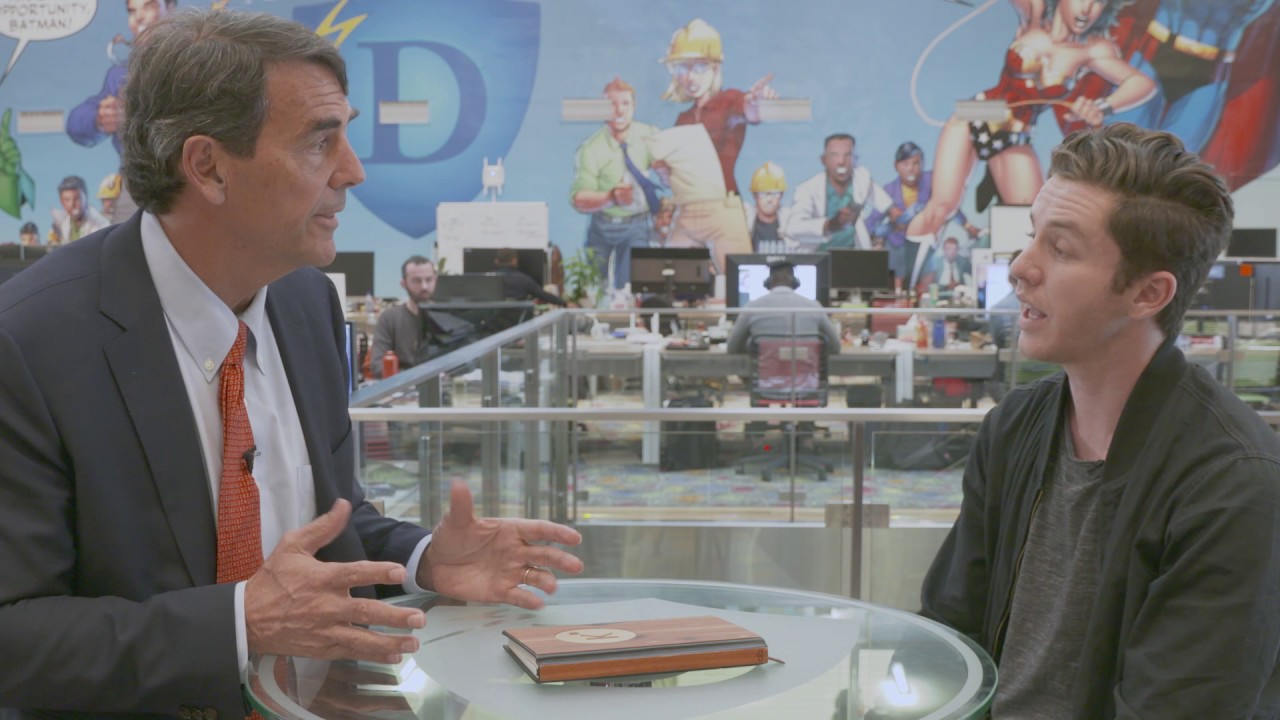
This content was created by Tim Draper. This content was uploaded by Tim Draper. This is a YouTube interview titled "The Startup Hero Episode 4: Alex Fiance" (posted May 8, 2017). It is an English conversation between host Tim Draper and guest Alex Fiance (co-founder/leader of the Kairos Society) discussing the Kairos Fellowship and Kairos 50 program, how Kairos evolved from a student-run nonprofit into a platform with a for-profit seed/late-seed fund (about $10M), their investment model and track record, global sourcing and regulatory/geographic challenges, team structure (Ankur, Ryan, Alex), examples like Freenome, and an invitation/ask for Draper to participate in a summit prize/ investment. The metadata indicates a YouTube content type and the video context is an entrepreneurial/interview format.
Chapters
Hi, this is Tim Draper, and I'm here with Alex Fiance of the Kairos Society. Did I pronounce that right?
Yeah, yeah, yeah, you did.
Good. And Alex, why don't you give us a little feel for what the Kairos Society does? Or do you call the whole thing Kairos?
We call it Kairos Society. We're now a family of a few different things that we do. But can I tell you how we started?
Yeah, go ahead. Tell us the whole thing.
Okay, so the founding story is we actually started in 2008 in the peak of the financial crisis. So the question we asked was, how come so many of the smartest college students just automatically wanted to go into banking, finance, and aren't necessarily thinking about starting a business that solves a problem. So I think this is, you know, this is 2008. You guys have been doing it for years, but there were maybe 10, 20 accelerators. It wasn't as trendy to be a student entrepreneur. So we were really one of the first groups out there really evangelizing the concept of student entrepreneurship, right? We were the first peer-to-peer community of student entrepreneurs to span multiple college campuses. So we started in 14 schools in the US, and today we're in over 50 countries and 100 universities.
So what do you do to make a student into an entrepreneur? We're trying to do that here at Draper University.
I think that we're finding students who identify with—
Wait, it was about the same year we started.
Yeah.
The same time.
Yeah.
So we both saw the same thing.
Yep.
Interesting. Okay, go on.
Different approach.
Go on.
Very complementary.
Right.
So we look for students who have a specific problem they want to solve. So usually it's a business student or scientist or engineer or designer who kind of decided that there's an industry they want to tackle or a general space they want to enter but don't quite know how. Or maybe they don't have the co-founder network. Maybe they're wondering how to get their initial capital. So we're finding standout students who are going to be successful at something, and we're trying to channel them into a for-profit business that is fundable and solves a problem. When we say fundable, we hope that they're in your office, you know, 18 months after they become a Kairos Fellow. So the Kairos Fellowship is really a peer community. We found entrepreneur— or students are so motivated by what their peers are doing, by social proof, to really believe they can do it too. So when you start to put, you know, a top engineer at MIT who's 19 with a top business student who just raised seed funding from Berkeley in a room together, they start to say, wow, I could really do this. So the fellowship is really just about that initial hurdle of getting someone who wants to solve a problem to deciding to solve it through an entrepreneurial venture.
So that is a nonprofit?
Yeah.
And what you're doing is you're gathering up a bunch of students and you bring them together to an event.
Yep.
And then from that event, then they go off and they start their business.
Yeah.
Is there something else you do? You train them too, right?
Yeah, so I would say that we facilitate an environment for them to train each other. Right? I mean, we have hubs on campuses all over the world, and, you know, this is anything from them pitching businesses to each other to going and eating pizza together. What we do is we facilitate events or partner with other people's events that will take them out of their local ecosystem and put them in a room with entrepreneurs from other parts of the world and with industry leaders. So we throw an event that puts the top collegiate entrepreneurs at a table with leaders of different industries so they can actually understand how to create a business approach to the general problem they want to solve.
So then I went to a couple of these Kairos events, and I funded a couple of your—
Yeah, I think about 10 of them.
Kairos people. You've got a good selection process. And then we backed you, but we backed you in another— for another thing. It wasn't for the nonprofit.
Correct.
It was for something for-profit. Yeah, yeah.
So what's that? How did that happen? Sure. So if you think about the sequence of events, first we just wanted to meet people like us, student entrepreneurs who believe they could start a billion-dollar industry in crazy— I'm sorry, billion-dollar business in industries like healthcare, energy, education. How do you find those people and accelerate their business? As these people started to go from— started to leave the idea stage and start executing on a business, we started to see a market opportunity to help commercialize the businesses. So, you know, the stat we use is that the top 25 Kairos companies from the past 4 years have together raised over $550 million in capital combined market cap of over $2 billion, and we met them, you know, at the very inception of their business. So what we do at the beginning is really looking for amazing people, and as the people start to build ventures that have prototypes, have customers, we now have a program to drive exposure for them and a fund to invest in them. So the exposure is done through a program called the Kairos 50. 50 top companies in the seed stage with founders under 25. We look for young people fixing or reshaping broken industries. Anything from education to transportation to logistics to finance. People apply with a problem they want to solve.
That's still the nonprofit thing, Accelerus 50, or is that a company?
That really sits— that's kind of the gray area that sits in between.
Okay.
You know, it's not necessarily a company we're quite ready to invest in, but we are seeing them start to take the leap, and what we want to do is drive exposure to them in front of angel investors, media outlets, Fortune 500 companies. So we've had outcomes ranging from helping people get partnerships with companies like GE to helping people get checks from, from you, frankly.
So then what's the business model from here? You've got this, you got the nonprofit, and then you've got this sort of gray place that's sort of half nonprofit.
Yeah, let's not call it gray. Gray is the wrong place to put it. It represents the stage where a startup is just Right. Finding product-market fit.
I'm wondering, where does the for-profit thing come in?
Yeah, we're investing in companies a little later in the seed stage, pre-Series A.
So it's a fund?
Oh, it's a full fund.
So that's the for-profit business, is the fund. It isn't any of this other stuff. The other stuff is just generating interesting companies, helping people get started, and then you've got a fund that's going to look and do what I did. Which is to back a couple of those companies.
Yeah, exactly.
So what's happened with the fund?
Well, we found our focus, which is in this— we call it late seed stage. People are calling it seed plus now, but it really means, you know, the startup has product-market fit, they have customers, they have revenue, they've raised a little bit of capital, they are looking to get over the hump to get to Series A. So the thesis behind the fund is, you know, we have this community all over the world of young founders fixing broken industries. we get really interesting insight into what young people are building on the ground. The fund is— if you think of our actual network with Kairos and the people that we bring to our summit, it's Fortune 500, big media publications, and Series A and B investors. So there's a certain level of product-market fit you need to have to be ready for that network, for it to be worth people's time on both sides. So we're really trying to invest in companies and then triple down on the way that we add value And now you've made some investments. Yeah, we made 4 investments.
4 investments. That's great. And have they— it's too early probably.
Yeah, it's too early.
So, but now, are you— is your fund allowed to invest outside of the Kairos network, or is it just going to be these Kairos?
Yeah, that was a new thing for me as a founder, raising this fund on top of Kairos, right? So clearly The goal is that we've gotten to know the teams, seen them hit business milestones from— that started in their college dorm room, and, you know, 12 to 18 months later, they're really ready for that check. But we've helped them early, for free, no strings attached. So we believe in the model. The investors in the fund and in Kairos believe in that model. But technically, we can invest in anything. But you have to think, you know, for us to really play to our strengths, It's working with mission-driven young founders who we've seen execute and we've helped.
So is your time more focused on the filter, or is your time more focused on the fund?
Yeah, talent development.
Talent development.
Sourcing, scouting, helping people at the beginning. And the fund, I don't want to say runs itself, but it's a milestone-based fund in the sense that people know they need to have revenue, they need to have outside capital raised to even approach us. And if they aren't ready, we have things that we can do to support them, right? We have the fellowship, we have the Kairos 50.
The Kairos, the nonprofit part, has a big event, and that event, is it like a business plan competition?
No, I would say if you think of the demographic of the guys—
I mean, is it like Demo Day?
Yeah, yeah, yeah, there's 2 things, there's 2 key parts to it, right? So the first is, you know, Let's think about Kairos Fellows. Young, exceptionally talented students who know they want to solve a problem through entrepreneurship and maybe are looking for that initial spark or focus on exactly how to approach the market. So we think that you, you know, you put these people at a table with CEOs of Fortune 500 companies, VCs who have seen 10 to 20 years of successful exits, you start to help them understand where within this So it's a low—
Tap them into a new network that they wouldn't have seen for years otherwise.
Yeah, yeah. And you think about it, right? Like, let's take a space like healthcare. Today's top healthcare executives could probably sit down and give you hours and hours of rambling on specific problems that exist within the space that could be solved through business. They're moving too slowly to do it, or they have bigger fish to fry, but they certainly know how to sit with a young entrepreneur and say, here's what I think you should do. who's interested in healthcare and point them in the direction of specific approachable market opportunities.
Mm-hmm.
So our goal is make sure that some of the most impressive young students know each other, so it doesn't matter if you go to Berkeley or MIT or IIT in India or Hong Kong, you can build that global peer network, and you could get exposure and inspiration from industry leaders. So half of the summit is really just about the leaders of today meeting the leaders of tomorrow, Fix broken industries. That's the nonprofit side. The for-profit side of the event is really around helping drive exposure and inject capital into these seed-stage companies that have products and prototypes and are ready to go. So ideally, right? I mean, we've literally seen examples of companies that started at the Cairo Summit that you know one two three years later are raising Series A's. There's a company called Freenome, for example. They Essentially built a liquid biopsy platform that can detect changes in your cell-free DNA through your blood to predict and analyze potential for cancer. 2 of the 3 founders literally met at a Cairo Summit through these sessions where, you know, the leaders of today are pointing to—
And they weren't doing that when they met.
No, no.
And then suddenly they met and they went, hey, maybe I can put that together with this.
Yeah, and then Andreessen put, you know, you can fact-check the number, it's online, it was somewhere between $3 and $5 million into their seed round. And, you know, they're fully going to market.
It's a big seed round.
It's a big seed round, and it's a huge opportunity.
Are they something that the Kairos Fund has also put money into?
Now, that's a sore subject. So they— companies like that, or stories like that, were part of the story of why we started the fund, because we'd been creating this platform and this ecosystem, this event, but we didn't have our own capital to invest. So they're part of the story of why we should have had a fund. And I obviously told a lot of stories like that as I was raising the fund. I was a first-time fund manager raising a fund over the past year.
Now, are you systematizing how you invest in these companies like the way Boost downstairs does it where they say we get a certain percentage for a certain amount of money and you go through a demo day and then you're off and you have a couple of weeks to figure it out?
What we said is that there are tons of great accelerators— Boost, Y Combinator, Techstars. We want to complement them. So most startups we've found aren't going to select 2 accelerators. So our goal is really just how do we build a model that enables us to help founders see and help founders early and still make sure that we can invest in their seed rounds.
So what is the model?
The model is provide value to them through the fellowship and the Kairos 50, completely free, and the fund invests at the end of the seed stage. So they're letting us in a little later into the rounds, also in part as a thank you for the work that we did to help them early.
Sure, and so—
At their terms. Yeah, $250K checks into their seed rounds. We're seeing—
So you put $250K in for what? Does the percentage vary?
Yeah, whatever the value. I mean, we're seeing valuations pretty steady at this point. You know, it's seed investing.
So you do an uncapped note then?
No, we're just— we've been amongst the last money into their seed rounds.
I see. They put their seed round together and then you can cap it with another $250,000. That's the deal you make with them.
Yeah, yeah.
An option to come into your seed round when the time comes.
So far there's no contract, right? So far it's been really a social contract.
You've worked together for a long time.
Hey, we're gonna help you early, we'll make investor intros. We believe in reciprocity and a long-term relationship, right? I mean, if you also look at what's happened through Kairos, let's say Casper, Periscope, those were the second companies of kids who were Kairos fellows, not kids anymore, but they were Kairos fellows that were at our events and the era between 2008 and 2012. So we're starting to see alumni companies. So really our goal is really drive value early and maintain a long-term relationship with these founders.
So you back 4, but you bring in 50. Is there any— like, are they starting to feel like their expectations are very high? They come in and they think they're going to get your fund?
Yeah, look, this is— we're pretty transparent, right? We're doing interviews for the next K50 now. We tell them we have a fund, we tell them it is designed to sit later in the seed stage, and that we really want to add value to the companies we invest in. So we've also passed on companies that we don't think we could help in the Series A stage, and I think we're trying to keep some level of focus there. We project 10 to 15 investments a year based on historicals. So if you look at the historical data of Kairos companies and the milestones we're looking for in a seed company, About 10 to 15 investments a year.
And do you have any biases toward US companies, or is it just— can you incorporate somewhere else? Yeah, yeah.
That is one of the biggest things I want to pick your brain on. I mean, we're in over 50 countries. We've made an international investment in a Brazilian company. So much of why we're here is to really build this global ecosystem of young entrepreneurs. We want them to meet each other, and we also wanna prove that access to resources and capital is slowly democratizing, and that a great company can start in Barcelona. I mean, you guys actually invested in a company called Verse that—
Right.
Kairos Fellow in Barcelona, came to the Valley to go through Boost, Kairos 50 company, you guys kept writing checks, they raised a Series A. It's the dream story. So we're really, if you simplify the goal of Kairos, it's scale that, it's to do that at scale. Amazing talent in their local ecosystem, getting the resources they need to get from seed to Series A, and we get to put capital in now and go along for the journey.
Yeah, we've had— well, I'll tell you, we've had a lot of variety of different situations in different countries. Yeah, and some are dynamic. Some actually are changing over time.
You mean the economies, or—
No, the way they Where— the way their governments operate. For instance, in China, it used to be a very free market, and now they're starting to clamp down and make it very difficult for a foreign investor to repatriate money or whatever.
Yep.
Or even for Chinese nationals to get their money out of China. So there's some real difficulties. So it ends up being a dynamic thing. Over time, though, my belief is that they will all become much more efficient, standardized, And we'll all be able to use it, invest in companies from anywhere in the world, and they can incorporate anywhere in the world.
Yep.
But right now, I mean, if we do something in a certain country, it triples, quadruples the legal fees. And sometimes it adds to difficulties in exit.
Yep.
We've had lots of trouble with that. Talking about a European company, well, Luxembourg's supposed to be the place, right? Well, it is on the way in. On the way out, it's very difficult.
Interesting.
So Estonia now is doing some interesting things. They're making digital signatures legal, and that saved them 2% of their GDP.
Wow. Yeah.
And they're going after smart contracts. And there's a company, Funderbeam, that we're a part of that has allowed small companies to raise money on that whole—
Yep.
On their platform, which is all a big crowdfunding platform. So they're kind of pushing the edge. And I think England, the UK, is also moving very quickly toward becoming the old financial center that it used to be. They're being aggressive in allowing a lighter touch of regulation, and they're going to be something pretty exciting too. So I think it depends on the country. In Africa, there's no real rule of law yet.
You guys made 2 bets in the last month, I saw, in Africa.
Yeah. No real rule of law though.
That helps though?
But we think that It's coming. And so making early bets in companies that seem to have promise, maybe something good will happen there.
So you want to be either before the rule of law exists or after it's so well established that you can predict exits? Is that accurate?
It's not quite. I mean, the way I look at it is Africa is going to be— right now there are 1 billion Africans. And in 50 years, there will be 4 billion Africans. In 50 years, there are right now 6 billion people outside of Africa. There's a billion in Africa. Total 7 billion. Those 6 will turn into 7 in the same 50 years. So the growth of population in Africa is exploding.
Cool.
So I'm very excited about what could potentially happen there.
Right. And you're investing in the building blocks of society, how they pay.
Yeah. And getting in early, something interesting might shake out. So we did that in China, and it worked out very, very well.
And India? I saw you made a new bet.
We went back into India. We went into India big and found that there was a lot of trouble in getting exits. and in the culture that had really been driven from the top. The government was very corrupt and that culture spread throughout. Well, Modi, the new prime minister, is really cranking— cracking down on all that bad culture. And I thought, yeah, maybe it's worth it to put my foot back in the water there. Yeah, yeah, yeah. Because maybe he's going to make that Rule of law becomes a bigger deal there.
Yeah. So you've achieved an incredible scale to what you do. And in terms of what we do on the ground, the community side of things, we're all over the world. So the advice I'm looking for is, how do you balance between keeping our eyes open for opportunities around the world to really truly be able to invest in our global community versus just staying disciplined and focused to prove out what's technically our first fund? I mean, even though we have this track record of sourcing, this is our first fund. So to really build this into the long-term business we're trying to create, we also need to just prove ourselves.
Yeah, I'm not sure I have a good answer for you because we're struggling with some of the similar things at Draper University because students from all over the world, some of our best students are the immigrants. And we want the immigrants. But they are generally, their visas run out and they have to go back.
Yeah.
And then they're working in a whole different society and things are a little bit tougher.
Yeah.
And so we don't know is the answer as to whether it makes sense to just go big in the Silicon Valley only or to go US only or Maybe, you know, first world countries only.
Sure.
I don't know.
Yeah, yeah.
And we're— or maybe you go for everybody.
How will you know?
I tend to go for everybody but make smaller bets, right, internationally. Now that can backfire too because the overhead on an international investment is always a lot higher. And so as a percentage of my investment, the legal fees and all of those All those issues, accounting, that all adds up so that we're making— too much of our investments overseas are in overhead. Yep.
Those are the mistakes I'm trying to avoid.
So what are you trying to do about it?
No, I know. I have to think about that. I can't believe that's such a key part of the answer, but it makes sense. The other question I have for you is, okay, so you're what, 5 years into DraperU now?
Yeah.
How do you feel about the balance of, let's say, nature versus nurture for entrepreneurship, born versus made?
Well, what's really funny is that—
That's what you're studying, right?
Yeah, what's really funny is that people came to me and said entrepreneurship can't be taught.
Yeah.
Because you're either innately an entrepreneur or you're not.
Right.
Well, whenever anybody says you can't do it, I always think, hmm, how would I do that?
Right, right, right.
So that's what I was looking at here. And I said, how would I do it?
Yeah.
And now I think it's working. It's wild. It's hard to quantify. I mean, we can. We can say we've had 700 students. There have been 300 companies started from it. They've raised a total of $50 million or a little bit more than that. And some of them look like they show great promise. A couple have FDA approvals. A couple have big audiences.
Cool.
But we can't say that necessarily we've proven that we can just take anybody off the street and turn them into an entrepreneur. But we do put them through the things that I think an entrepreneur has to go through before they're really ready.
Right.
Because as an entrepreneur, you know as well as I do, you've got to have really good armor.
Yep.
You've got to be really ready. And so we challenge them emotionally, physically, intellectually. We just keep pounding on them until they come out and they're heroes. Like you. You're starting— you're building heroes. And so I think that's exciting.
We have the same goal. I know.
It's very interesting. And I'm actually learning from you as Well, here's what I would say, right?
Like, even our promotion of success stories, I mean, we have a couple. Like, let's say Periscope actually sold, but he was a Kairos Fellow in 2009. What we really—
But that's not in your fund.
No.
So you have to say, well, yeah, that was a Kairos success, but you can't say that's a fund— like, the fund model has worked.
Exactly. So really, you know, the And the crazy thing about this is, you know, we're probably 2, 3, 4 years away from that true end-to-end success story. Someone was a part of the Kairos Fellowship, it helped them get their career off the ground, it helped them find their co-founders, they raised Series A funding, they raised Series B funding, and they have that exit or IPO. And, you know, the way that we view this, right, is especially if those entrepreneurs are having that tangible success story, that exit in a space, like let's say healthcare, Then you start to have these heroes who create a signal to the high schoolers and the middle schoolers that this is a career path that you can do it too, that you can make an impact and honestly make money and have notoriety for the right reasons. Like, we want Kairos Fellows to be the entrepreneurial heroes that 10-year-olds say they want to be like.
Right.
Just like they do in athletics or music or entertainment or banking, right? So that's— I feel like you guys have the same exact goal. So that's why we've always loved working with you.
So you have a co-founder.
Yep.
Anchor Jane.
Yep.
And he has— he got really involved in it and then he sort of spun off, wanted to do his own. And now he's kind of come back.
Yeah, yeah, yeah.
Is that what's going on?
Yeah, so how did that work out for you? Yeah, it's a great question. So I think, you know, Kairos was really Ankur's startup, and we were student-run for the first 4 years. But we say student-run, the reality was it was a small group of people, Ankur Jain, Jake Medwell, David Weiler, a few others who were basically full-time on Kairos, right?
Mm-hmm.
When they graduated, they said, okay, we want to make a run at building a startup ourselves. Ankur knew that for Kairos to be able to run without him, He needed to fully hand over the reins to someone and kind of throw me to the wolves a little bit, right?
Mm-hmm.
Because I needed to be able to be an entrepreneur to keep Kairos, not just keep it alive, but turn it into a sustainable business, right? So Ankur brought me in, went to start his business. You know, they got acquired, and now we're in a position where we have such a clear, business goal, right? And it's so easy and simple to define. Like, we want Kairos startups to successfully get to market, and we want to invest in them. It's, it's something very simple for Encore to plug into. It's a partnership. It's very nimble in the sense that we don't have heavy overhead. We don't have a huge team. We're just a small group of people really committed to the same thing.
Now you still run—
Yeah.
The Kairos Fund.
Yeah, I did.
And Ankur has come back. He was running it before. So how does that work?
What's the person who runs the— Yeah, well, there's also Ryan Bloomer. So there's 3 of us. So Ryan really runs the community side of things, the Kairos Fellowship, the regional network. You know, there's over 90 volunteers who are college students or recent graduates who make Kairos possible. If we don't provide a valuable experience for them, the community crumbles, right? So Ryan runs that. The community, the fellowship, the regional network. So he runs, let's say, the top line.
And then what does Ankur run?
Ankur runs the post-investment, so he's the one who actually has experience really getting from, let's say, seed to Series B. So he's really the one managing the relationship post-investment, and then he's also helping create this experience for the summit that brings the leaders of today, titans of industry, with the fellows, the people who Ryan is really sourcing. So I kind of sit in between, right, where I manage the fund, I manage the relationships with the LPs. I raise the bulk of the capital. And it's not to say the fund runs itself, right? But most of the companies we've invested in, we've gotten to see them— well, actually, I'm sorry, all of the companies we've invested in, we've known the founders for over 12 months through the community.
Yeah. So how do you decide who— like, who decides whether you back a company or not?
We are a 3-person investment committee.
And it's got to be a— Does it have to be unanimous, or does it have to be just one really passionate person?
For now, unanimous, because the goal for us is just to have equal conviction that we can support every company we invest in. I think that doesn't scale, but right now we think it's a smart way to get off the ground.
We've had trouble with unanimous. We've had trouble with every different model that is out there. It's very tough to figure out how to get the right people Passion and the right democracy. So you kind of need the— you need a dictatorship with democracy, and I'm not quite sure how that works.
Yeah, the good thing is we—
Or a multi-dictatorship with democracy.
So the good news for now is since this is driven by a community-based model, it's kind of like if Ryan sends me a deal opportunity, I know that he knows the founder, it's been vetted, and they've really hit tangible business And then I talk to Ankur and say, can we really help this founder after we invest? And if we can't, let's—
And those are the things that—
And those are the conversations. So ideally everyone's kind of made their decisions sequentially, right? And I look at the deal, we'll send it to— I mean, we have a vast group of advisors in our network who will help us with the market diligence because right now we're generalists. And once it's passed through that stage of diligence, it's really a function of whether we can help.
What we found was it was the decibel level in the room that would determine whether we would We should really be backing it or not. For or against.
Yeah, conflict's good, right?
Yeah, the louder it got, the more likely we were going to make money on the investment.
I like that.
So that was kind of an interesting— keep that in mind as you go through.
Well, I think for us it's what works today is not necessarily what's going to work tomorrow. Like, we're a startup and a fund at the same time, so all we're really focused on now is a small group of companies that we're tangibly helping.
When the fund is raised, Funds raised. So you're putting it to work.
Yeah, yeah.
And then when would you have to raise your next fund?
I would have to within 4 years. You know, should probably within, within 2 to 3, right?
Okay, so then when you go out and you raise a fund, how do you, how do you tell that story that there's this nonprofit and And then that's sort of an access thing for you. But then that you're just adding on to seed funding, is that— are your investors going to say, no, we'd rather you led deals, or are they going to say, we would rather you have a standard program, not just tagging on? Yeah, yeah, yeah.
No, understood. Yeah, I mean, there's all sorts of things we can do. Either before or after our current investment spot, right? We could easily put $50K into each Kairos50 company. We could easily follow on through Series A. I think my answer is we have data on every company in the sense that we know how we met them, what different points in time we could have invested, and we'll use that data to decide whether we really should have been leading deals.
How big is the fund?
How big is it?
$10 million.
So, you know, it's big enough to do—
You can do a lot of interesting— are you going to experiment with the fund, or is it mostly you're going to just take sort of 4 out of each 50?
No, no, it's really 10 to 15 out of each 50. So again, the fund was based on historical data of the Kairos 50. So as much as it's new, we at least have a very clear track record of finding companies, and we knew exactly what their valuation was at the time they were at our Demo Day because they were trying to raise money from you and other people, right?
Yeah.
So, so we, we know where we stand. I think right now people really like how focused we are in terms of this specific stage. Later in, like, investing later in the seed stage, helping early, helping for free earlier in the seed stage. The experimentation is more so for us to just track the different times we could have invested and kind of build a couple parallel models of what the So we aren't going to actually experiment with our LPs' money. We're going to experiment more with documenting when we could have invested and keep running those models moving forward, if that makes sense.
Yeah.
The advice I've gotten is definitely— I've heard it called strategy creep, which is just like, be consistent with what you're trying to prove. What we're trying to prove is that we find great entrepreneurs by helping them early for free, and then we're going to make money. and exposing them to peers, industry leaders, and capital, right? And that we can actually add value to their companies at Series A. And if we're right about that, I know that we have a business for a long time. And then the question is, how much can we also scale Kairos as a team and as a platform so we could really meet the demand of our global community? Which is why I'm gonna keep showing up in your office asking for help.
Okay, good.
I actually talked to So what's the ask? OK, what's the ask? OK. Well, the real ask is at our summit, the one thing we're experimenting with is the opportunity to put up a prize in advance. So essentially, you would go and say, I'm committing to investing at least $50K out of Draper Associates into one of the Kairos 50 companies. You know our track record, so I think it's fairly safe to say you'll make one good $50K bet, and the The fun part is you get to invest it live at the event with a big check from the bell podium at the New York Stock Exchange. So the ask, the first ask, and obviously we're doing a prize out of our funds, so we'll put our money where our mouth is. So the first ask is, do you want to do a prize at the summit?
Yeah, it sounds like fun.
Great. Then the second ask is really to just have your continued candid support.
I mean, I'm pretty sure I'll find a good idea.
You're gonna find a good— I mean, like I said, top 25 from the past 4 years. Worth over $2 billion combined.
Yeah.
And you've probably— I think it's about 10 investments that you've made in Kairos companies.
I think I have.
And you get this epic shot from the bell podium of the stock exchange, big check.
I'm not sure that's worth it.
No, no, no, you're not—
Do we ring the bell? You can ring the bell, you can do whatever you want. Can we ring the bell?
Yeah, yeah, and you're not paying sponsorship dollars. It's capital that you're gonna put to work anyways in our companies. So this is just a more fun way to invest.
It's great. We're going to have a gong here for anybody who has a big day, you know.
I like that. That's like from the hedge fund or finance world.
Yeah. Make an announcement from up there.
No, I like that you—
We're going to do that here.
Steal what works from finance and apply it to startups. I like that. Yeah.
Good. Alex, great having you here on the Startup Hero.
Thank you.
Welcome and thank you. Remember, keep coming back. Startup Hero is going to keep Entertaining you, if you are entertained by this.
Hopefully you're entertained.
More from Tim


He Sold His Car to Build This Startup, Then Pitched It for $1M 😳 #Startups #AI

This Startup Moves Your Crypto BEFORE Hackers Can Steal It 😳 #Crypto #Cybersecurity




15 Months Without Refrigeration?! This Startup Thinks It Can Go Global 🥥 #FoodTech #Startups



