The Startup Hero Episode 7: Ajay Shah | Dotty
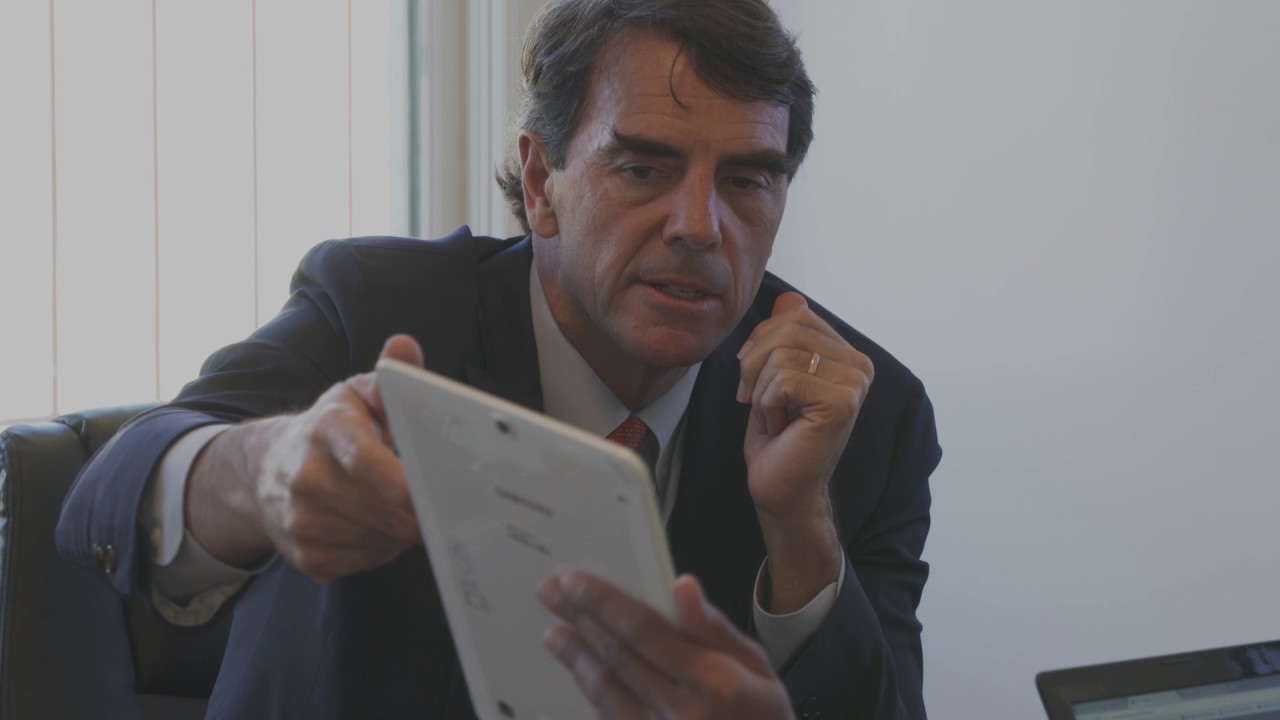
In this episode of Startup Hero, Tim Draper interviews Ajay Shah, co‑founder of Dotty, an augmented‑reality (AR) platform that turns complex 3‑D models into interactive AR experiences. Shah demonstrates the technology, showing how Dotty can scan objects, stitch images into full 3‑D meshes, auto‑track them, and render self‑assembling, step‑by‑step visualizations that users can walk around, zoom into, or “surf” through virtual spaces. He outlines a range of use‑cases: AR‑guided IKEA assembly, immersive toy experiences (e.g., a 3‑D Pokémon character), interior‑design visualizations, detailed industrial visualizations such as turbine engines, remote collaboration on oil‑rigs, tele‑medicine, IoT‑enabled ship monitoring, and holographic tele‑presence (holoporting). Dotty is pursuing enterprise pilots with IKEA, Bandai Namco, a large oil‑and‑gas firm, ODG smart‑glasses, and is in talks with TurboSquid for a revenue‑share model. The business model is SaaS‑based, charging per model and offering a platform that can be embedded in partner apps (e.g., IKEA’s app) while also providing a service fee for model creation. Shah describes the company’s technical stack: Android/iOS apps, integration with Autodesk’s 123D Catch, custom code for stitching and auto‑tracking, conversion pipelines that turn CAD, SketchUp, Maya, etc., into AR‑ready OBJ files (≈80 % automated). The team is self‑funded, with co‑founders bringing backgrounds in business development, sales, AI, underwater robotics, and previous ventures in 3‑D printing and social media. Shah emphasizes the need for a “killer application” to drive adoption, sees AR shopping as a primary growth area, and acknowledges that B2B adoption is slower than consumer‑facing use‑cases. The interview ends with Draper urging Shah to secure paying pilots and demonstrate clear market traction.
Chapters
Welcome to Startup Hero. Here we are. This is our webcast and. podcast and thought, why don't you go ahead and introduce yourself and tell us what you're doing and, and why and where you're going from here?
Sounds great. So my name is AJ Shaw. I'm a co-founder of Dotty. I'll put the Dotty on there. We're an augmented reality company. We have basically been able to take complex models that are in 3D and build them into the AR space. So, we have a full viewing platform, which I'll demonstrate, but basically what we've been doing is we started in one area, in 3D printing, and as you know, 3D printing has kind of cliffed, and we kind of evolved from everything we've done to build this entire ecosystem. And if Steve Jobs has one saying of hindsight, you can only see the future in hindsight, and we've created an entire ecosystem that now is really, really well-poised for the future in AR. Right.
Terrific. So show me a demo and then I'll understand what it's all about.
Sure, absolutely.
Is that what you had in mind?
Yeah, that would be, that would be ideal for us to do. So basically what it started is we have a scan technology that can basically stitch imaging together, and I'll just pull up a model just because it takes, it takes some time. We're perfecting the process.
But so you aren't scanning the QR codes here, you're scanning—
I will do a scan of the QR code that I have. I have specific QR codes. I'm not doing a scan of these.
But you're scanning the bowl of things so that you have an image.
Yeah.
A 3D image.
Yeah. So this would be an example of my face in full 3D.
Okay.
Right?
Great.
So what we were doing is we were basically helping—
What's that thing growing out of your head?
That is, that is the wall. So it captured the wall behind it.
Oh, interesting.
And then we could crop out the wall afterwards.
Yeah.
So I'll show you what that looks like in AR. But then what happened was we were doing this database so we could stitch imaging. So it was a scan around the face like this, and then we were augmenting sunglasses on top of my face from there. So I'll show you what that looks like.
Oh, I see.
And so So this is .ear. I'll just come into local models and pull— yeah.
So, okay, we've seen people who can do this.
Right.
And they used it for 3D printing. And then seen people do that and they're using it for VR.
Right.
You can put your own face on the—
Yeah, in your avatar, right.
So what is it that you're gonna do?
So this is Autodesk's backend platform for 123D Catch, which is what we're using, the base end, but we've custom coded significantly on top of it to kind of take it to a whole new level.
But what's the use? Why do I care about this?
So how this will get interesting is AR shopping, we believe, is definitely a future state for where things are going, where people will want to see things and You're on Amazon, and you'll just want to pull a model just like any one of these models, and you'll want to open it, and you'll have one of these things pop up where it won't be as complex as this, but it'll be like, enter a quick code, which I'll show you in the app. And once you enter a quick code— in fact, I can just do it now to show an example of it. You just come into the app here, and it'll say, these are your options.
And I'll basically— What are the options?
Oh, sorry. So I have local models where I have my local models stored. And these are just all the models that I've previously uploaded. So you can save models to your app.
Oh, OK. Each one is a different—
Each one's different, yeah. And then I have a scan option, which is where these guys come into play, which I'll do after. Or I can enter one of these quick codes, which is going to be probably the most prominent for people that just want to do things quickly. So this one is HYXO. And I'll hit go. And—
Oh, so that guy shows up.
Yeah.
Like in Pokémon Go.
Yeah, so that was the image. That was the image there for this one. It was this particular one. So—
Oh, that's right.
Basically you have that. And then the benefit of the tracker, if you saw here, I showed there's the QR code. You could have scanned this, and I'll do a scan, but one of the interesting things that we've done is We've been able to auto-track. So now he's known in space where he's at. And so basically—
He hopped.
He's auto-tracking this, so if I move the tracker— oh, sorry, he's tracking this way.
Oh, I see.
If I move the tracker, he goes with me.
Oh, he goes with you.
Yeah, so I can—
Oh, that is really—
So I can even spin the tracker in 3D. And then he spins around.
Yeah.
Theoretically, what that would mean is you could walk around him in full 360. And so, where that gets interesting is, I'll do the actual scan now so you can see it. So, there is an IKEA wine rack now in full 360. Now, what's interesting and where our platform varies from others is if we hit play, play, that's the baseboard, and now it's self-assembling in full 360 with zero visual loss.
Oh, wow, that's interesting.
And so I could pause it anytime. It's like a 3D how-to. Yeah, and so I could drive into the model as well if I want to see that part or that piece. I can now see it in free space.
Wow, that's fun.
And you could basically just do step by step all the way across the board. To see what it looks like. So if you want to ever see any various angle, you just—
So it's a really interesting new technology that you are sort of putting into 3D. Well, that's interesting. So what I'm trying to get at are use cases. How would I use this?
So if you had, for this particular one, right, if you had the IKEA wine rack at home, and you were gonna assemble it and it came with this QR code, basically you could just do a quick scan. It would just pop up. Yeah.
I see. So IKEA would give out that QR code and then I'd just scan it and then I'd be able to look at it from all different angles and see how it's supposed to be assembled.
Right. If you were gonna be assembling this, if you had actually bought this wine rack, you would then be like, okay, instead of Reading the blueprint of it, you would just basically be able to see this, and you can drive into the model at any point to be like, okay, that's the piece that I need for this, this is the step I need, and you could go back at any time to reverse. You're like, oh, I think I missed a step. All right, do I make sure I have everything here, right? And it shows kind of the process of the pins dropping and everything. So then from there, you're like, okay, got that step. All right, now I gotta align these boards. This is where they fall in the line. Got that, then I get the next set of pins, drop those in, then I go, okay, drop those down, then get these pieces. So you have the full process across the board.
So that's one application. The other application is, I guess, a toy? It sort of pops up where it says, hey, there's a character, and when I scan that, that character is on my screen, then I, do I, how do I keep interested in that character?
So, we're mainly focused on the enterprise play, but for AR shopping, for example, if you have a toy that you wanna take out of the box, right, like, for example, the Death Star in Star Wars for the Lego set.
Yeah.
It costs $700, right? And so if you were going to buy that, before you spend $700 on your kid's toy, you'd really want to know what that thing is going to look like kind of inside and out. And so I'll show you a different model, which we'll do a scan for.
And you can see it in the room.
Yeah, you can see it in the room. But the other thing is we would be able to drive the details of the model. So—
Ooh, you might want to talk to Laurel and Wolf. They're the interior decorator. firm, and they do it all online. Okay, then they could say, how does this space look with this piece of furniture?
Yeah, so that's been done with multiple— so you have companies like Augment or other AR viewing platforms where you could put furniture into your room. Mm-hmm. And so that's a good use case. Cimagine also did that recently where they had the scaled furniture and they would do a scan of the room. Where we've been very different is if you take this turbine engine, right?
Yeah.
If you take the quality of what we look, and I can pull up C-Imagine so you can see kind of a comparison as well, or Augment. But if you take this turbine engine, right, what we could do is, where we come into play is we can basically explode this engine like that, and you can now drive into the different components of it, right? You could basically drive into the shell of it. And so you could zoom and you could pan into it in case you want to see different parts as well. So what we've been really doing that's a lot different than—
You can't spin it this way though.
I could spin it.
This way.
Oh, I can't spin it up and down. Yeah, I could, I could. So what I can do is I could turn it 90 degrees.
Oh, okay.
And so, oh yeah, yeah, that's great. So, so you can see it from all angles. But that's really where we are a bit different, is we can really drive into the model and see a lot of different things. I'll pull up a local model because this will give you a lot of clarity as well, and I'll let you actually drive on this one so you have it in front of you.
Okay.
But so what we do is we say, we just say walk through the door, so to speak, and then—
Oh, oh, that's fun. It just pops open and then there's a—
Yeah.
You're in the apartment.
So if you, if you can—
Then I can even look at what the books are on the shelf.
Yeah, if you actually track it, put it over the tracker, just shrink it down a little bit and then zoom out so that you're on the tracker. Beautiful. Now you could actually surf around the room.
Oh, I see. That's interesting.
So you can now surf around the room as if you were in the room, to the point where you can now read the books on the bookshelf where the magazine cover. So, yeah.
Yeah. When you get crunched in, there we go. Okay.
So, yeah. Just instead of trying to move, just drive. Like move around to whatever you want to see. So, let's say you want to see the clock on the wall, right?
Yeah.
You would come down.
Oh, just drive this way? Yeah.
You would come down.
Oh, yeah, yeah, yeah. Okay. Much easier.
Yeah.
Okay. That's much better. Okay. Now, I'm looking Seeing what books are on the shelf. Okay. What time it is on the clock. Let's see. Ah, there we go.
Yeah.
So I spin around. Ooh, can I open that door too? I think that takes me outside, but— no, it doesn't. Okay. So then I come back around and I go, oh, look at what's The weatherman is on the screen here. That's really interesting. What do you think this— this is like used to maybe sell an apartment or something?
Yeah, so this you have the cross-section. So you could drive through that wall and actually read through those posters and everything.
Yeah.
If you just actually just—
Just keep pulling in?
No, no, no. Don't even bother pulling in. Just push the tablet forward. Walk through the wall.
Oh, I see.
Okay. Yeah, like that.
What's that thing? It must be a lava lamp. That's terrific. Great. That's fun.
So, yeah. So, if you take this as like a cross-section of a high-rise and then you wanted to see what that unit looked like, you can now showcase that unit without actually visiting.
Yeah. And it would be interesting to know, like, when I am designing an 8 by 12 office, I don't know what that really fits.
Yeah.
I don't know what fits in that. How big? Is it too big, too small? I mean, if you have just flat office space and you're trying to figure out where to put the offices.
Yeah.
It's kind of a nice thing to add. Terrific. So how are you going to sell that?
So what we're looking at doing is we have A lot of pilot programs in place, but we also have the collaboration feature so you can collaborate in real time on these models.
So pilot programs, you have one with IKEA, I guess?
So we are in talks with IKEA right now.
And you have one that's the Pokémon kind of thing?
So we did the Pokémon because we met with Bandai Namco, and so we just wanted to show them when they release Pokémon Go, obviously it's kind of gone down in popularity, but when they released Pokémon Go, all the Pokémon were in 2D. So we said if you were gonna do the next iteration of Pokémon, you can now do it in full 3D. But it kind of hasn't gone as according to plan with, with the gaming kind of going down. But yeah, but we wanted them to have more interaction with a 3D character.
Yeah, you would definitely have more interaction. That's interesting. Interesting. And then what were the other applications that people are piloting with you?
Oh, that are piloting. So we have— we are working with a large oil and gas company, and what we did is we outfitted an entire oil rig. So basically, I could show that a little bit here as well. There's 2, there's 2 I'll show. So one is, this is basically, so we're partnered with ODG, which is the smart glasses. So if the guy was to have ODG glasses or smart glasses on his face, he's looking at this turbine engine, the one that I just showed you. You have the boardroom, which is sitting wherever, say, we are actually in the boardroom, but your plane is grounded in Miami. They can now see exactly what he's seeing, so it's bidirectional.
Oh, that's interesting.
And you can now collaborate in real time on that turbine engine and say, okay, which piece or which part is it that we see is the problem here? And then from there, they can dictate, okay, here's how we could fix this problem. If you have your expert on the ground over here, he's like, okay, I know exactly what you're looking at. This is how we switch it out. This is what we need to look at.
So medicine would be another thing. That's the first thing people could—
Yeah, telemedicine would absolutely be. And then from there, to talk about the Shell project, or the oil and gas project. So this is the oil tanker, and what we've done is we've basically put an IoT solution in with a viewing platform, 'cause viewing things in 3D are very difficult without a specialized viewer. So with us, you don't need a specialized viewer. Everything you do is in HTML. And so here, we put a very, very complex tanker into this platform, outfitted where you can now track where the IoT devices are, and it tells you kind of on a scale what needs to be paid attention to. So obviously a 2 is not nearly as important as a 4, et cetera. And so you have this entire viewing platform with this backend dashboard, which then you can also pull and take into augmented reality. So if you were to have the glasses, so we definitely see the future in smart glasses technology. We see that wearables is where things are going to be going. We actually kind of— a lot of people in this space are thinking that the cell phone will eventually go away. And the other thing that people will be wearing, the Meta glasses or whatever, and then to start— Yeah, Meta would be one example of the glasses.
And then they can be looking around at people on the board seats, but then also be looking at where the problem place is on the ship. And everybody can see it from whatever angle they want to see it from.
So when you have anything that's a remote field team and someone has to go out, whether it be the offshore oil rig or even just an industrial plant, right? We are even working with Itron right now. We're doing—
We're both Looking at the ship and we're in the same board meeting and we've both got the glasses on, I can turn my ship around this way and you can turn your ship around a different way?
Theoretically, yes, you can. But what we would be doing is you would, you would turn it and I would see exactly what you're isolating and what you're turning.
Oh, I see.
That would be, that would be the—
It's more collaborative than—
That is it, yeah. So we have a patent for the collaboration for That's interesting.
Well, and do you have any sense for how people would pay for this, or how this turns into a business?
So, what we want to do is— another group we're talking with is, say, TurboSquid, which is one of the largest repositories of 3D models. And so, basically, when you come into TurboSquid and you want to look at any of their models, Take, take this Bugatti, for example. Everything you see is a 2D image, right? And so when you scroll through it, you're looking at it at different angles from a 2D.
Right.
Now, the best that they've come with the 360 is they've been able to put this video-type play where you can spin it around.
Mm-hmm.
But the funny thing is you're trying to buy everything in 3D, and, and this is the best you have. So what we're looking at doing is taking these models through an automatic conversion process where we can now take complex models from different platforms, say SketchUp, say Maya, CAD files, etc., and then put them into augmented reality. So then you would have them sitting on your phone and tablet just like you have here, and now you could play with the car. So you have the full experience of the cars every day.
So your application is really phone and tablet, but when the glasses come, you're gonna be ready for those?
We are. So we are iOS and Android. The ODGs are on the Android platform. 8th Year is also on the Android platform. Meta is on Unity's platform, but we will be able to speak with Unity and convert the file language to Unity, so we'll be able to use those as well.
Okay, so this is interesting. And so you think Bugatti would pay you in this case?
Not Bugatti, no. What TurboSquid would basically, we would have a partnership with TurboSquid where they have the largest repository repository of 3D models in the ethos. So this is basically, if you were to go to TurboSquid, they basically have 3D models for all kinds of stuff. I just pulled up cars because it was one of the top things, but their selection is quite impressive, probably somewhere around 50,000 files.
So these were things that TurboSquid has so that people can 3D print them?
You know, oddly enough, the 3D printing was probably where they started as well, but now they're being used for gaming. And then virtual reality and augmented reality, and then people also put them in CGI as well. So people, people use these things for a multitude of things. But if you think about the fact that you're trying to buy a 3D image for whatever platform, wouldn't it be better to see it in 3D?
Yeah, I'm just trying to figure out what a really good I mean, it's great technology, no question about it. I'm trying to figure out what a great business model is for you.
Sure. So for the enterprise level, what we're looking at doing is we can basically take these complex draftings, put them into our process, break them, right? So the IKEA wine rack— IKEA has that wine rack, so to speak. What they don't have, what our technology allows them to do, is it allows them to break that IKEA wine rack in the step-by-step sequencing. So that's something that not everyone just has. And then on top of that, not everyone has—
you would take one apart and put it back together and—
yep, yep.
And do a 3D image of it in lots of different ways. And then you— how does that happen? You don't just get a wine rack, do a 360 on it, and then you No, right.
So, so we'd have to— so Autodesk works with IKEA. They have the CAD file. So what we did is we took that CAD file, which they have every piece in a CAD file, and we broke it and assembled it. Right now what they do is a 1-to-1. So basically you can see just this one piece in augmented reality. You can see this one piece. You can't see all of it. You can't assemble it. It's not all linear.
Right.
If that makes sense.
I get it.
Yeah, so we were able to dynamically take all these models and compress them into a single piece and self-assemble them. And then the benefit is—
And then would you get, you know, a piece of every sale that came from that, or IKEA just sends you money for, so that you—
Yeah, we definitely wanna become a SaaS platform. So one of the things that we are—
SaaS, so they— IKEA pays monthly and they get the whole thing?
Yeah.
They get whatever you create for them?
Well, we— they would, they would definitely pay per model, but then they use the viewing platform of Dottie, which we would either incorporate into an IKEA app, which we would sit behind and be their kind of engine behind it. So that way it all stays within an IKEA platform. Or they could come to Dottie, most likely they'll just sit behind the IKEA Within the IKEA app, and then yes, there would be a monthly revenue for there, but then there would also be a service charge for building the models that they want.
Do you have any idea what the market size is here?
For specifically IKEA, or just like across the board? I don't know what that looks like. I'm assuming it's quite large, but I don't know what it is.
Good. Anything else? Tell me about the company. Who— what's your background?
So, my background is in business development and sales. I started with WPP, worked there for a little while.
That's interesting.
So, I was in the market research. I was good at crunching numbers. I was good at doing analysis. But I realized that I had much more fun working with people. And so, I switched into sales after doing market research and doing the analysis piece. So I went to go work for Gillette, and then they were acquired by Procter Gamble shortly after. So then I went to go do my master's program. I went to the University of Tampa for international business. And then I got recruited by Weyerhaeuser, if you're familiar with them. And so, yeah, yeah. I'm not familiar. And so in May 2006, I was recruited by Weyerhaeuser, and then we all know what happened by 2008. So from there, I started a company in social media, and that did pretty well. We garnered Ford as a client, and then I was poached by a client in affordable housing, and we got into affordable housing alternative finance capital. So our biggest claim to fame was we raised $47 million from Google to rescue a project in Hawaii for 3,000 residents. And then from there, we wrote a book on the Good Life Guidebook for ending poverty. So the 2 co-founders, the other one is an underwater robotics expert for oil and gas, and so he has a semi-narrow field given that his specialty is that.
Yeah.
But he was my college roommate during my study abroad program. So he's an artificial intelligence engineer, and him and I had been talking for a long time about doing something together. And when he basically came into 3D printing— are you familiar with SOLS? S-O-L-S? They were doing 3D custom-printed insoles.
Oh.
We were doing, we were doing 3D-printed orthotics. So we were doing basically doctor-grade.
Same thing, but different shape, yeah.
So yeah, so basically the difference would be podiatrist is recommended by a doctor, insoles off the counter. And so we built the scan technology to be able to scan and scale a naked foot so you can then buy your insole through the platform. And so that's where our scan technology came through. And so that would involve a lot of machine learning. Then we were garnered by a large sunglasses company and said, hey, can you do faces? And we were like, absolutely can do faces. And they were like, well, what would be really interesting is if we can augment glasses onto the face. So that's kind of the evolution of how that came to be. Where we see this going is obviously AR shopping will become very big. So even take Amazon Home and Kitchen. We see that if you are on Amazon Home and Kitchen and you want to basically place an object into your home, you can use the tracker technology, enter in the quick code, and then all of a sudden you can place that object into your home, as well as have the functionality of it so you can see it in the sequence of what does this thing actually do.
So how far along are you now?
We are live on Android and iOS.
And is anybody using it?
Yes, we, like I said, so we have—
You have a couple of pilots.
Yeah.
Are there— there's no consumer application?
As of right now, there is nothing that is being used widely on consumer.
And then how have you been funded so far?
We have self-funded. So the co-founders and I, we've all basically put in money to date.
That's great.
Yeah.
Yeah, I think I'd like to see a little bit more of a business that can replicate. A couple of things I would like to see. One is some good market sizing, but first figure out What's the killer application? So maybe it's IKEA, and maybe it's something else, but I'd like to see what the marketplace thinks is the killer application.
So if I could just answer the killer application. So the conversion from different files into an OBJ, which is ideal for AR and VR, is very, very difficult right now. It takes a lot of time and man-hours for that to happen. And for us to be able to automate that process, we don't have it 100%, we have it about 80%, which is how we were able to get that tanker into this platform, is really where our bread and butter is. So that's really kind of the backend engine of being able to bring things and sit at the epicenter, if you will, of AR and VR, because we're able to do that conversion process very quickly.
And you do it by design, Things that have been designed on computer rather than doing a scan.
So that's— the scan is part of the stitching technology that would be able to say, like, if you have, you know—
So you have both?
Yeah, so it's an ecosystem.
One is the 3D design, one is the scan where you stitch it together.
Yeah, so now if you have high-resolution images like that Bugatti, we can now stitch it into a full 3D image. So that takes the AR shopping platform for anyone who could just take photos. We take the photos, we stitch it together, and boom, you now have a 3D object, and that can be pulled into AR.
It's really neat, and I'm trying to figure out what the— and usually when there's something really neat and fun and catchy, it's usually there is a consumer application that comes first. I don't know what it'll be, but usually that's what happens. It's rare that it goes straight to the business-to-business community. They're slower to adopt.
They are definitely slower to adopt.
Consumer looks and kind of goes, oh hey, look, I can use this for whatever.
Yeah. So IKEA's—
Pokémon Go was like big huge hit. So then how do you, how do you move so that the Businesses are ready for something like this, and they're usually slower than the consumer. Consumer can just spend their own money. The business has to spend the business's money.
Right.
And so they have to talk amongst themselves, and it usually takes longer, and they have to figure out what the real application is. Consumer can just buy it and try it.
Yeah, yeah.
So I'm— I think you've got really interesting technology, and I'm interested to see what the real applications are. What's the one that really drives the whole thing?
Yeah, I mean, look, we are—
If it's business, I'd like to know what they're using it for and why it's worth it for them.
Yeah, so, you know, obviously—
I've assembled plenty of things, knowing it, so I do know IKEA, that there is some real value to sort of seeing where the screws go.
And eventually what we'd like to do is we'd like to be able to build in the parts so that you don't ever have customer support, right? Customer support is one of the biggest frustrations people have. Being able to basically open this in your app and then see the parts, click on it, and it'll tell you exactly which part it is, and eventually be able to integrate so you can order online right then and there.
Yeah, yeah, yeah. I think there are going to be some Interesting things. And you, you know, just look down at that and then up comes this image. That's pretty powerful.
Thank you.
So I'm just trying to figure out what you do with that power.
Yeah.
What do you turn that into?
Yeah.
And what— how do you make the world easier, faster, cheaper, safer, whatever, through that?
So we see IoT being an area of focus. Like I said, one of the pilot programs is monitoring water sensor data. So being able to track water usage, you have the soil testers. So let's just take agriculture as a big example.
Mm-hmm.
Being able to tie in and have that visualization platform instead of just 2D dashboards, where you can now come in with your app, hover over your entire field, if you will, and figure out which areas you want to look at in your field. That would be incredibly beneficial for someone instead of just having to fly drones over the whole time or actually physically go out.
Do you have revenue now, or they were all just pilots?
That is— yeah, we don't have consistent revenue. We don't have— if IKEA comes through, that'll probably be the biggest. We're also working on a different project that could be a multi-year, multi-million dollar contract as well, but One of the other, if I could just show you one other piece of the platform.
Sure.
I'll mute this, but basically what we have is we have this technology of holoporting, which was defined by HoloLens, but the fact of telepresence. So the green screen there, that guitar is obviously a real guitar at the green screen there. And then what you'll see, she puts the hat on, it's a 3-second delay, She jumps through the screen, and you'll now see the hat is on the guitar as well. So that is a live augmentation in essentially real time, right? Minus the 3-second delay, it's a real—
So it may end up being something Hollywood wants too.
Yeah, what we were thinking about is for Skype. I know you've been an investor in Skype, right? So if you were to take the fact that people are trying to commute less to do meetings, If you were able to basically be, I'll show you just one example of where Wes is in the chair. So this is my business partner, he's in the meeting, so that chair is augmented in that room, it doesn't actually exist, and then he's gonna come and sit down on it. You now have the ability, even with smart glasses or tablet phone, to now have people directly in your line of view. So we are speaking with Hallmark right now, actually, about kinda having like that Obi-Wan Kenobi type type experience when you open up your card and you pan your phone over it, and then the message pops up that you have prerecorded on there from the green screen.
So he's sitting somewhere else?
He's sitting in a completely different place, and now he's in your living room. And that was a fake chair? It's a real chair. It's a real chair and everything. It's just that is augmented.
Another place.
Yes, exactly.
And that chair had to be the same height?
Uh, basically, yeah, you, you, we just blew it up. Like, um, you can, you could basically just, just, you, just like you were shrinking and, uh, growing that condo unit, you just—
Or you just blow it up to fit.
Yeah.
Oh yeah.
Yeah.
Interesting.
So that is wild. Yeah, so that's, okay, that's another piece of the technology that we have as well, um, integrated. So that's what I mean by we have an entire platform suite where we can basically tie in many different things. Like, think of it as almost like a Microsoft Office. We don't just have Word and Excel, we have—
All these other things.
Yeah, so obviously we are relying on people much smarter than ourselves. We've built some incredible tech, we have some initial ideas where we think it'll be very useful in the market, but visionaries such as yourself would basically be able to see Here's something, 'cause we would not have seen it before, right? And you'd be like, this is another application for this type of technology that could be widely adopted.
Yeah, so I'm a little stumped trying to figure out what to do with it, but maybe if I sleep on it, something will happen. Or I'll have little 3D Pokémon people in my dreams. That is fun, great, thank you.
Yeah, absolutely.
This is a treat. And thanks for doing this.
I appreciate, yeah, you making the time.
Terrific. Thank you. I'll let you know, but I think what I would like for you to make a little more progress on, applications.
Okay.
Maybe a customer, or maybe something where it starts showing that, hey, look, these guys are willing to pay real money And they are going to use it for this thing, and then we can go out and sell it to all their competitors.
Sure.
That kind of thing. So that I start to feel like I'm—
So if TurboSquid were to sign a contract for their models at a rev share, that would be—
Yeah, then it's worth—
That would be compelling. OK.
Yeah.
OK. We're in talks with them right now, so I'll do that.
Oh, great.
I appreciate it.
Great.
OK.
Terrific.
Thank you.
Terrific.
More from Tim


He Sold His Car to Build This Startup, Then Pitched It for $1M 😳 #Startups #AI

This Startup Moves Your Crypto BEFORE Hackers Can Steal It 😳 #Crypto #Cybersecurity




15 Months Without Refrigeration?! This Startup Thinks It Can Go Global 🥥 #FoodTech #Startups



