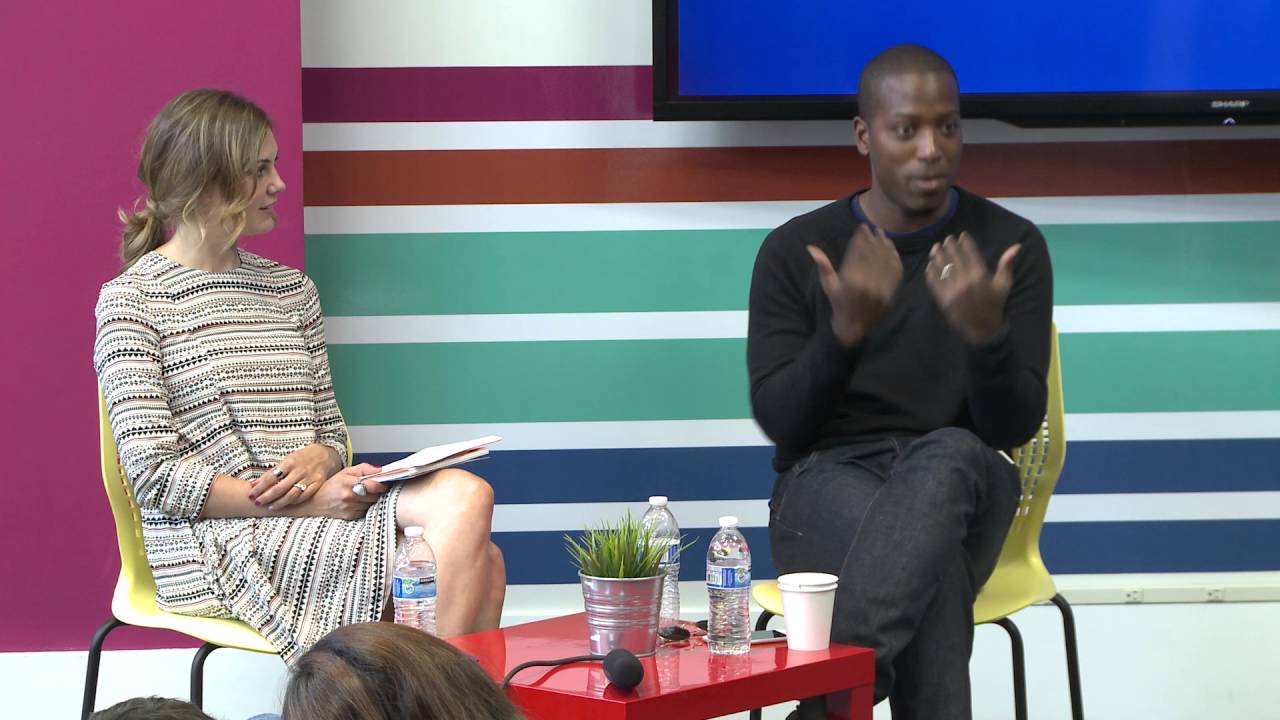
In this interview, Tristan Walker explains how he built his founding team by rejecting vague "culture fit" and instead defining six concrete company values—courage, inspiration, respect, judgment, wellness, and loyalty—and embedding them into one‑on‑ones, reviews, and hiring decisions. This values‑first approach enabled a highly diverse workforce (majority minority and women) that functions autonomously, giving the company a competitive advantage. Walker then describes Bevel, a shaving system created to solve the pervasive irritation problem affecting 80% of Black men and women and 30% of other consumers. Launched in February 2014, Bevel grew quickly, catching Target’s attention when a Target buyer, who was also a satisfied customer, reached out after seeing a positive NPS comment. The partnership led to Bevel’s entry into Target stores. Looking ahead, Walker outlines a product roadmap: a six‑product kit (razor, brush, pre‑shave oil, shave cream, restoring balm) with a new complementary product launching soon, and a new brand aimed at female consumers slated for 2016. He emphasizes a problem‑first brand philosophy, aiming to launch one to two new brands annually. The conversation concludes with a brief query about his content and social‑media strategy for creating viral videos, highlighting his focus on authenticity and customer‑centric storytelling.
Now what about your team? A lot of people are trying to put teams together, finding the right people. What was your process of getting the right people on board your team?
So the first 15 people on my team I've known pretty well, probably for at least 5 years or something like that. But they also aren't like super close friends, so I had some distance, right? Secondly, the way that we hire, we try never to talk about this idea of culture fit. I hate that term. I think it's the dumbest term on the planet. Specifically because no one could ever define it, right? When people talk about culture fit, it's like, oh, well, this person plays golf, I like playing golf too, you should be hired. It's stupid. That's literally the case. This person made me laugh. Who the fuck cares, right? That's crazy to me. So one thing I did when we first started the company, we wrote out these 6 values that we have for it: courage, inspiration, respect, judgment, wellness, and loyalty, right? And we wrote out what they mean. So it's on our website, et cetera. But it's not enough to just be 6 values on a website. You've got to entrench it in every single thing that you do. So every one-on-one I have with my team, we talk about the projects that we're working on in the context of those values. When you get reviewed semi-annually and annually, the criterion by which you're reviewed is based on those values. Were you courageous when you did this project? Was it inspiring? Did you have respect for the customer? Did you practice good judgment throughout? Are you taking care of yourself? How loyal have you been to the mission of the company? Why is that important? Because if I go away for 8 weeks like I did when I had paternity leave, the company still works. We still hire people that are like us in terms of values. And now we can use culture fit because we've actually defined it. So that's allowed us to find people that kind of share those values. That's allowed us to have an incredibly diverse team. We're majority minority, majority women. Right? All great leaders within the company. And that alone, that alone, it's not charity, it's good business. It's a comparative advantage for what we're doing. And I'm deliberate about that, right? And it's worked out for us since.
Awesome. Can you talk to us a little bit more about Bevel? I heard that it's coming to Target in 2016.
Yay! Yeah, so we've been in the market for 18 months. We started shipping February of 2014. Bevel, it's also— I mean, it's a problem, we solved the problem that 80% of black men and women have, right, shaving irritation, et cetera, and 30% of men and women of other races have, whether it's face, legs, arms, wherever, right? It's never been done before. It's crazy, like just think about it. The past 100 years, this whole shaving industry has been built with all these quote-unquote innovations, With limited resources to solve this acute health and beauty problem and need. We did it, right? We've been growing really fast ever since and then Target reached out to us roughly 6, 7 months after we launched and said, hey, you guys should come to Minneapolis and we should chat. Actually, you know, what was funny, you know, the buyers were actually customers of ours and we do like these NPS surveys and stuff. You know how you get like the NPS survey and you can write a comment after you rate it 1 to 10? I saw this comment, hey, Bevel is the most amazing shaving system, it's changed my life for the better, skin's better, blah, blah, blah. And it was firstname.lastname@target.com, right? So I look it up on LinkedIn, he happens to be the person who runs like a pretty big division within Target, he also happened to go to Stanford Business School, he also happened to be a black man, right? It actually worked out quite nicely for us. So, you know, I kind of give that story because I try not to discount serendipity and luck because it does help, right? And if you set yourself up in the right way to kind of be ready for it when it comes, you're going to be very well off.
And what's next?
Oh, Target. I didn't even say— yeah, so we got into Target. We're going to be in Target next year.
Sorry.
No, that's awesome.
No, no, we're really excited. As far as the product line is concerned, So what ideas, if you can share with us at all?
Just about the product line in general or Atlanta Cosmetics? Yeah, so it's a 6-product consumer kit. We have a single-blade safety razor, brush, pre-shave oil, shave cream, restoring balm, all of which is clinically proven to work. We're gonna launch a new product in a couple months to complement the line, which we're very excited about. We're gonna launch a whole new brand altogether in 2016. Focused, well, not exclusively, but focused on the female audience. So I'm very excited about that. And we're only focusing on brands that solve acute problems, right? So we're not gonna make shampoo to make shampoo. We're not gonna make lotion to make lotion. We focus on the problem first and build a brand around those problems. We built Bevel in 6 months with 6 people. I'd like to get us in a cadence where we launch 1 to 2 new brands a year. I think we can do it. I say that without giving away what we're launching soon.
You're tiptoeing around it, so I get it.
I'm pretty good at this. No, we're really excited for you.
Congratulations.
Cool. Thank you.
Okay, talking next about content. So you're big on content, social media. What do you find to be the most helpful resource? We have a task for them coming up soon about creating viral videos. So especially with a lifestyle brand, so what have you found to be the most useful? And kind of tips of incorporating social media and keeping up with that?
The only secret is be authentic. I mean, like, trying to make a viral video, you're probably not gonna make a viral video. You know what I'm saying? Like, it's just a— like, you're just trying too hard, and all that stuff just means that you're losing sight of the customer, right? Like, the only thing you need to focus on is the customer. Like if you're focusing on a marketing campaign without a focus on the customer, you failed, you failed, right? Because you have to adapt it to like the audience, you have to adapt it even within the customer segments, there are micro segments like of customers, et cetera, and that is far and away kind of the biggest principle that at least I'd give to you guys and it solves so many different problems, right? So if you guys are participating in something like that, just step back a little bit and ask like why you're doing it. Right? And that's not as like Draper University, I just mean as yourself, right? Like is this something that we need to do? Because more often than not you don't, right? And there's something to be said I think at least in this way when you think about stuff like that, it's like this focus on hypergrowth, hypergrowth, 10x, 10x, hypergrowth, blah, blah, blah. We actually are deliberate about not growing in like our first year. The only thing that we focus on is product market fit. Deliver something that customers are gonna love, understand our unit economics better than anybody else, and only when you understand your unit economics should you really do hypergrowth. And few companies, surprisingly, know their unit economics that cold. So unit economics, authenticity, worry about the rest of the stuff later. Thank you.