Torsten Kolind built YouNoodle starting in 2010 as a connection tool for startup competitions, then pivoted multiple times: killing a Pinterest-like feature, launching Access for sourcing and Connect to link founders with corporate executives. He discusses the trade-offs between short-term revenue and long-term product vision.
Chapters
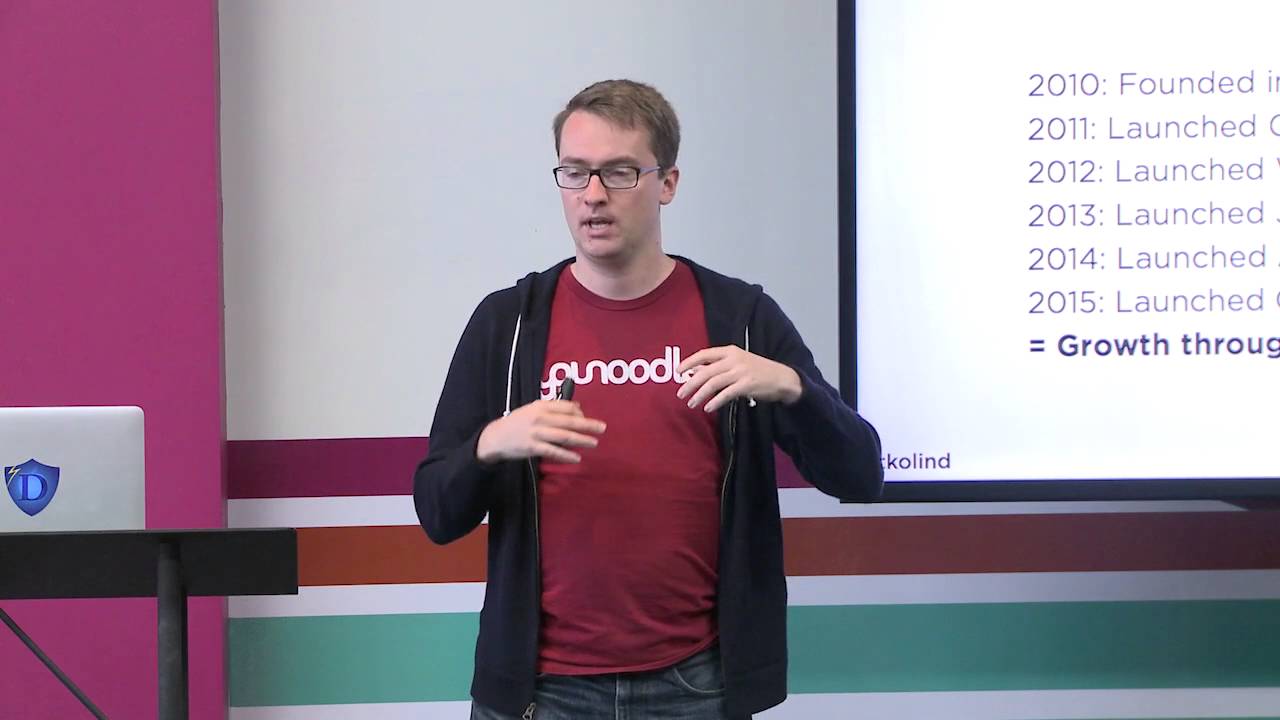
So I want to spend a little bit of time on this because you guys are probably, most of you, earlier than I and we are in our companies. You're probably in the early stages, and you're going to be going through lots of pivots and lots of learnings and lots of things that are not going to be going the way that you thought they would go. So here's a little, very, very brief— I mean, there's just countless hours and blood, sweat, and tears in this little list here. But what I wanted to do was to summarize some of the learnings and different iterations that YouNoodle has been through. So we started out in 2010. And at the time, the platform that Rebecca and I launched was very much like just a connection platform for entrepreneurs in mostly these different competitions. But it was just built for ourselves. Rebecca and I were both organizers of startup competitions. And we just wanted some sort of tool to help us. So as we started to roll that out and other people asked us, hey, can we get access to this tool? How does it work? Can you help us? Then we had all these people that started to ask us for short-term immersion camps. Like, for instance, we worked with a partner in Korea who said, well, I have all these Korean students that would love to come over for a short period of time. We're talking like a week or 2 weeks or something. Just get a little bit of a feel for what happens in Silicon Valley. Yeah. Silicon Valley. So we got all these requests, and we started a product that was essentially organizing these camps, as we called it. And it was really fun. It was fantastic to get these founders and startups over. And it's a little bit similar to this, but it was not quite like— the educational program was not quite what it is here. It was more like, just come over here, and we'll try to make some connections. It was really fun. And it actually paid our bills. But it was a huge distraction from trying to build a technology company. Yeah. So we had to stop doing that. Can you imagine that? You're actually— it's a small team, we're making money, and we have to stop doing it because we were not being true to what we actually set out to do. At that point, we could have chosen, okay, sure, this is actually working. We're just going to become a startup immersion camp company. That's entirely possible. But Rebecca and I said, no, we were here to build this global network of entrepreneurs, and this ended up just being a distraction. So that's now dead. That is no longer happening. It was fun, but it is no longer. Then we launched something called Wall. Now this was— so I'm the engineer in the company now, obviously. Luckily, we have more, so we have better code now because I'm not writing it. But I had this little baby project. I wanted to do something called Wall, which was like a— imagine like a Pinterest interface with little tiles. with either entrepreneurs or startups and the ability to network around those and kind of make connections across borders. It was a really cool idea because it would tap into the data set coming out of all the competitions, so you would get almost more prominence on this wall if you had done better in any of these application processes, right? So I thought it was really cool, and it just didn't work. And so we had to kill it. What actually happened was that As with any kind of public social media or like public profiles, the people that used them a lot and almost spammed the system were the most desperate ones. They were the ones— it's almost like a dating network. They were the ones that just really, really, really wanted their startup idea out there. And they were not necessarily— there were even people that were trying to push products. Like there were some selling plumbing equipment and they just wanted to be on some page somewhere and they had no idea what this was. So it just didn't work. And we had to just kill it, which is really hard when it's your little baby project. So the good thing about that was now we could move into, let's actually build this platform, the platform for the application processes and this whole unbiased evaluation of startups, which was the part that Rebecca and I were really passionate about, leveling the playing field, making sure everyone is treated equal in the global world of startups. startups. So because we stopped spending time on the other projects, we were now able to, with the team, spend time on building this platform. And that's the platform that today is used in all those places I showed you. So it clearly was rough to stop doing these things because they were working and/or making money. But it did mean that we now actually were able to focus and build this platform. Later on then, we launched Access, which was more the sourcing tool that I showed you. best startups to best opportunities. And that's also still in effect. And then we recently just launched something called Connect, which is more of a matter of trying to take some of all these corporations that generally know there's a lot of good stuff happening in the startup world, but they don't really know how to deal with it. So for them— and they are also big corporations that are pitched by all sorts of founders that want to sell us stuff. So we are kind of prototyping a product now that allows founders to get introductions to high-level executives in order to both pitch what they're doing, but also really to exchange how they see the markets. Because for these big corporations, that's often the problem. They don't really know what's happening, and then they don't see it before it's too late. And if they talk to founders early on, we're hoping that they're able to change how they do stuff, and hopefully, of course, start doing business with this founder or this company, right? So it's all— I wanted to share this because it's very much a growth process through all the people that have been around us as a founding team and as a company. It's been our investors, it's been our advisors, it's been our clients, our partners, our users, our families, coworkers. There have been so many people over time that gave us input to how to build this out.