Things I Tell Myself Part 1 | Zander Adell
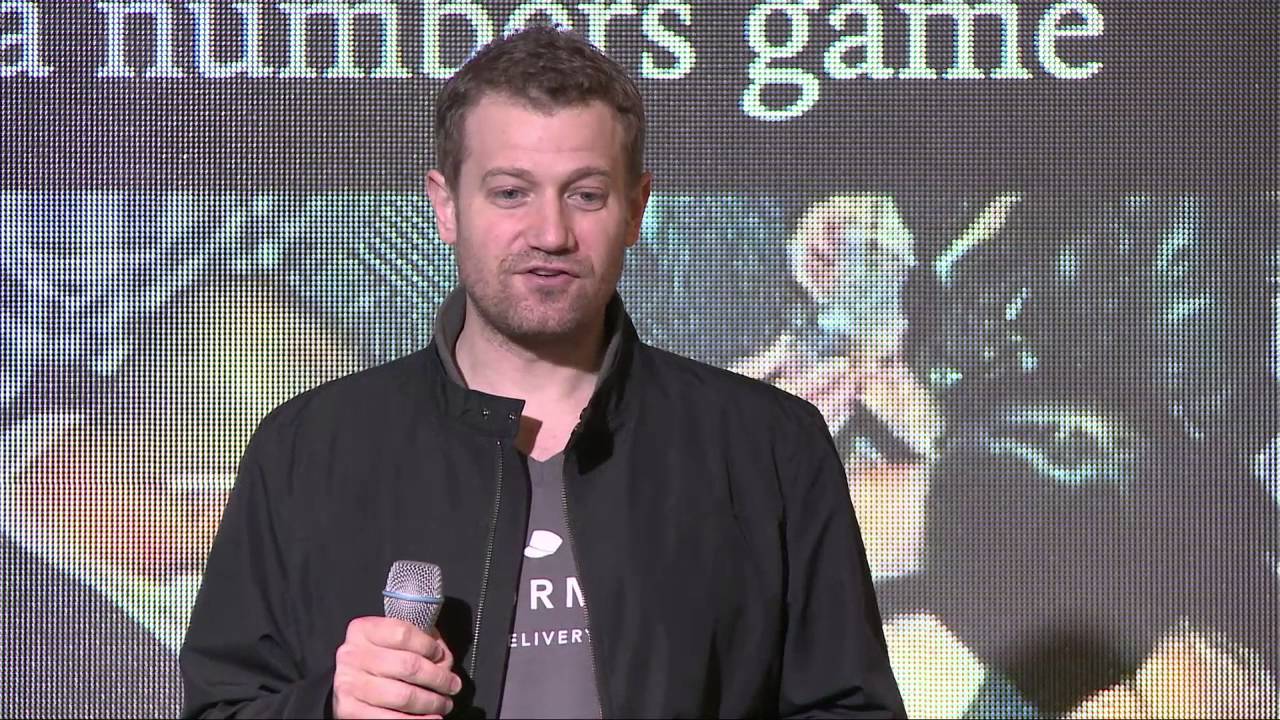
Zander Adell talks about the brutal reality of building startups, from his failed video-game company to investor rejections that feel personal. He compares the relentless rejection to dating, and uses the image of an ant in a toilet to explain how founders survive chaos by simply not stopping.
Chapters
So I figured I would start with a— here, I'll pull up my little quote here— sort of a beginning thought, which is that what everyone here is trying to do with their company is achieve escape velocity. And it is a really messy experience, and there's a lot of light and heat that comes off, and it's terribly— well, anyway, it's a mess. The actual definition is the minimum velocity that a moving body, as a rocket, must have to escape from the gravitational field of a celestial body, as the Earth, and move outward into space. So I would replace those with escape velocity is the minimum velocity that a moving body, as a company, must have to escape from the gravitational field of a celestial body, as dismal failure, and move outward into space. Or success. So that is the— that's the big challenge that we're all facing, and it's really, really, really hard. And every success you have will be met by like 4 failures, and you just have to keep pushing. But we'll get back to that. This is a guy named Howard Fine. Howard Fine is an acting coach in LA. I'm trying to figure out how to hold all 3 of these things. There we go. I think I did it. And while I was trying to start my first company, which was a video game called BoundlessPlanet.com, which was this awesome massively multiplayer war thing where you were fighting over oil. It never went anywhere because I had no idea what I was doing. But while I was doing that, I got kind of bored, and which is, you know, probably part of the reason the company didn't work out. And I was like, I'll take an acting class. I was living in LA. And this guy's actually— he's taught all these famous people. But I took this acting class with him, and there was a moment— I was not good at it. There was a moment when he said, if there is anything else that you can do, if there's anything else that you're good at, go do that, because this sucks. The rejection, the pain, the effort, the years and years that you're going to have to in, and by the time you actually make it, you'll be so beaten and tired you'll barely notice. If you can do anything else, go do that. And I sat there and I thought, yeah, this is not my thing. And I never took another class, and it was great advice. It was some of the best advice I've ever been given. I think that is also true about entrepreneurship. There isn't anything else that I would do. This is all I've ever sort of found myself headed towards after every problem. But if there is, think about it, because this is not a picnic. So, started at sort of a dark note, but it'll get more interesting and more fun from here. So, the hardest thing that I learned at the beginning— so this has a mild chronological order. Kind of starting with just the very beginning days. You know, I had had a little bit of a product off the ground. I'd been doing package deliveries out of the back of my car for 8 months and got into 500 Startups, and things finally kind of started going. And it was like, okay, now go raise money. And I was like, what? Like, I have no idea what that— I don't even know where to begin. And slowly but surely, I started to realize that And this is totally just from my experience. It was a lot like my experience with dating and meeting women in public situations like a bar, where the first time you get rejected, you're really like, oh, I should just crawl into a hole and not try to meet people ever again because I'm not— this isn't— my product isn't— there's no product-market fit here. And then, but then you realize over time that no, that person's just not into, you know, what I'm selling. But that person totally is. And then the next day you're like, oh my God, I am— everyone in the world loves me. And I should just walk into bars and just like, just stand there and wait for people to come talk to me. But it's not gonna work like that. It's completely random. You have no idea what people's background is. You have no idea why they like you. Until later, and you find out it's some weirdly specific reason that has to do with something you would never have known when you first met them. And there's no way to know who's going to like you and who isn't. So what do you do? You just talk to everybody. You have to. And it is gonna suck, and it is gonna hurt, because the probability that they like you is very low. So that means that you're just going to get horrifying rejections. It's gonna hurt. You're gonna feel stupid, and then the next day you're going to have to go do it again. In fact, there's a good chance that 2 minutes later you're going to have to go do it again. I had— I was at a talk. I was like on a panel at some little tiny conference with half as many people as there are here. And right before going on stage, I had a call with the best investor we would have ever had. And they were like, you know, we just weren't impressed with the way you displayed your numbers, and we don't think you're taking this seriously. And it was— I had been working these guys for, I don't know, 3 months, and they were the coolest. And it was a gut punch. It felt exactly like a gut punch. I had to— I was going to be on stage in like 5 minutes, and I just had to take a walk around the block, and I literally called my mom and, you know, centered myself and like whined. And then what? And then got back on stage, and everyone acted like I knew everything, and everyone was asking me all these questions. My memory of that talk is that I was the shit. But like 10 seconds before that, I felt awful. I felt like the biggest loser in the world, and I'm still sad we didn't get that investor, and I'm still going to try to get them down the road. Anyway, so it's a numbers game. It will always be a numbers game, and numbers games are brutal. They're emotionally brutal, and I think that's— One of the hardest things about entrepreneurship is that you take it so seriously, and this is your baby, and you care about it. And anything anyone says to you about your company, you feel like they're saying it about you, because your company is built of all of your ideas and all of your sleepless nights. So while you're doing that, you're running out of money, and things are going slowly. And you are in the sort of clichéd feeling of Death Valley. And I had a moment one day where I— maybe a little TMI— I like walked into the bathroom, and I lifted up the toilet seat, and there was an ant in the toilet. And the ant— and the toilet seat was closed, which means it was dark in the toilet, in the bathroom. It was probably at night. So it was pitch black for this ant. And it was in a toilet bowl, had possibly been there all day. I have no idea. And I look at this ant, and he's alive. And he's just like trying to figure it out, trying to solve his problem. And I felt this bizarre feeling of envy for the simplicity of the ant's mind, or what we think is the simplicity of the ant's mind, because it just wasn't going to give up until it was actually, actually dead. And I kind of thought, if that was a person, Or if that was me, I would have just been like, I'm dead, and just drowned and given up because I had like this— I had these sort of higher thought of doom and emotional sadness and like self-doubt that the ants— I don't think ants have self-doubt. And because of that, the ant was just like, well, maybe this will work out. I'll just stay alive until the last possible second. And I— so I saved the ant, of course. That would have been really, really bad if I was just like, ah, poor bastard. No, I saved the ant, and I like, I don't know, somehow got out with like a piece of toilet paper and like put it on a windowsill. I don't know what I did, but it always sort of stuck with me that like, that in those moments when you're— when it's emotionally hard, it's important to just be the ant. Just keep doing this. Because someone will maybe walk in and fish you out of the toilet for no reason at all. You have no reason to expect it to happen. But you're in— what you are involved in is this multidimensional chaotic situation with a million vectors going a million different directions. And you're trying to build some multidimensional puzzle piece that's going to fit into the market and suddenly make a ton of money. And everything is moving constantly in 100 dimensions. There's no way, like, you're just going to nail it. But there's also an interesting possibility that if you stood perfectly still, something amazing may still happen because of all of the chaos constantly going on. So anyway, I think about the ant in the toilet bowl all the time. That's not a picture. I didn't take a picture. I just found that on the internet. I would have to—
More from Tim


He Sold His Car to Build This Startup, Then Pitched It for $1M 😳 #Startups #AI

This Startup Moves Your Crypto BEFORE Hackers Can Steal It 😳 #Crypto #Cybersecurity




15 Months Without Refrigeration?! This Startup Thinks It Can Go Global 🥥 #FoodTech #Startups



