Things I Tell Myself Part 2 | Zander Adell
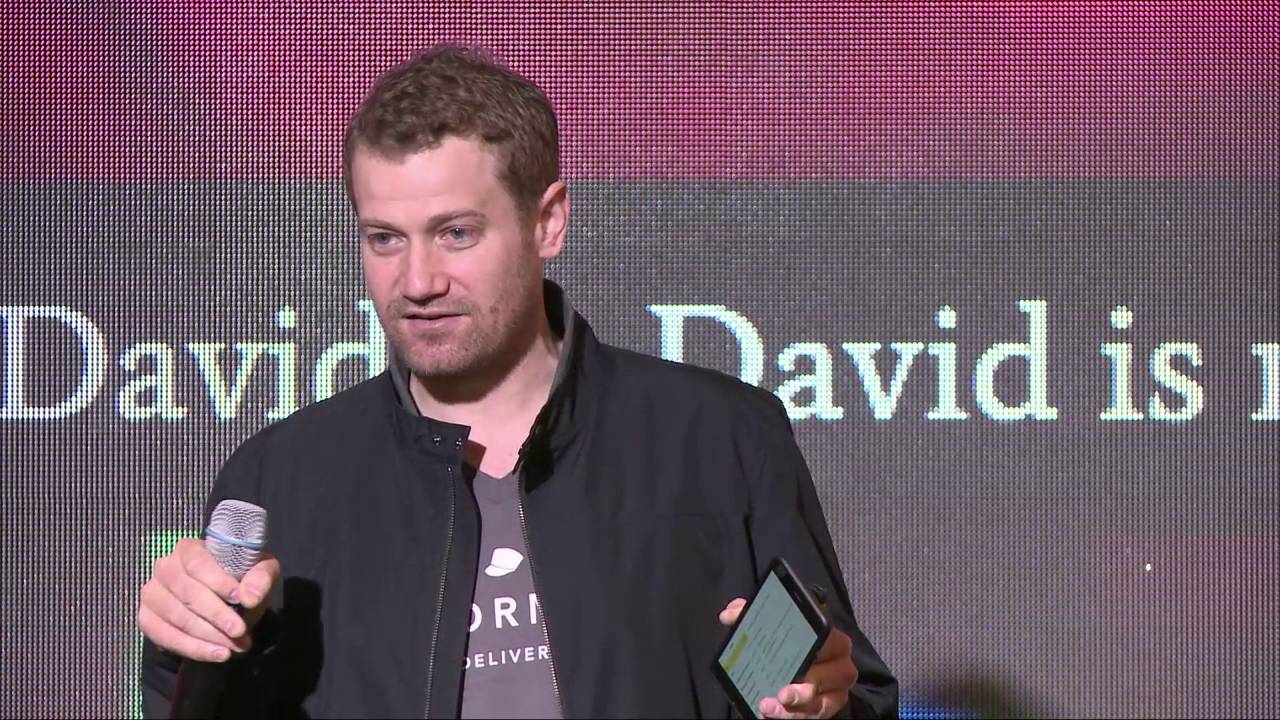
Zander Adell shares startup advice through stories about Doorman and Luna, arguing that obsessing over competitors wastes energy. He explains when to pivot versus stay focused, why constant direction changes kill team morale, and how to run lightweight experiments to validate ideas before building them out.
Chapters
So this is obvious. David versus Goliath is cool. That is, in theory, that's what we're always doing. And that's what the fight is. And that's why startups win, because Goliath is slow and David is quick and fast. And it's totally true. It's like, oh man, yeah, maybe they're big and slow, but they have a jillion dollars. So of course they're going to kick my ass. I did a call with FedEx. I don't know. It was like 6 months ago. And they were like, hey, we're thinking about doing something like this, and we're a part of a 4-person review committee. At the time, that was probably the entire size of my company. Part of a 4-person review committee that's going to do some research. All we're doing is research for the next year on whether or not we should do something like this. And I was like, oh, big companies really are slow. Like, that's how they think. They're like, all right, let's do a review for a year. I mean, in that year, 4 startups have come along that are trying to do the things that FedEx is doing, or is thinking about possibly doing, if the review committee likes the things that these guys are still working on, by the way. So, fine. David and Goliath is great. David versus David is dumb. Don't do it. These are— I have so many examples of this. So many times early on in the startup world and in the world of trying to build a company, another company has come along that's just like us or whatever, and we get super angry and jealous and territorial, and you think, oh man, these guys are going to totally steal market share. They're not. None of you have any market share. Maybe, maybe someone does. But there is, you know, if someone walked into a room of 1,000 people and they started like, and you know, the idea was to like get business cards, and they started talking to people, don't go punch that guy. Like, just go talk to people also. There's 1,000 of them. The, the, and every time we got all worked up over another startup that did the same thing that we did and started focusing all this energy on them and what they were doing, They just petered out. It's just hard. It's hard out here. Or they just end up doing something totally different because of the crazy multidimensional tornado that you're in. No 2 people are gonna do it the same. The first one that came along was this company called Luna, for the moon, because they did deliveries at night. I had started Doorman 6 months earlier, and Luna started in San Francisco, but the Luna guy, His name is Zach. And Zach had started— he was part of Techstars. So he had this— I hadn't gotten into far from startups yet. And he had all these cool Twitter strategies. And everyone knew about Luna all of a sudden. No one had ever heard of Doorman. I'd been delivering packages out the back of my car for months. And then one day, someone was like, is Doorman just a Luna copy? And I was white-hot angry. It was so insulting. And, I mean, I didn't say anything, but it was, you know, I brooded on it. And literally 2 months after Luna started, Zach was like, hey, do you want to get coffee? I was like, okay. And I sit down and have coffee with him. He's like, do you want to buy the company? I kind of want to do something else. And I was like, oh, all right. And then I felt like weird, like, oh, maybe this isn't worth doing. Like, suddenly I was sad that he was like, didn't want to— Like, it's just all nonsense. Think about other startups. Yeah, pay a little bit of attention to them. If they do something really smart, fucking copy them. Absolutely. They're going to do the same thing to you. Do you know how many websites there are on the internet right now that just copy and pasted our FAQ page? It's like, here's what we do. Oh, we do package delivery till midnight. Oh, it's exactly the same price. Do you know how hard it was to figure out our pricing? Now people are just like, oh yeah, we'll do that. It's great. We do it too. Do it. Copy your competitors. Take their ideas. They're gonna take yours, but do not lose any sleep over whether or not they're taking market share from you. Whatever you're going after is some giant oil well, and 2 little tiny derricks in it isn't going to make a difference. Right. David versus Dave is dumb. All right. So, this is a hard one because It is a bit more subtle. As you are building your company, and as you are trying to figure out what to do and how to do it, and what your market is, and what your position is, and what your special superpower is that you're going to do to beat Goliath, it is easy to get distracted. Myriad blog posts about keeping focus and not getting distracted and, you know, don't lose focus and do one thing only, only, only. And it is mostly true. However, it is also possible that over time things change or that your original thesis is wrong. And you'll know. The world will tell you. The market will tell you. And you'll notice, we noticed, as we started talking to people, you know, with DoorMann, I was like, oh, this is going to be a consumer app, and it's just going to blow up. Everyone wants this. It didn't happen. It was really hard. We got like a few customers. We started noticing retailers contacting us and saying, hey, we would like to do this for, you know, our company. And I was like, oh, well, whatever. We're a consumer app. Like, I don't know about, you know, working with retailers. I don't know anything about retail. And more and more it started happening. And so I started to notice sort of a tug in the current. And I started to notice that, yeah, I had my idea and I had my vision and I had my focus, but there was this enormous tug. And the tug, I started to notice, was made of money. And so if the current— if you feel over and over and over again That, yeah, you have this idea, but everyone keeps saying this one thing. And in fact, sometimes when they're talking about that you should do this one other thing, there's a lot of money in it. Pay attention to that. Don't, you know, suddenly try to turn the ship around. It's— what you're steering is a big ship, and it's hard. And the more you raise, and the more team you hire, and the more vision you put in, And the more tech you build, the ship just gets bigger and bigger and slower and slower. So yanking the ship around is a very, very bad idea. I worked for a company once, and the power structure of the company was sort of lopsided towards the board, and the board was a bit scared schizophrenic, and the CEO was a new CEO, and it felt like twice a week the entire vision of the company changed. And I was a manager there, and my job was to then go tell the troops and get them excited about it and tell them, well, yes, that was a good idea we were working on yesterday, but we're gonna completely change now. We're gonna focus on this. And then the next day it would completely change, and it— the morale just plummeted at an accelerated rate to the point where it was a completely dysfunctional environment and people wanted to leave. Yanking the wheel is a very bad idea. Of course you need to decide projects are bad, and sunk cost is sunk cost, and no matter how much time you spent on something, if it's totally dumb, Yes, stop doing it. However, every so often, for the sanity of the team and the sanity of the engineer who happens to be working on a project, if it's gonna be one more day for them to finish it, as opposed to, no, no, no, we have to, like, change our entire idea today, let them finish it. Let them, like, you know, you may end up using that code later. Who knows? But, but constantly ripping people around is, is really unhealthy. So. That leaves you in sort of a weird state. You're supposed to pay attention to the current, but at the same time try to make sure that you're not yanking the wheel around a lot for the sake of morale and everyone's sanity. So the weird image I've always had in my head is like, yeah, you're on a big heavy ship, but you need to be able to go do experiments. So the helicopter leaving a boat— and I totally found the image in my head, which is cool. The helicopter leaving the boat and kind of going and doing experiments, light experiments, MVP experiments. Experiments that don't require a lot of code. At Doorman, we have hacked every feature we have first. Now we have— and then, you know, several months later, those features kind of show up in the app as fully baked ideas that have been tested in market, tested by consumers, that we have marched through every single problem of, that all the gotchas have already surfaced because we've actually had that product in market just in a really shitty version. But when you get used to shipping shitty products at first, and then— but for a small number of people who are all really understanding and think it's interesting and give you good feedback, and then bringing them to fruition in sort of a bigger way with a press release. We had a press release in TechCrunch on Friday. By the way, don't publish things on Fridays. It didn't— we saw no lift on the website, whereas previously TechCrunch articles made us— the website lift was crazy. Anyway, the TechCrunch article on Friday was, Doorman now does returns. It's sort of like, now you can ship stuff out and we'll deliver stuff to you. Sort of like a full package delivery solution. Or, you know, sort of package management solution. We've been doing returns for close to 2 years and never said a word about it in the press because we were just figuring it out. We had no idea how it should work. We didn't know how people wanted to use it. We didn't know how much we were willing to commit to doing that kind of feature. And, you know, there's— you know, are we gonna pack everything up into bubble wrap and ship everything for everyone? They just hand us a pair of shoes. Or are we going to find something that's a little easier to do? And we ended up sort of finding this slightly middle road where it's like, yeah, as long as you give us a ready-to-ship package that already has a label on it, we'll come pick it up and deliver it for you. And we'll figure out sort of the harder versions of that. But sort of MVPing that stuff and stumbling through it, every so often someone would email us and say, hey, I have this package to ship out. Can you pick it up? And we'd be like, oh yeah, totally. But we didn't advertise it. We weren't very public about it. And that it was a way for us to sort of send out a sortie and figure out, is this something we want to do, without, you know, saying, oh, this is our big next vision, and the whole team has to, like, refocus their energy. Find a way to get, like, a sort of forward squad to just go test things. And oftentimes it's done with paper and pen and email. You do not need code to support every experiment you're going to do, and I would highly recommend doing experiments without code. It means that the engineering team gets to focus and build great stuff, and you can go off trying all this weird shit. And every so often you come back and you're like, hey, I really found something. This is— people really like this. Let's actually get this into the— let's get this into the development pipeline. Okay. So, I have a question.
More from Tim


He Sold His Car to Build This Startup, Then Pitched It for $1M 😳 #Startups #AI

This Startup Moves Your Crypto BEFORE Hackers Can Steal It 😳 #Crypto #Cybersecurity




15 Months Without Refrigeration?! This Startup Thinks It Can Go Global 🥥 #FoodTech #Startups



