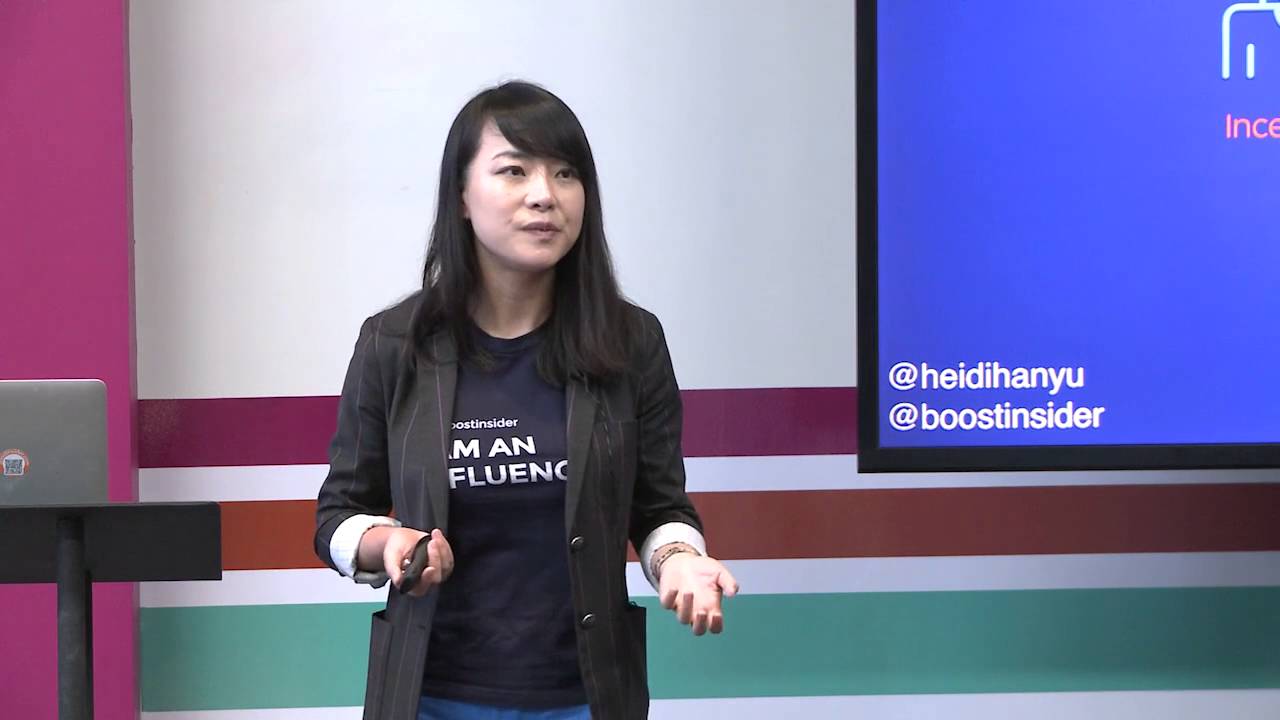
Heidi Yu breaks down three types of app users: incentive users from paid offers, non-incentive users from regular ads, and organic users from word-of-mouth. She walks through conversion metrics like click-through rate and install-to-register, then explains why lifetime value matters more than volume, using Pokémon Go's 18-month user lifespan as an example.
Chapters
So, okay, I already asked some of you guys about type of users. There's different type of users. But I'm talking about users, those are not about who they are, but what type of these users are. Like, we have incentive users, non-incentive users, and organic users. Any of you guys know those concepts? What is incentive user?
That's what, we actually listened I went to a talk last night.
Oh.
And the guy— it wasn't specifically pertaining to this, but he was explaining his company. And he was saying how word of mouth, typically that could be like organic growth. But the customers that you acquire by having an ad campaign and going all out with the marketing are typically of a lower quality and only became interested because you incentivized it. Marketing.
Yeah, yeah.
So I guess the best would be like organic could be like word of mouth.
Word of mouth.
Incentive would be byproduct, like people who found out about you through Facebook or ad campaign on TV or something like that. I'm not sure about that.
Cool. Who know what is non? Yeah, that's excellent. What is non incentive? Oh, I'm just following questions. So I don't think that if you acquire certain customers as an incentive user, you can actually transform them into organic users by providing services to them to experience. So actually, these 3 kinds of users are transformable to each other. Yeah, yeah.
I'm not sure, but is incentive user maybe the people that sign up because Because you're like, oh, 30-day free trial, and non-incentive is like just they signed up and they started paying for your service. Is that what that is?
Yeah, yeah, those are all correct, actually, when you define that different ways. Usually in my industry, I define that incentive user, for example, if I'm running ads to somebody's app, and this user, he's playing a game, and now he is stuck there, he has to pay $5, to buy something to the next level, or he have to download my app. So that moment he said, okay, I don't want to spend $5, I will just download this app.
Right.
So that time they become an incentive user, which usually the quality is really low, but sometimes some companies they want quantity, they want to have a lot of users, maybe some of the users can transfer to be the real user later, they will still try that out. So that's one of the ways when we are using ad networks. So non-incentive users, sometimes I myself, I also consider Facebook ads, when we acquire users that way, when they see the ad, they're like, oh, I might like this drink. I might like this dress. So they're like, oh, this is cool. So they become non-incentive because we're not giving them any other thing. Or give them $5. Sometimes right now people give out to have a promo code. Those are more like between those two, but somehow those are still cool, good quality users. Organic users, yes, word of mouth. And also if your app reached the top of iOS Store, other people saw it, we also consider those people, the new downloads become organic users. Just talk about what you care the most from all your users. Now you have a pile of users, Do you care about the volume, like how many people really get your app? You have 100 people downloads every day or 1,000 downloads every day? You care about conversion rate. So what is conversion rate? Anybody tell me what is conversion rate?
How many bucks you make from each customer.
Yeah, yeah, what else?
How many, I guess, ratio or rate of people that you bring on 10 people, How many out of those 10 actually buys or pays for a service?
Totally. Yeah, absolutely. What else? So you can define all your conversion rates. That's all correct. So a lot of times I define a lot of conversion rates from when people see my ads to click, called click-through rates, right? Or people click the banner or click the ads to register or download. That's from click to download rates. After people download the app, sometimes people just delete it. Or sometimes they give you the information to be registered user, so we measure that as install to register. After that, we also measure after register, any of those people really spend money with you? And how soon they spend money? And do they come back again? When do they come back? Second day or 7 days or 30 days? We also measure, a lot of times ecommerce guys, we also measure lifetime value of this user. Sometimes for my industry, Pokémon Go, we measure one guy, we get them into the door, we measure 1 year and a half, which is 18 months. So we consider that user's life with us is 18 months. How much they are spending today, this week, the whole year. So you maybe later, you guys, when you are getting deeper into your business, those might be really helpful numbers you want to measure. User quality. So like user quality just talk about like how often do they come back? Do they refer you another friend? Do they talk about you? Do they give you good reviews? Do they spend money with you again and again and again and all the time? So you want those users not only spend with you but also become the promoter. Like somebody said, content creation is created by the users to help you guys out, to be your brand ambassadors. So those are good users. Thank you.