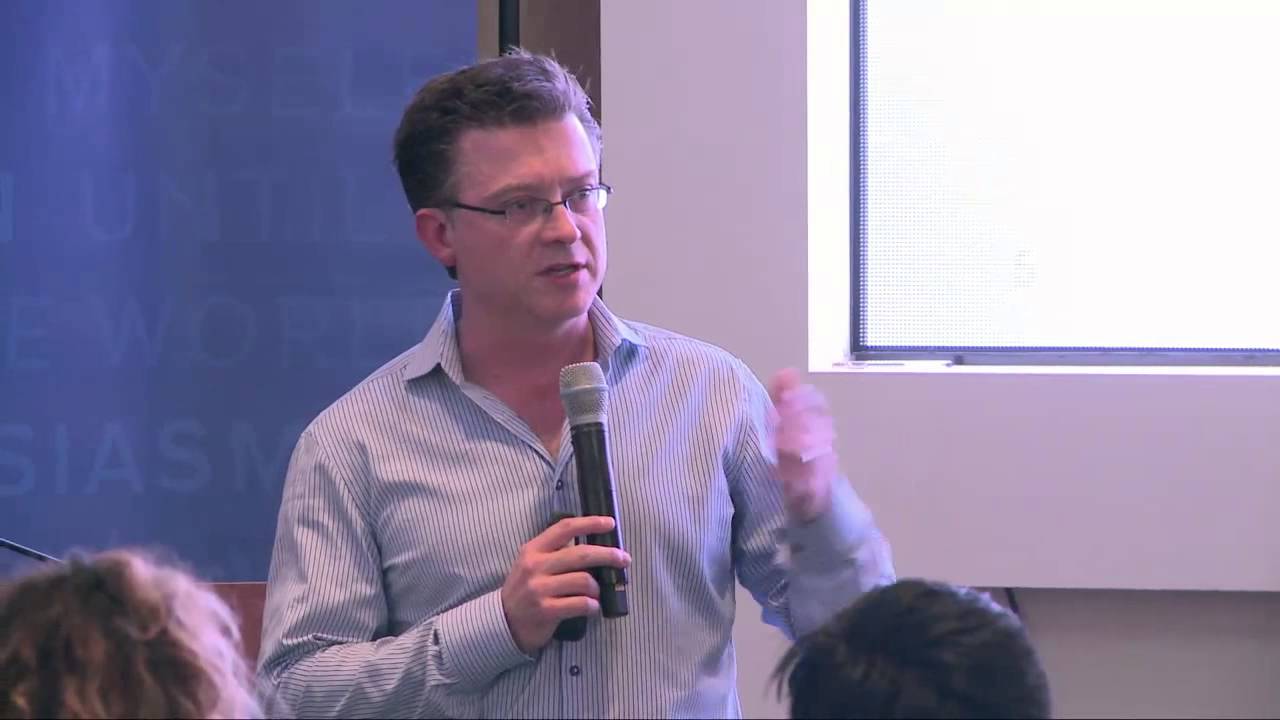
Bob Tinker, CEO of MobileIron, shares lessons from scaling two tech companies. He emphasizes the difference between building a product and building a business, the critical need to prove you can sell, and how the iPhone's launch accelerated MobileIron's growth. Hiring order matters: engineering first, then sales, then scale.
Chapters
Hi, everybody. Thank you for the kind introduction. I put together a presentation that I've done a couple times. But the quick way to summarize this is the stuff I wish somebody had told me before. So my background is I was an engineering undergrad. And then I went into IT for a bank, which was pretty brutal. Actually, my first job, I had to get senior vice president approval to get access to the internet to do email with customers. I know, it's kind of sad now. Then I moved out here in Silicon Valley in 1996 because I love technology and I love business. And it always sort of ticked me off that in a lot of industries it's a two-class system where you're either in technology or in business. And one of the things I love about Silicon Valley is the business is the technology. And we live in a really special place. A lot of people are building great companies, great products. But in many cases, as we're all on the journey to go innovate, be an entrepreneur, create value, we're all learning together. And I've been fortunate enough to learn a lot over my last 20 years in building technology companies. And I've been keeping sort of a running list of the things that I wish people had told me along the way. So I had roughly 3 buckets of things. One, there's a big difference between building a product and building a business. Big difference between building a product and building a business. And I'll talk about what the difference is. Actually, I'll jump ahead. You already got the intro. So scaling a business and taking it public. And I also wanted to spend a couple minutes on some of the soft topics that often don't get covered enough, which is dealing with people and organizations as they grow. So in a really simple way, there's really 3 things you do when you build a business. You build something. You've got people that build stuff. You've got people who sell stuff. And you got everybody else. Think about building a company. So selling it, your salespeople. Building it, your engineers and product folks. Everyone else includes me, the CEO. We're all overhead. So Larry Ellison from Oracle was famous in saying that if you're basically not an engineer or a salesperson, why are you here? That's a little overly simplistic, but as you're building a company, think very carefully as you're investing. in which bucket. You want to really minimize the ones on the right. So I want to talk about how it changes over time. And this is— so in my background, I built 2 companies. One was Airspace, which did enterprise Wi-Fi. And we went from zero to about $80 million in 3.5 years and then sold to Cisco. and became the wireless business unit at Cisco. Left Cisco after 3 years to go start what became MobileIron. And we went from $0 to $140 million in revenue in about 5 years. So there are some patterns of things that worked and not worked in going through that early stage of building a business. And I wanted to share some thoughts about sort of how that changes over time. Some of this may map to what you're doing as you're thinking about going out to start companies or build products or build businesses. Some of it may not. It's a caveat emptor. So the big things are— the first thing is build a prototype. You have an idea? Sketch it out. See what it looks like. You then build it and test the value proposition, because sometimes the idea you had either may or may not quite fit. And then this third one, which I'm going to spend some time on, Which is prove you can sell it. As you go out to raise money, as you try and build a business, if you can't sell it, you don't have a business. You just have a product. Once you do that, you figure out your sales model, it's time to go and start scaling. And this was actually the headcount ramp as we grew MobileIron in the early days. It was like 17 people in the beginning when we were trying to figure it out. Then we're like, all right, let's hire some salespeople to show we can sell it. And then, all right, that worked, so it's time to get going. We went from 17 to 35 to 65 people over the course of about a year. But you'll notice sort of how the people change in the beginning, from being mostly about engineering and product to then sales, and then a lot more sales and product. And if you look at everybody else, it was still a pretty small number. So what does it take to do this? Well, the first thing it takes is capital. So you need to raise money. I'm sure you guys have heard a lot of folks come in and talk about how to do that. I will not be doing that today. It takes a lot of hard work. I slept in the office at least one night a week for the first 2 years of the company. And it also takes some luck, because sometimes timing matters. Something happens in the market that matters. One of the things that really, really helped turbocharge MobileIron in the early days was the iPhone showed up. We started the company before that happened. But then the iPhone showed up and fundamentally transformed how people thought about mobility, using apps and data. And people started to bring their own device to work. These were all ideas we had that we were pushing. But sometimes there's also luck that comes from the outside that helps make that happen. Thank you.