Tim Draper Q&A about Bitcoin and the Blockchain 2018
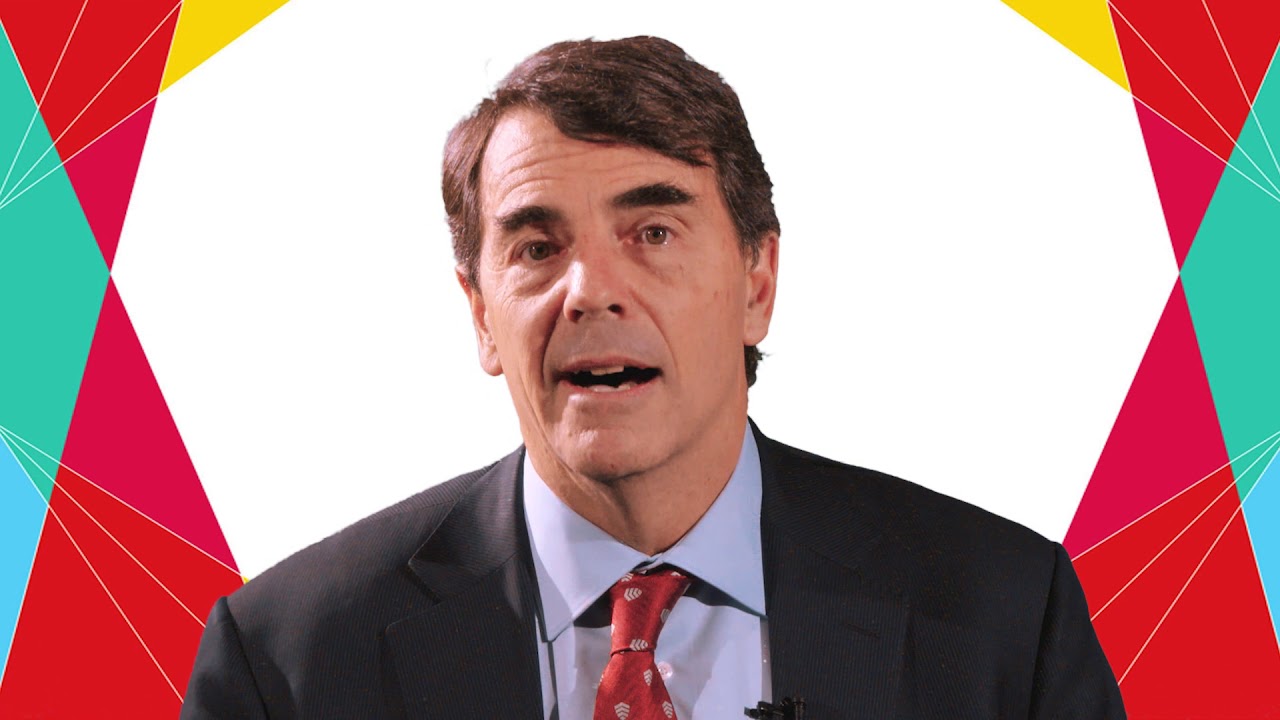
Tim Draper discusses his Bitcoin predictions and blockchain's potential across payments, contracts, and government. He forecasts crypto replacing fiat currency at retail within years, warns about risky ICOs, and cites Estonia's e-residency program as a model for blockchain adoption.
Chapters
What is the future of Bitcoin and the blockchain? Bitcoin and the blockchain have an amazing future. This is going to transform society. Geographic borders are going to fall. Governments are going to have to compete with each other. We are going to have an extraordinary time. In the next year or two, it's going to be a little shaky. Governments aren't going to know how to respond. They're not going to know how to You're going to see fits and starts, just as you have with Bitcoin over the years. Bitcoin's been very resilient. It stayed alive during a very difficult time when there was the Silk Road mess, when Mt. Gox stole all that Bitcoin. That was a mess. But still, there was a real need out there. There's a real need for a currency. that is global. There's a need for an opportunity to store value that isn't subject to the whims of some political force. This is an amazing new technology. It's going to affect industry after industry after industry. We're going to see more change coming from Bitcoin and the blockchain than we did from the internet. The internet transformed communications and information and Entertainment, and the internet had an effect on taxis and hotels. But Bitcoin and the blockchain are so fundamental, they're going to have an effect on real estate and insurance and healthcare and government. And they're all going to be completely transformed by this new technology that is So I made a prediction. Bitcoin was somewhere around $400 and it was sliding down to just under $200. And at that time I made a prediction that in 3 years, by 2018, that Bitcoin would hit $10,000. And it did. So, and the way I came about that was I just saw so much use for it and so many engineers working on it and so much energy being put into it that I knew that after a shaky period it was going to come and become a major force. I still feel it's a major force and I still feel it will be really transformative for all of us. I plan to make another prediction at our party in April where we're going to do a fabulous new event. It's going to be a block party here at Hero City. And we're going to have this big party. We're going to celebrate that Bitcoin hit $10,000. And I'm going to make a new prediction. My prediction for right now is that in 5 years, if you go into a Starbucks or a McDonald's and you try to buy a burger or a coffee with fiat currency, the person at the desk is going to laugh at you. So the way I got into blockchain. And Bitcoin was that way back when I met this great guy from Korea and he said that he had to buy his son a sword and it was for the son's birthday and it was $40. And I said, well, it must be a nice sword. And he said, well, no, it's just pixels on the screen. And I said, whoa. So people are buying virtual goods with fiat currency. And then I thought, whoa, maybe there will be fiat currency to buy fiat goods. And it got me thinking. And then I watched very carefully as games like FarmVille created new kinds of virtual currency. And then when Bitcoin came along, it was the universal currency. It was the currency for our entire Earth. And I knew that it had the potential to transform And I've been in finance all my life and I know that finance is getting disintermediated and completely transformed and this is how it's going to happen. And so that's how I got into these currencies and I think I'm very glad I did and I think they've got a long way to go. So I love— some of my favorite blockchain projects are really tied to what people are doing with this new technology. The technology can be used for data and where every piece of data can be tied to the blockchain so it can be kept in a permanent record. It can be tied to accounting. Where since the blockchain is a perfect ledger, it can take advantage of the fact that all accounting will be done without any extra special help from an accountant because it's already there. It's already recorded on the blockchain. It's going to have a big effect on contracts because I think a lot of contracts can be done through smart contracts in the blockchain. In fact, in Estonia, I worked with Thunderbeam and we created the first venture deal on a smart contract. And I think that this kind of thing will start to permeate our world and things will be much more efficient, much more effective, and just we are going to be a much more prosperous society because we don't require this huge drag on our economy that has to do with that trusted third party because the blockchain is now that trusted third party. So I think all corporates need to think about blockchain, need to learn about blockchain because First of all, I think Bitcoin may be the currency they all start trading in. Many early corporates, early adopter corporates have said, we accept Bitcoin, and it has paid off big for them. And not just because of the acceleration of the Bitcoin price, but also because they are in effect saying to a younger generation, come to our company, we are Cool. We're interesting. The reason a corporate needs to understand the blockchain is that the blockchain is tied to data. The future of data is going to be on the blockchain. It is going— because that keeps a permanent record. And that data will be evaluated and used through AI. And I think all corporates are going to have to be thinking about using artificial intelligence. If they want to be competitive in the next 10, 20 years. So people are investing both in blockchain and they are buying cryptocurrencies. And let me start by saying, if you're buying cryptocurrencies, please understand what it is you're buying. Make sure you understand that what you're buying is a movement. And if you think that movement is going to take off and be something really extraordinary, terrific. If you think that, hey, I might be able to buy it and sell it at a higher price because I hear that crypto is a big deal, don't do it. But in general, I think it's a new way of thinking. There is a corporation, and that's for the good of the shareholders. There is a nonprofit corporation that's for the good of society. And then there is the blockchain and crypto. And crypto, these ICOs, they are for the good of the consumer. And so the consumer has a new opportunity to be there and to understand a new product and to get behind a new product even before the product is launched. So I would say beware before you put your money into an ICO, but I do think it's a very good future and I think in general the governments who accept ICOs are going to also attract all the entrepreneurs of the world and the ones who shun them are going to lose all the great entrepreneurs and probably the young populations of those countries. If you want to invest in the blockchain, I think almost every industry will be in some way transformed by the blockchain. And so I think it's a very fertile ground and a great place to be. It's really an interesting time because if you have a small government, you have a small country, And people don't trust your currency. Let's say you're— well, Argentina is not exactly that small, but let's say you're Argentina. People don't trust your currency because they've lost it several times over the last 20 or 30 years. And so they're going to Bitcoin and they're saying, hey, I want a currency that I can rely on that's global, that isn't subject to the whims of some political force. Other countries are very interested in getting involved and saying, hey, we're open for business. Japan said Bitcoin is a national currency here. They attracted tons of entrepreneurs by saying that. China said, oh, we shun Bitcoin and we shun ICOs. They basically sent all the best entrepreneurs out of their country. So I think countries have a really interesting opportunity. They need to understand they're in competition for the great minds and the capital and the entrepreneurs of the world and the citizens of the world because we as humans of the Earth are pretty mobile. We can move. And we will go to the place that's the most attractive for business, for entrepreneurship, for freedom, for encouraging growth and technology. And so if you're a government official, you should start thinking in terms of how do I attract people to my country? How do I make it a nicer place to do business? How do I make it a better place to live? to operate and how do I attract them here. Now Estonia has taken a huge step here. They created a virtual government and that virtual government allowed me and others, 20,000 other people, to be virtual residents of Estonia. And so what they're doing is saying that there's— sure there's the land-based government That's sort of the old way of governing. And then there's this virtual government where anyone can compete to give you your healthcare benefits, to give you a Social Security program, to give you universal basic income or any number of different features and functions. Those can all be done virtually. They don't have to be tied to a land-based government. And so that opens up a whole new competitive environment where all of us as citizens have an— citizens of the world have an opportunity to pick and choose the governments that are right for them. And this is going to be really a major change, transformation in the world. And a lot of governments are going to try to grab it and hold on. And those are usually the ones that will fail. And the ones that are open and free and allow money to flow in and out, allow businesses to flow in and out and people to flow in and out, those are going to be the governments that are the big winners over the next 50 years.
More from Tim


He Sold His Car to Build This Startup, Then Pitched It for $1M 😳 #Startups #AI

This Startup Moves Your Crypto BEFORE Hackers Can Steal It 😳 #Crypto #Cybersecurity




15 Months Without Refrigeration?! This Startup Thinks It Can Go Global 🥥 #FoodTech #Startups



