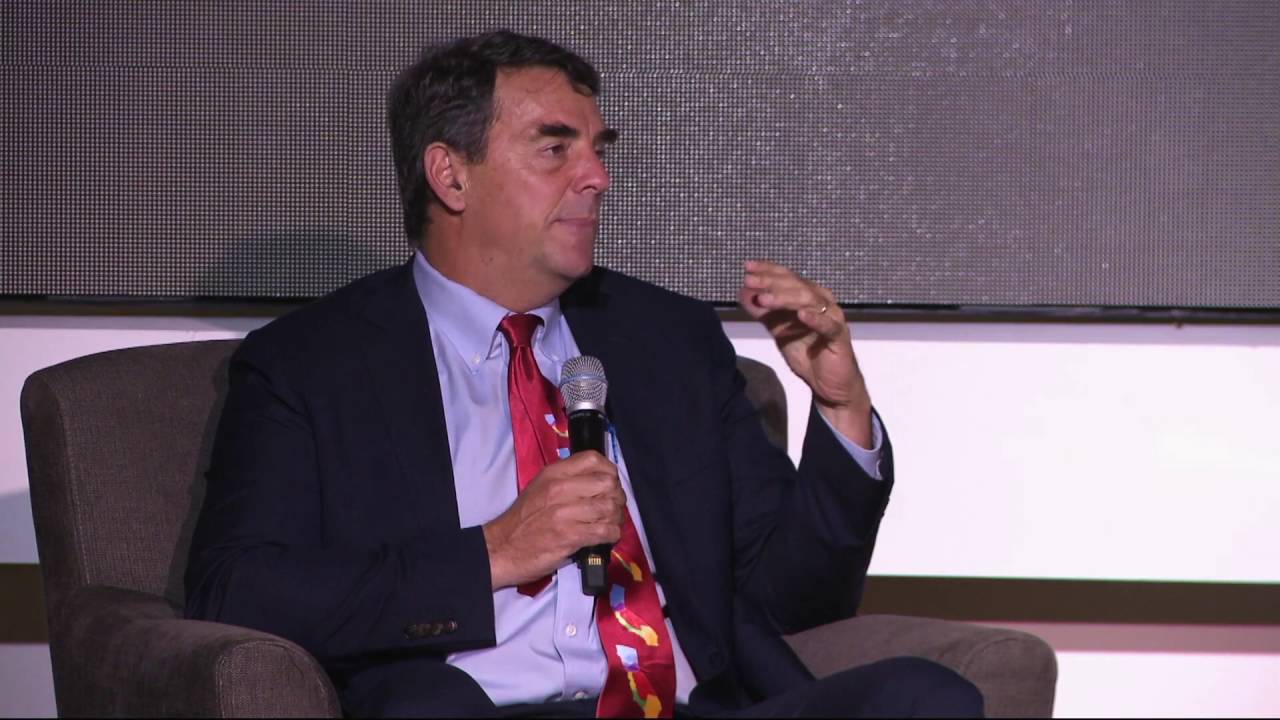
Tim Draper founded Draper University to create heroes willing to take long odds. Unlike conventional education that rewards grades and individual achievement, the program emphasizes team learning, failure as practice, and instruction from active entrepreneurs rather than tenured professors.
Chapters
Thanks for joining us, everybody. So Tim, I just wanted to have a very candid conversation about your vision for Draper University. What was your vision that created Draper University, and how do you hope that Draper University changes the world?
So my vision for Draper University was really to create more heroes. I was looking to generate an opportunity for people to come through and get that extra push that they might need to become a hero. I think a lot of people have hero in them, and they just need a little bit of encouragement to get that— to the point of being a hero. A hero is somebody who takes long odds at an extraordinary outcome. They will try something they know may not succeed, but they'll keep trying anyway because they know that it's a great thing, and if it works, amazing things will happen. And I felt like there weren't enough heroes on the planet, and I started to feel like maybe all of our education systems were setting people up to be automatons. And being just a part of a track where we really do need people who are outstanding, who break out of that mold and do interesting things. That was the beginning of what is Draper University.
Yeah, I think going off that, I know you're a big believer, and here at Draper University, we're a big believer in entrepreneurship that's actually taught by entrepreneurs themselves. And so I'm curious what you think the current education system really lacks that we are really filling in our program.
Well, so we've learned a lot in starting the school. The current education system focuses on individual achievement over team-based learning, and I think team-based learning is significantly better in many ways. And at least it should supplement the individual achievement kind of education. Focusing on an A just means you didn't make any mistakes instead of focusing on what the extraordinary outcomes could be. So we feel like people don't take enough Chances, and so we encourage people to try things and fail. If they try things and they succeed, that's even better, but if they try things and fail, we like to get that into their heads that, hey, failure is not that bad. You can fail, and then you can get back on your feet, and you can fail again, and you can keep trying until you are successful with something really great. Thank you. Existing systems are very much rigid and have been in place forever, and tenure has hurt us a lot because professors basically teach the exact same thing time after time after time, where here we have speakers and they are much more relevant to today. And maybe to the future, and they can help people focus more on what's going on right now and what the future might look like than the same class that's been taught for 20 years by the same professor. And the students also get a variety of different speakers so that they are not—
they don't feel like they're trapped in some sort of a cell going through the same repetitive In your experience with these speakers and with this model for learning that you've built, who do you think comes out with the best ideas? I'm sure our students here want to know too. Who do you think has the best ideas, and how have you been involved in these companies, whether they be one of our 550 alumni or a company you've invested in? Who has the best idea?
Well, the best ideas— are usually when people look and say, there's a big problem I want to solve. I see a big problem out there in the world. I have been affected by it. It's in me. It's in my DNA. I need to get this thing done. That problem is usually or often there because there's an established lazy bureaucracy or established big business that gets huge margins and doesn't provide very good service to their customers, or there's just— the way we're doing it now is an old way and needs some sort of transformation. I think those are where we have the best success. We've had a lot of students have come through here, 600 students. They've started something like 250 companies. And it's, in most cases, it's too early to tell whether we've got a big winner or it's going to go the other way. And then the other benefit that we have here is that we have students that have come from 70 different countries, and they are able to take advantage of local changes in their environment. You know, where China had a big move and the world really took off in China in that area, now it looks like maybe Africa or South America might have that big move. And we have students from all different countries all over both those continents, and it's— so it's very exciting. Individual successes, one from our first class, Surbhi Sarna, came up with a camera. She had a problem and they had to— they would have had to destroy her ovary to see whether she had cancer in her ovary. And she's come up with a camera that is very, very fine, runs on a very fine fiber optic that can, can go and see if there's cancer there without having to destroy the ovary. And I think that's a potential major breakthrough. And she has gotten FDA approval, and she's off to the races. And she, to this day, said— has said, I would never have done this if it hadn't been for Draper University. university, and I think we have many people that just need a little bit of encouragement to go do what they know in their heart they need to do. Thank you.