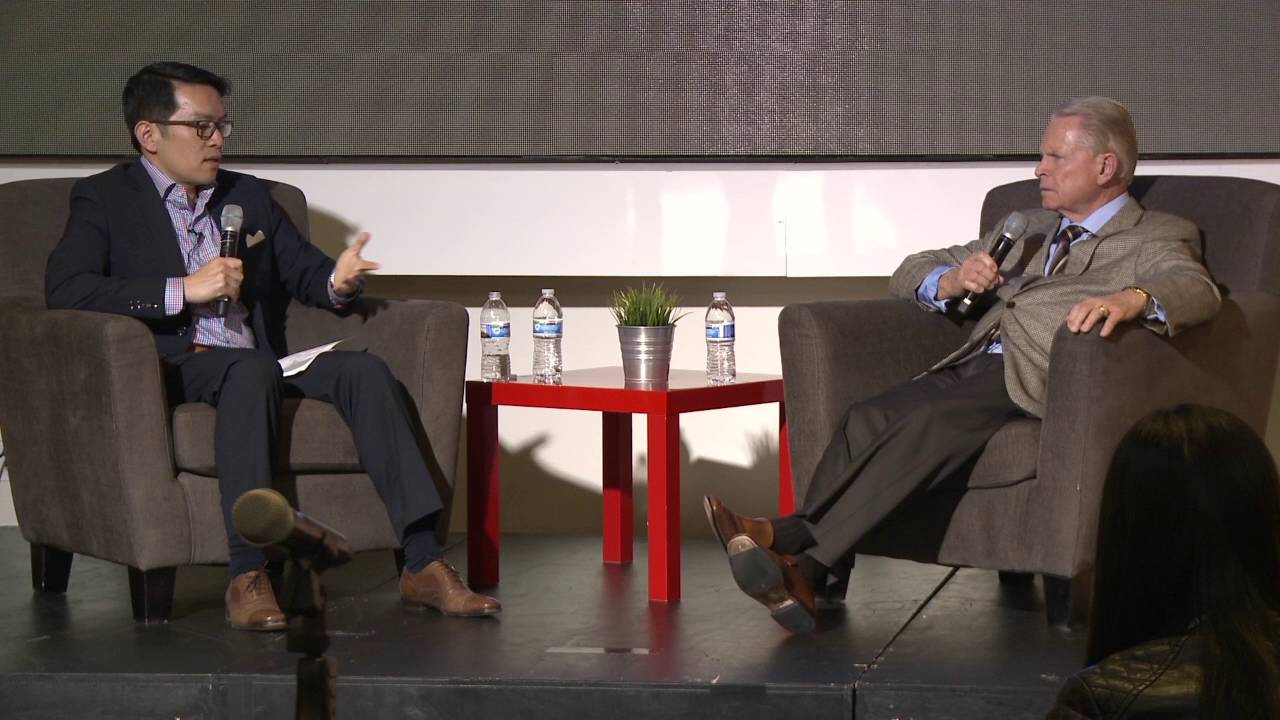
This content was created by Tim Draper. This content was uploaded by Tim Draper. This is a YouTube video titled "Transitioning into a Public Company | Ray Zinn" (posted May 13, 2016). The excerpt is an interview-style conversation between Ray Zinn and an interviewer (labeled SPEAKER A). Ray Zinn recounts taking his company public in 1994 and discusses differences between running private vs public companies, increased regulatory scrutiny and accountability to outside investors, and practical financial considerations (balancing R&D, SG&A, gross margins and operating margins) when answering investor demands versus long‑term investment in the business.
Chapters
Maybe we can turn a little bit to actually running the business. I know a lot of folks here, maybe you aspire to run a public company at some point. Now, you've taken MyCrowd public, I think, was it in the '90s?
'94.
'94, right. And can you talk a little bit about that experience and how maybe running a— the differences between running a private company versus a public company and kind of the things that you learned over that period of time?
They're not a whole lot different. There's some more regulations and things you have to do when you run a public company, but they're very similar. You still— the techniques you use, the policies and procedures that you have in place will be the same. You'll just have more scrutiny because now you have outside investors. As a public company, you're going to answer to the public because that's who owns your company. So if you're private, you still have the same issues to deal with, employees and turnover, and you have a board of directors because you report to the board. And when you're public, it's the same. So we went public 16 years after we started the company. And the reason we didn't go earlier is 'cause we weren't ready. In other words, you know, you have to be ready to go public. So when you decide to go public, you have to be prepared to deal with all the issues associated with being a public entity. You know, it's no longer private and you have to deal with all the rules and regulations associated with being public. Being public. A lot more restrictions, a lot more limitations, and a lot more people to answer to. So I don't see a huge difference. It depends upon what your endgame is. If you want to remain as an entity as opposed to being acquired, being public is fine because you have a continued source of revenue, I mean, of people who will invest in the company. And there's a lot more runway with it if you're public. If you're private, at some point you're going to have to either be merged or acquired in some way in order to cash out, as you say.
Right. And I think you mentioned kind of that scrutiny. Certainly being a public company, you have to meet the demands of investors, Wall Street. How do you balance those demands versus investing in the business, maybe investing in research and development and thinking for the long term versus sort of near-term profitability that public investors might require from you?
Well, there's a structure that you have to meet if you're have competitors, and so you look at what your competitors are doing, look how much they're spending on research and development. If you don't have some level of research and development, it's hard to grow your business, 'cause you have to keep replenishing your product line. So of course, the limitations in research and development affect, or the amount of research and development affect your bottom line, because— You have gross margin and then from there you go to your operating expense. So you have R&D and then you have SG&A. SG&A's kind of fixed, you can't do much with that. So the amount of R&D you do depends upon how much you can afford from how much your gross margin you have that allows you still to be profitable. So if you're, SG&A is running, you know, somewhere in the neighborhood of 15%. Your gross margin's gotta be greater than 15% or you're not gonna do any research and development. So your gross margin should be in the range of 50%. If you want at least a 10 to 20% operating margin, you know, you're gonna have to have a 50-plus percent gross margin to support, you know, R&D in the 15 to 20% range.
Right. No, that's really helpful. And we just had a session regarding sort of some accounting and finance basics. And there has been a lot of questions about what do you think is a good business. And I think that's a really good background from someone who's actually operated a business and ran a multi-centimillion revenue type of business.