Trust might be the most valuable currency in crypto.
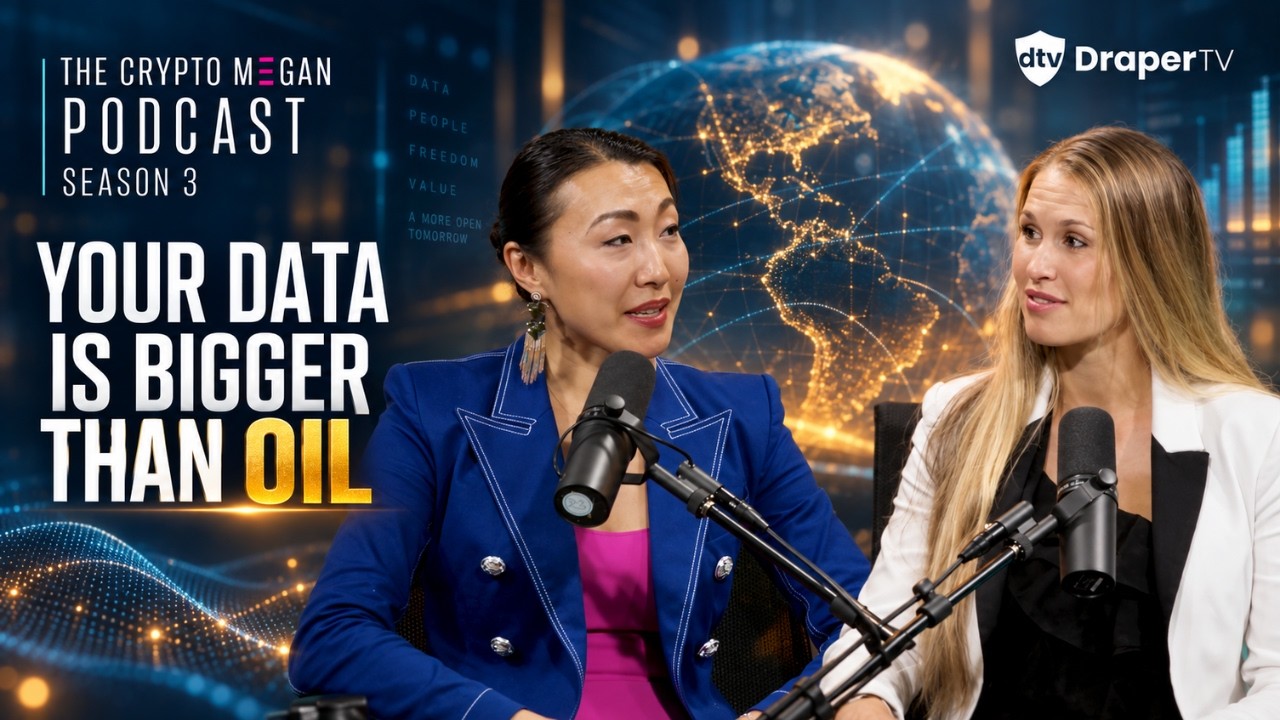
A Coinbase breach exposed how one insider can steal millions of records from centralized systems. Cyph's solution gives each user a decentralized vault for their data while still letting regulated companies verify identity for compliance. It's a hybrid approach: your data stays yours, but regulators can access it when legally required.
Chapters
Data is, is now bigger than oil, right? It's, or it's, it has the potential to be much more valuable than oil. And whoever's got the backdoor to this, so we talk about this a lot in AI, um, the, the, the backdoor is the people who own that data are gonna be the world power. Tell us a little bit more about what happened with Coinbase and if that could have been prevented if they had a system like yours. Yeah, that's, uh, I, I mean, I don't, I don't wanna say bad things about, no, but Brian Armstrong, he, he came out and said, look, we're not, this was a mistake. We're, we're trying to fix it. It is that middleman link, right? And just to— it's a little bit off on a tangent, but I like to try to come up with things that the audience can identify with. And it's sort of like a SIM swap too, because there is that sort of middleman or the person in the middle that's the sensitive spot, the weak link. And they were able to be bribed and they can give the data out that they have access to. Why do they have access to it? There's so many questions here. So then let's examine the Coinbase case. So what exactly happened with Coinbase?
So my understanding is they have somebody helping to manage their support who has access to a whole bunch of customer records, um, millions of customer records. And, uh, and this is me paraphrasing, I don't have the full amount, but this is some of the information. But I believe that somebody ended up bribing somebody in customer support, and that allowed them to get access to a lot of customer records at once. That's, uh, one of the ways that that's happening is there's a lot of people that have personal access to personal information, and then that information is something that can be very easily sent over to bad actors. And so it's, you introduce a lot of different links in the chain, and all these different links, they can pretty much take that information and send it out much easier than you would expect. So what we try to do is, first of all, we give users, we issue users their own decentralized vaults, and that keeps their information. So, they fully own and control that data. Now, for compliance reasons, you do have to show, as a company, that you've gone through those steps of verification for a KYC or a KYB.
Right.
So, you do have to be able to point to the source data, but the way that we give access to that data is highly controlled. There's a lot of security built into that. The way— there is really no way for the companies to kind of download a central database of all these different records, you may be able to potentially get one or two, but it would be quite a lot of effort to get everything all at once. And even the one or two, there's a lot of ways you can kind of secure that as well.
Right. So, just some added layers of security that would be— make it much more difficult to do what was done with Coinbase, for example, or in the SimSwap hack, because you do have employees that you're dependent on for that data in the middle. And as compliant and as secure of a company as you are, if you've got that sort of weak link in the middle of all of this data processing, it makes it vulnerable. Yeah.
So, and there's 2 things I'll actually add to that as well, because there's, there's a balance that we're trying to achieve with all of this. Because why do you even need to have that data to begin with?
Right?
Because from a compliance and regulatory perspective, you're trying to prevent financial crimes. Now, a few years ago, there were a lot of things happening on exchanges that, that weren't that weren't great. And there's a lot of regulation out there to really protect consumers and to really protect the financial system from having, you know, bad actors do different things with money. That's why KYC exists. Now, it's not, it's not perfect, and it requires a lot of information from people being revealed.
Right.
So, that's where it's— what we're trying to do is, that evil's out there, right? Like, it's, You have to, for better or worse, to be compliant with these governments, you have to show your information. You have to share that data.
Right.
Now, how do we make that much more secure? How do we make that easier? So, on the one hand, we're trying to decentralize everything, give control back to the users. The way that we're doing that, that's being done today, is that you have oftentimes a middleman, and sometimes there's another middleman, the middleman.
Yes.
And then there's a support agent somewhere. And they all have access to this data, and it's sitting in so many different places, all of which can be breached. So we are taking that away and giving it back to the person who should have it, which is the user. And then we're giving very strict access to certain parties in certain contexts.
Right.
And then the other thing that we're trying to do with all of that is making sure that, as a user now, you have this information. You shouldn't have to go through the KYC over and over and over again and have your data just kind of Continue to sprawl out across different platforms and different middlemen each time.
Right, yeah, yeah.
So now you can use the same data and you can reuse that. And if you need to do through a— go through a KYC process again, 'cause maybe your passport is expired, then sure, you can do that. And that will be issued back into your own vault.
So in your own govern— like, so you have control of your data now.
Yeah.
That is, and like you said, the balance, that's really powerful because it's still kind of going with the Web3 ethos, yet Now we've got some sort of layer in between that the user can have sovereignty over their data and decide who sees it and when. But there will be also the compliance part where if certain parties need it for certain reasons, it'll be there. But it's not just sitting on a server ready to be potentially hacked or somebody to get access to it that shouldn't get access to it. It's a much better system. And this is what I refer to as like a hybrid, right?
Yes.
Because there's the Web3 people and then there's the Web2 side and there's the compliance and regulatory side. We need that side to grow in this space, to scale, to go forward, to Protect from those, against the financial crimes. So yeah, there must be a balance. Can you walk us through exactly how it works with Cyph?
Yeah, sure. And one other point I'll actually add as well on that is, because we are talking to a lot of Web3 folks, is that the question is, well, why not ZK? Why not zero-knowledge proofs, right? Um, and that, I think, longer term, that's where I think we should move as a society. But for purposes of compliance today, that, that really doesn't work for regulators, because they'll look at that and say, that's great that you've verified to yourself that these guys are, you know, compliant, that you've done all the ID checks, but we don't trust that. So, we actually need to look at the source data. So, there's information that still needs to be retained, which is why there's still a little bit of a hybrid approach here, which is information is still being stored, but in a, in a decentralized way. To answer your question about what exactly we're doing, so, When you go through KYC or KYB process, there's usually a database that the government maintains, which has a source of IDs, right? So let's say, for example, your passport. US government has a database of passports. What you want to do in that process is, as you're onboarding, you want to verify this person is who they say they are, that they are kind of a legitimate person. And then when that person who's actually going through that onboarding is the person who matches that passport. This is very basic stuff.
No, that's okay. We wanna hear it simply, break it down so the average person can understand.
Yeah. Yeah. So a lot of times what you're doing is you're taking an ID, you're doing some kind of a selfie liveness check to make sure that it's, you are that particular ID. And there's a lot of kind of deepfake protection.
Oh yeah.
It's a whole nother—
It's a whole nother, yeah.
That's a whole nother—
Rabbit hole to go down.
Yeah, yeah. But there's sort of an AI versus AI thing going on right now, which is deepfakes are AI, and then there's AI to help prevent deepfakes. And so there, there, it's, it's getting great.
Yeah.
Yeah. Um, bit of Darwinism going on there. But so you basically have ID, you're verifying who you, you are, that ID, and then that, uh, ID. And once you verify that you're that person, now you're being checked against a bunch of databases where, um, if say you're on some kind of sanctions list or you've committed a bunch of financial crimes and you're a known person who's trying to do money laundering, right? Or there's kind of like behaviors that are indicative of that. That's where the regulation requires that we're doing those checks and that we're making sure that there's nothing kind of illicit, like truly illicit going on on somebody's platform.
Right, which you wouldn't want. And it's essential that we understand that in the space and that we embrace that because We need that to go forward or else we're gonna just kind of be siloed and we're not gonna be able to scale and reach that mass adoption sort of target that we wanna hit where this is everyday life. So in order to make this everyday life and seamless, we need to be able to integrate those sort of mechanisms for protection, for regulation, to make sure that it's compliant, yet not in a way that is, you know, coming back to the user in a bad way, right? So they're having a better experience, their data is more protected.
More from Tim


He Sold His Car to Build This Startup, Then Pitched It for $1M 😳 #Startups #AI

This Startup Moves Your Crypto BEFORE Hackers Can Steal It 😳 #Crypto #Cybersecurity




15 Months Without Refrigeration?! This Startup Thinks It Can Go Global 🥥 #FoodTech #Startups



