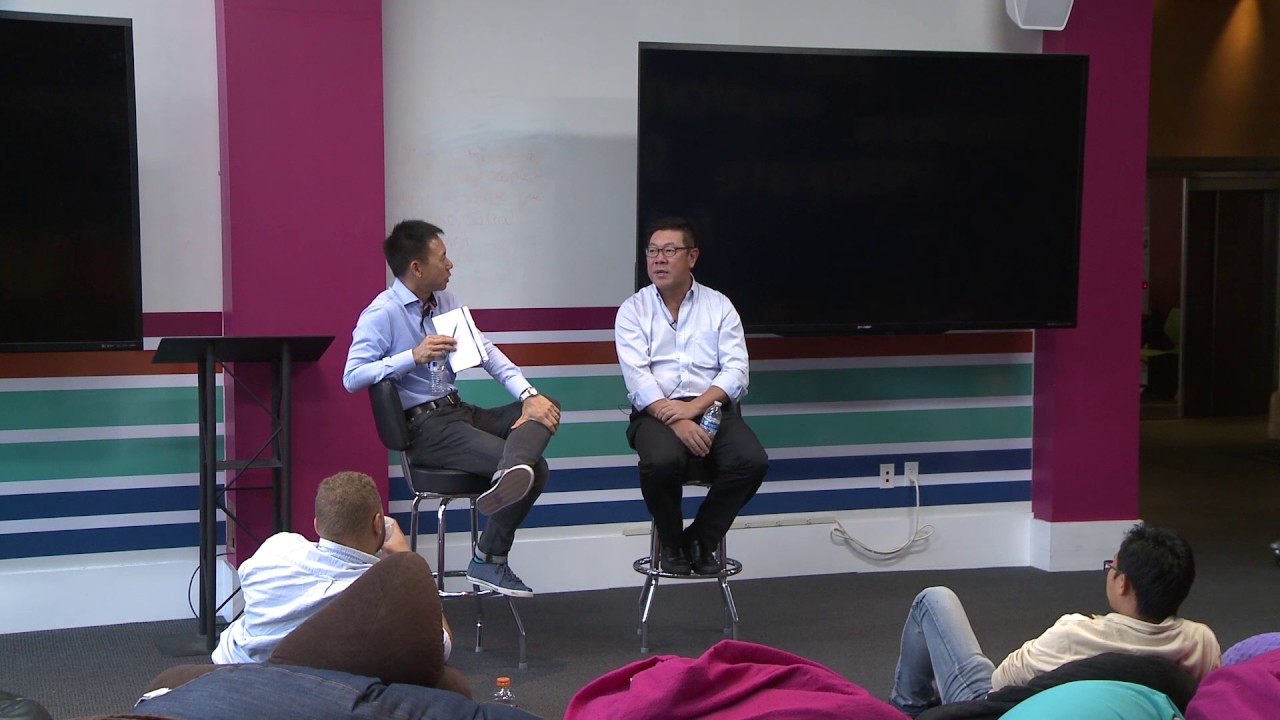
Michael Li founded Tsing Capital in 2001 with a $13 million fund to invest in sustainable technology in China. The 2005 solar boom delivered strong returns, but wastewater treatment taught him that low-margin infrastructure doesn't work for venture capital. By 2008, his $240 million fund attracted corporate partners like BP and ABB to help scale hardware ventures past the pilot stage.
Chapters
Yeah. Yeah. So tell us a little bit about currently what you're investing in, what kind of sector strategy, you know, Ching Capital. Maybe tell us a little about Ching. It's truly the— I think it's one of the first sustainable investing funds In the world. And it's probably also the largest venture fund that focuses on sustainable investing, right?
Yes.
So maybe tell us a little bit about Ching Capital. And by the way, full disclosure, in my previous job, I actually invested in Ching Capital. So it has been a successful investment for us. So maybe tell us a little bit about Ching Capital and then the sectors you're currently covering and what you're looking for.
Sure. Yeah, Tsing Capital, we started in year 2001 together with my college, which is a leading engineering school in China called Tsinghua University. Even nowadays, Tsinghua is still a small shareholder of Tsing Capital. We were, you know, as Andy mentioned, we, We started with one main theme, which is sustainable development. So, you know, back then in year 2001, when we talk about sustainable development—
Not very sexy.
Not very sexy stuff. You know, people can think of, oh, environmental protection. That's how we started. But it was necessary for the country because China became the world factory around the year 2000. Albert talked about that. And then we realized this is the country that's going to face a lot of challenges in environmental issues. And also we're going to face a lot of challenges in energy supply and all that. So that's, that's, we, we made that, you know, our initial markets. So we started our first fund was really humble start, only $13 million, $13 million US dollars. But we have a few pretty reputable investors. One of the first investors is called Asian Development Bank. And the other one is Hong Kong's Kaduri family. It's one of the richest families in Hong Kong. They own China Power and also own the— the Peninsula Hotel. And then we stick, we weren't sure after a couple years, because of the market size was very small, even the government didn't pay much attention. And there was law enforcement was not there. And certainly companies are not paying attention to that environment issue at all. So we were, we had our doubts. But we thought we should give it a try for another 3 years. So at the anniversary of 5 years, if the market does not take off, we need to think whether, how we're going to pay our monthly rent next time.
Typical startup issue.
Yes. Happens to a startup fund. Exactly. Again, I think it was until the end of 2005, we start to see the light because back then renewable energy came to play. Started with Europe, especially Germany. Germany was pushing very hard on PV, and the Chinese startups are doing extremely well. Started a couple of them by Chinese returnees and all that. So that's, That's when we start to see the lights, and we were kind of lucky to invest in some of the early high flyers in the PV industry. Our second fund is about $50 million, still a modest size, but—
But you start seeing the 4x.
Start to see the, yeah, So the return profile started to change a lot.
Sure.
And also, even though we made the investment, our first fund made a few investments with a small chunk, but they actually generated very impressive return because the government back then in year 2005 started to pay attention to the environmental protection. And all of a sudden, environment protection markets started to grow rapidly as well.
Renewable energy investment historically has been associated with capital intensity and lower cash-on-cash multiples. So in the early days, were you able to prove out the business model that these type of sustainable investment could also generate large cash-on-cash returns?
That's a really good question. This is one of our biggest challenges for the The sector. The sector. Cleantech, so-called investment, what we call it 1.0, which I've seen similar comparables in the US, and almost all of them fail, just because, mostly because of the reason that you mentioned. It's very CapEx intensive, and the growth trajectory is unpredictable and heavily reliant on government subsidies and all that. So we actually try to avoid that, you know, since Fund 2.
Right.
We start to pay attention. This is some of the business models we should definitely avoid. For example, wastewater treatment. This is a very popular sector which attracts a lot of capital. mostly state-owned companies. But really, it's not a suitable area for VC capital to play.
Right.
So, you know, we avoid all of that. We don't want to get involved because, you know, it's very stable return, give you like 11%, even leveraged returns probably 15%, 20% in the range. This is far from, you know, what our expectation is. And also, It's a regional business. Relationship is the key.
Hard to scale.
It's hard. It's really difficult to scale. And also, it's basically the core competition will be the cost of capital, which is not to our favor.
Different asset class. You might be like a fixed income, this would be great, very predictable.
Exactly. State-owned company, they have their cost of capital, let's say, less than 2%. Our cost of capital is easily North of 6%, 8%, right? So there's no way you can compete in that sector. So those are the lessons we learned.
And you adjusted as a fund, as a pioneer in this asset class, right? Your initial proof of concept that works, and then as Fund 2, Fund 3, you actually had to fine-tune your investment strategy To continue to be the leader in the space.
Yes. Yeah, well, that's, you know, that's something we took really hard time to learn. We also paid our lesson as well initially, but we realized, I think we are pretty lucky that we realized that issues a little bit ahead of our competitors and competing funds and all that. So in year 2008, we managed to raise our Fund 3, which is $240 million, which is a decent VC fund size. We have a lot of strategic investors, so to speak, in addition to the financial investors. We have, you know, Andy mentioned, we have ABB, we have BP, we have BASF. We have Applied Materials, EDF, probably a dozen of Fortune 500 companies. Those are investors you usually don't find in other typical VC funds. And we also have a very unique group which consists of what we call development financial institutes, called DFIs, including World Bank, IFC, we have Asian Development Bank. We also have a development bank from Sweden, Holland, Japan, Canada, and Norway. There's a bunch of them. So those are very strategic to us because the focus we're in. And the other value they can bring in, which is for the market we focus on, most of the startups that we invest, they are somehow manufacturing related. So one of the major issues for you to be involved in a manufacturing business is it poses a significant risk in scaling up. It's, you know, compared to software. Software and internet service are totally different play.
Right.
So that's, People don't realize that until it's too late. They easily jump on, say, I have great lab results or even great small pilot results, then I'm happy to scale up, spend hundreds of millions into the equipment, only to realize that those equipment don't really work at that kind of scale. That's how, So many ventures here got burned out and died and all that. So that's kind of a risk that we pay very close attention, which is also we're hoping that our strategic investor can bring us a lot of knowledge because those companies—
They have the scale.
They have the scale. They've done that many times before they realize that issue.