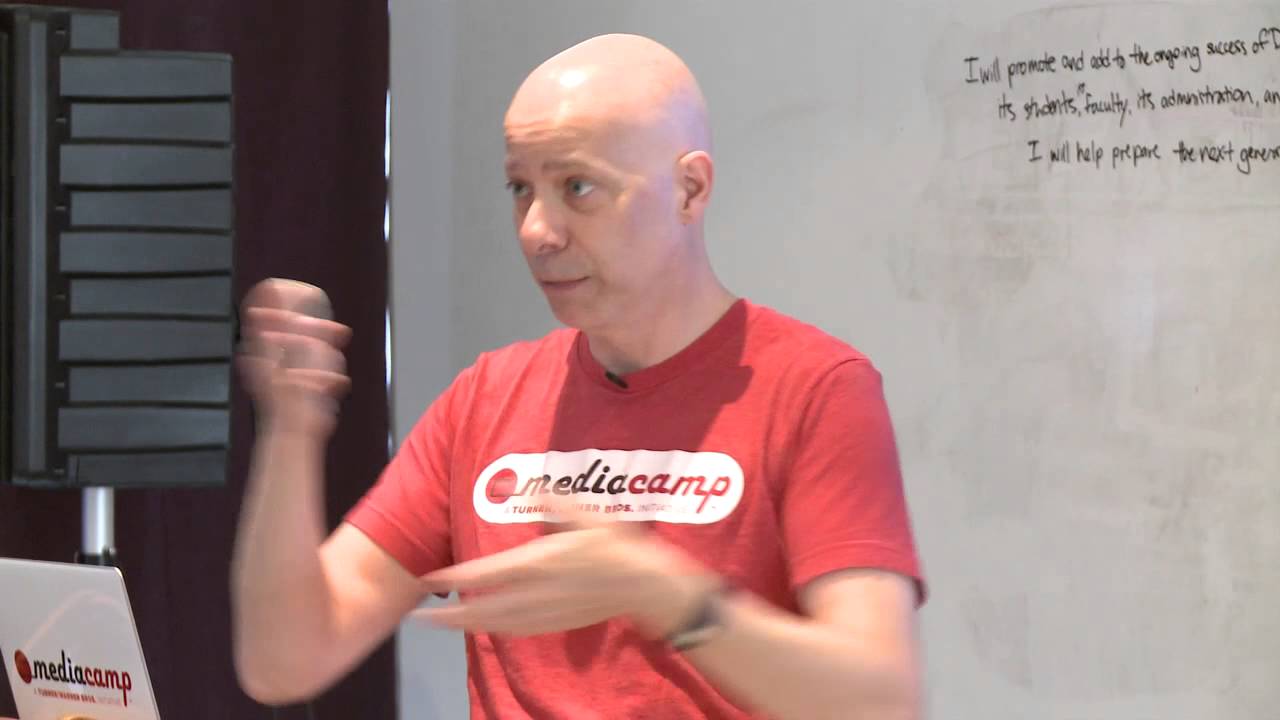
Dave Austin explains why startups obsess over minimal viable products when they should focus on minimal viable features instead. He draws on his Apple experience to show how context and breadth matter more than shipping fast, and why "whole products" beat feature lists.
Chapters
I want to talk about whole products and what I mean by whole products. Everybody knows who this is, right, behind there? Whole products for me are a way of thinking about product. When I was at Apple— and I'm sorry, I'll probably say that like 3,000 times because that's where I learned, that's part of my DNA— when I was at Apple, what I was taught and what became very valuable to me and also valuable in startups and how I try to help entrepreneurs is to think about the whole problem, not to think about a part of the problem, not to think about a feature, but think about a whole problem and a whole product, which means thinking about every single aspect of it from the beginning to the end, from the interface, from the design, from the coding, to think holistically about what you're trying to do. Obviously, you're gonna focus and do specific things at different times, but to think holistically is really, really important. If you can't step back and look at the whole picture, you don't know whether you're necessarily focusing on the right thing. or the most important thing. So to me, whole products are extremely critical. An example of that was when I was at Apple. I actually approved— remember these things? They had these things in the stores where you actually go up and take them and go to the register and buy them. They're these things called boxes. You may have heard of them. Software used to be sold in boxes. I used to approve the box copy. What was written about Keynote on the back of the box, I approved. I wasn't in marketing. I wasn't a copywriter. But I was assumed by Steve, because he thinks that people who own products own the product, to worry about every single bit of detail about the product. What that meant was I got it. I mean, I lived and breathed it, and I thought it. And it made me think about it from a broader perspective than just, I'm trying to build this product, worrying about how many bugs I get, and getting it out the door. I thought about it broader than that. I thought about it short-term and long-term. Yeah. Because when you have that kind of interest, you think about things differently. I think it's really important. And I think we've— I see a lot of startups now where they think about this thing, but they don't think about the longer term. To me, it's all about context. You guys will never guess who this guy is. If anybody does, raise your hand. Breadth and depth. Having context about a product— this is what I think about whole product— is really important. It's both breadth of understanding the market, understanding the product, understanding how people will use it, but also depth. A conversation I had with my boss one time, I remember we were on an airplane and I was talking about how amazed I was by how much he had context and depth and breadth across so many different kinds of products and so many different things. And he said, that's really great. I have like this much compared to what Steve has. Because what the difference, I think, what's really interesting is they each were really self-aware, and I try to be as self-aware as possible, of knowing what I didn't know and what they knew of what they didn't know. I remember being in a meeting with Steve where he said, oh, this is back in the early 2000s, we were doing all these products, all these iApps, like, I really don't know what's going on in the TV space. I don't understand it. Steve in a meeting saying he didn't understand something, which I thought was really interesting. But I need to know more about that. And so he went off and that's where Apple TV originally came out of. But the fact that what it was is he actually realized he had a hole in his knowledge base and he proactively went and did something about it. I think that's huge. So if you're thinking about a whole product thinking, you need to really get context. We can talk more about that. I want to talk about MVP. So somebody mentioned that earlier. Everybody knows who that is, I'm sure, but maybe not. I think we oftentimes— and I see this with startups a lot— is to think about what is minimal, what's viable, what's product. And we think about— I see a lot of minimum viable features, lots of what I call MVFs, which are great. And there's some startups doing that, and they get seed funding, and they do stuff, but they don't go anywhere. They plateau, they stop, because they're not thinking about product. They're thinking about this one little problem space versus holistically about the whole space. So I think it's really, really important to think about not— people think about minimal, but they forget the viable part. And they think minimal and viable, that's great, we got this thing, but they forget about the product part. You gotta think about all 3. And more than likely, you're not gonna get there on your first iteration. That's cool. But realize it's okay as long as you know it's on the path to where you want to get to and you don't forget where you're trying to go. If you only think about that one thing, again, it's context, you can potentially go off. You're going to go off and you're going to zigzag to get there, but you might zig farther than you wanted to and your zag might be unfundable or you might not have enough cash to get your zag back.