Tim Draper answers questions about venture capital and startups, covering whether VCs back founders after failure, timing trends like blockchain and IoT, and how to build globally from outside the US.
Chapters
Hasan. Hi, Hasan. Salaam.
I'm from Turkey.
Oh, shit.
Yeah.
I don't know the Turkish for hello, so—
Merhaba. Merhaba.
Merhaba?
Yeah.
Merhaba. Okay, I'm gonna try to remember that.
Yeah.
I know one word in every language. It's only when you reply that I get in trouble.
But it's a start. So my question is, you mentioned Hegel, which is actually great. And actually, he should set a great example to entrepreneurs because he says, fear to make a failure is failure itself. So actually, we should take an example. But from VC point of view, you said more than 80% of companies you invested fails, right? And so this means even if we get invested by a VC, we have a quite high chance of failure. And then how would our chances of getting invested again after failure would be? So do you invest, or would you invest in a company that you invested before and failed? Would you invest in that company again, or that person again? So what determines your criteria on reevaluating a person who failed before?
Well, you know, the, the right answer is yes, of course I would. But, you know, I invested in Travis Kalanick, the Uber founder, in his prior company, Red Swoosh.
Wow.
And Red Swoosh didn't work out very well. Me and Michael Arrington both invested. And Travis came to us quite close to the end of Red Swoosh and said, I have an investor who wants to buy your shares. And we said, wow, awesome, because this thing's going nowhere. Let's sell them. And the investor turned out to be Mark Cuban. And Mark Cuban bought my shares and Arrington's shares in RedSwash. And 2 weeks later, Travis sold RedSwash to Akamai, which he hadn't told us about. And Mark Cuban got all the upside. So I kind of thought that was shady, let's say. So when Travis came and said, do you want to invest in Uber? Absolutely no way am I going to invest in your next idea. So I didn't, which of course was a big mistake. So he screwed me and then I screwed myself. And so I think the true answer isn't yes or no. The true answer is it really depends why someone failed and what they learned.
Right.
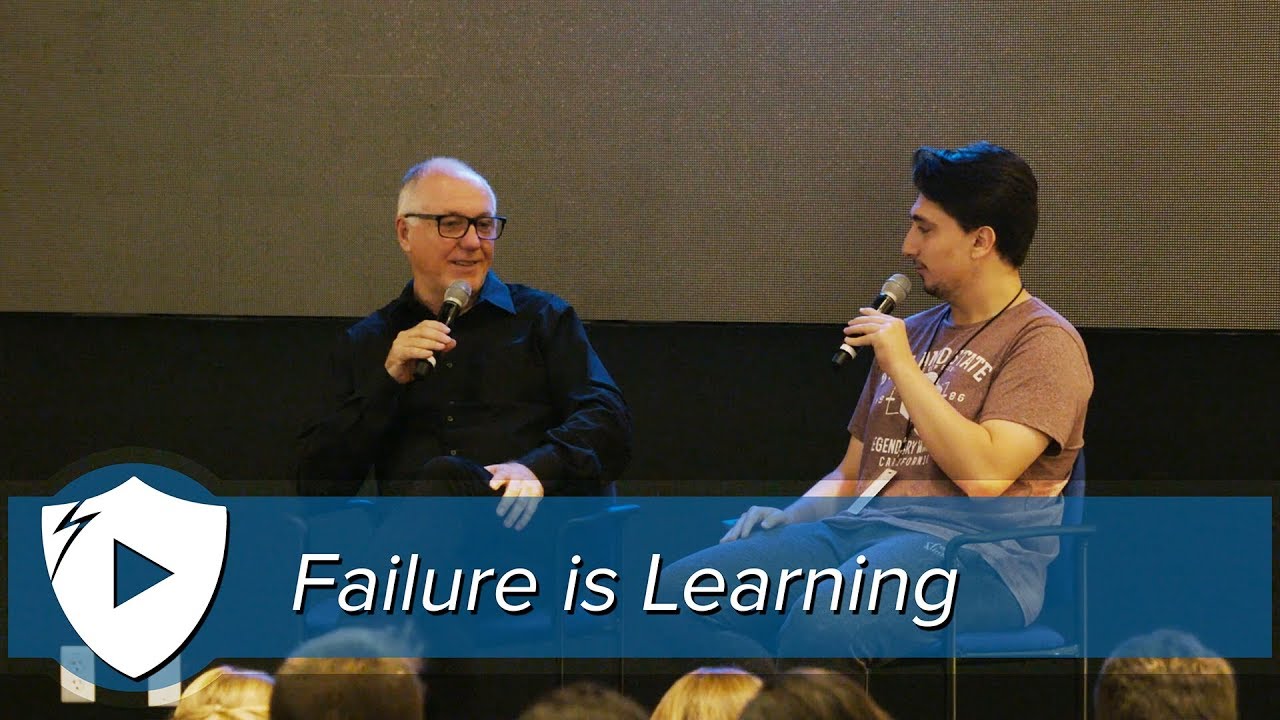
It's fine to fail. Culturally, In America, it's extremely fine to fail. Culturally in England, it's much harder to fail. So every culture is different, but I think there is an understanding that failure is learning, but then you've got to say, well, what did you learn? So it's very specific to the person and why they failed and what they learned. Yes.
Okay, thank you.
Okay, last one.
Hi, nice to meet you.
Hi, Luis.
All right, so—
I wanted to say, ¿cómo estás? Thinking you might be Spanish, but you could be Portuguese or anything else.
I'm from Mexico, so you're right. But anyway, so my question is, so you always talk about— you're talking right now about waves and trends and how we have to have the right timing to be early enough for the product to be viable and kind of groundbreaking, but at the same time not to be too late so everyone can kind of take us over. or it's too obvious. But most of us right now, we're not from the US. So we're going to go back to our home countries where you have all these global trends that, as you said, are blockchain, Internet of Things, all these different trends that even though they're global trends, our same countries don't have the technology or the systems or just the foundation to be able to catch up with these trends. So what would be your recommendation? Should we kind of take the context of our own hometowns and try to work around those, or should we try to take the context from, you know, the world trends and try to take them back to our hometown, or what would be your idea on that?
Well, a lot of— the answer depends a lot on your own ambition. If you want to build a business and support yourself and an employee base and a family, using your home base and doing something organic is completely rational and sensible. If you want to do a venture-scale business, you have to start with the global trends and figure out how they apply globally. You know, think of Skype. Skype— Niklas Zennström, who did Skype, was from Estonia. Not a promising place to start a global startup. at that time. But he did, and he succeeded. And the reason he succeeded is because the internet had made everything global. So it didn't matter that he was in Estonia, as long as he built an application that everybody wanted and he could get it to them, he could build a global business out of Estonia. So I actually think Silicon Valley is— and the blockchain really accelerates this— is going to be part of a much flatter world. where you can do globally ambitious ideas from almost anywhere. So it really depends on the idea and the team and the applicability to the trend.
Right.
So I don't know if I'm answering your question, but I think the answer is, who do you want to be? And then pick the right strategy for who you want to be. And if you, you know, a big part of me wants to be back in my hometown in a beautiful little house looking at the ocean, you know, and another part of me wants to be the next big thing. And we all have both elements in us, by the way, all of us. And it's really choosing one and then going for it. And it has to be genuine. You can't fake it, you know. It's— I think the second thing is you have to genuinely have some passion for the thing you choose because it's going to be really hard. And if you aren't actually driven— I won't name names, but I have this founder. He's a German-born, Scottish-educated guy. And I've done 3 companies with him, but I didn't intend to do 3. I intended to do 1, but he kept pivoting. And he pivoted at the point it got hard, not because it wasn't working, but because it was hard.
Yeah.
And he said, wow, this is— this is what his first one was called. It was doing delivery from local stores to your house. And now, which, which now, by the way, is a common thing. He was very early in that, but it got hard, so he stopped. His second one was putting beacons, Bluetooth beacons, on tables in restaurants and automating the menu coming up on your phone when you sat down at the table and making it possible to order from the kitchen at the table without standing in line. As soon as he realized it was hard to place the beacons, he pivoted again to a completely different idea, and then he ran out of money. So there's something to be said for determination and passion and not giving up. There's always— pivot's fine if it's the right thing to do, but not because it just got hard. It should— you should pivot because it isn't going to work and not because it's hard. And for that, you need passion, enthusiasm, and Determination when it gets hard. So I think what the idea is has to be 100% about you. You have to really believe in it.