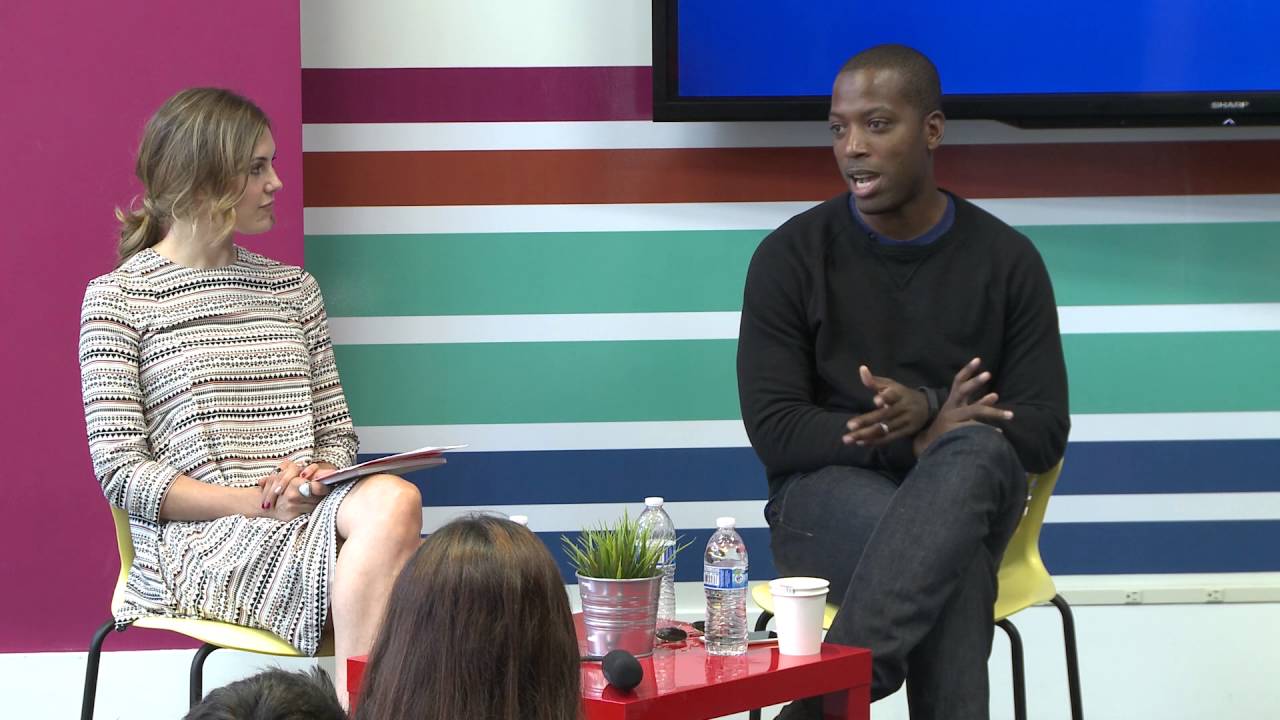
In this interview, Tristan Walker reflects on his formative nine‑month stint at Andreessen Horowitz, where he learned to focus on problems he is uniquely qualified to solve rather than chasing generic "10x" ideas. He shares two core worldviews that shaped his entrepreneurial path: first, that American culture—particularly Black, Latino, and Asian influences—drives global trends; second, that mainstream retail neglects the needs and representation of people of color, illustrated by a vivid anecdote about a poorly stocked, stereotypically packaged product on a CVS ethnic aisle. Combining these insights, Walker founded a health‑and‑beauty company explicitly designed for people of color, positioning it as the "Procter & Gamble for the majority demographic" rather than a niche player. He expands the conversation to broader socioeconomic issues, citing the widening income gap, the role of technology in amplifying productivity disparities, and the under‑representation of founders of color in venture‑backed firms (about 1%). To address the impending demographic shift in the United States, Walker discusses Code2040, an initiative aimed at preparing Silicon Valley for a future where the majority consumer base also becomes the majority producer, urging the tech ecosystem to anticipate language, platform, and cultural preferences of a diverse market.
Chapters
So how did I do it? I joined Andreessen Horowitz, they said come spend 9 months with us, Ben Horowitz said spend 6 to 9 months with us, we'll pay you to think of ideas every day. Still to this day it's probably the best job I've ever had in my entire life. I spent all 9 months there milking that for as long as I could. And I like to say I spent the first 7 months of my time there wasting their time. And what I mean by that is after Twitter and then Foursquare and Andreessen Horowitz, I was trying to think of the most ambitious thing that I could build. I wanted to build a bank, I wanted to fix childhood obesity, I spent 4 months working on an idea to fix freight and trucking in the country.
Right?
Only like those are 10x ideas, right?
Yeah.
Those are 10x ideas, but I'm not the best person in the world to solve those problems, right? Sure, I could work on a 10x idea, but if there's someone who is uniquely and authentically qualified to work on that 10x idea at the same time I am, I'm going to lose, right? I am. So I went through this whole process and Ben would say, Tristan, number one, you need to stop giving a crap what people think about you, right? Like I was almost building things that would make other people happy as opposed to thinking about the thing that I'm uniquely qualified to do. Yeah, I think we've got to drive that point home because a lot of people don't grasp it. Yeah, totally. It happens all the time. And the second thing, and this kind of gets at it, He would always encourage me, he and Marc Andreessen would say, what's the one thing that you believe that few other people in Silicon Valley believe? This is a very Peter Thiel kind of thing too.
Yes.
And for me I had 2 things. I had the luck to have 2 things, it's crazy. And it's funny because when I first heard about that, the way to think about the world, I went home and I started to think, how do I think about this stuff? And I could never figure it out and it kind of came out through this experience. experience fairly organically. So the first view of the world that I had and continue to have is this idea pertaining to culture. I have this fundamental belief that all global culture is led by American culture, which is led by black culture in the U.S. Food, music, dance, etc. And more recently, I think the past 5 decades or so, Latino, Asian culture as well. And a big frustration of mine is my living in an earliest adopting region in the world and it's knowing very little, close to nothing about the earliest adopting culture. Right, like that discord should not exist. That's crazy to me. The second view of the world that I had pertained to something more close to home in health and beauty products companies. I think it was December of 2012 or something like that. You know, I walked down that aisle that I always have to walk down and got frustrated. And that experience goes as follows. I walk into CVS, I have to go to aisle 46. It's the ethnic aisle, right? And they say it, they say ethnic aisle, it's whatever. But it's not really an aisle, which is ironic, 'cause it's a shelf way in the back. And it's usually on the right side. Then, you know how these shelves have like 4 levels? It's really only like 2 levels on the shelf at the bottom. Then I have to reach the bottom of that shelf, and the package is dirty, right? And then, you know, I always joke, but it's true.
What?
There's a photo on it of like a 65-year-old bald black guy in a towel drinking a cognac while like petting a tiger on the packaging. And they assumed I should buy that product. Like we laugh and it's funny, like when I went around like my pitch meetings, I would say it, all of them would laugh and the next slide would be those things and they'd all shut up, right? This is actually real, it's not, I'm not joking, right, it's the truth. So I said, that's crazy to me, particularly considering a couple of things. Number one, how culturally influential a demographic we are, how much money we spend on that stuff, completely over-indexed relative to everyone else, and we're the majority of the world right now, people of color, right? And one kind of way that our company gets described all the time is, hey, they're building the Procter Gamble for people of color. The 2 ironies in that is one, those words have never come out of my mouth. I think it's just people trying to describe like, who we are based on some analogy. But what's funny about it is that they speak about it as if it's a niche opportunity. Well, people of color are the majority of the world, so if we're the Procter Gamble for people of color, what the hell is Procter Gamble?
Right.
It's like, it's a really interesting nuanced thing. So I wanted to put those 2 views of the world together to build a very special health and beauty products company focused uniquely on the needs of people of color, leverage all I've learned in Silicon Valley and technology to scale it from the ground up. And I fundamentally believe there's no one on earth who can do that better than us. And it was the first time in my life that I felt that way, and it is the most freeing thing on the planet, right? Because we can execute, and we can execute fast. And now it's just bringing more people who are world-class at what they do to help this vision actually manifest itself.
I love it. Statistically, they say about 1% of the VC-backed companies are people of color that have the companies. And I think that that is a really alarming factor. And I think it's really exciting to have you here because I think people need to hear more about that. And how do you, like, kind of where do you see things changing? I know you have Code 2040, which is a really cool statistic about how—
So a couple things.
Yeah.
Yeah, I was 24 when I moved out here, and that's when I realized Silicon Valley was a place. That's a problem. It's a problem. I thought it was a place where semiconductors got made. They got better over time. That's it, right? And I wanted to make sure that folks my age didn't make the same mistake, right? Like they're— they really understand that this place is a really amazing place. I read this book, it was a book called Race Against the Machine, probably the best book that I've read in the past 5 years or so, and really talked about the state of income inequality in our country, right? And I'm about to botch the thesis a little bit, but I think this is pretty much what he was trying to say. Gap between the rich and the poor is as stark as it's ever been, it's getting worse, it is going to get worse, et cetera. There is no more middle class, it doesn't exist. I fundamentally believe that to be true. So why is this gap widening? It's because folks at the top are actually leveraging technology in ways to make them a hell of a lot more productive so they don't need to hire anyone, while folks at the bottom just aren't leveraging it as productively as they could be. A lot of folks kind of at this bottom happen to be, when you think about kind of persons of color in the U.S., who are some of the most culturally influential groups on the planet. So I had this thought like, can we actually help the most culturally influential demographic group on the planet and the best consumer group on the planet be the best producing group on the planet?
Right.
What does that mean not only for like this demographic group, but also America's competitiveness, right? Where the greatest consumer demographic is now the greatest producing demographic. And that demographic is gonna be the majority of our country. Like, something needs to change. So Code2040 was built out of that. Like, that's when the minority-majority flip happens in the country. And we wanna at least prepare the Valley for that shift. Why is it important? This isn't charity. We treat this as if it were a for-profit business. In 2040, let's assume that you were Facebook and you were going to start Facebook in the year 2040. Is it Android first or iPhone first? Is it Spanish language first or is it English first? Think about that. It's crazy, right? But they don't have to think about that now because it's just not the harsh reality. They will in 20 years. So they should, or should be incentivized to prepare themselves for that future, and that's where things like Code2040 come in to help them. Great.