We Are All Born Creative - Here's How YOU Harness It | Former Apple Ops VP Ron Johnson
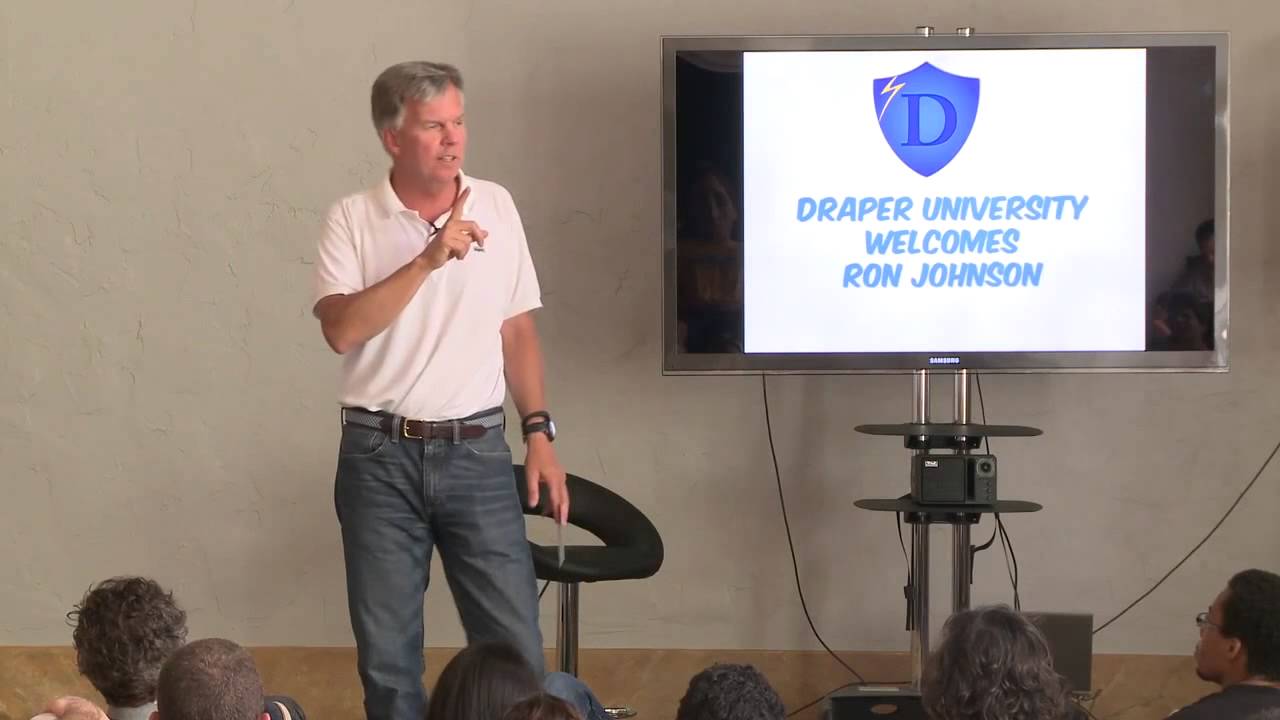
Ron Johnson, former Apple retail VP, argues creativity is innate and essential for breakthrough achievement. He partnered with designer Michael Graves at Target to democratize good design, then brought luxury hotel service principles to Apple Stores, eliminating commissions and creating the Genius Bar to prioritize customer help over sales.
Chapters
Each of you were born with probably your most incredible gift that you don't realize you have, which is the power to imagine. All right? We are all born creative, and we all can be creative people and have creative impact in our lives. Don't believe the idea that there are some people who are more analytical and some people more this. I'm not an analytical person. We were all born creative. I really believe that, and it's the power of your imagination that will truly allow you to do profound things in your life. Okay, so often people go through school and they're taught and taught how to learn how to do things, and they they kind of lose sight of the fact that they can think on their own. But each of us can, each of us should, and all the good things you do. Will happen when you unleash the power of your imagination, right? That's another thing Steve believed obviously very strongly in. And it's something I actually didn't learn till I was in my early 30s. So I had been at Harvard Business School. It's when, you know, we're all getting jobs, doing things. I think 800 people in our class went to workplaces. Most people picked one of those big exits off the freeway, you know, McKinsey, Bain, Goldman Sachs, Salomon Brothers. And I was lucky, I had those choices. But I kind of said, I want to be just good at something that most people who go to a Harvard Business School wouldn't choose to do. And I picked retailing. Because most people who went to retailing, you know, weren't from Harvard Business School. They kind of just kind of love clothes or they love fashion. And I thought, you know, retailing has a lot of things that might appeal to me. It's fast-moving. It's, uh, it's got a sense of fashion. It's— you get your results today, you know, for what you sold yesterday. It's not these long product cycles. It's people-intensive. It's an ultimate team game. And I said, well, I think I'd like that kind of thing, but I had to make a choice to become a good retailer. And I said, I could either go to some big fancy training program or I could just go work in the back house of a store and get started. So I went from Harvard Business School to the Valley, Glendale, California, and I worked in the back of house of a Mervyn store and I unloaded trucks with my MBA. And I remember August, September, October, November, they allowed me to go work on the cash register. And I remember being there at Thanksgiving. There were long lines back then because it wasn't like checking out at an Apple Store. But, you know, I was sitting there and all of a sudden in came 2 of my business school classmates with their new girlfriends and they're out shopping for Thanksgiving. And there's Ron sweating trying to check people out of a Mervyn store. But ultimately I was learning things that would impact my career all the way down the road. And from that experience, that, how do you not connect that to reinventing checkout at an Apple Store with a phone where all the transact— it's all, it all comes together, but you've gotta invest the time to do that. Well, so I'm just going along learning at Mervyn's, went to Target doing, you know, soaking it all in. And then I realized, why am I just doing what everyone else does? Is there something unique we could do? And I was in my early 30s, and I was one of the merchant leaders at Target, you know, the people who develop the products or select the merchandise that goes in the store. And I started to discover I really appreciated well-designed things, like a beautiful tea kettle. And all of those things were really expensive. And I asked the question to myself, why does good design have to be expensive? Didn't make sense, right? Why is good design out of reach from most everybody, and it's only available to a select few who go to London, go to Milan, you know, have a lot of money? You know, could Target deliver good design? And that's when I reached out to a person who's become a very good friend, Michael Graves. And I said, how would you like to design products for Target? Right? Well, that was really one of the first times I really said, let's use your imagination to do something never been thought of versus doing something that's just a little bit better. Right? When you get your imagination, good things happen. Well, now, Target, they hated this idea. Nobody at Target thought it was a good idea. Who's Michael Grace? How do you know people care about design? You know, why don't you do 3 items and put them on an end cap, and if they sell, add a 4th? That was the CEO of Target telling me that. Well, I was far enough along, so we did 140 products all at once. We took 2 main aisles. We rented the Whitney Museum in New York to launch this. We had a lot of fun. And ultimately, 10 years later, the COVID of Target's annual report said, winning by design. You know, that little imagination spark and the ability to do that had a profound impact on Target's direction as a company, right? But I learned that when you use your imagination, you do things that are really out-of-this-world good versus things that are just improvement. But what happens, you'll find in your career, when you have an idea, before you can even think it through, someone's taking, sucking the oxygen out of your idea by saying, well, here's why it might not work. What about this? Do you think about this? Think about this. And pretty soon you take this really powerful idea and you make it just an ordinary thing. Well, every company in the world is doing— trying to get better. And so if you just get a little better, you're not going to win. You'll just run in place. You got to use that God-given gift of an imagination if you really want to do great things in life. Does that make sense? So after being at Target for a lot of years, I took another unpopular choice career-wise that everyone said I was crazy. I decided to go to Apple. Now you got to picture this, back in 2000, Apple had had a couple of near-death experiences. It had less than 3% market share. It was losing money. You know, the PC was the future. And, but Steve wanted to create retail stores. And I thought, well, I, I decided to become a retailer, but all I really know how to do is be a merchant. I know how to buy and create things, but I've never done store design. I've never done real estate. I've never done all these things. This would be a chance to, to just go try to create a retail strategy working with Steve, one of the great creators in our world. And so I went to Apple, and everyone said, you're crazy, crazy, crazy. How do you do this? And my wife said that. But I went. And when I went there, I said— the reason I like to go there, Steve said, He goes, I like you, Ron, not because of what you've accomplished, but because you're a creator. You're an imaginer. I thought, I guess I am. And so when I went to the Apple Stores, I said, I'm going to take advantage of this opportunity to imagine something that could be a really great experience for customers, unlike anything that's been done before. So when we started out, we got a team together in a room kind of like this, about 18 people, said, What should the experience be in an Apple Store? You know, come to the meeting, kind of a meeting like this, with your best ever customer service experience. Well, we sat around the group and 16 out of the 18 people were clever enough to say, well, I was at the Four Seasons Hotel and— Nobody, only 2 people referenced a retail experience even though they were designing an experience experience for a retail store, when they talked about service, 16 out of the 18 independently came with an idea about something you have in a hotel. And so we started out with the question, what is it that hotels do that retail stores don't? And it turns out if you're a hotel, the only way you make money is by getting them to come back. They've already booked their room for a week, right? You got that income already in your pocket. You can make a little more money if they eat in your restaurant, but ultimately it's when they tell their friends, when you go to Hawaii, stay here, or when they come back. That's how you earn money in a hotel. So service is not about today, it's about tomorrow. It's about the leverage that comes from unbelievable experiences you want to share with somebody, right? And that's where he came up with, at the Apple Store, we're going to create an experience that would change people's lives. So our store's now got to enrich a life. It can't sell stuff. So how do you do that? So we made a list of things, and most of these things had never been done. So one was started with, well, if we're going to try to change lives and we're an Apple company that nobody cares about, 3 out of 100, imagine this room, say there's 100 people. This is the size of Apple when I joined. You're Microsoft. Nothing personal, but you are. Think of the— how small Apple was. So if Apple's gonna succeed, if we put a store where retail stores typically go, a product that's bought every 3 years, where do you locate? In a parking lot off 101 like a car dealership where the rent's cheap. But at Apple, if we're gonna change someone's lives, you gotta be in the middle of where they live their life. You can't be 10 miles away. You gotta be 10 feet out of their way. So we got to go to shopping malls and streets. Well, people said, that's crazy. How can you put a retail store there in a buy center? Why would you do that? Usually restaurants pay for that kind of space that have frequency, apparel stores. But it was because we had to change their life. And if you want to change people's lives, you got to get in the middle of their life. If you want to help someone and they have a problem like at a Genius Bar, you got to be where they can get help easily. Make sense? So it's easy to say, let's locate in high-traffic places. Second, if you're going to change someone's life, you can't have someone who's an employee looking in their wallet. They got to look in your heart. So he said, no commissions. Well, there wasn't an electronics or a car dealer. I don't know when Saturn started, but fundamentally the belief was, if you're only going to have a few customers come in, you got to get someone who's incented To get that decision made so they can— we can make money. But we said if we're going to enrich someone's lives, we can't be looking at what's best for us. We've got to look at what's best for them. So we can never think about words like sales and conversion. And we just got to look at people's hearts and how do we improve their lives. So if someone comes in, you just got to say, hi, how can I help you? Why are you here? What are you trying to accomplish? And then how do we meet that need in the lowest cost way possible? Everyone's on a budget. So why try to sell them something beyond what they need? And if you do a good job the first time, they'll tell their friends, like the hotel, or they'll come back. So we're not going to do commissions. Well, Steve and Tim Cook thought that was really crazy, but they supported it, right?
More from Tim


He Sold His Car to Build This Startup, Then Pitched It for $1M 😳 #Startups #AI

This Startup Moves Your Crypto BEFORE Hackers Can Steal It 😳 #Crypto #Cybersecurity




15 Months Without Refrigeration?! This Startup Thinks It Can Go Global 🥥 #FoodTech #Startups



