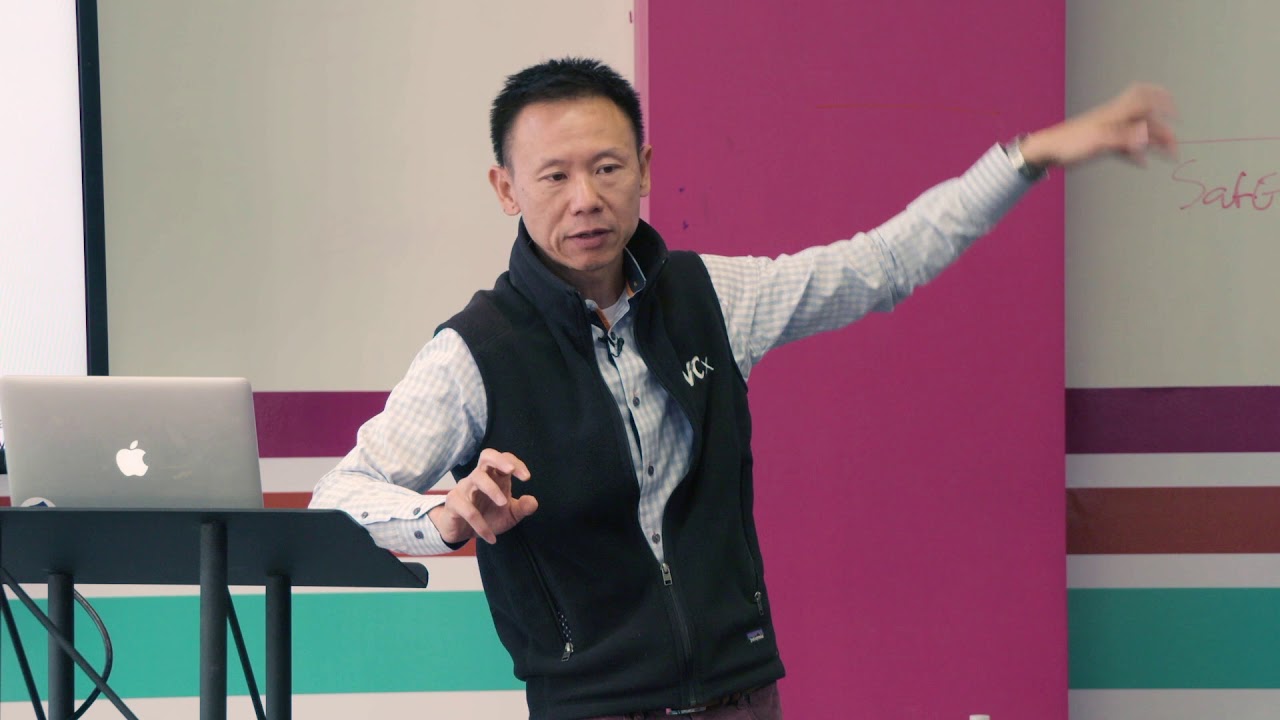
Andy Tang explains what founders are really selling to investors: a stock certificate backed by vision, team, and credibility. He evaluates early-stage companies on two things: a capable, passionate team with founder grit, and a large addressable market. Honest updates about problems build more trust than sugar-coating bad news.
Chapters
Okay, so anybody read this book? Right, great. What's the takeaway?
Men and women are so different.
Okay, so you read the COVID okay. Any interesting takeaways from the book? Is it communication, is it mindset, what's—
Mindset, it's like— Yeah, it's mindset. Men and women have different ways of thinking about the same problems. Like men like to be alone when they stress out, but women like to release emotions, keep talking, keep talking.
Yeah, so men are from Mars and women are from Venus. Different people, very different perspective. When it comes to under stress, men like to sort of just be alone and have some private time and women, it's— so you got to kind of talk through the stress, right? I'm not saying sort of investor and entrepreneurs are completely polar opposites in this perspective, but definitely when it comes to various business perspectives were different. I'll give you one example. If entrepreneurs encounter a problem, your immediate reaction may be I have to either sugarcoat it, find out the positive aspect or maybe try to hide it. And not— you could think of it from a good perspective, I try not to worry my investors.
Okay.
But most investors, most, not all, most investors, especially the institutional investors, are used to hearing bad news. And I would even say after 17 years I haven't invested in a company where they have always hit their financial projections, not a single one. It doesn't mean I'm a really, really bad investor, it just means even when I have a good company, right, and I have good companies that sort of have done really well, Even when they are hitting their numbers, it's very different from what they projected. There may be a delay, but when they take off, they take off faster than they imagined.
Right.
So what's the takeaway for me? Whatever the entrepreneurs tell me, oftentimes it's not how it turns out. So some bad news, I'm kind of used to it, right, so I could stomach a lot of bad news. Co-founders leave, big customers don't sign on time, existing customers change vendors, right, running out of cash, investors— new investors said they commit, they don't, all kinds of things. So I think the key is in this case the communication is about just being transparent. No need to sugarcoat. You do want to spend some time thinking about sort of the silver lining of a situation. If something bad happens, I guarantee you 98% of the time, not 100% of the time, 98% of the time, It's not all bad, there could be some good things. So your job as a CEO or founder is to stay optimistic and figure out what that— what the silver lining is, right? But still be very honest and transparent about the bad things. Why? Because it's a long journey and that's how you build credibility. Because if people trust that you can share with them even bad news, they trust that they don't have to make a worst-case scenario analysis. Does that make sense?
Yes.
And this is probably a good time to ask the question, if you're fundraising, what are you selling?
Selling.
Okay, yourself.
The vision.
Your vision. What else?
Our team.
Your team.
Yourself.
Okay, yourself. Essentially you're selling, you're all right, this is all right, you're selling a piece of paper. And you know what that piece of paper is? It's a stock certificate. That's what you're selling, right? Yes, in between $30 and $40. And what— how much is that worth? How much is a stock certificate worth? It's whatever you want it to be. It's your imagination. It's how you— this is at the early stage, right? I'm not talking about IBM stock. It's what your imagination captures, what you allow your investors' imagination to capture. Those 4 stages, you may have a business plan that gives them some imagination, you may have a minimum viable product that gives them some imagination, right? But imagination is one thing, right? The person who delivers imagination is probably the most important thing. So me as an early-stage investor, I only look for 2— I mainly look at 2 things. Any ideas what those 2 things are? I think I may have said this on the first day when you guys came here.
Team experience. Team? Vision. Vision? Passion.
Passion, which is all sort of part of the team. The market size.
Market size.
Market size or the market. What is the market you're going after? And then who is going after it? Right? So we went through this exercise, you know, if you are a talented person going after a small market, There's limited things you can do to change the market size, right? It's pretty much an uphill battle, right?
Right.
So one boundary condition is pick a big market and then we pick the right team to execute. And the right team, the characteristics we mentioned, having that passion, having some grit that we know you could keep going. We're looking at our investments, one of the things we notice is when the company becomes very successful, and let's just say this is top 30% of the companies, the average exit time is 10 years. So one of the very sort of basic assessment I try to make is, can this person last 10 years? I could never find out until 10 years later, but I tried to predict, so that's why I'm sitting here. I tried to make a prediction. Is this person who could make a 10-year commitment? And for most of you, this is— you haven't had a chance to demonstrate to even yourself you could do one thing for 10 years, right? 10 years is what— 10 years is a long time.
50%.
50% to 33% of your life so far, right? I mean, even going to college, it's a long— it's 4 years, it's only 4 years, right? So we don't know and you don't know, right? So that's part of this exercise is to have you sort of think, all right, do I love this thing enough for 10 years? It doesn't mean that you stick with the same business plan for 10 years. I already mentioned most of my business that I invest in change, right? But it's sort of this person working on a startup in this sector for 10 years. In that 10 years, we're looking for a captain who would navigate the rough waters, based on the regulation changes, the consumer sentiment changes, the macroeconomic recession might hit. In the down cycle you can't raise money, in the up cycle you can't hire people. So you always have problems as founders, can you stick around? Sorry.