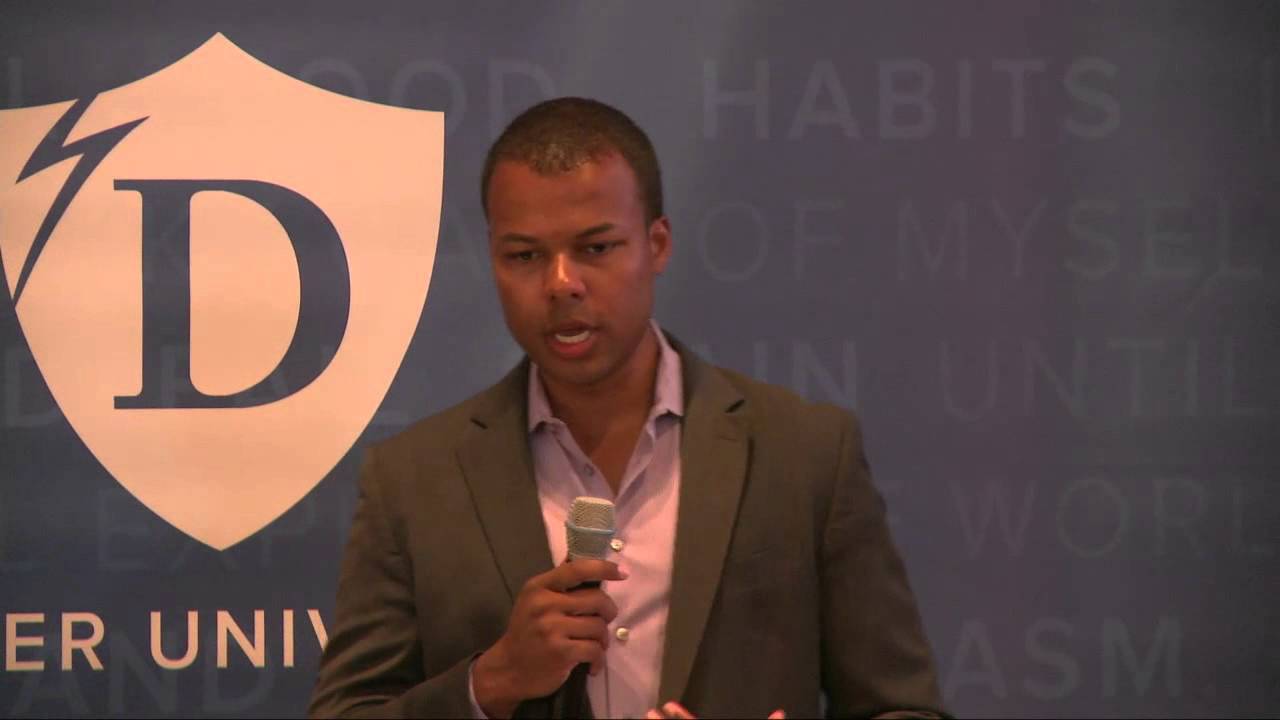
Sam Bright, eBay's Merch & Seller Partnership Lead, walks through how eBay evolved from an auction site into a diversified marketplace. He covers traffic, trust, catalog standardization, seller tools, and eBay's push into mobile and data-driven merchandising to help sellers succeed.
Chapters
So who's shopped on eBay? How many of you have shopped on eBay in the past year, let's say? 90 days? We lost a few hands. 30 days? Yes, okay. I can see who my favorites are. So eBay is kind of the— we've been in existence for about 20 years, but we've evolved a lot during that time. And I think that's one of the first takeaways I think is applicable to your, your businesses is that, you know, we came on the, on the market, we were really well known for auctions. Auctions are a very small part of our business now, but that's what we are really well known for. And we've adapted to meet changing consumer expectations, which we'll talk about a little bit later, to adapt to how the market has evolved, how the competitive landscape has evolved. But still some of the core components of eBay are in place. So first of all, we provide a platform. That platform includes diversified traffic. So it's no good if you're a seller and you list, you list items on the eBay website, nobody comes, nobody knows about it, nobody's going to buy the items that are out there. It also has to be safe. It has to be a platform where you can feel that if I enter my payment information, that it's not going to be hacked, that no one's going to— I'm not going to make a purchase and not get the item that I paid for, or the buyer's going to return that item when there's nothing wrong with it. It also has to be easy to navigate. And so there's a lot of work being done at eBay to take our catalog data to the next level so that it's easier for buyers to find the items they're looking for and for sellers to categorize the items that they have put on the website. Because eBay, when it started out as a primarily auction service, allowed their sellers to describe items however they saw fit. So for example, this shirt— I'm gonna keep talking about this shirt till you guys are tired about it. This shirt could have been a purple shirt. It could have been a Ralph Lauren shirt. It could have been a shirt that my grandpa gave me. There are a lot of different ways describe this particular shirt. So one of the things that eBay has evolved on is providing more standardization in how items are described so that they're easier to find. We are a marketplace. That's why I wanted to talk about the marketplace from the get-go. For us, we focus on value. So the variety of items allows you to find items at the price point that are— that is most interesting to you. We have both new inventory. We have used inventory. You can buy this directly from Ralph Lauren. You can buy it used. We have trendy inventory. We have unique selection. We start— in our early history, a lot of the excitement that was associated with eBay was around discovery, especially of collectibles, being able to find Beanie Babies that you had never— you weren't able to find anywhere else. Even now, we're known for our long-tail inventory. So if there's something unique in the world that you're trying to find, it's probably on eBay. And that's what makes us sort of the world's shopping destination. We also are providing seller tools. So we've done this in a variety of different ways, sometimes through partnerships, sometimes directly on our site, that help you as a seller to see, okay, how are my items selling? What are ways that I can actually improve the visibility of my items so that they will either show up higher in search results or so that they are more likely to sell? Do I need better pictures? Do I need different types of descriptions? What have you. And then data-driven merchandising so that you as a seller can take advantage of specific holiday events where you're more likely to get eyeballs. One of the other ways we've evolved is around engagement. We'll talk a lot about this later, but eBay obviously started as primarily a desktop site, right? Everybody just logged on to their computer and and just search the— at that time, what was called the auction web, before even eBay— to find items that were of interest to them. But obviously, mobile has come into play. Not just mobile apps. There's the app on the eBay Watch. There's tablets, whatnot. And so we have evolved to actually harness the technology where customers are looking to engage for commerce experiences. And so part of that is simplifying the experience. That's what makes marketplaces so challenging, right, is that you have to build an ecosystem that has all the ingredients that are necessary for a trusted transaction. But the more that you add different elements to the ecosystem, the more complex the experience is. And the more complex the experience is, sometimes the harder it can be for buyers and sellers to have the patience to find each other and go through a transaction. So we've had a lot of— we've done a lot of work over the years through listening to our buyers, listening to our sellers, to simplify that experience as much as possible for them and make it— and make it an experience that both buyers and sellers are satisfied by. So why do we do it? I think some of you may know our founder, Pierre Omidyar. When he founded eBay nearly 20 years ago, really believed in the power of commerce for good. He really saw commerce as a way to transform people's lives. Only on eBay are you able to connect with a seller in a completely different country who may derive their— his or her entire livelihood from selling handmade items on eBay to buyers in the United States. We recently, post-separation, had a really interesting story that was shared from one of our sellers who started on eBay just selling CDs on his store on eBay and has now grown to be the largest seller of Gretsch guitars in the world. And now he's built the beach house, or bought the beach house for his wife that she always wanted. This is how eBay actually enables opportunities to come to life. And we see that as not just like, oh, I want to buy an iPhone. Or I want to buy a shirt, or I want to buy this, or I want to buy that. But really enabling people to be entrepreneurs on our platform and to actually see their dreams come true by starting with maybe selling crafts, selling items from around their house, and potentially even building full-time businesses out of it. So we see connected commerce as our mission. It's what drives us. It's what drives both shopping and Selling and giving, and it's what, what encourages us to bring to bear various tools to simplify the experience.