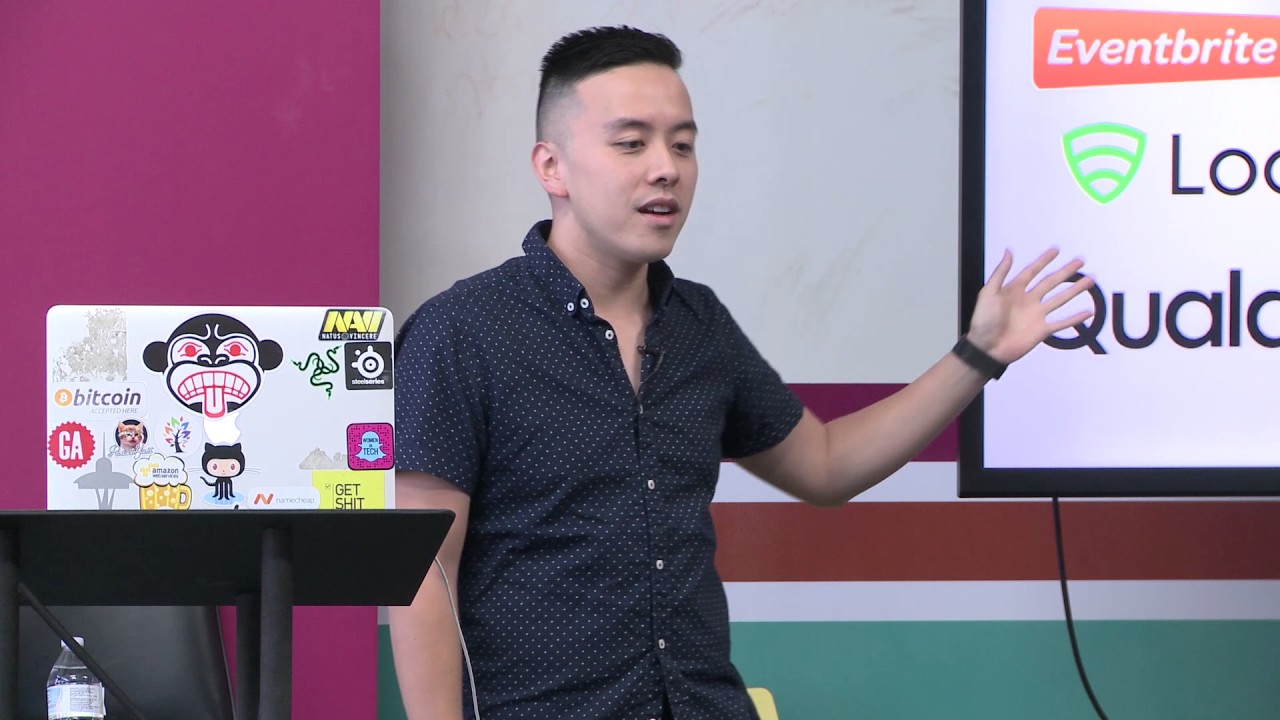
Justin Wu, founder of growth agency Growthly, explains growth hacking as the intersection of product development, engineering, and data-driven marketing. The term was coined by Sean Ellis at companies like Dropbox and Eventbrite. Wu breaks it into three parts: business strategy, software engineering, and analytics, and argues you don't need a technical background to adopt the mindset.
Chapters
Thank you. All right, awesome. Yeah, well, thanks for having me here at Draper University. Just to give you a little quick intro about me, my name is Justin Wu. I'm originally from Seattle, but I moved to Los Angeles, the Los Angeles startup community, probably about like 3 years ago. Today, kind of want to talk about the topics of growth hacking and how to build a brand from the ground up. Today's agenda, we're going to cover different topics from kind of identifying kind of the big nebulous term, what is actually growth hacking, to kind of having the growth hacking mindset, talking about the anatomy of growth. Then I'll go over a list of different tools. Then after that, I'll leave it up to more like a Q&A where if you have any questions or kind of have a project or an idea that you need help with growth, you can throw it at me and I can try to like throw you some different ideas and ways that I would potentially try to grow. Your product, business, service, or app. But before I go a little bit more deeper, I kind of want to just give you a little bit more context about my background and where I came from and all the different things that I've done in the past. So I am the founder of a growth agency called Growthly. So think of us as your outsourced growth hacking and growth marketing team where we're coming in there helping people with their— both from their products, development all the way up to kind of scale. So for me, my background, I've always had kind of a computer science background, and what I did is I studied information architecture at the University of Washington, and a lot of people might not know what information architecture actually is. It's a combination of computer science, sociology, psychology, so cognitive sciences, project management, and data. And so I've always been kind of more like the middle-tier guy in between engineers, business people, and users because everybody thinks they're right, right? Everybody, like an engineer, thinks that they're coding the best thing, and business people think it's magic. They can just deploy code and like, why isn't this working? And then customers always think they're right. So I'm the guy that goes in the middle, the information architect who understands all worlds, can translate it all, prioritize that, and kind of identify what exactly needs to get done built in the correct order. So while studying that at the University of Washington, I kind of found out that what I learned from being that military guy, it applies into marketing and internet marketing in general very well, because with marketing you have to understand both the product, the customer, and the user. And so what I really did was I applied my software development skills into marketing, then I started building some software and scripts, and then it just jumped more into like the whole marketing tech and marketing space. So But for me, like, my entrepreneurship career started even way before that, more so at the age of 12 or 13 where I was selling like Pokémon cards, video games. Then I built up my own eBay store, kind of just like hustling my friends saying I can get deals off eBay and making good money on arbitrage off that. Then I continued on and just built other businesses from an automotive marketing agency called DealerBus But what ended up happening was the automotive and real estate market crashed. And so I was doing heavily marketing in both those industries. That ended up fizzling out. Then I moved to Los Angeles, worked on several other projects. My most notable one is called Side Vision. I went through the Warner Bros. Accelerator, built an interactive video player that worked on top of YouTube. And it worked inside of Facebook and Twitter. But then Facebook and Twitter native video came out. And that just killed that project. So then I kept moving on. And then I decided to kind of build my own company called Growthly. But in between that too, I also helped another previous company called Vitamin, which is a marketing tech SaaS platform. I was in charge of product and growth. And I helped kind of achieve $1 million run rate in annual revenue within the first year of that company. But so kind of my background getting into growth hacking. You know, growth hacking kind of was born over here in the Silicon Valley and just the Bay Area where a guy named Sean Ellis really came up with the term growth hacking. But before growth hacking even came out to be, which was probably like 5, 6 years ago, it was really just called marketing or internet marketing. But what he identified, Sean Ellis, who is this guy right here, and he was part of the product and growth team, marketing team, for a lot of these companies that you might have known, Dropbox to Qualaroo, Eventbrite. And while he was working under these companies, they asked him, say, they asked him what— well, he had a development background, but then they got— they kept pushing him closer to actually with growth. And what he identified was out there, there was a bridge in the gap between a marketer and a developer where marketers tend to just focus on the business side and developers just focus on the business. But as products becoming more technical and data-driven and software-driven, what is this intersection? There was no term for it. So he came up with the word growth hacking. And also too, everybody loves the word hacking and hack culture. So that word just exploded. And that's where it kind of just ballooned up, the word growth hacker, which is the intersection of both development and marketing. But as growth hacking and the terms evolved, kind of the definition kind of expanded out. And to me, kind of looking at that model in the past, growth hacking is actually cutting to these 3 different parts, from understanding the business side at the very top, to software engineering to help with automation, and then really looking at the analytics and data to then make data-driven decisions on your marketing. Now again, if you think about it, higher education and schools usually have taught each of these disciplines separately, from software engineering to business school to more like the data side. And you're even seeing this clash with new degrees that are not even really degrees yet, like data science. It's the same kind of intersection where it's taking in multidisciplines and really clashing it together and really finding the intersection. Now, you might say, well, I'm a business guy and I don't know much about software engineering or development. And, you know, that is the reality. Most of us are not necessarily growth hackers. And you're going out and seeing a lot of marketers out there claiming they're growth hackers, adding it to your LinkedIn profile and getting instant resumes and job offers just because they put growth hacker on their profile. But even the word marketer is a really big nebulous term now. You have content marketers, SEO marketers, you got the growth hackers, content— email marketers, etc. But it's fine, you know, it's okay that if you don't understand the term or you're not even kind of having these software engineering or a data background. What you have to understand is just getting into the growth mindset when you are trying to grow your business. And really there's ways to kind of compensate and help you alleviate and fulfill the different areas where you're not as proficient in. And the more as you continue growing, the goal is trying to be in the center, which is for— to be a growth hacker. You can go pick up different things. So let's, for example here, let's say you don't have any software engineering background, but you understand the business. Well, you can go out to platforms like Elance, oDesk, and go out and commission a software developer to go ahead and build the scripts for you. And that's gonna help you on the software side to automate any processes or ideas that you have. Then if you want to look at the analytics, there's a lot of analytics tools out there. So there's a lot of shortcut ways for you to be able to jump forth and kind of help you become more well-rounded. But my whole point here is that if you are coming from more like the business and marketing side, it's becoming more and more important to really understand more of the software and the data side. Just to even just learn and understand it so that you can go out and start communicating to developers and also data guys and really pull your product to be more full circle for growth. And