What is Machine Learning? | Christianna Taylor
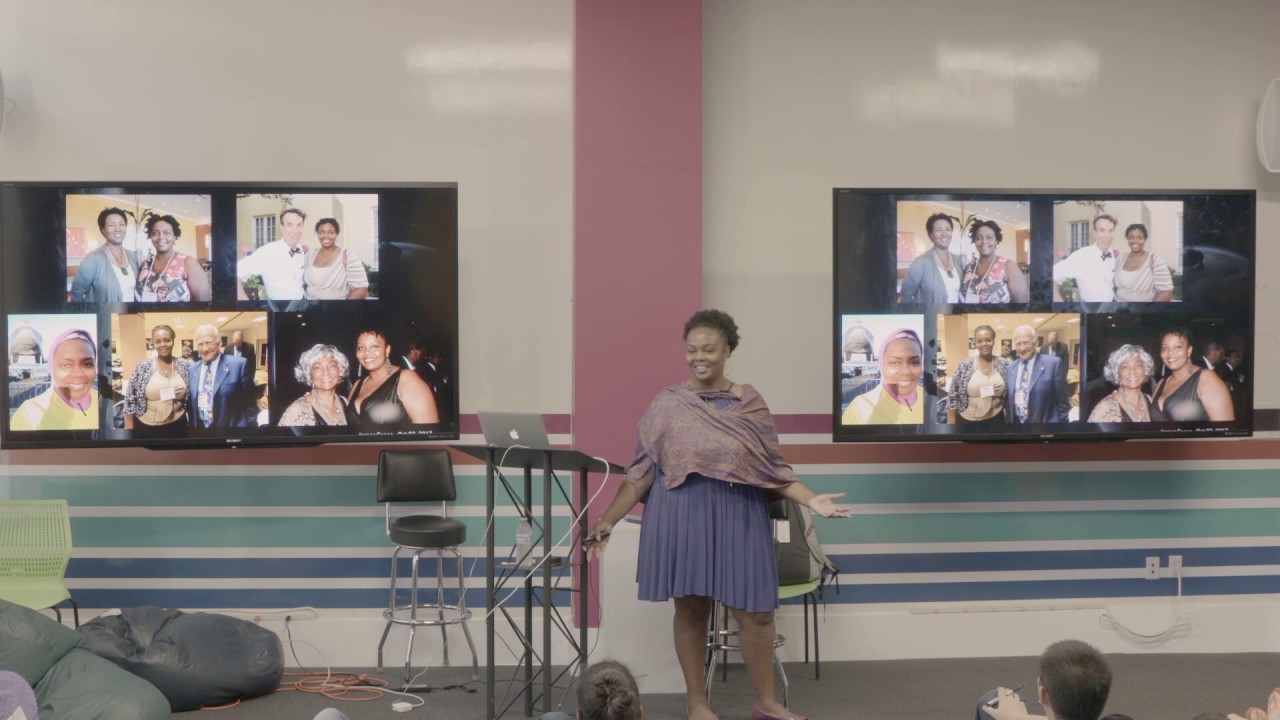
Georgia Tech engineer Christianna Taylor explains machine learning as teaching computers to make decisions from data. She walks through how Amazon, Pandora, and social media platforms use it to predict what you want, and raises questions about the ethics of those choices.
Chapters
All right, good morning, everyone.
Good morning, Chelsea.
All right, so we have a pretty amazing guest speaker here this morning. She is a brilliant engineer who graduated from Georgia Tech. Her passion is in environmental space tech, space engineering. And so she's super passionate about that. She's an awesome engineer. One of her other passions is paying it forward and mentoring other women who are in need and like help them find their direction in life and figure out what they want to do to succeed. And the last 6 years, she's been working on asteroid deflection and cleaning up space debris, which is pretty awesome. So can we give a big hand to Christiana Taylor?
Good morning, everyone.
Good morning.
So that's kind of cool with the pledge there. I like the be a superhero part and make sure you take care of yourself. Because taking care of yourself is really important, especially if you're trying to do anything that is new, uncharted territory. It's really important to take care of yourself. So actually, really, that was actually quite amazing. I'm here to talk to you guys about artificial intelligence and space, where they intersect, how sci-fi is becoming slightly reality, where the problems are, and what we're looking at. This is my Twitter handle. Feel free to tweet me. I'll try to respond. If you have questions that I don't answer here, again, I'll try to respond. I'm pretty open, pretty cool. At least I think I'm pretty cool. So feel free to talk to me. But first, we're talking about the future, right? It's the first important thing. And I get to talk to you about what I'm really passionate about. And that is space in particular. I love space. I've been trying to be an astronaut since I was a little girl. And that's who I am. That's what I do. All my friends know me about— know that I'm the person you go to when it comes to space. And quite frankly, a lot of people, and you will too, understand the issues about orbital debris, and you'll learn about it later on. But even cooler— well, I won't say even cooler, but just as cool as that is where we're at today in artificial intelligence. In particular, when I was in grad school— so I graduated from Georgia Tech in 2011— I was just doing machine learning. That's just— it was a course. I had to do it for my degree. I had to do it for optimization, for design, and I didn't realize that that was what artificial intelligence was. So fast forward to 6 years now, we've had this huge renaissance in artificial intelligence. And that's kind of amazing, as fast as it's been going. And as fast as it's growing, there's this really interesting intersection, especially in space and aerospace technology. But first, this is me. Not really. But this is me when I was 3 years old looking at Halley's Comet. I was 3 and a half when it came through. And this is what I wanted to do with my life. I wanted to be an astronaut. I learned about the cosmos. Only the smartest people got to be astronauts. And that was going to be me. So this is where I learned and started my space journey. Fast forward, I've had amazing experiences. I've met my mentors. I've gone to— I saw the last shuttle launch. I've talked to so many amazing people all over the world. Fast forward 3 degrees, 1 public policy degree later, What do I want to do with my life? And I'm still figuring that out. But luckily, I'm in an area where you can be— you can have crazy ideas and still figure that out. But we're here to talk about artificial intelligence and where they intersect with space. Now, at its face value, AI has been in pop culture everywhere. We have the positive AIs. We have the computer from Star Trek. We have Gideon from The Flash right now. We have Jarvis from Iron Man. But then we also have Ultron from Iron Man. So we have this dual sense of artificial intelligence that can be this amazing supplement to what we're trying to do that can do all these amazing things, and then we have these evil AIs that are coming after you. You have the Skynets of the world, your Robocops for my old-school fans out there. You have your Vickys from your I, Robot types. You have this duality, and everyone has a very strong opinion about artificial intelligence. Now I'll tell you guys a little bit later What my personal opinion is, but quite frankly, AI is nothing but decision-making. That is all it is. It is literally how do you make a decision? How do you make the best decision out there? Now, as humans, we have experiences. We make a decide— we have an experience, we make a decision based on that, and then we assess the outcome. And then we put that back into our experience barrier and do it all over again. However, our brains can process things so fast, and we grow up just sensing everything. We go in and we get into everything. If you're me, once I learned how to use a screwdriver, nothing in the house was safe. I used to take apart everything. Like, nothing was safe because I had to fix it. It doesn't matter that it wasn't broke. I had to fix it. My experiences were I wanted to be an engineer. I went and tinkered. I decided, hey, there's a screw there. Let's see what's behind it. Outcome, hey, there's stuff behind it. Let's go do that some more. That's all it is. And what we're doing now with artificial intelligence is focusing on how do we make that a computer cycle? So instead of our lifelong experiences, we have datasets. We have these different datasets of information that's being put into a computer, and then we're doing data statistics because that's what our decision-making is. Now, yes, it's much more complicated than that. And if you want some really great resources, I have a slide in here later on that can tell you about that. But we're basically doing data statistics based on known information, making an assessment, and then putting that back into our data and fixing our data, saying, all right, how do we make better decisions quicker, faster, quicker and faster? Now, AI, artificial intelligence, sounds kind of big. It's very nebulous. Everyone just kind of sprinkles the magic AI dust on everything we do, right? Hey, throw some AI on there. Now you're going to raise money. Throw some AI on there. Now you have a better product. We throw AI on everything. But if we go down a few layers, the first one that at least I personally learned was actually machine learning. Oh, excuse me. Was machine learning. But we see it in particular when it comes to consumer products. So almost any decision you make, you go on Amazon, you go on Pandora, you go on eBay, almost anything you make has some type of AI algorithm trying to figure out what is it that you specifically like. tailor-made and specialized information, that's all datasets. We as people, we are datasets, and we're providing that information freely, especially through the use of social media. Look at any hashtag on Twitter. Literally, we're a dataset giving— feeding into an artificial intelligence algorithm saying, all right, you know what, you clicked on this, let me make sure you have more ads on this. You're interested in this, let me make sure you have more ads on that. And there's some ethical implications about that. If you guys want to talk about it later, I would love to talk about the ethics of AI as well. So feel free to ask me questions or tweet me. But everything we do right now has this driving force of how do we make it better specifically for you? Not you, you, because this is your experience. And that's what AI is doing for us. Now, as I was starting to say, if you go down a few layers, the big ones I want to talk about are 3. First is machine learning. Now, machine learning Was what I originally learned. Machine learning is basically a way of taking datasets and then specifically saying, what was the decision you make? How do I make sure that this decision is accurate based on all the datasets you have? We go with the social media idea. How many people clicked on this hashtag? How far did your tweet get? If you ever look at those trend information on your tweet, that's how they actually figure out what hashtag to actually promote on the left-hand side. Are you regional? How do we make that decision? There's so many minds out there that are thinking about artificial intelligence to figure out how do I get you to click. The entire ad economy is based on how do I get you to click on something. And that's all artificial intelligence because they're tracking what you've clicked, what you've looked at, how long did you look at it, are you really interested, did you actually read through the whole thing, do you have your ad blocker on, how do I get you out of that ad blocker? We have an entire economy based on artificial intelligence trying to get you to click to something. And that is specifically machine learning. And even when you look at some of these really complicated machine learning algorithms and— not algorithms, just platforms. We're just taking a whole bunch of datasets. Remember how— well, I don't know how old you guys are. Remember how once upon a time you maybe didn't have GPS? Think of how your location-based is affecting your life right now. They know exactly that you're a Draper. So they know exactly, you know what, we need to put some food places around here. So make sure you guys have food. We need to make sure that when you go out and have recreation, you have options that are within walking distance so you don't have to travel too far. And they put all that information in one place. And that's all machine learning information. And we make a decision based on— excuse me. Other people make decisions to where they put their businesses In relation to you, and then you make a decision because it's convenient. Now you thought, oh, this is just for me. It is just for you because they want you to go there. And that's all machine learning.
More from Tim


He Sold His Car to Build This Startup, Then Pitched It for $1M 😳 #Startups #AI

This Startup Moves Your Crypto BEFORE Hackers Can Steal It 😳 #Crypto #Cybersecurity




15 Months Without Refrigeration?! This Startup Thinks It Can Go Global 🥥 #FoodTech #Startups



