What is Predictive Analytics | Mathematician Thane Plambeck
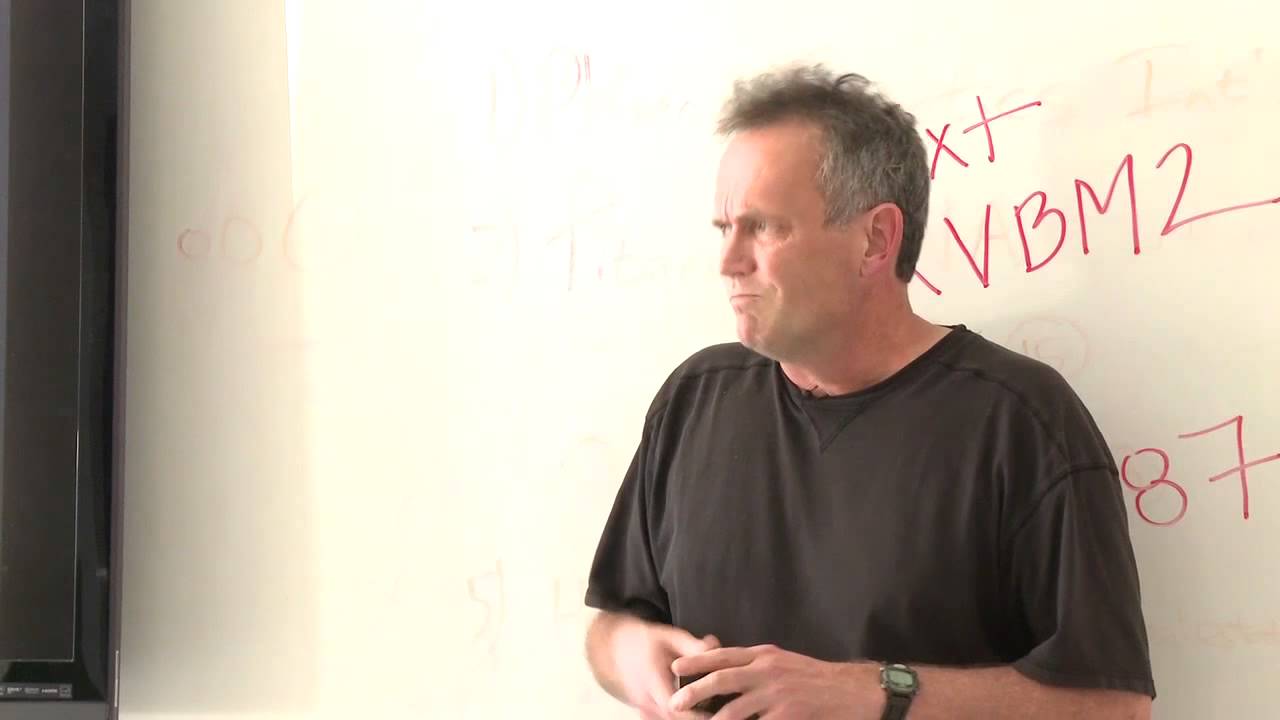
Mathematician Thane Plambeck uses spontaneous human combustion and a fictional breath test to explain Bayesian reasoning and the base-rate fallacy. A 99% accurate test for a 1-in-10,000 event still gives less than 1% odds of a positive result being real, a mistake that shapes how we interpret medical tests and predictions.
Chapters
Okay, so if I'm walking down the street wearing my favorite pair of Chuck Taylor high-top basketball shoes when suddenly I explode in a fireball, leaving nothing behind but my shoes, some flames rising from them, and a few rapidly dissipating wisps of smoke, I'm gonna call that spontaneous human combustion. Okay, so this spontaneous— Now I should say, What spontaneous human combustion is not. It's not any reasonable, you know, plausible reason a person could explode in a fireball. For example, if I'm walking down the street and I'm hit by a lightning bolt, that's not spontaneous human combustion. That's just being hit by a lightning bolt. So do I think this could actually happen? If you Google it, you'll find that there's a conspiracy theory. People believe this actually happens. I don't think any of it's true. I think it doesn't exist at all. That's why I chose it. But I'm going to give you the facts. What I want you to take is the facts surrounding spontaneous human combustion. Then we're going to start doing predictive analytics with it. So what are the facts? Oh, I need someone to manage 99 ping pong balls. I'll talk to you later.
All right.
And this is a duck call. Someone needs to— you want to do this? Okay. Okay. Okay, so scientists expect 1 out of every 10,000 United States— say, I know, I can tell there's— this is a much more international audience. So let's say not just United States, in the entire world, 1 out of every 10,000 people in the entire world will spontaneously human combust in the next 365 days. So— and this is a completely random process. Nobody really knows who's going to blow up. You know, there doesn't seem to be any way to really tell. And let's try to put this number into some kind of perspective. So the city where we are now, San Mateo, has about 100,000 residents. So that means just in the town we are right now, We're going to expect 10 people to spontaneously combust in the next year, okay? So 10 people out of every 100,000, that's 100 people out of every million. There are 300 million people in the United States. So that is 100 times 300, that's 30,000 people that we're expecting to blow up in this country. That's roughly the number of people that die in automobile accidents. So most people— I mean, I know, you know, I'm older than you guys. I know 2 people personally who died in automobile accidents. And for someone your age, it's more likely that you— maybe you didn't know someone personally, but probably someone in your sphere of acquaintance died in a— I mean, someone that you sort of knew, a friend of a friend, or it could have been someone quite close to you. So I just want to get you an idea of what the risk is so that we can compare it to other things. Okay, well, that's the bad news. The good news is that, in fact, there is a test to determine your susceptibility, okay? So, I want to tell you about the test.
Okay.
Okay. It's a simple breath test, okay? It can be administered by a medical professional or an officer of the peace. As shown in this photo. And you just blow into this little thing and you put it in some analysis machine or something and then it tells you whether you're gonna blow up. So this is really great news if you decide to take the test. There's only one catch is that it's 99% accurate. And what this means is that regardless of whether you're gonna blow up or not, it will give you the right answer 99— with the probability 0.99. Okay, so this looks like a pretty accurate test. So, another way to phrase it is only 1% of the tests give the wrong answer. Okay, so you can imagine you've been reading about spontaneous human combustion in the newspaper. You're seeing your doctor and you say, you know, your doctor says, do you have any concerns? And you say, well, I've been reading about combustion and I think maybe I should take the test. What do you think? He said, absolutely. You know, so you blow into the thing. And you're sitting there waiting for the results to come back from your doctor. Your doctor comes back in and says, I am so sorry, but your test is positive. You— this test shows you are one of the people who is going to blow up. You may want to put your papers in order. Okay. So my question— so now here's my question. You can probably guess what the question is. Anyone think they know what the question is?
What's wrong with this?
Not what's wrong with it. That's a good question. But my question is this. How likely— given everything I just told you, how likely is it that you actually are going to blow up?
Because there's a greater likelihood that you actually are negative and the test is 1% wrong than the likelihood of you being the 1 in 10,000 who are actually going to blow up.
Please stand up. What is your name? Andrew? Everyone, please do this. This is the— that is in fact exactly the point. The chances are less than 1%, okay? Less than 1%. Now why is this the case? Okay, so this is— I'm gonna spend some time on it 'cause I want you to get a good feel for it. This is kind of the most straightforward calculation way to do it, but I wanna make it more specific for people for— 'cause it is— it's quite counterintuitive, I think. And I really want to drive it home. So what I'm showing here is there's sort of 4 possibilities. There's the possibility that you're— you are really going to combust or not. That's 2 choices. And then there's the question of whether the test was correct or incorrect. So that you've got 4 possible choices there. So you're— when you test positive, you're either in the top row here, which is the case you're worried about. Where the truth is that you are going to blow up and the test was correct. That's what you're worried about. But there's also this possibility at the bottom, the green one, which is that you're not going to blow up and the test was wrong. And these are the only 2 possibilities. There are— you would think there might be 2 other possibilities, but both of these, if you think about them, if you are going to combust and the test is wrong, you wouldn't have gotten a positive result, right?
Right.
You know you have a positive result. So you're only in one of these 2. And in the bottom case, if you're not going to blow up and the test was right again, it would have said no, right? But your test said— OK, so you just compare. Then you multiply the corresponding probabilities. And you find that this one, the one you're worried about, is 4 zeros, 0.99. But the one where it is a false positive is more than 100 times that. So you have less than 1% chance of blowing up.
OK.
I feel safe now. Hmm?
I feel more safe now.
Good. Good. So, okay, what about this 99% accurate test? Because it almost seems like by definition when I say it's 99% accurate, it almost seems like, well, gee, the test is 99% accurate, I must have a 99% chance of blowing up. And this is exactly the mistake That I want to spend some time on and try to drive home that it really is a mistake. And I'm going to demonstrate it with the ping pong balls. So if you pour those into the box. Okay, so there are 99 white ping pong balls and there should be— is there a colored one in there? Okay, put it back in. Okay, I wanna change the problem slightly. I'm gonna change it. Let's take the truth, which is that nobody ever blows up. No one ever spontaneously combusts. Okay, and then Muhammad? Or I can't read your name.
Mo.
Mo, stand up please. Okay, I wanna change the problem. No one ever blows up. Let's see, the point is we still could have This 99% accurate test, right? So blow into the thing. You have to figure out which side.
Ah!
Okay, he's just taking the test. Okay, now give it to me. Okay, now hold the box up. And someone draw out a ping pong ball. Just reach in and pull one out. For a little drama, hold it in your closed hand. Okay, is he really going to blow up? Okay, open your hand. He's not going to blow up.
Really?
OK, see, now does this test have this 99% accuracy property? Yes, it does. It gets the right answer 99% of the time, right? Because 99% of the time, you will click out a white ping pong ball. But I've already told you nobody ever blows up, so you focus on that correctly, right? If you had drawn the orange one, you would just discard that information. Well, the punchline of this story is that 1 over 10,000 is really a number pretty close to 0, right? And so how can you go from thinking, knowing the answer is 0 if it's truly 0, right, to all of a sudden thinking it's 99% when I just bump it up to 1 over 10,000? Okay, so you see, I'm just trying to give you an idea. And I'm trying to draw the distinction between the idea of a prior distribution— well, forget it. Let's go on. Okay. Okay, so this is what we just talked about. If we change the problem so that nobody combusts, you go in the lab, you get a positive result, say, what are your chances? What's the answer? Zero.
Zero.
Correct. All right, so now here's question 3. And this doesn't have— this is more just a thing I'm interested in what people think. This doesn't have a right math answer to it. So let's put the probability back to 1 over 10,000. And let's say that you go into the lab again and you test positive again. And your doctor says, OK, I've got great news for you. I have a very painful medical procedure. That will reduce your risk to zero. So you really don't have to be— you know, you can just come to surgery on Wednesday and we'll take care of it. All right? And this is a little more real life here. So would you— the question is— and again, there's no real answer. I'm just interested in what you— what your reaction is. Would you opt for this? Would you opt for— would you choose to have this surgery?
No.
This painful surgery, or would you take your chances? How many people would take your chances? Okay, would any— and how many people would have the surgery? Interesting. Okay, so we have a couple surgery people. I mean, there's actually— okay, so I want to try to approach this problem, which is a little— I mean, it's a vaguely stated one, but it gives some idea. One way to think about it.
More from Tim


He Sold His Car to Build This Startup, Then Pitched It for $1M 😳 #Startups #AI

This Startup Moves Your Crypto BEFORE Hackers Can Steal It 😳 #Crypto #Cybersecurity




15 Months Without Refrigeration?! This Startup Thinks It Can Go Global 🥥 #FoodTech #Startups



