Chris Messina invented the hashtag in 2007 to solve Twitter's lack of search and discoverability. He repurposed the pound sign, an unused key on mobile keypads, to group conversations by concatenating words. His first hashtag tweet posted August 23, 2007, became a lightweight solution that shaped how people organize content across social media.
Chapters
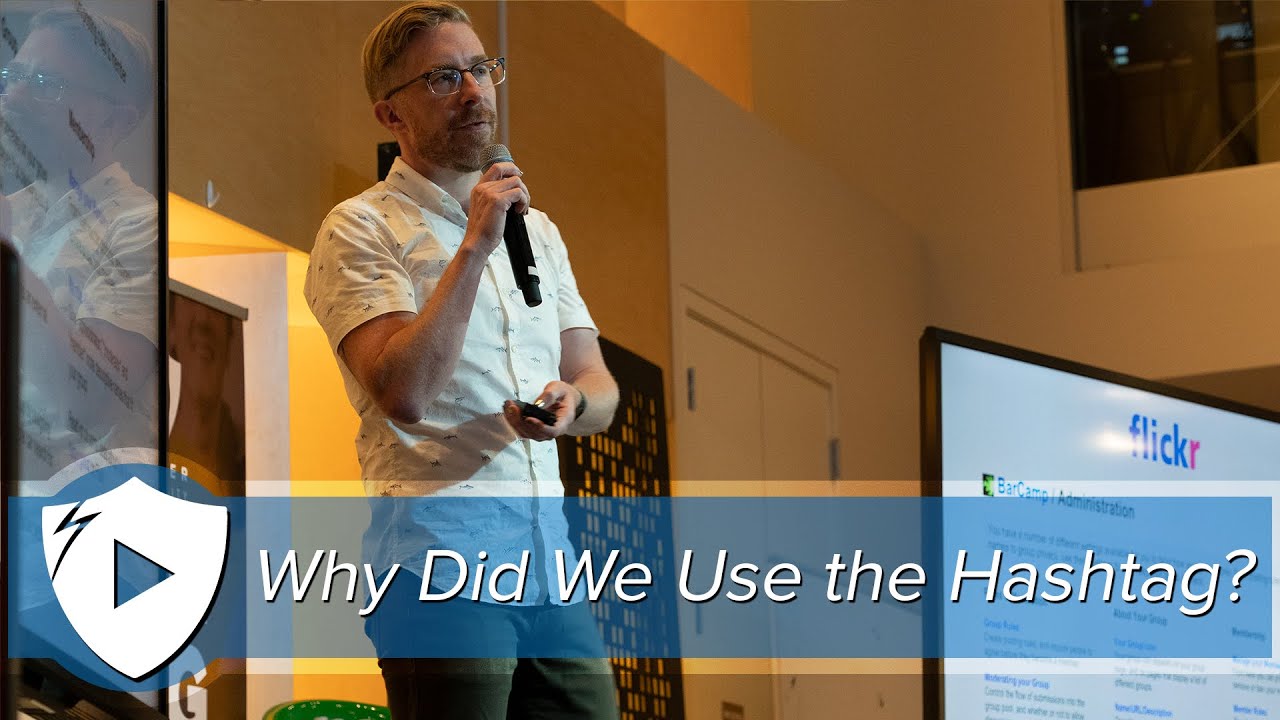
So you bring all these things together, you have the group solution where people are posting for relevancy, you have the idea of IRC channels. Push notifications didn't come out until 2009, so there was no way of getting information to phones besides SMS. And then you had folksonomies, and you had the phone. And that sort of came together for what became my proposal. So this is the very first tweet in which I sort of proposed the idea for a hashtag. Hey, so I'm Chris Messina. Today I'm talking about the unlikely lesson from inventing the hashtag. I'm here with a bunch of students from Draper University. If you want to find out more, you can go to draperuniversity.com. So what was the hashtag for, and why do people use it? Well, it was really about taking this early social media platform, Twitter, which we could only use over SMS at the time, and helping to increase the relevance of individual posts as well as increase discovery of content. What does that mean? Well, essentially in terms of relevance, you know, you want to be able to find and connect with other people. Show me stuff that's relevant to me. Show me things that are relevant to my interests, to stuff that I care about. And then on the flip side, help people find the content that I'm sharing. Even if I don't, you know, say what this is about, I want people to discover my content. So in the previous era before Twitter, the way that we solved relevance was essentially by creating what I consider kind of digital real estate, essentially groups. And the place where we had these groups where people would go and aggregate was in this photo sharing service called Flickr. Flickr was sort of the predecessor to Instagram. People would upload high-res photos and things like that. And while they were there, they would go and find different groups where they could share things that were of similar interests. For example, dog photos and cat photos. And of course you would never mix those two together because then there'd be fights. And if you're running those groups, you had a lot of tools. Essentially, if you run a Facebook group, you know how this works as well, right? So imagine administering a group for, let's say, BarCamp, for an event. But imagine having to do this simply over SMS, right? All of these different behaviors are incredibly complex and very difficult. So these are not the kind of things that you'd actually want to do over text messaging. Now like I said, so this is actually Twitter from 2006. This is what the homepage used to look like. Let's see. You would sign up by texting a message to 40404, which is a shortcode that still works. So if you text it, you will be tweeting, just so you know. But this is how it looked back then. And this was the original way that you would kind of keep people up to date with your status updates and your status messages. Hi. Now, Twitter had come out before the iPhone. The iPhone came out in 2007, June of 2007. So up until this point, most of us here in Silicon Valley were using phones that looked a little bit more like this. Have you guys ever seen a device like this? It's not a remote control. You have one of these still? Okay, well, you might wanna upgrade sometime soon, but it's okay. This is what I mentioned before, this is a cell phone. Okay, you make phone calls with it, you know. You can also create text messages. Now, here I am looking for a way of solving this problem of getting tweets that are at BarCamps to go to the right people. Well, I'm like, okay, so we have to solve this problem with something like groups, but without all that overhead, and it has to work over SMS. Well, what do the people who want to use this already have? Well, they have devices that look like this. And what's not being used on this piece of equipment? Well, if you zoom in quickly, you can see that there are the numeric keypad, with all the letters on it, but also these 2 additional keys that nobody was really using for anything. And I was like, well, that's interesting. You have millions of people who have this device, and you have 2 things that are not being used, and yet I could just co-opt that and use that for my purposes. Interesting. At the same time in 2007, Twitter was unable to provide search. The service was growing so fast, and people were using it so much that literally servers were on fire. And so instead of allowing people to search for tweets, Twitter came up with this rather ingenious solution called Track. And the service allowed you to essentially follow a keyword and get every time or every tweet that mentioned a certain keyword to be sent to your phone via an SMS. When any— someone mentioned in the public something like NYC, you would get sent an SMS for that tweet even if you weren't following that person. Right? So you could do something like this. You could say track iPhone, and then any tweet from any user across the system would be sent to you if they mentioned the word iPhone. Now, back then there weren't a lot of people tweeting, so this is not a big deal. You can imagine today if you got every single tweet that mentioned iPhone in it, your phone would probably melt down. Now there was one problem with this track feature, and that problem was that you couldn't actually track multiple words. Essentially you could track one word at a time but not many. And so this created another opportunity for me, right? Because instead if you used words squished together, now you had a unique code that essentially people could use to get their updates. And now this solution was also something that we had on Flickr. On Flickr, in addition to groups, we had what were called folksonomies, a way of labeling content with words that people made up to identify things that were going on. And in this case, this is a screenshot from 2005. You can see there was a London bombing that had occurred. And so people were coming up with their own keywords and phrases to describe what was going on, to label their photos that were about that topic. And then of course, at events like BarCamp, we would have these back channels. And these back channels were using a technology called IRC, or Internet Relay Chat. IRC was organized into what were called channels. And channels had the pound symbol in front of it. So you can start to see that there's a bunch of things that are coming together from different spaces that are starting to sort of blend into this mixology solution for what I was about to achieve. Now, one thing you'll notice, this may look familiar to you, essentially Slack has taken IRC and productized it. So if you guys are familiar with this, Slack actually is not an original invention either. Okay, so you bring all these things together, you have the group solution where people are posting for relevancy, you have the idea of IRC channels, You have tracks, so you're getting these push notifications. Actually, I should say push notifications didn't come out until 2009, so there was no way of getting information to phones besides SMS. And then you had Fauxonomies, and you had the phone. And that sort of came together for what became my proposal. So this is the very first tweet in which I sort of proposed the idea for a hashtag. And you can see this is August 23rd, 2007. Yeah, so I mean, it was like super awesome to both get like this like standing introduction reception. That was great. And like the students are like super pumped, super excited about what's going on, and really engaged after the talk. And so I thought it was really good to have a chance to like talk to them, share my ideas, and also hear from them in terms of things that they're thinking about. So it was a real honor to come to Draper.