What the Blockchain is capable of | Jack Saba
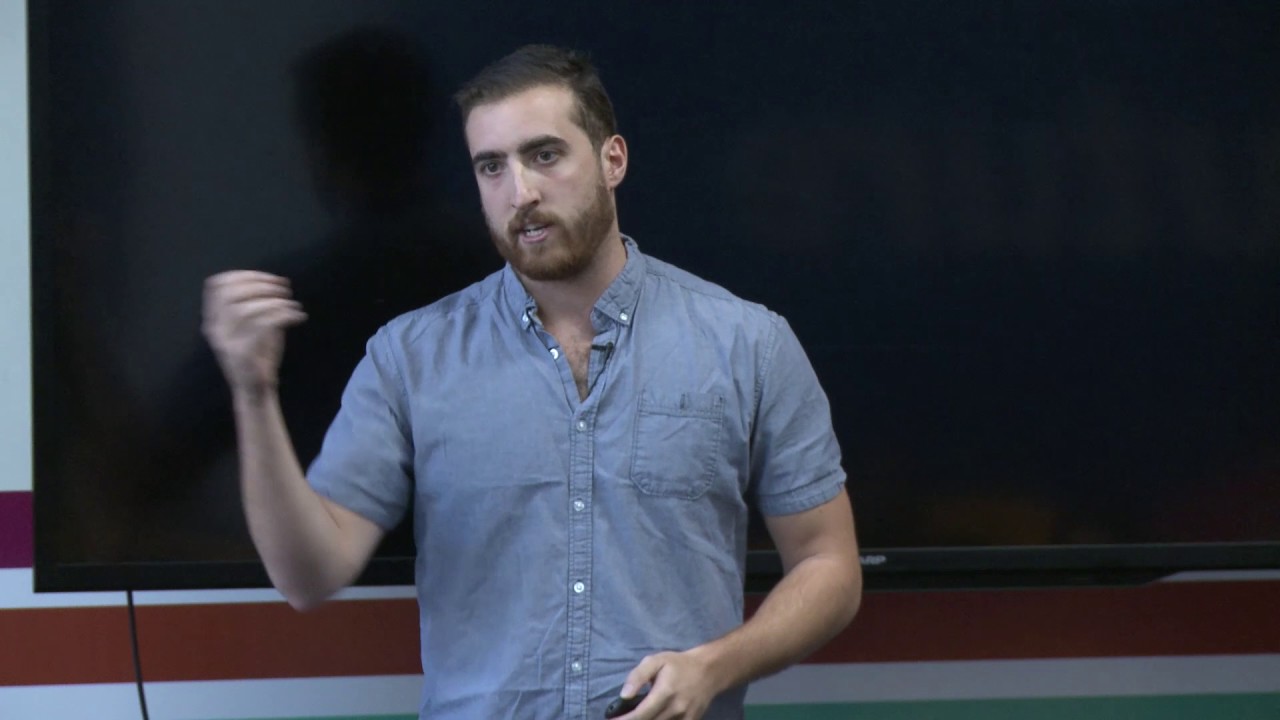
Jack Saba explains how blockchain extends far beyond cryptocurrency to reshape finance, healthcare, and governance. Cross-border bank transfers take days and involve multiple intermediaries; blockchain enables direct, final transfers between individuals. Patient-controlled medical records, low-cost remittances, and instant securities settlement show how emerging markets can leapfrog legacy infrastructure.
Chapters
So think about everything that the internet can do. Everything, like the sheer power that we have because of the internet. All the people you can connect with, all the things that you can buy, the sheer wealth of knowledge that exists. Doesn't it seem inconceivable that in the early '90s people couldn't describe it, and they basically just thought it was for email? I can just send emails back and forth. It is just as inconceivable that people think that the blockchain will only be for cryptocurrency. So Bitcoin, was the first step, and that was kind of what unleashed this technology onto the world, the blockchain, the technology that I'm here to talk to you today about. As he said, I'm Jack, I am of Day One Investments. We are an emerging fund that's focused on blockchain-enabled services and technologies. We see that this technology is going to enable emerging markets to leapfrog and create stability through stability, transparency, efficiency. this technology, the blockchain, is going to do for financial services and trust-based services and things like land registration what the internet did for commerce, social connectivity, and marketing. So this all start— let's start with the problem that the blockchain solves first. So it takes 3 days to send money from one bank to another. That's ridiculous considering you can send emails across the world instantly. So the reason why it takes that long is if I want to send money to my friend in Australia, It goes from my small bank here in California to a larger bank to an intermediary to a large bank in Australia and then ultimately to his bank. Each one of those entities needs to record the transaction, facilitate it to the next person, and reconcile that it happened. That takes time and it costs money. The blockchain enables for the first time 2 individuals to directly send money to each other in a way that is guaranteed to be valid, and final. That's wild. There is no need for trusted parties in the middle. You can now transfer value anywhere in the world at the drop of a hat. So the way it works is that instead of having all these intermediaries record and say that this existed here and I'm gonna pass it here and it happened and so let's record this and let's make sure that it all works, there are computers on this network, it's a distributed network where all these computers hold the same truth of events from the inception of the blockchain to the point that we are at right now. So as I go to create a transaction and I send you money, the computers on the network validate that at some point in time leading up to now I had accrued enough value to send, so I have enough value in my account to send to your account, they validate that your account exists and that I authorized this transaction. If any one of those pieces is missing, the transaction can't occur. If it says that I don't have the money that I have and I try to send it, it won't go through. If it says that I didn't authorize the transaction, it won't happen. So it takes the trust out of these intermediaries and it places it on the ecosystem. All right, so I'm gonna continue again and then— Yeah. Thank you. So the fundamental principles of a blockchain, what this really gave us was a trustless system. It provides anonymity, efficiency, immutability, which means that you can't change a record after it already occurs, and efficiency, immutability, transparency, and traceability. So this enables transactions to be valid and final, which is something that had never happened ever before. The Bitcoin was released onto the world in 2008 on a white paper by an anonymous source. It was either 1 or 3 or no one really knows, but Satoshi Nakamoto released this technology and it kind of just existed in the corners of the internet where no one really frequented, and it started to gain traction. Actually, at one point in 2010, someone paid 10,000 Bitcoins for 2 pizzas. That'd be worth $6 million right now. He feels like a fool and we all know it. So 2013, it started to come to light when it reached $100. People were like, wow, you can actually transfer some real value with this. And then it spiked to $1,000 and that's when it really hit. But people in establishments such as banks and governments and all these things were just writing it off. They're like, this is just some currency that people are using on the internet, it's nothing. And they started taking a look at the technology underneath it. The blockchain. Because the way that you can transfer a Bitcoin anywhere in the world and have that transaction be immutable, meaning it cannot be changed, the pieces of information in it, who had it when it was received, these things cannot be changed. That can be done for anything, a vote, a land title, a healthcare record. You now have the ability to own your information and do what you want with it, permission it out to other people and provide them the ability to have it. So Where there is high friction, high cost, and low trust in archaic systems, the blockchain's gonna create efficiencies. Where there is problems in finance, healthcare, insurance, govtech, the blockchain's gonna create new solutions and new business models. So where we are— Anything? Can I see something real quick? Can I see something real quick? Oh, hey. So in 2015 they started talking about the blockchain, and there are, the thing is that the blockchain would suggest that there's only one immutable source of truth, there's just one ledger that continues to grow, but the thing is there are many blockchains. There are so many blockchains out there it's incredible. Hey, there we go. We're good. Cool. Let's, uh— Oh yeah. So like we said, 2015, distributed ledger technology, blockchain became mainstream. So there are many types of blockchains, and they can be grouped into 3 things: public, permissioned, and private. And what those mean is who has the ability to use and read and write them. So if you want to operate a node that validates a transaction, you can do that on the Bitcoin blockchain, it's public, anyone can use it. And then you have permissioned blockchains, and this is known entities, so it's something like the financial institutions would come together and they would create a permissioned blockchain so that in order to interact with it you would have to sign up through one of their services and— What are they doing? All right. So you would have to sign up through one of their services in order to do it, but that's good because that provides anti-money laundering and that enables people to create more efficient bond markets and creates financial inclusion because now people can be reached where they could not be reached because this technology creates efficiencies. And then there's private blockchains, and private blockchain means that there's one entity that controls it and they— you have to come through them in order to use it. Each one of these blockchains puts a different value on anonymity, efficiency, immutability, and transparency. So the public blockchains, for example, they want immutability, anonymity, transparency over efficiency. And permissioned blockchains, something like banks would use or the healthcare industry would use, wants to have efficiency and immutability over transparency and anonymity. They want those people to be known. So in healthcare— let's talk about healthcare for a minute. Right now, your medical records— you've gone and visited so many different doctors over the course of your life that if you go into a hospital right now, into the ER, they have no idea what you've been treated for. They have no idea how you've been treated and what you've been treated with. With the blockchain, you can create one succinct medical record. Everywhere you go, they would add that piece of information, that new piece of information. You came with the flu and we treated you with this. You broke your arm and you had these painkillers. Whatever it was would create one true history of who you are as a medical patient. And as you walk into an ER, you could have that for you. That's great here in the States. But imagine what it can do in emerging markets where there's not very good healthcare and there's no real record-keeping system yet that's effective or efficient. As you travel from country to country, you leave behind who you were as a patient. You now have the ability to go from Syria to Canada and they can treat you for everything that you need. That's incredible. The other thing that you can do— yeah? But can it be done like privacy issue, like somebody not to see what I have and I cannot see what others have because then it can be— Yeah, so the blockchain enables you to encrypt pieces of information and certain pieces of information. This is a really great point. So I have all this information about who I am as a patient, right? And I find that some— Stanford University is doing a clinical trial and they need information and they need to aggregate these data records. So I can sell my data to them and only release information such as I'm a male between the ages of 20 and 25, I am living in California, I've been treated for these diseases, and no other piece of information. I have complete control over my records. and who sees what, because now I own the record. So yes, it can be done and people can't see it, only those that you want to see it have the ability to see it. So that's healthcare. Within finance, there are the issue that we talked about before of sending money back and forth. Remittance is one of the— is a massive industry that preys on people that don't have much money, right? So you come in from the Philippines and you're working here and you want to send money back to your family. Western Union charges 12% because they know that they can. There's no other way for you to get that money back there, so they're going to charge you that ridiculous amount because you have to use their service. The blockchain cuts them out. They can now send money directly to their family at a fraction of the cost, so much more efficiently. Microloans. In Brazil right now, it costs you 300% in order to— your debt costs you 300%. If you have credit card debt, they charge 300%. If you take a loan, sometimes it's as much as 400%. That's ridiculous. The blockchain will enable people to receive microloans from anywhere in the world. So institutions that are here in the United States, people that are here in Europe, wherever it is, they can provide a loan to an individual in Brazil for a fraction of the percentage, undercutting that market. That's ridiculous. An efficiency that it will create in, say, bonds. Right now in trade, if you go and you have you purchase a stock or you sell a stock, it takes 3 days from the time that the trade happens to the settlement occurs because there is an inefficiency in the marketplace where they have to transact across and it has to do the clearing process that we talked about before.
More from Tim


He Sold His Car to Build This Startup, Then Pitched It for $1M 😳 #Startups #AI

This Startup Moves Your Crypto BEFORE Hackers Can Steal It 😳 #Crypto #Cybersecurity




15 Months Without Refrigeration?! This Startup Thinks It Can Go Global 🥥 #FoodTech #Startups



