When Pitching Your Startup, Remember to Relax | Toba Capital VC Patrick Mathieson
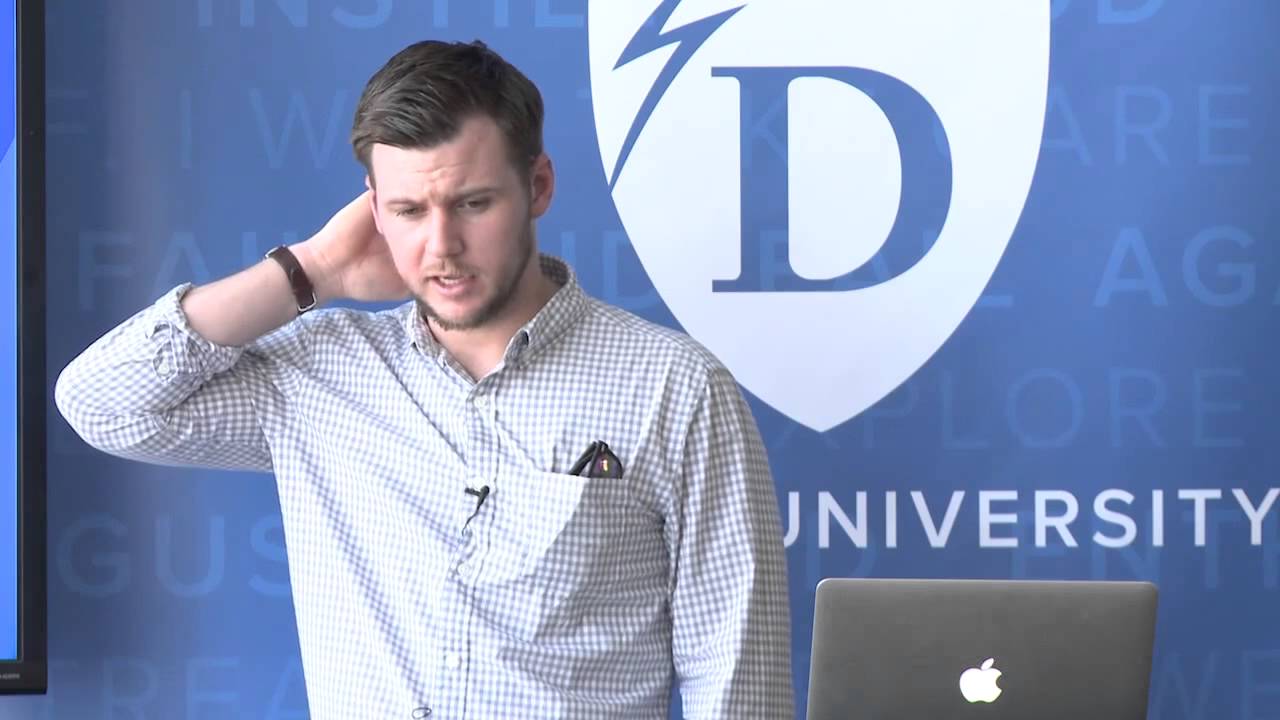
Patrick Mathieson, a VC at Toba Capital, advises founders to relax when pitching and give clear, off-the-cuff answers. He emphasizes understanding your customers and describes what makes founders stand out: charisma, thoughtfulness, and scrappiness. The firm focuses on B2B and enterprise software.
Chapters
Final thought is— I kind of touched on this earlier, but the more you can just kind of relax and chill out about the whole process— here's another stupid movie photo— the more you can kind of just be chill about everything and just treat business like it's just business, it's not life or death. I mean, we're all here to have a good time and learn and change the world, and everyone's— and assuming positive intentions by everyone and just feeling kind of relaxed about what you're doing, you're going to go— into meetings and pitches feeling pretty good about yourself and be relaxed enough to handle whichever questions the venture people are throwing at you. So it's important to work hard to get this right and nail your pitch and really feel like you put work into it, but you shouldn't be neglecting your family or your health or whatever. So yeah, don't take it all too seriously. I think that's it. Are there more questions? You have a question?
Yeah, if you really want to impress on them and stand out and leave a memory, I mean, that's a good question.
I mean, that's a broad question. You just mean in the way they handle themselves in the phone call or just like the substance of their companies? Can you be more specific?
I guess not really like about their companies, but I guess how they handle it or how they portray it, that really makes them stand out in your mind.
The one slide I had with all the questions, I think being able to coherently speak on how your company is doing without source material or slides in front of you, not that slides are bad, but just being able to answer questions and field them on the cuff in a thoughtful way is more than a lot of people generally are capable of doing. A lot of people hone their message in the deck and they get everything they want to say in the deck, like are totally rigid about it, but if you answer a question that they weren't anticipating, they like totally freeze and then you kind of realize that maybe the presentation has been a little over-engineered and they're not necessarily like a loose, thoughtful entrepreneur that you're looking for. So the people that are really impressive to me are people that take understanding their business metrics and understanding what their company is trying to do, it's like a 24— not 24 hours a day, but like it's a It's a full-time effort to them, it's not just something they do periodically when they're fundraising, and that shines through when they're just very casually but quickly and thoughtfully answering the questions that we have. And that just comes from understanding your business and taking time to understand your customers.
And what is Tilted Capital investing in, are your big trends B2B or what?
We do pretty much all B2B software, it's mostly enterprise IT type stuff. and business applications, so anything that's like Salesforce, Eloqua, just big enterprise contract type deployments we generally do. So I don't know if we have any super insightful investment theses. We're only about 2 years old, so we're just trying to kind of figure out the stuff that we believe in. We had a big discussion about Bitcoin last month and whether we wanted to get involved or not. We haven't made an investment yet. We may make an investment in Bitcoin. I don't know. But we're kind of a fund in search for some hardcore— some more hard theses and we're just trying to figure that out. But in general, we just like business software.
When looking at enterprise business software and who you're going to invest in, what are the 3 biggest things you look for in a software company? Whether it be the team, the product, whatever, the top 3 things you are really looking for in a business, and your partner.
Yeah, I mean, you— okay, so a big one when you're talking about enterprise stuff is, Well, you obviously have to have a product that's way better than whatever the incumbent is, right? So when— a lot of times there's— you see companies that they have a new way of tackling a problem that like IBM basically has owned the market in for 25 years, so you're trying to displace like really old crappy software, but that's hard to displace, but when you actually figure out how to do it, there's a huge opportunity. So that's a really big one.
Another one—
Which sort of ties into that is if you're selling a product that— again, this is all business software, so we're talking about customers that have budgets and things. It's not like selling apps for $5 a pop or whatever, but selling to companies that have existing budgets for something is really important. There's a lot of great software that comes out nowadays, but the problem is it solves a problem that no one in IT or the chief marketing officer has decided is a problem yet, so there's not a line item for it in the budget. So it's a lot more efficient to basically hit a category where people are already spending money on it, but giving them a much cheaper solution than they're already paying. So ideally it's like average customers paying IBM or Oracle $500,000 a year to do some database thing and this new company can do it for $100K. That's the kind of characteristics you want to see. And obviously again, thoughtful entrepreneurs, charismatic, thoughtful, intelligent entrepreneurs that can command a room and can convince people to come work for them is a big one. CEO charisma is a super important thing in general. I mean, for the early stages of a company, the CEO is recruiting all the employees, is convincing the spouses of the employees that this is a good idea and they're not going to ruin their husband or wife's career. They're getting the first 100 customers by themselves. They're doing biz dev. They're doing PR. If you run into an entrepreneur and you're just like, this person is not an engaging person to be around, then as an investor you don't have a lot of faith that they can accomplish all those things. So having charisma and being engaging is super important.
Thank you.
Sure.
Is that a question or— Oh no, sorry.
So in one of your Quora posts you were talking about how there's so many ways to get into So you worked at Dell and then you came to VC. What was the jump like? What was the jump like and what would you suggest if someone, one of us, wanted to get into VC?
So yeah, I mean, like you said, I worked for a mentor at Dell and he went over to Toba, so I joined him. The jump was like I went to Asia for 3 months and like ate Chinese food for for a while and hung around with a backpack. It's hard to get into venture without knowing someone who's already a partner or someone relatively senior in the fund because most firms don't advertise those positions. So you generally need someone you've worked for in the past to vouch for you. So if you guys were going to work at a corporation doing something like corporate development or being like a chief of staff or being some sort of strategy or data analyst, is a really helpful thing to do because you're helping out a lot of people that are senior, and a lot of those people can plausibly get into other industries, and those are good people to work for. You guys are all going to be super successful entrepreneurs, so that's not great advice for you. But if you guys ever want to hear more about getting into VC, you can always send me a tweet or something. We could talk about it. I'm stretching. Anything else?
Do you think you'll stay with Toba, or is there anything— any other companies that you might be looking at to join? What is it that Toba sets apart for you besides just your mentor?
Yeah, I mean, I'm not looking to move at all, but I mean, it's not just my mentor. There's a lot of really smart people that work at our fund. Most of the partners in our fund have all been CEOs of enterprise software companies that got pretty big scale. One of them was a billion-dollar company called Quest Software. So there's— if you work in venture, there's a lot of really smart people you get to work from. But a lot of people make the jump from VC to one of their portfolio companies, because when you're working at the fund, you can see which ones are growing more quickly, and sometimes you can catch on a rocket ship before the rest of the labor market knows that that's a good company to work for. So that's a plausible thing, but not really looking. I was wondering, when you're evaluating a candidate for work, what are the top 3 characteristics you're trying to see? Just like I said a second ago, so charisma, which is just persuasive ability and fun to be around. Thoughtfulness, which is different than intelligence, so it's not necessarily raw intelligence, but People that are thinking very carefully and thoughtfully about their company. I guess those are the big 2. I don't know what the 3rd would be. Whatever the 3rd would be would be a distant—
What?
Whatever the 3rd would be would be significantly behind those 2. I think those are the biggest ones we talk about. I guess the 3rd one we talk about is scrappiness. So scrappy means being really resourceful. So being able to get your company very far without a lot of capital or resources. just by either working hard or trying to leverage opportunities other people don't see is a really good trait. So like when we see companies that they've already raised $10 million and they've gotten to like $1 million in revenues, we'd much rather see a company that only raised $2 million and got to $3 million in revenues because they did a lot more with less resources, which is a good trait. I'm just really curious about life as a— working at a VC. So there's 2 questions. One is, are you allowed to put in money, your own money, into the portfolio, into specific companies in the portfolio? And what's the step for you next, and when do you conceivably become a partner? So first question, at our fund, not currently. We might do that in the future. We haven't kind of figured that out. That's more of a private equity thing. They tend to do that more often, from what I understand. Next steps? I have no plan. I mean, I'm enjoying this, so more of this. Do you want to be a partner? I don't know. At some funds, the associates don't become partners. Partners come in from outside. There's a lot of different things that you can do, hopefully, after doing this, but I'm going to do this for at least quite a bit longer.
What's the lifestyle of a VC really look like, and what's a typical day?
The lifestyle?
I'm in a hammock all day and people put olives in my mouth or grapes and olives and fan me. No, well, so I do pretty much 4 things. So I do— I prospect, which is find new investments. I do diligence on the investments we're considering. I help service our existing portfolio companies, so that's like— I sometimes do projects with them, like help them with marketing or help them with branding or messaging. And then I do— general firm PR, which is write on Quora or do things like this and just tell people about what we're doing. So it's kind of all over the place. I'm barely in the office and I drive around a lot and fly around a lot and write a lot. It's pretty fun. You guys should think about doing it. It's not bad. Do you have weekend time to relax and chill? Do I have weekend time? I get time to relax and chill, yeah. But sometimes, I mean, you're You're not always on, but even on the weekend if I'm in the middle of doing stuff, check your email periodically. A lot of, especially out here, a lot of the people in the Bay Area that are your friends are also technology people. So sometimes your friendships blend into your work, right? Maybe they're just your buddy, but then they have a startup or something, they want some advice, maybe that could be a deal for the fund, I don't know. So I think it's much like being an entrepreneur, your personal and your professional life. blend more than in other jobs. It's not like 5 o'clock, I'm done. Are we good on one more? I've seen many job applications for that and a lot of them require experience in the investment banking field. At the jobs for the venture fund? We get inbound resumes and requests, but we're not really hiring for positions. Not for your company, but in general for the position. Knowledge for the position? I mean, I didn't work in investment banking. I don't think it's required. If you either work at startups or have been in technology or— a lot of people do corporate development. Do you know what that is? That's like M&A at companies. So like work at Oracle and like help buy companies or something. Anything that's kind of related. But again, best way is to network your way in, I think. Job application is hard. It's hard to make that work. Yeah. Out of time?
Yep.
Cool.
Thanks, guys.
More from Tim


He Sold His Car to Build This Startup, Then Pitched It for $1M 😳 #Startups #AI

This Startup Moves Your Crypto BEFORE Hackers Can Steal It 😳 #Crypto #Cybersecurity




15 Months Without Refrigeration?! This Startup Thinks It Can Go Global 🥥 #FoodTech #Startups



