Why Branding is All About People | Head of Brand Strategy at GS&P, Andy Grayson
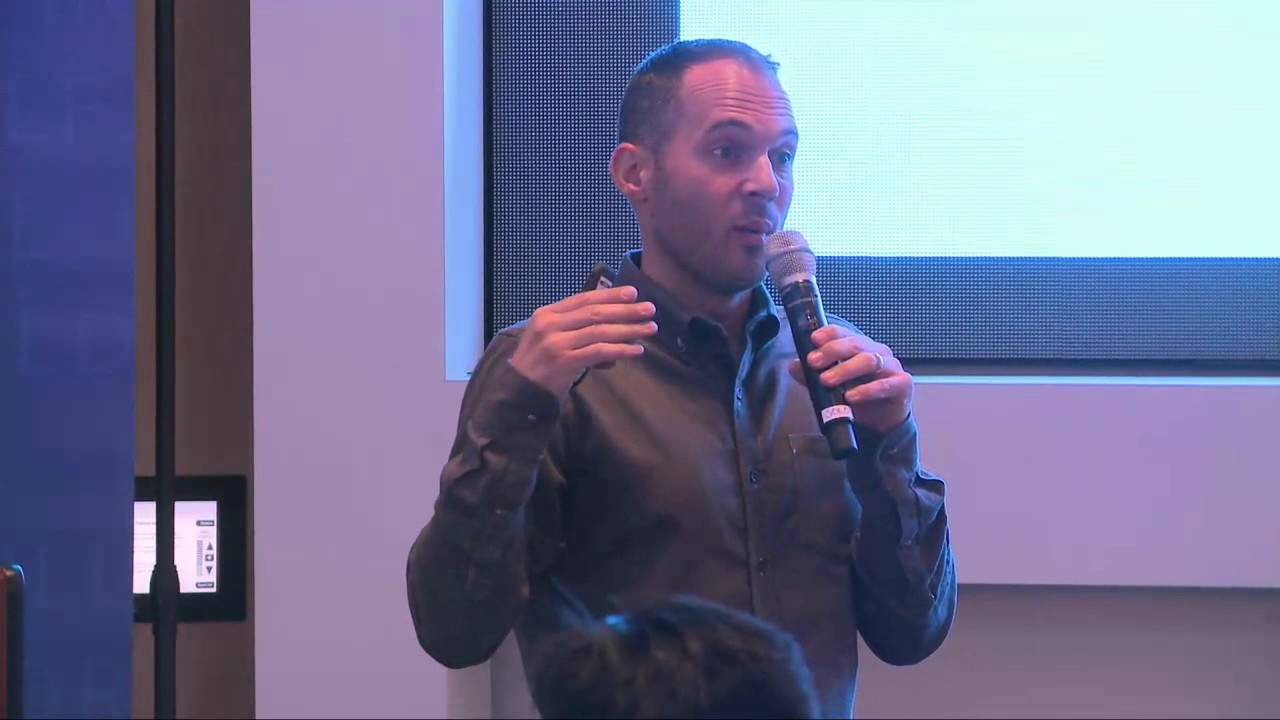
Andy Grayson, head of brand strategy at GS&P, tells founders that branding starts with your story and the people you're trying to reach. He uses Simon Sinek's Golden Circle to show why emotional connection matters more than listing what your product does.
Chapters
But the basic building blocks of building a brand haven't really changed all that much. And that's what I want to talk to you about today. And I think what I'm going to talk about is going to be relevant to not only the pitches for you that are about a week away— my hope is that you'll take a little bit of these nuggets with you as you head towards those pitches— but also try to reserve space in your brain For after the pitches, obviously. 'Cause if you pitch and you're successful, then you are gonna be building a brand. So some of this stuff might seem not as relevant to next week, but remember it will be relevant to you as you build a brand. And as the CEOs of your companies, the founders of your companies, you'll wanna remember, I think, some of these things. And I've tried to keep it really simple because at the end of the day, branding, is not complex, actually. It's actually really simple. People try to make it really complex and pretend like it takes these, you know, crazy amount of time and crazy amount of research to build great brands. But it really doesn't. It actually starts with the founder of the company. And that's who we have in the room. And it basically boils down to 2 things, which I've organized this presentation around. And those 2 things are based on the one simple truth that branding and marketing is all about people. It's not— it's really not more complicated than that. And when I talk about people, I'm basically breaking it into 2 things, like I mentioned, that we're gonna build the presentation around. The first people or person Is you and what your story is, why you did this. And I'm going to talk a lot about that and how important that is for building your brand and your brand story. And the second is the people you want to talk to and getting to know them and understanding them and what you should think about when you're doing that. Honestly, it's those 2 things. You try to connect the 2, and that's how you build a brand. I know that sounds almost Simpleton simple. But that's really what you need to think about. And the best brands in the world are simpleton simple. If you think about it. Think about the brands you love. They're not really complicated things. They're things you can explain in an elevator to a child. The brands that are kind of confusing and you don't know if you like them or not, those are the ones that usually haven't figured out how to talk about themselves in that way.
So—
Let's start with part 1, which is you. Every one of you has a reason you're creating a company. Every one of you has a reason you're creating this idea. And it came from someplace. And if you're at this university and you're listening to Tim Draper, who has a great message, who wants companies to change the world, hopefully you're creating this company not just to make money. But to actually do something because you have a great idea, because you think something can change. And that story is really relevant to you creating your brand. Don't throw it away. Don't think it's not relevant to why you created this company and ultimately having it be part of your brand. I've done a lot of advising to startups and worked obviously around the Bay Area. with a lot of technology companies. And a lot of young technology companies in particular make a big mistake when it comes to their brand. And they kind of subscribe to this false belief that the product is everything. If we make a great product, we'll never have to advertise and we'll never have to build a brand because it'll just be so amazing, it'll just do it— do that for itself. Well, that's kind of horseshit. And it doesn't work. And you really need to be thinking about why you created it and what your story is. This is my product is everything joke. Um, don't think that's the truth. And if you're not gonna listen to me, listen to someone who you'd think would live by the mantra of the product is everything, um, who actually kind of said the opposite in the best way possible, I think. And that's Steve Jobs, who said, it's not technology that really changes things and changes the world. It's the people. who created the technology. And that's exactly what I'm talking about, is that there's a human story to why you did this. And human beings on the other end want to know what that is. And that's the thing we hunger for. We want to relate to things and understand things and connect to stories. And again, if you think about your favorite brands, somewhere along the way, you connected to a story about that brand in a way that was very human. And again, was very simple and was probably emotional rather than technical or rational. That's a long way of saying this simple point is that— and you may have seen this, I'm gonna show a video in a second because someone kind of summarizes this way better than me in a TED Talk. Simon Sinek. Who's heard of this guy?
Yeah.
Cool. Well, a good number of you have and a good number of you haven't, which is great. So you can watch this video. But think about when you're building your company and you're building your story, whether it's for your pitch or whether it's for ultimately building your brand, what people are gonna really care about is not what you're doing, it's why you're doing it. That's what's gonna create a memorable connection and people are gonna remember that in their brains. Oh, I connect to that. I get to that. I subscribe to that. That's a great vision. I believe in that person. I believe in that idea. They may be impressed by the what, but they're going to remember the why because they had an emotional connection to it. So watch this video. It's the longest video I'm going to show, but it's not boring because I think this will really strike home. To you guys, and it really sums up what I've been talking about. But this is Simon Sinek. Oh, yeah. These are the questions you should be asking when you're thinking about your why. Why did you create this? What were your ambitions? These are the things people are going to want to know, and these are the truths that are going to define your brand. So here's Simon. What is your why?
I call it the Golden Circle. Why, how, what. This little idea explains why some organizations and some leaders are able to inspire where others aren't. Let me define the terms really quickly. Every single person, every single organization on the planet knows what they do. 100%. Some know how they do it, whether you call it your differentiating value proposition, or your proprietary process, or your USP. But very, very few people or organizations know why they do what they do. And by why, I don't mean to make a profit. That's a result. It's always a result. By why, I mean, what's your purpose? What's your cause? What's your belief? Why does your organization exist? Why do you get out of bed in the morning? And why should anyone care? Well, as a result, the way we think, the way we act, the way we communicate is from the outside in. It's obvious. We go from the clearest thing to the fuzziest thing. But the inspired leaders and the inspired organizations, regardless of their size, regardless of their industry, all think, act, and communicate from the inside out. Let me give you an example. I use Apple because they're easy to understand and everybody gets it. If Apple were like everyone else, A marketing message from them might sound like this: We make great computers. They're beautifully designed, simple to use, and user-friendly. Want to buy one?
Meh.
And that's how most of us communicate. That's how most marketing is done, that's how most sales is done, and that's how most of us communicate interpersonally. We say what we do, we say how we're different or how we're better, and we expect some sort of behavior, a purchase, a vote, something like that. Here's our new law firm. We have the best lawyers with the biggest clients. We have, you know, we always perform for our clients, do business well. Here's our new car. It gets great gas mileage. It has, you know, leather seats. Buy our car. But it's uninspiring. Here's how Apple actually communicates. Everything we do, we believe in challenging the status quo. We believe in thinking differently. The way we challenge the status quo is by making our products beautifully designed, simple to use, and user-friendly. We just happen to make great computers. Want to buy one? Totally different, right? You're ready to buy a computer from me. All I did was reverse the order of the information. What it proves to us is that people don't buy what you do, people buy why you do it. People don't buy what you do, they buy why you do it. This explains why every single person in this room is perfectly comfortable buying a computer from Apple. But we're also perfectly comfortable buying an MP3 player from Apple, or a phone from Apple, or a DVR from Apple. But as I said before, Apple's just a computer company. distinguishes them structurally from any of their competitors. Their competitors are all equally qualified to make all of these products. In fact, they tried. A few years ago, Gateway came out with flat-screen TVs. They're eminently qualified to make flat-screen TVs. They've been making flat-screen monitors for years. Nobody bought one.
And Dell.
Dell came out with MP3 players and PDAs. And they make great quality products, and they can make perfectly well-designed products, and nobody bought one. In fact, talking about it now, we can't even imagine buying an MP3 player from Dell. Why would you buy an MP3 player from a computer company? But we do it every day. People don't buy what you do, they buy why you do it. When we communicate from the outside in, yes, people can understand vast amounts of complicated information like features and benefits and facts and figures. It just doesn't drive behavior. When we communicate from the inside out, we're talking directly to the part of the brain that controls behavior, and then we allow people to rationalize it with the tangible things we say and do. This is where gut decisions come from. You know, sometimes you can give somebody all the facts and your figures, and they say, I know what all the facts and details say, but it just doesn't feel right. Why would we use that verb, it doesn't feel right? Because the part of the brain that controls decision-making doesn't control language, and the best we can muster up is, I don't know, it just doesn't feel right. Or sometimes you say you're leading with your heart, or you're leading with your soul. Well, I hate to break it to you, those aren't other body parts controlling your behavior. It's all happening here in your limbic brain, the part of the brain that controls decision-making and not language. But if you don't know why you do what you do, and people respond to why you do what you do, then how will anybody— how will you ever get people to vote for you, or buy something from you, or more importantly, be loyal?
Cool. Kind of a long video. I think I heard some people trying to spell his name. It's S-I-N-E-K. That's how you spell his last name. There's a really long TED Talk you can watch. There's that one, which is just 3 or 4 minutes long. But he makes a really compelling point. And it's a very true point. And it's something for you to think about. Even when you do your pitches, you know, you're talking to those people in the room. Yes, they're gonna wanna know The information that's gonna allow them to make a decision, but you're also gonna wanna connect with them emotionally. Which is also why you should think about yourself and having fun when you do that. And connecting with that person and those people in the room emotionally as well. Being likable. Communicating that you, that you love what you do. Ultimately, that is how you build a brand, and that spills over into communicating your brand to other people.
More from Tim


He Sold His Car to Build This Startup, Then Pitched It for $1M 😳 #Startups #AI

This Startup Moves Your Crypto BEFORE Hackers Can Steal It 😳 #Crypto #Cybersecurity




15 Months Without Refrigeration?! This Startup Thinks It Can Go Global 🥥 #FoodTech #Startups



