Why Cost and Robotic Application Inversely Effect One Another | Board Member of Anybots, Tim Lenihan
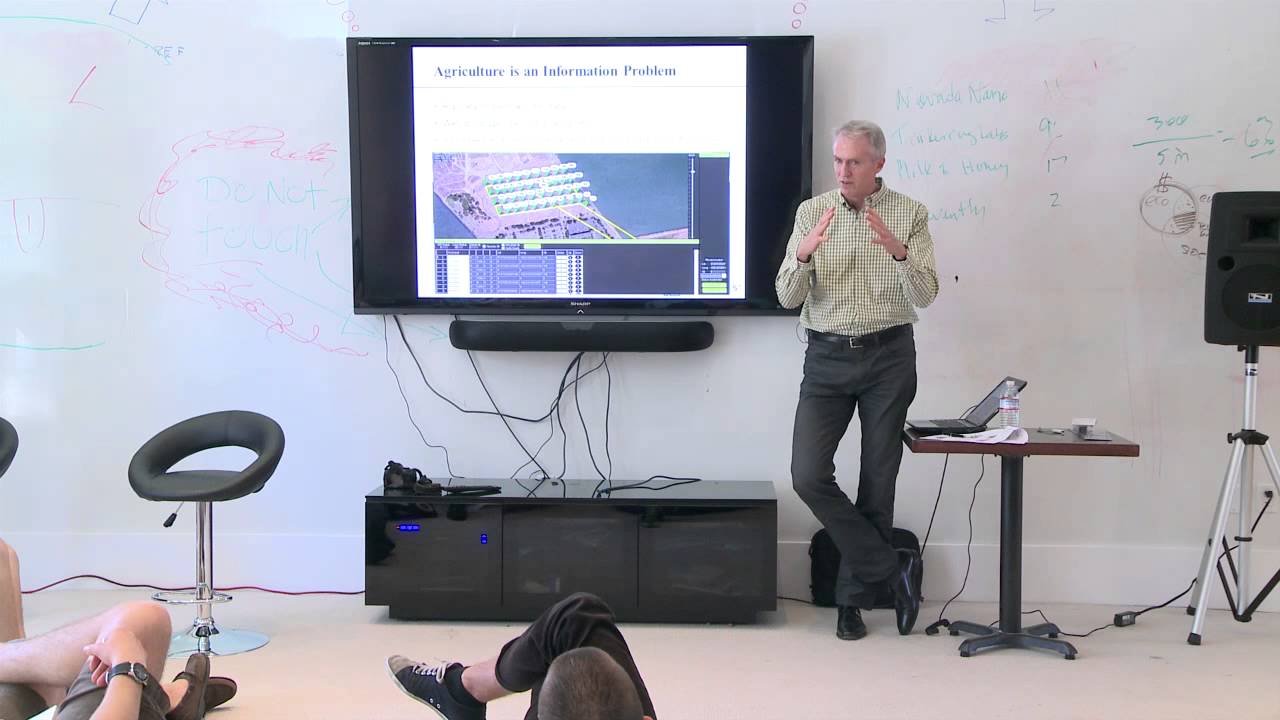
Tim Lenihan, board member of Anybots, explains how falling robot costs are opening new applications the way cheap computing democratized software. A $200 drone gives farmers real-time crop data; an autonomous ocean platform replaces expensive survey vessels; the Nest thermostat couples AI with cheap sensors to cut energy waste. As robot costs drop, routine tasks become viable.
Chapters
I think all these kind of interesting things that are occurring on the hardware side and the software side change the equation entirely. It's the same thing that happened in the computer space. It used to be, if you go back early '90s, if you wanted to have processing power, you have to go get a big computer and you have to rent time on a server, this kind of thing. Eventually, that came down to virtually nothing, and then all of a sudden everybody could make their own applications. Right. So everybody can write their own app. The same thing's happening in the robotics space. It used to be very high barriers to entry. Only the military and the government could be able to do stuff. And now because of these things that we just reviewed, there's virtually no barriers to entry and you can go off and do whatever you want with robotics. And so as you would suspect, some interesting things happen as a result of that. So as the cost in any kind of technology, As the costs come down, the applications go up, right? So if it's real expensive for a robot, well, you can only use robot for really high-value things. But if robots are virtually free, then you can use robots for all sorts of stuff. So there's a couple of interesting, I think, a couple of interesting applications for robotics that you really maybe don't think about as robotics, right? So this is a company called 3D Robotics, and they're over here in Berkeley. They make this device, it costs about $500. All the software to run it is free. Up until about 8 years ago, these things could not even fly because the computation power that you had to have to control all those spinning blades A human couldn't do it, they weren't fast enough, and the computation power just wasn't there. So only in about the last 10 years have we been able to fly these type things. And so they provide these basically military-grade, self-guided devices that fly on their own for the price of a toy in a toy store, $200. And so it's kind of interesting, the biggest market for these things Now you think to yourself, well, that can't be, but agriculture is a big data problem without the data, right? So what farmers do is, you know, if you've got this giant wheat farm, you're concerned about this disease called wheat blight. And so you could walk around the farm and look for areas of the wheat that are not doing well, the wheat that has kind of turned black, and that's wheat blight, and then you could spray that, right? But if your farm is 12 square miles, there's no way you could walk that thing. So what do you do? So every June, you just load up a bunch of planes and you spray the whole thing. You just go out there and spray pesticides across all the wheat because you don't know where the wheat blight is. So you just say, let's just hammer the whole thing, right? So the idea is, You know, it's happening already, is the farmer gets up in the morning, instead of walking around his farm and checking on how things are going, he takes his drone, opens up his kitchen window, throws the drone out the window, right? The drone just goes, it knows the pattern of the farm, it goes and it does this like lawnmower pattern across the crops. It lands by itself, it connects by itself to the internet, sends that data up to some cloud, That data center cranks through it and sends the farmer a little thing on his phone that says, here's your morning crop report. You might wanna go check out over in mile marker 2, 350 yards, there's something over there that might want some attention. Maybe there's some wheat blight over there. So the farmer all of a sudden has this massive amount of information amount of information about their, what's going on on their farm. In the tomato business, this is kind of interesting too, right? The tomato guys, I mean, I knew nothing about farming until all this stuff starts coming up where they wanna use these drones for farming. The tomato guys, their whole big thing is you can only pick a tomato like in a 2-day window. And so the tomato has to be a certain color. And what they used to do is they had a guy go walking around the farm, right, looking at the tomatoes, what color is it today, that kind of thing. So what they do now is same type of thing, they send up the drone and the drone will fly over the tomato field and it will take basically visual images and then it will combine all those images and say this is the average color of your tomatoes. Wow. So the guy doesn't have to guess anymore, right? It's like, okay, when the tomatoes get to this color, let's go out and pick them. So it's really kind of interesting. So like I said, agriculture is an informational problem. In order to be doing a good job and maximizing the amount that you get out for the resources that you put in, farmers have been operating blind. Now with these robotics technologies being so cheap, they have tremendous ways to not only reduce costs, but then they reduce the environmental impact of the areas they're farming, and they increase the productivity, and then there's less waste, and so the cost of the food drops. So it's just a very, you kinda think about, well, where are robotics being deployed? If I had asked you guys that, maybe 2 or 3 would say, oh, agriculture, but it's really not that, it's not like the obvious place, but— Because of the cost model and some of the things that are going on, it's an interesting thing. Another interesting space, another big data problem is oil and gas. Think about it, if you're Shell Oil and you want to get gas, it's an information problem. If you want to drill for oil, it's an information problem. If you knew exactly where to drill and exactly how deep to drill, You just go there and you drill, and you just think about how much money you'd save, right? I mean, think about how many oil wells have been drilled when it's like, oh, they get to the bottom and it's like, oh shit, there's nothing there. Let's take it down, let's go do another one, right? And that costs millions of dollars, huge amount of wasted resources. And so if you're able to get all these data, especially in the ocean, So these are a bunch of things that these guys care about. If you're Shell Oil or Exxon, you care about all these things. Where are their hydrocarbons seeping out of the ocean? How are existing wells doing? All this stuff. And the way that they do it today is they take a big giant boat and they go out here to Pier 29 or whatever and they load it up with 40 guys and they the Indian Ocean or whatever, and it takes them 4 weeks to get there, and they got all these guys on the boat, and then they drop these sensors down and they collect the data. So there's a company in Santa Clara started by a friend of mine called Liquid Robotics. And so what these guys did is basically the same thing that the drone guys did to farming. They come up with this little thing, it looks like a surfboard. This is what it looks like. This is a liquid robot. Right? So it's a surfboard, they got a little solar panel on it, they got a little box that holds the server, and then underneath they've got this little device that generates forward thrust on the robot just from the motion of the waves. So as the waves go up and down, this thing moves the device forward, right? So now— and it's got all the normal stuff you'd have on your cell phone, right? It's got GPS location, it knows where it is, right? It's got the ability to steer itself and it's a controlled— it's a closed-loop control system like an autopilot. And it's nothing more than what's in your phone. What's in your phone mounted to a surfboard with a solar panel and a server and then a connection to a satellite phone. And they just put this thing in the ocean and they say, well, send me some data when you get to Hawaii or send me some data when you get up to the Aleutian Islands by Alaska. And then there's no guys on a boat. There's no oil being burned to move this boat across the ocean. There's nobody falling off the boat and drowning. None of that stuff, right? Everyone just is sitting around doing something completely different, waiting for their text message to come in. Says, okay, yeah, you should drill for oil here. Or this oil well is leaking, or whatever. So, I mean, just a— I don't know if it's one order of magnitude or 2 order of magnitude or 3 order of magnitude change in the cost of collecting that data. And the amount of wasted resources that you can take out of the equation is just insane. So this is just another kind of example of you've got these robotic technologies, you wouldn't really consider them if you've been watching Transformers and all these other Hollywood shows, you really wouldn't say, oh, these are robotics. But that's really where the kind of the juice is right now in the robotics space. It's in Solving these problems that you have in the past has just thrown a bunch of resources at, and now you can do them with a lot more precision. Here's a couple other examples, right? I mean, I don't know, this is the Golden Gate Bridge. It's a bridge a little north of here. I mean, you think about this, there's no longer toll takers on that bridge. Well, you think about it, 20 years ago if you said, well, there's not gonna be any toll takers on the bridge, there's gonna be robots doing the job. Well, you have this vision in your head of some 3CPO guy there who'd come by and grab your money as you went through, right? But that's just never happened obviously and what happened was instead is you just got a whole bunch of low-cost sensors, right, and their ability to track where things are and assign accounts to them and it's a— again, it's a big data problem, right? So you have all these cars, they all have IDs on them, they're all associated with a certain And now when that car drives through the Golden Gate Bridge, it gets a bill and that person gets charged on his credit card. So it's another kind of one of these combination of these, all these trends that provides humongous benefits. So you think, well, that's cool, Tim, but those 8 toll takers lost their job. And that's true, they did. But you think about this. Every single person who crosses the Golden Gate Bridge every single day gets an extra half an hour to work. So those people can, if they're out collecting food for poor people, if they're out inventing cures for cancer or whatever, they get an extra half an hour to do that every single day. And how many people cross the Golden Gate Bridge every day? A lot. A lot. So you think about how much did that automation, how much did it do to free up resources to solve problems? Now, and I guess the one thing that, and this is a, you guys know what this is? The Nest thermostat, right? Same type of thing, right, where you've got this, you've got a data center hooked up to a device and it's doing a better job optimizing how your house operates. And that's really more kind of in this area of AI, artificial intelligence. And kind of the joke has always been, and this is both in the area of robotics, and in the area of artificial intelligence is the era of artificial intelligence will never ever get here because it kind of works like this. As soon as someone does something that looks like artificial intelligence, everybody says, well, wait a minute, I know how you do that, it's just math, right? So it can't really be artificial intelligence. And so it's this kind of loop where someone does something really interesting and they kind of develop this nest and it kind of knows when you're knows when you're in your house and knows when you like the temperature and you don't have to do anything, it does it by itself. But now we all know how it works and so it's not really that impressive anymore. So this whole joke is the artificial intelligence will never get here. And it's kind of the same thing for robotics, right? People wouldn't say, oh, this is the age of robots, right? And you might not say, oh, this is the age of robots. And this is the age of robots. Again, because of Hollywood, and, you know, we all think robots are 3 stories tall and can transform from a car into a giant robot at the press of a button.
More from Tim


He Sold His Car to Build This Startup, Then Pitched It for $1M 😳 #Startups #AI

This Startup Moves Your Crypto BEFORE Hackers Can Steal It 😳 #Crypto #Cybersecurity




15 Months Without Refrigeration?! This Startup Thinks It Can Go Global 🥥 #FoodTech #Startups



