Why Startups NEEDS to Avoid Office Culture that's too Casual | Cooley LLP Partner, Sally Kay J.D.
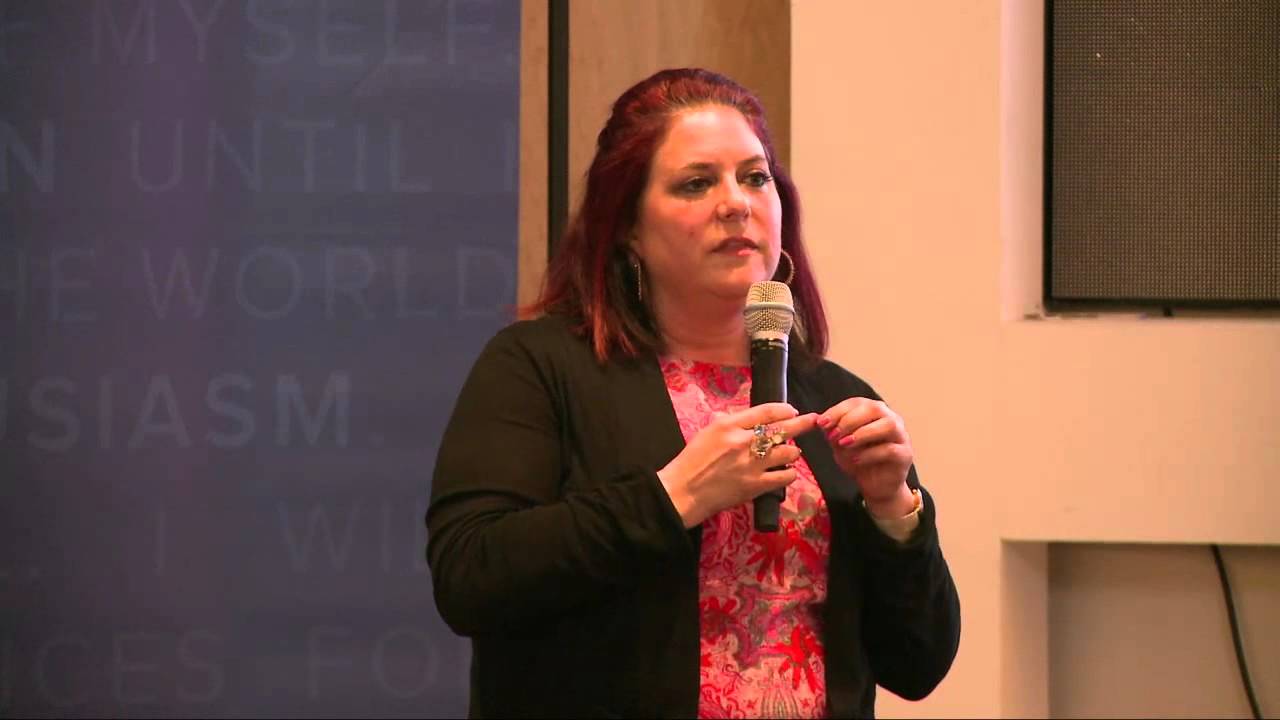
Sally Kay, a Cooley LLP partner, explains why startups should avoid overly casual office culture and the legal risks it creates. She covers harassment and discrimination laws, what you can and cannot ask in interviews, and hiring practices that protect you from discrimination claims.
Chapters
Um, this one is a big one. It has become a lot more generational, so I will defer to the brilliant youth in this room. The world has gotten a lot more casual. I mean, normally, back when I started working, back in the dark ages, when we actually, you know, women still had to wear pantyhose to work. So women couldn't wear slacks. I wasn't allowed to wear pants in the 3rd grade. Oh my God. We had to wear skirts. We had to wear dresses. Little girls. Things are a lot more casual. I mean, look at you guys sitting around here. You're in flip-flops. You're in beanbags. And what happens is in an environment that's much more casual, and in a startup, right, you're together 20 hours a day in small space. You're eating every meal together. And you get really close to each other, right? You become very familiar. We're all pals. Everything's fine. And it's all fine until it's not fine, right? There's 3 or 4 of you, you started this thing, you're 6 months in, and you say, you know what we really need to do? We need to hire a 5th person to do job X. So you bring in that person who doesn't know the 4 of you very well, and you guys are at lunch and you're having a rip-roaring conversation about something that happened in the bar on Friday night that involves, I don't know, too much drinking, picking up somebody of the opposite sex, some profanity, some nudity, some—
Sex.
Something, and it doesn't have to be even that extreme, that this new person is very uncomfortable with. And you don't think anything of it because the 4 of you have had this company and it's cool and we talk about everything and it's all cool and nobody's feelings get hurt and nobody's feathers get ruffled. There's not any statute that says that if it didn't offend me yesterday, it can never offend me. Right? I mean, I, I, it's pretty hard to offend me. I mean, really, I swear like a longshoreman, right? I tell some of the dirtiest stories that you can ever imagine, 'cause I can't help it. I have brothers, you know? That's the way I was raised. But I was at a board meeting once for a client. It was a chip company, right? So bunch of old white dudes. Bald old white dudes. Directors, right? So I don't even work for these people, right? I'm just the outside lawyer sitting at the table. Big oval table. Old white dudes over here, investors. Young white dudes over here. Japanese co-founder sitting over here on the side. I'm sitting at the end of the table. One old white dude next to me reaches in his briefcase, pulls out his nail clippers, takes off his shoes, and starts cutting his toenails. I'm not even making this up. It was the most disgusting thing. And I thought, this is so gross, until old white dude over here starts using racially insensitive words to talk about the potential Japanese partner that these people want to engage with and how he did not appreciate the way that he thought that they were strong-arming them, which really involved 4 pretty explicit sexual references. And 2 or 3 very explicit inappropriate ways to describe people who are from Japan. Fortunately, the Japanese guy that was in the room didn't speak a lot of English because I'm not sure that he understood it. But the horror on the side of the table of the young guys who all immediately sent me emails saying, oh my God, oh my God, I'm so sorry, I'm so sorry, I'm so sorry. And I sent them back an email and said, It's a good thing I'm not an employee here, because I would have grounds to sue them. I mean, it was just— everything about it was inappropriate. But this is the way that these older guys who, like, were some of the founders of Intel, probably, this is the way they always talk. But you can't do that, because if you've got 5 or more employees, you're subject to harassment laws in the state of California. And so you need to be really careful. Just be really sensitive to the people that are around you. Because you're not just an employee, right? You're a founder. You're the person that's in charge of this thing. You're setting the tone for everybody that comes to work for you. And you need to be really careful and really sensitive to the people that are around you. If you have 15 or more employees, you then become subject to federal anti-discrimination laws. And so you should be very thoughtful in your hiring. There's a lot of resources out there to understand that. And I realize that, you know, in your generation, Diversity, people are a lot more aware of diversity, but even if you are not intentionally doing it, and you can all of a sudden look at your workforce, and you're like, wow, we're not very diverse, and look at these last 22 people that we didn't hire, you have to be really, really careful in interviewing people. There's lots of questions that you can't ask, and we won't go through these today, but the EEOC, their website has a lot of information about things, questions that you can ask in interviews. You need to be really careful. You can't say to somebody, wow, that's a great accent, where are you from? You can't ask them that, right? Because it potentially gives way to a discrimination claim based on national origin.
That's false.
No, absolutely true. Because if— or I'll give you another example, and this is probably something you won't see for a long time, but you're interviewing a woman You look at her resume, she has a gap of about 3 years in the middle. You can't say, well, what were you doing during those 3 years? You can't ask it in that way because she could be home having children. She could have been raising a family. But you can't ask her that because you can't ask if she has a family. If she wants to bring up that she has a family, you can. But you say— you can't say, do you have children? Do you have a husband? Are you straight? I mean, Oh, I see here that you are the vice president of the Gay and Lesbian Alliance. You can't bring that up, because if you don't hire that person, they may go to the EEOC and make a claim that you didn't hire them because they were gay.
Yes? So, just 2 things. Firstly, if they had a gap of 3 years, could you say to them, could you please tell me what skills you learned during 2009 to 2012?
Not really. People will— so people who generally have a gap will be forthcoming about it. They will generally say something. But if they don't raise it, you can't explicitly ask it.
What if they sign a document saying, I'm okay with you using this information?
No, I would never sign that. Why would anybody come interview you to sign that piece of paper? Guys, use the mic. Daniel, please use the mic. Okay, no, I understand, I understand completely. I interview probably 600 law students every year. I'm gonna— and it's hard, right? Because you see something, they've got a big gap in their resume, you just have to ask them, and you need to determine, what you need to determine is, do they have the skills to do the job that you're asking them to do? So if you're hiring, for example, a marketing manager, and you look at their resume and they've got marketing skill, then you ask them. You know, tell me about a time where you had— you were trying to design a marketing campaign for such and such. And let them tell you. But you can't say to them, I see that you didn't work for 3 years, because for all you know, you know what? Their child died and they were— they had to be— they had to go to a mental institution because they had a breakdown. Or they had to have some kind of surgery. that prevented them from working for a period of 3 years. They have a disability, which you also can't ask about those things either. So very, very strict rules in California and most other states.
So if both parties are like walking on eggshells and not addressing these issues, and the interview is really vague, and then afterwards you say, okay, we're not going to hire them because we don't have answers to these 5 crucial questions, can they sue you that they didn't get a proper No.
As long as you don't break the law. Don't break the law when you're doing it. But it's, it's, it's on you to ask them the right questions to get the information that you need. And it is likely not critical that because they took 3 years from not working that, that you are not able to ascertain whether they possess the skills to do the job that you need to hire them for.
When did these laws come into place?
Forever.
It's like, how did Steve Jobs, like when he fires people in the elevator, How come he didn't get sued to the days?
How do you know that he didn't get sued and settle it?
Yeah, that's ridiculous.
You don't know. You never know, right?
And with the accent, is that only during the interview? If like, if you are working and a new work colleague shows up on Monday, you say, oh, that's a cool accent, where are you from?
Once they're an employee, once they're an employee, they've already got the job. The challenge then becomes, if you're that person's supervisor, you again need to make sure that you're not doing anything that would be perceived as discriminatory, right? So you say, hey, that's a really cool accent, where are you from? I was born in Uganda. Oh, very cool, all right. And then all the people that weren't born in Uganda all get promoted, and the person that was from Uganda didn't get promoted. Okay, so it's just about being thoughtful. It's about being thoughtful in what you're doing, and making sure that you're providing the same opportunity to every single person come through your door. And you're not asking questions about the protected things.
Yes? Hi, I just wanted to know, like, if something like that happens, who has to give the proof of what is going on? So for example, someone sues you because they think they've been discriminated. Who has to give proof that he has been discriminated? The person himself, or the company has to prove that they haven't discriminated him?
Both. Both. So the person will go hire— so let's say that you didn't ask one of those questions, right? So let's say that you went through the interview and everything was— it's 3:03, so any of you that have to be out at 3:15, you got a 12-minute warning. Um, you go— you are perfectly legal in all the questions that you ask, right? And then that person says, I think I didn't get hired because, um, because of my race.
Right.
or because of my national origin, or my sexual orientation. And they go and they get one of those lawyers that I was talking about that will take on anybody. And then they come back and they bring this lawsuit. There's back and forth in this discovery, and you as the interviewer will be a witness, and you'll have to be deposed. And they will say, look, here was the interview, these are the things that we talked about, I never asked any of those questions. And then they may actually go and look at the company's hiring practices. And see, look at the composition of your workforce. See, of all the candidates that you've interviewed, are you only hiring the white people? Are you only hiring the black people? Are you only hiring the Asian people? I mean, it's a big, complicated thing. Ordinarily with the EEOC, you can sometimes settle those things. Sometimes the EEOC will look at it and say, this is BS. But if they go get a private lawyer, they can just drag through it. It's hard. Which is why, You need to start setting, especially if you're gonna have more than one person in your company interview people, you need to start setting some boundaries around who, what can they ask, and make sure that everybody is well informed about the kinds of things they can ask in an interview. Let's do one more question and then we need to go because we keep going. I'm gonna go through the rest of this quickly so that we can get to the term sheet part.
Sorry, I just really want to reiterate on the they can sue you based on you commenting on their accent or something like that, which— and then the answer was, what if they sign a document saying you cannot talk about what we talked about during the interview? We went to visit Airbnb, they're gonna go visit Google, they're all gonna sign a document saying whatever you see you cannot talk about. Why don't you do the same with people you hire? And I'm not saying this so that I can sexually harass them, but so I can defend myself.
So there's a difference between people that you are interviewing for employment and people who you employ. But the confidentiality agreement that you sign in as employee, you are not signing away your rights to sue if the company behaves improperly.
That's, okay.
Right, so, okay, I'll give you an example. I come to work for you, I sign a confidentiality thing, and then you tell me that I'm a piece of shit. I don't have any right to come after you for that? You do, but if I say— Okay, so, but you're—
Where's your accent from?
I don't think— Okay, okay, so you say, where's your accent from? And I say, well, you know, I don't really have an accent, but I was born with a really bad speech impediment, and it took me a really long time to get through it.
Oh boy.
Okay? And so I have a little bit of an accent, which is not true, but yeah. So then we're all working, and I'm on a team with 4 other people, and everybody on the team gets promoted and I don't. And I think that my work is the same as everybody else's. This is kind of a far-fetched example. And then I say, okay, you discriminated against me because I have a speech impediment, or I had a speech impediment, right? So it's—
Right.
A lot of it, as long as you're treating people well, and people in your employ are happy, it's not gonna happen, right? So I'm kind of at the corners once people are employed, right? But in the interview process, you are not allowed to ask them those kind of questions.
Okay.
More from Tim


He Sold His Car to Build This Startup, Then Pitched It for $1M 😳 #Startups #AI

This Startup Moves Your Crypto BEFORE Hackers Can Steal It 😳 #Crypto #Cybersecurity




15 Months Without Refrigeration?! This Startup Thinks It Can Go Global 🥥 #FoodTech #Startups



