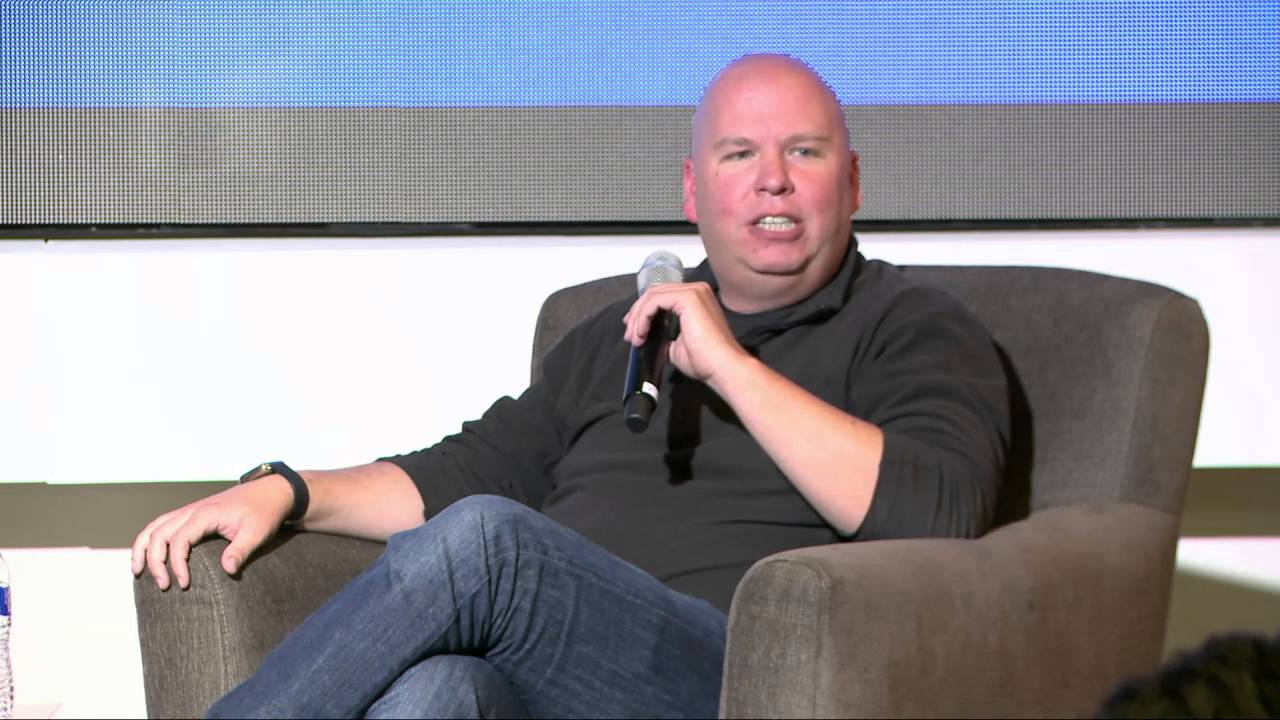
Andy Grignon, iPhone lead engineer, explains how Palm convinced Sprint to launch the Pre by finding a carrier hungry for growth. He describes building webOS from a weekend hack, using WebKit and a custom integration bus to connect Java code with web rendering, and how relationship-building helped navigate carrier bureaucracy.
Chapters
Sort of branch a little bit into just working with service providers, because I've heard stories—
Oh, no.
Another friend of mine who had to go into a meeting with Steve, and he basically went to the board— maybe this is a true/false question, you can verify if you think it's a valid story. He basically went to the service providers and said, drew this big pipe and said, this is the content, this is where we are. And this is a customer, and that's the value, and this is a pipe. It's the dumb pipe.
Oh yeah, that was a dumb pipe thing.
And that's you, and these are the service providers.
And that, I can verify that that is— I wasn't there, so I can't tell you that's exactly what happened. However, there is the perception that the carrier is just a dumb pipe.
Yeah.
And they fought tooth and nail because they saw their value is outside of that. Like, they were adding lots of value. Not sure how, but they're adding value.
So how do you convince a partner who you are there to essentially commoditize to work with you to roll out your phone? I think it's one of the issues I think many startups would face, right?
I think what you rely on, and what we relied on, because at the end of the day, again, these big stupid bureaucracies exist. Think of them as just like the corporate antibodies. They exist to protect the company. All of that kind of big corporate speak and all these other things, these program managers that you have to deal with, like they are just there to protect the status quo. And you coming in with a new idea or an agenda of any kind is going to— it will for sure, 100%, you are going to get shot down. Like that's just the way it is. Even when you're within the company, when I was at, you know, inside of HP, dude, I got shot down all the time. And this is like coming, you know, with them as a product that they bought. I would still propose new ideas and like, it's just, that's the way it is, right? How do you work with people like that? Well, you go back to pretty strong interpersonal communication skills, you know, your ability to have a beer or whatever it is. Like, I rely on alcohol heavily. You would be amazed at how, you know, just having like a personal relationship in the adversarial position helps you. And I did that all the time. So, This dude who was in charge of certifying iPhone on the other side. I mean, we're actually still like it. The relationship was set out on an adversarial tone. Like it was constructed adversarially, and he and I are still friends on Facebook, and we still talk and just shoot the shit on random stuff. But I think what you have to kind of overcome, like the you know you don't say ah my boss wants me to do this. Like don't blame it on your superiors. You have to just kind of take a different approach, and you know again it took a lot of alcohol. It took a lot of like. Keeping your mouth shut, biting your tongue, letting him say what he's gotta say, or whatever it is. But it's just like having, you know, being able to overcome that. Ignore that instinctive kind of, you know, fight back.
Yeah.
'Cause you won't win. You know, it's David and Goliath. And if you just fight—
And it's also set up, it's somewhat of a zero-sum game, right?
Absolutely is. And they have nothing to lose. I mean, think about it. Their job is still gonna be there tomorrow. Your funding dries up and you're fucked. So, like, what are you gonna do? You gotta kind of zip around and do some really creative stuff.
And do you guys sort of take the approach where, and we've seen this just from the companies we've funded, you don't go after the number 1 guy, you go after the number 5 guy who's hungry. But I'm sure the number 5 guy is somewhat bureaucratic as well.
Of course, of course. But you guys, at that point, you guys have aligned interests, right? Like, that always helps. We had to do that at Palm when we did webOS.
Yeah.
Everyone's like, why did you guys ship on Sprint? Like when we shipped the Palm Pre, it was a phone way back when. And it was using WebKit kind of under the covers. And it was a cool design. I actually really liked it. Cool design. A lot of things I liked. But we shipped it on Sprint. And everyone's like, why the hell did you guys ship it on Sprint? And the answer is because nobody else would talk to us. Like, we of course wanted to ship on AT&T, but they're like, sit in this bin. So we went to Sprint and Verizon was like, no. And Sprint was the one that was willing to let us kind of push this new design through as an alternative to the iPhone. They had— that was important because they hadn't landed Apple. They hadn't landed iPhone at the time. So it was kind of like a thing. But we had, again, they're kind of second, third, or whatever, however you want to view them on the chart. But we had aligned interests. We both wanted to kind of team up, even though, yes, they were bureaucratic. We had difficulties working with them, but we both wanted the same thing at the end.
Speaking of Palm and webOS, rumor has it that you coded webOS over the weekend. Tell us more about that.
It was a hack. It was a friend of mine who, funny enough, he was my neighbor in Half Moon Bay now. And he and I worked together back at Pixo. Remember the iPod company? And I just saw him. I was walking around Palm one day, and he was just in a cube. And it was like this random ass, like, the fuck are you doing here?
Out of context.
It was weird. It was like, yeah, totally out of context. And we started talking. And for me, I had this idea of, you know, we were kind of on this path that wasn't tenable, right? It was building basically Palm OS 5 or whatever it was. What I wanted to do was bring Dashboard— I don't know if you guys know Dashboard. I see a lot of Windows machines, which is all right, I guess. But I'd seen— when I wrote Dashboard, Dashboard was these web pages, but they didn't have to be square. It was like these nice rounded rects. We could use alpha. Hey, imagine that. But back in the day, you couldn't do that. And what I wanted to do was grow these web widgets from Dashboard up into a full-on operating system. You know, when we started iPhone, I had the same— I pushed the same agenda. And then when I got to Palm, I got to team up with my buddy who now he's director or VP of WebKit at Google. So he's gone off on his— he's continued that march.
Yeah.
But we both kind of had this kind of aligned interest. And we had— I remember there was a time we were building very early days of before webOS. We were building the look and feel of webOS but on a different platform. And the guy who was responsible for the text system was out, like, on a long weekend or something. And we didn't have the ability to center text. And, like, the entire program halted because the dude who could write the thing that just div by 2 and— yeah, like, he was gone. And we just didn't have center text. And I was like, what the fuck? Like, we've been able to do this from the dawn of time. So that's what WebKit comes from, which is— Stand on the shoulders of giants. This goes back to, do we need a custom thing? No. Can we build off of a module that exists?
Yes.
Yes. But then we have to build our separate sauce. What's our secret sauce? Well, Palm had already invested years in doing enterprise-grade stuff. We had written a bunch of code in Java to allow us to talk to Exchange. That was a pretty cool thing. There was a lot of knowledge there. But how do we bridge Java into WebKit? So we built a whole new bus and all this other bullshit. But I think that's a good example of, like, let's invent a little bit of special sauce, take advantage of what we've already got, leverage something which is big and powerful, and then create, you know, the endgame. I don't think— I think a lot of times we get stuck on thinking about the path that we laid out when we first started something. And it's okay to change your mind. It's not okay to change your mind repeatedly. But I think sometimes you have to acknowledge the fact that the path you're on is not going to work.
In fact, one of the things we teach here and kind of really emphasize is the idea of fail and fail until you succeed. That in a fast situation, it's better to fail fast and come back.
I'm a huge fan of that. Absolutely. And I fail. I mean, I failed so many times. And every time, it's not like I can't say I learned my lesson. I learned a thing that didn't work. But, you know, but again, I'm not trying to solve the same problems over and over again.
Right.
But I think it's identifying that pattern, right, of like, this isn't gonna work. It's just not working.