TimTalks: Housing affordability through technology and funding innovation

Tim discusses how modular construction and sustainability bonds could solve housing affordability in the Bay Area. Factory-built apartments cut costs and timelines. Green financing unlocks capital for projects that traditional funding won't touch.
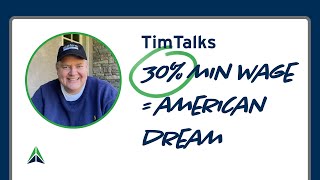
So we've talked in earlier videos about the 30% minimum wage, and that's the magic number to live the American dream. So if you're willing to work 40 hours a week, does your job pay enough, you can turn around and spend 30% or less of it on housing. As we said in 1970, you could work any job, and that would be true today. 45% of hourly jobs don't pay enough. Part of that is wage stagnation. But the biggest part of it is that housing has not been innovated for a long time. The construction industry nationally produces about a thousand apartment buildings a year. The reality is we need 5,000 a year. And the reason why it's a ,thousand and not five thousand is because the way these apartments are built, they're built one by one by one, custom each time. There's not a single national brand for apartments. There's national brands for Starbucks coffee, for fast food, for hotels. There's not a single national brand for apartments. So we're going to try to use some innovation to disrupt that. So I funded a company named Cloudapartments.com and our founder there, Curtis, has a really innovative solution. So he has designed the ultimate apartment. That apartment is a lot like the Tesla of apartments or the iPhone of apartments. It's something fundamentally much better than you've ever seen before. It's very green, LEED platinum, certifiable, etc. And what's fascinating is he designs that module, he passes the CAD design over to. So he does the design, he passes that over to a factory that does modular construction. What's fascinating for the modular guys is there's been big advances in robotics and big advances in computer vision. So that allows these factories to be 80% automated and have 20% of the work done by union labor. And the result is those modules can be built in the factory, shipped via truck to a site for an apartment building. So you have one acre of land, you can build 200 studios or some combination of studio, one, two, three, bedroom. The workers on site prepare the concrete pad and maybe the underground parking if it's needed in that area. And then the trucks show up and they crane these modules and assemble them like Legos on site. And Curtis has built in this really cool self aligning system. So there's very little labor on site. You stack them all up, it's about six stories and 200 apartments on an acre. And then once they're all stacked, you go into the hallway, open up a door, and you only have to do four Connections on site, hot water, cold water, sewer and electrical. So the on site labor is way, way lower than normal. So an apartment building that would normally be built today with a developer partnering with a general contractor, that same team that can build one building can build five to 10 buildings with the same amount of on site labor with cloud apartments. So that allows the existing labor force that's working in apartment buildings generating 1,000 units a year to generate 5,000 units a year. The other thing that's really nice is because of this efficiency, you take about 20 million of the cost out of a building, so you bring the cost way down and you actually speed going live by quite a bit. The other thing is since the apartments are green and can be low rent, you qualify for sustainability bonds to fund them. And sustainability bonds you can get at 2% interest. Google took down 10 billion of sustainability bonds. They're building solar farms and lots of other things with it, but they're also building housing in San Jose with it. So if you borrow at 2% and you take 20 million of cost out of each building, what you can do is actually have rents that are affordable. So you can take each quintile of income in a community and have them all housed in the building. So the top tier, the tech worker pays market, but the fast food worker who's working 40 hours a week can pay less than 30% of income. And if you blend the rents with the 20 million cost savings and the 2% interest, you can pay back the bond in a reasonable number of years and have massive growth in housing stock. So in the Bay area we need 5,000 buildings. At 200 units, we have 1 million more jobs than housing units. So 5,000 Cloud apartment buildings built around the Bay Area from San Jose to San Francisco would allow jobs and housing to match. And when jobs and housing match, then you have affordability for everybody. Now what's interesting is Google's already shown how to do this, how to fund it. So cloud apartments has the design, the factories have all the automation ready to go. The funding can come from big tech or the biggest employers in any given county. So in tech we need 5,000 buildings times 70 million per building. That's 350 billion of sustainability bonds. The sustainability market bond market is over a trillion already. What's interesting is if you get the top hundred employers, tech employers in the Bay Area, they only need to take down 3.5 billion of sustainability bonds each. And remember, Google already took down 10 billion and this doesn't cost them anything, they're just loaning their balance sheet guaranteeing the bond. So if the top 10 top 100 tech employers in the Bay Area each take down three and a half billion of sustainability bonds and the existing developers and general contractors in the Bay Area adopt the cloud apartments model, we could actually have affordability in the Bay Area. Traffic goes way down when service workers can work in the same county. The American dream ends up alive and well for everybody in the Bay Area. If it's possible to do in the Bay Area, it's possible to do everywhere. So tech companies could start in the Bay Area and then any other town where they have over 500 workers. They could enable housing for those 500 workers, plus the six service jobs that get created per tech job. So if they have a thousand workers in a town, if they enable 7,000 housing units using this model, they can have housing neutrality. They can bring affordability everywhere they go.