Deceitul Modi? Or Tech Savvy Communicator Modi
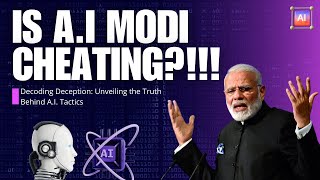
TJ Walker examines how Narendra Modi and other politicians use AI video avatars to send personalized campaign messages in voters' own languages and names. The technology enables targeted ads and conversational avatars, but raises concerns about manipulation, deepfakes, and military risks in political communication.
Chapters
Prime Minister Modi of India in the news for his innovative, some would say deceptive use of technology. It's campaign season and the world's largest democracy, and Prime Minister Modi is using the most sophisticated technology available. He has ads that are communicating directly to constituents where he's mentioning them by name in their language. Now, how does he do all that? It's courtesy of artificial intelligence. Let's take a look and we can see exactly what he is doing. It's pretty fascinating. Let me show you this full screen so you can get a sense of exactly what we're talking about.
Namaskar Sharikji. Namaskar Manasji. Namaskar Omkarji.
So that's just a small little snippet of what's going on in these ads that are being pushed out on social media directly to individuals, phones, their email accounts, their social media accounts. It's positively, I think, earth shattering. There's no other word to describe it. Now, this is the power of artificial intelligence, where if you feed into computers enough video of someone speaking their voice, their image, their pictures, it could then scramble everything together to make that person say anything, anything whatsoever. And you can personalize it by the name, you can personalize it by the language. And the question is, is this the right thing to do? There's one school of thought that says, well, politicians have been doing this forever with direct mail ads and email ads. It personalizes high. Hi, Jim. This is president so and so, or this is Congressman or member of Parliament, so and so that. Why is this really different? Well, I think it's because in part, when you actually see someone, you think it's real. If you get a letter from a politician or anyone, there's always an assumption, okay, Some staffer wrote that that's sort of baked into the system. That's baked. Baked into people's assumptions of what life is like. Certainly for the last 60 years or so. But we haven't really seen videos of a politician specifically on purpose addressing me and you by name, telling us messages on particular policies, what they're going to do, what they have done. That's new. Now, in recent elections here in the United States, we have seen some deep fake technology where you see a famous politician saying something that's completely contrary to what they believe, something that is scandalous and it's kind of obvious to anyone, okay, someone is just playing a trick here. This is a goof, and it is an attempt to fool people. And every once in a while, it does fool someone. There's certainly the Concern within the security status, the security apparatus of any country, that a video could be created of a politician saying so and so has declared war on us. We're launching nuclear weapons against country X in five minutes. And it's not true. It's just made up. But that someone in the other country, the leaders of the other country who've now been told they're targeting, could see that, perceive that it's real, and then push a real button, launching real weapons. So there's very much the concern about that. And that is why we are here today talking about this. The rise of artificial intelligence in communication. Now, this is a subject near and dear to me because I've been trying to figure out how I can, in fact, communicate more effectively with people around the world, personalizing it, speaking to them in their language, not just my language. And if you're a politician, this is obviously very, very attractive. How can you communicate with all of your constituents on their terms, not your terms, without translators? And artificial intelligence is allowing people to do this. So what do you think? I know we have a lot of students, members of our community, based in India. We're talking about your prime minister. And quick caveat, we are not here today to talk about politics. We're not here to talk about, oh, you like this position for this politician or you like his particular political philosophy and you think he's great or you think someone else is awful? That's not why we're here. And our friends on TikTok, if you want to see what I'm talking about, you can go to my YouTube channel. And I have up on the screen this artificial intelligence version of prime minister Modi speaking. And he's speaking in ads. And his political team is now using it in such a way that it can personalize it. So when you open up that email or you go to your Facebook page, you see the prime minister of a country, what, one and a half billion people mentioning you by name. And it's very, very powerful because people are. Are so used to getting emails all the time from politicians. It just seems like spam. It just seems like junk. It's delete. It's very new to actually hear a famous, famous, famous politician address you by name. It gets people's attention. Now, interestingly, in India, what's also happening is this is filtering out through members of parliament. Some of them are taking the exact same message of the party leader and filtering it out as well as their message. And their own constituents can see them saying the same thing. Craig on TikTok says, Let me make sure I didn't miss your comment. Well, we do dabble a little too much in foreign affairs. Not quite sure what that is referencing. Craig says, it's very dangerous. It's crazy, but trust AI. Let me address that in just a moment because I, I personally don't think the message here is to trust artificial intelligence. I don't think it's to distrust artificial intelligence. Artificial intelligence is just a tool. Do you trust a knife? Well, if I need to cut a stake, a knife is very, very handy. If I see someone with a crazed look in their eye, frothing at the mouth, coming at me with a knife, well, no, I don't trust that knife. And what it could do to me, it could pierce my heart and kill me. So it's just a tool. It is just a technology. Now I say just artificial intelligence is an extraordinarily powerful, powerful tool. And what it can do in communication, I think we haven't really seen it yet at a widespread level, but I think we're perhaps this election cycle in the United States going to see it used in such an extraordinarily profound way that it really does alter the nature of communication. Now, typically, since Gutenberg's press text has been the easiest way to communicate at a mass level for most people, most individuals, most organizations in the least expensive way. But when people can see you speak, that's always the most powerful. So what is the reason most people don't just go on national tv, network and talk to millions? They don't have the money, they don't have the resources to do it. Social media has changed that a little bit. Some of us do speak out and reach a lot of people on a regular basis. But for politicians who already have the budget, the resources, the infrastructure to communicate with everyone in their country or everyone in their constituency, artificial intelligence is an even more powerful tool. Because so much of the problem politicians face everywhere is how do you say anything that gets people's attention? How do you cut through the clatter in a meaningful way? Well, if you can speak to someone in their language when they're not used to political leaders speaking to them in their language, that is one way of really cutting through. If you can speak to them by name as if you were speaking to them one on one, that's extraordinarily powerful. I mean, the most powerful thing any politician can ever do, they will tell you, well, if I could just sit down across from a coffee table and talk to a voter one on one, tell them why I'm running answer their questions, I'd win 90% of the vote. I've never met a politician who didn't feel that confidently about their ability to communicate if they can do one on one. And the problem is once you go beyond a certain level of constituents, size of a town, you cannot reach 99% plus of the voters one on one. Can AI change that dynamic or at least appear to change that dynamic if you have a politician who is talking to you by name answering your question. So here's the interesting thing. You could in fact have, and I haven't seen this done yet in India by Modi or anyone else, but recent story in the New York Times and elsewhere about thought leaders like Deepak Chopra are creating artificial intelligent versions, video avatars of themselves that can actually take meetings on Zoom or anyplace else. Answer questions as in this, in this particular case, that thought leader, how he would answer a question if he were actually there. We're not that far away from you getting an email, whether it's from Modi, whether it's from a US Presidential candidate, a political leader, saying, hi tj, I would like to talk to you about this election. I know that you're already concerned about such and such because you live on 22 Elm Street. I'll do what I can for that. But you tell me what are your biggest concerns about this election? And then the artificial intelligence video avatar of this politician could actually have a conversation with you and it would look pretty much the same as the real person on Zoom or any other online platform. It could sound the same and they could actually give information. Now, Dr. Amber says this guy is A.I. no, I'm not yet. But I am interested in figuring out how I can help more people with their communication skills using artificial intelligence. So I'm not opposed to using it if I can figure out a way of doing it that is meaningful. So we've had a lot of interesting comments coming in on TikTok. Hello to our friends on TikTok. If you want to see the particular video clip being used in India now where the prime minister is talking to each individual constituent by name in their language, come on over to my YouTube channel. I'm about to play that clip again. That's why we're here. If you're joining us on FaceTime, LinkedIn, YouTube, Twitch, Twitter, Instagram. Thanks for joining us today. We're going to have a fun day where Thursdays are always a little bit different in that we have a sort of relatively quick morning session, then we have to break away for a private session with my online students from Udemy. And then we come back and open the floor to everyone at 10:45 Eastern Time. It's great to be back. I've been on the road and traveling this week conducting trainings, coincidentally with people in the artificial intelligence industry in Washington D.C. just arrived back to my home base last night. So that's why I haven't been doing these live sessions with you this week. But we're back to normal scheduling today, a full three hour session tomorrow for your questions, comments. We're going to have some interesting interviews tomorrow with communication experts as well. Okay. We've had a number of comments coming in from our friends on TikTok and a caveat. Regardless of what platform you're joining, I am talking about politicians today. As you can see, we're not here talking about politics. We're just talking about the communication aspect of using artificial intelligence and you know, ethics involved. Some people are concerned about them, the effectiveness. I am just quickly looking through on our TikTok. We appear to have hundreds of people who've joined us already on TikTok and I've missed some of the questions in comments, although I did see one of the comments that yeah, I, that I'm AI. No, I'm not an AI, but I certainly have used in some of my courses artificial intelligence to try to make my insights more available to people in different languages. Brian says this is worse than cnn. Okay, not quite sure what you mean by there, but if you want to elaborate or Brian, if you actually want to come on and talk to me, I mean the one thing I know about cnn, if you have a complaint, they're not going to just let you come right on the air and air it. I will, but you would need to come over to my YouTube channel and join us through Streamyard. My colleague Ben has just posted how you do that and you can say why you think this is worse than cnn. Brian says, I'm not worried because you, because you won't be here long. That's again the fascinating part about artificial intelligence and video is you could in fact take any thought leader and suck all of that up into artificial intelligence. You could take a news commentator, for example, and input their last 10 years of news commentary. If they died tomorrow, you could in fact have an artificial intelligence create a new show every day commenting on new news as the commentator would have done through their worldview. So it actually is a way for people to live on long after they've died. I mean that to me is one of the fascinating things. That's not my main interest in doing that now. But it is something that that could happen. Craig says. True, it could. It can just be going too fast. That is the concern a lot of people have with artificial intelligence. And, you know, people like Elon Musk say that this could destroy the world. There is that school of thought that says artificial intelligence could be given some directive of, you know, make as many paper clips as possible. And in the quest to do that, it's killing people and destroying everything to create more raw material to make paper clips. And that may be a mundane example, but it is a concern a lot of very smart, intelligent people have. Okay. And Kickbooty says, wow, first time I've seen you live. Well, thanks so much for joining me. We do typically go live right here, Monday through Friday, 9am to noon Eastern time, where I take your questions about any aspect of spoken communication, whether you are preparing for a job interview, giving a speech, a presentation, talking to the media, trying to figure out how to speak comfortably on camera. That's what we talk about here. And it's a community of people trying to help everyone else become more successful in life by communicating more effectively and more confidently. Kart says, I could see you on a wrestling mat. Okay, yes, we have. Here's what it is, and I'm happy to share. What I have is not a wrestling mat. This is a mat you might see in a kitchen at a restaurant. A lot of people have them in their home. It's a spongy type material. So if you're standing for a long time as a dishwasher is, it just keeps a lot less pressure off your feet, off your back and everything. So I typically am standing here for three hours when I do these shows, and the reason for that is I like to demonstrate principles of public speaking. What do you do with your hands? What with other camera angles which our TikTok friends can't see? I am in a wider shot in our studio here and I demonstrate aspects of how to move around the stage when speaking. So that's why it is. I'm not planning on wrestling anyone. That's not exactly what I'm very good at. If you have questions or comments today and you're on YouTube and you want to talk to me, or if you're on LinkedIn or any of the social media platforms, we're here for you. All you have to do is click the streamyard link in the comments section and you can come on live and talk to me directly. So, more than happy to have you join us there. And a number of comments have come in. Let me see if I can cover some more of these. I do want to be very responsive. We are live today. Really seen it yet? Intelligence has invaded you. Okay. Not quite sure what that means. Craig says, I find that AI misunderstood my meaning quite often. Like you said, it. It's misunderstood. It's certainly not perfect. And it's a little bit dangerous for a politician because if you think you're putting out a forceful statement and it doesn't hear a note and it changes a negative into a positive, it could really confuse people and could cause political controversy for you. Dr. Amber says, AI for President. I don't know about for president or prime minister of any country, but there is a growing school of thought that artificial intelligence will make governments more efficient. Because really good artificial intelligence coupled with sensors could make traffic flow so much better. If rather than having a traffic light automatically go green or red for 60 seconds, it could really take all of the data of cars going to that intersection, but also seeing how it connects with the overall traffic patterns and the entire city or a community and make things infinitely more efficient. So certainly not a bold prediction on my part, but a lot of people are predicting that governments around the world use more and more artificial intelligence and sensors to be more responsive to their constituents. Craig says, what will our military. I hit the wrong button there. Sorry. What will our military stop? Terrorists or hackers? So part of the concern from a military standpoint with artificial intelligence as it relates to video and spoken communication. Hang on one second. I'm getting an auto focus. Okay. Issue. One of the concerns is that countries can manipulate public opinion of an enemy by posting videos of that enemy country's leader saying things that are wildly inflammatory. So that's the particular. I'm not an expert on all aspects of artificial intelligence. The reason we're here today talking about this is again in the news. In the current elections in India, you have not just the current prime minister, but other political leaders using the power of video artificial intelligence, creating avatars so they can communicate directly with constituents by name. And it's much more powerful. It's getting people's attention and they can tell them issues specific to them in their language. Let me just play this clip again. It's a very short clip, but I do want you to see. And if you're on TikTok, if you come over to my YouTube channel or Facebook or LinkedIn, you'll find it there. And it is just TJ Walker success channel there. So let Me just play this again. Going to go to widescreen for this particular clip. I want you to see it because it is pretty effective. So that's just an opening, opening clip. It's not.
Omkar G. But what they're.
Showing there is simply the fact that here's a. Here's a political leader who is in charge of a country with 1.5 billion people. He obviously can't create a video mentioning by name everyone in the country. He could spend 24 hours a day in a TV studio for the next thousand years. He wouldn't do that. Through the power of artificial intelligence, a computer can input every single name in India and then create through digital manipulation of the algorithms and the video images and his mouth and his voice so that it appears that he's actually speaking directly to every individual. Sanjay. Every individual, Priyanka. Mentioning them by name and then talking to them about issues they care about. This is potentially groundbreaking. What we find so often in actual warfare. But in politics, which is a type of warfare, whoever uses the most sophisticated technology first in any campaign often wins. Now I full disclosure. I have been active in Indian politics. I have worked with members of parliament there and and certain high level political officials in India. But I have had zero involvement in Indian politics for more than a decade. So I'm not here to weigh in on Indian politics. We're not here to debate Indian politics. But I do think it's fascinating to see the use of technology to help people communicate more effectively. I mean, we're using technology here. Today I'm using TikTok to communicate with Craig and Dr. Amber and all the other colleagues have joined us on TikTok. And I'm using social media and YouTube to communicate with Matvev and others who've just joined us. Hi Matve and Matve. I'd love to see if you've actually seen any of these videos. I would love to hear it. And if you personally received one, if you want to come on screen and talk to us about it, happy to have you do that. Or if you want to type in your comments. But I have not experienced this in the Indian election. Obviously I'm not a citizen or a voter or resident of India, but we have a big political year coming here in the United States. So I'm pretty sure we're going to see things like this as well. Madam says my suit looks good. Well, thanks. Here's my question for you, madam. I am giving serious thought to taking all of my online courses and turning it into an artificial intelligence. TJ so that you could come on, ask a question. I could address you by name, you could post a video and I could do a much more in depth critique and it would, it wouldn't be me live, it would be an artificial intelligent version. So it does bring up the question how should I dress for that? What age should I make myself? Now I'm. I don't try to hide the fact I'll be 62 this year. But in theory I could create an artificial intelligence version of myself where I am 35 and it might be more appealing to people. So what suit would you want me to wear? Madav, I guess is the question. But Madhav, what I do want to hear from you since you do live in India, have you seen any of these ads, whether from your prime minister or members of parliament or other local officials where they sent you in an email, a social media post a video of them speaking and they mention you by name or they do other aspects of personalization where you just haven't seen that before. Let's see what other comments have come in. It is nice that so many people on Tick Tick Tock have stopped by. Rhino again mentioned is this AI? No, this is real says that's crazy. Amber says I am a. I know. But continuing looking at comments, I addressed the question of whether I wrestle. Oh, it's because of the mat on the floor. And Rhino says I move and sound like AI. I don't know if you're talking about me or if you're talking about the Modi ad, so let's if you care to clarify on that. Craig says, we've used AI for a long time to narrate machinery, control, security, access. Of course, artificial intelligence has been been around for decades and decades and decades. But what is different now is things are going so much faster. ChatGPT really made many people for the first time take AI seriously. There's been an explosion of startups in the AI space. A lot of breakthroughs. Sushi says how to naturally speak on camera and feel natural with no anxiety. Well Sushi, that is exactly the sort of question we deal with every single day right here on the T.J. walker Success Channel. If you go to my channel and type in that question, you will see dozens of specific tips on how to do that. The number one tip is move. Most people when they have anxiety, they do this. They freeze. I want to get each word just right. And their head freezes and their hands freeze and they look frozen, stiff, scared, nervous. People who are relaxed and confident and come across authoritative Move their hands. Now see my hands. I'm not intentionally thinking bring my left hand up here, bring my right hand up. No, they're moving naturally. Guess what? Your hands move naturally to when you're comfortable and confident. If you doubt me, go to a sports bar, watch a game about a team you really care about, have someone secretly record you after a score, a victory, a bad call. You're going to see your hands move all over the place. So that's the way to look natural is to actually move your hands, move your body, move your face, move your eyebrow. It's the movement. And I don't mean in some sort of a jerky way. It has to be the way you actually move when you are comfortable. That's the way to do it. And madam, I guess you're not going to tell me if you've seen any of these videos, these personalized audio. Excuse me. Artificial intelligence generated videos from politicians in India. So I would love to know. Kickboat says first time seeing you live and want to know what I do for a living? Well, what I do for a living is help people like you communicate more effectively. I do public speaking workshops, seminars, one on one trainings. I do media training workshops, seminars, trainings. I have more than 2 million online students, take my communication skills courses and that's what I do for a living. So what I'm trying to do here is bring and share that same expertise with you so that you can learn and ask me questions. We can create a community here of people who want to be more successful in life by learning how to communicate more effectively and how to be more confident in their communication. So Kiki, thanks so much for asking about that. I do appreciate it. Stray says AI identifies humans relate to. So yes, artificial intelligence is not a human at this point. It has no consciousness. At this point, some are contemplating.
The.
Evolution of AI to get to the point where there is actual consciousness. We're going to leave that for another day. That's a huge, huge debate right there. But you're absolutely right. But here's the issue. If you are a voter and some politician who you think of as so famous, so powerful, doesn't care about you, sends an email to you and they're mentioning you by name, is that going to get your attention? Now I like to think I'm a pretty sophisticated person and jaded at some level, but that would still get my attention at least the first few times I saw that. So that's what we're talking about. And Nika says, what's up Joe Biden. Now, interestingly, you mentioned that I was in front of the White House just in, in the, in Washington D.C. just yesterday and two days ago, and I made a little joke to my family. So, hey, I'm in front of the White House. People keep coming up to me, asking for my autograph, wanting to take selfies. I wonder why. You're not the first person to say I look like Joe Biden. Simply because, you know, all old white men who don't have much hair and have a little gray hair, you could arguably say look alike, but no, not Joe. And he is two decades older than I am. He's technically old enough to be my father, but I'm not at all bothered by the comparison. Stray says, Nico, save face. I'm not quite sure what that is referencing, but I do want to say a special hello to all of our friends on TikTok. Thanks so much for joining me today. If you want to be a part of the conversation, actually speak out, you can do so by coming right here to my YouTube channel. That's TJ Walker. Success on YouTube. You hit the link in Streamyard and you can join me on screen again. For those of you just joining us, I want you to take a look at this. This is a video clip of the Prime Minister of India. We're not here talking about politics today, but we are talking about, as we always do, communication. This is artificial intelligence.
Namaskar Manasji. Namaskar Omkarji.
So all of that is. Is the beginning part of video where he's addressing constituents by name and yet he's not really saying it. Artificial intelligence has the ability to absorb a politician or anyone, you or me, speaking. It takes our thought patterns, processes that and figures out, okay, now I've got all the most common sounds of how this person articulates words, letters, consonants, vowels. And I can remix it to make them say anything. So in this case, it's not distorting the politician to advocate a policy that's really contrary to what he stands for. It's not getting the politician to appear to say, I'm a fraud, I resign. A humorous could do that though. But it's getting the politician to appear to be personalizing the message so that it can be sent to a constituent. And the constituent then hears this politician talking to me by name. Wow. Now so much is done. A lot of controversy in the 2016 campaign here in the United States with Cambridge Analytical and what they did, mining data from YouTube, finding out, excuse me, from Facebook, and mining data about people's particular interest. It's, it's never been easier. Well, some, some folks at Facebook would say things have changed, but at some level, it's never been easier to put together a profile of an individual voter to figure out exactly what you think are the issues they care about, create a psychological profile of them, and then in theory, you could send them a two minute video every day for 90 days before the election. And everything out of the politician's mouth is only saying what that voter wants to hear. Will that be effective? Will that become the new norm? We don't know yet. I mean, the, the challenge is, and the big question is what politician will be able to say no to this? For one thing, it's going to take a lot less manpower, worker power, because you can have the artificial intelligence create the message. You're not going to have to have 2,900 speech writers coming up with different messages for every single voter. You can simply say to the artificial intelligence, here is the voter profile. Here are the issues they care about here. All the things that our politician, our team, has said in the past, mix and match and tell this person what they want to hear from the mouth of the person we're trying to get them to vote for, personalizing it by name. Now, I don't, I don't have any evidence that this has happened in India yet, but I certainly could imagine getting data to the point where you've got the artificial intelligence video avatar. I click on, I get an email and it's again, I don't want to be overtly political. Let's just say it's President George Washington and the first words out of his mouth are, hi, tj, how are you? And how's your wife Joanne and your daughter Rossa? I hope they're doing well. By the way, I hear things are great on your street, but you're concerned about rising water levels from and really give me a highly personalized message about problems I face and then the specific policies. In this case, the fictional President George Washington is telling me he's doing to solve my problems. This is going to be extraordinarily, extraordinarily powerful. What do you think of it? I would love to hear from any of our friends in India or anywhere in the world, if you have received video messages from a politician where it starts off mentioning you by name, I would love to hear about it because I do think it's trite to say it. Dale Carnegie said it 100 years ago in his book how to Win Friends and Influence People. But the Sweetest sound to anyone's ear is the sound of their own name. And if you can direct a message to someone by first calling them by name, it's powerful. Again, we're not here to talk about. Excuse me one second. We've got a slight technical problem. My auto focus on my main camera, not for TikTok, but on my Studio 3 camera. I've done something to mess up the autofocus. So what I just did is I turned off my camera, turned it back on and voila. It does seem to have cleared up the problem of the autofocus. So I'm going to give an example here and I'm going to mention a particular politician's name. Some of you may love him, some of you may hate him. We're not here to debate that. I just want to talk about this one communication skill and it's former U.S. president Bill Clinton, by all accounts, by anyone he ever met. They all say the same thing, whether they were Republicans, enemies, opponents. They all say he had the absolute best memory in the world for anyone's name. He met you once. 30 years go by, he remembers your name. Beyond that, he remembers your kids names. Beyond that, even if he never met your kids, if you just mentioned in passing what your kid's name was, he could bump into you years later, ask how you're doing by name, and ask how your kids are doing by name. And it just floored people. It really made countless people who met him think this is the most charming person in the world, even if they didn't like his politics. That helps in the political world. Well, now we have an issue or a technology advance that kind of levels the playing field. You might be a politician and not even know the names of your own kids, but through the power of artificial intelligence you can appear to know everybody's name. So is this ethical? And I'm here to tell you I don't have a clear cut, absolutist position on this. One of the things my understanding is that the political party in power, India is doing is they are putting a, a footnote on these messages, letting people know that this is in fact artificial intelligence. Which is a nice thing to do. I think anytime you disclose, I certainly try to disclose if I'm using some aspect of artificial intelligence, give credit. If I'm using B roll from different places, I think that's a nice thing to do. The question is, is that enough? Is it fundamentally manipulating people or distorting people in a way that is harmful to that individual or to society? I haven't. I haven't thought it all the way through. I would love to hear from you. I would love Kickbooty says. Wonder what you was like in your 20s. Well, I did have more hair. I think that my voice sounds almost the same and I'm basically the same size, although maybe a little higher muscle mass in my twenties. But thanks so much for, for asking. And we've had a number of other comments come in, so thanks so much for doing that. Stray says the world's belief system is unethical. That's kind of a broad statement, if you care to elaborate. You can. And by the way, we can have an actual conversation. We're coming up to our end of our first session today. I will be coming back live right here on YouTube, Facebook, Instagram and TikTok at 10:45 Eastern Time, which is just one hour and four minutes from now. So if you have a question or something you want me to deal with, let me know. If any of my friends on TikTok want to come on over and join me live on screen and participate, ask these questions, give your own opinions, point out where you think I'm wrong, or make the case that I actually am Joe Biden, you can do it live rather than just texting. We can see you and hearing, but you would need to come over to our YouTube channel and then click the Streamyard link. That's the application we use that allows people to appear right on screen. So that's what we're talking about. Chat. This is not a real Joe Biden lie. Okay, so Stray, when you say something like the world's belief system is unethical, that kind of sounds like you're saying you're the only person who has ethics. And that just sounds a little bit egocentric and solipsistic. If I could use that word. Kik says, do you think that machine learning Contingency is a JavaScript issue or a universal C base problem? So clearly somebody here knows about technology and knows about programming. Full disclosure, I don't know anything about computer languages. What I try to do is figure out what's a problem I'm solving and then how do I find technologists who can help me build a solution? That's what I've done for my Ultimize app, which helps people build stronger daily habits through audio reminders of telling them what they want to do. So for example, I listen on my Ultimize technology app every day, a reminder saying, tj, you drink water all day long. You don't drink Soft drinks and sugar based drinks. So this is one reason why I have water here is I remind myself every single day because without that technology reminding me to drink water, it's very easy to slip into that habit of, oh, you know, someone's given out a free Gatorade or the Coke was cheap at the, at the store and well, walking by Starbucks, why not have a Cafe Macachino with tons and tons of sugar? So I am a big fan of technology, but not everyone has to know every aspect of, of programming. But would love to know if you had a theory as to how this relates to the larger issue of people and politicians and authority figures communicating to the world using the power of artificial intelligence, specifically creating video avatars of themselves so it appears as though they're speaking directly to someone by name and talking to them about issues of concern to them. So that's, I think, the huge, huge, intriguing development of what's going on in the world of political communication. And again, for those of you seeing this for the first time, this is not a political talk show. We are here to talk about communication skills, how to improve communication skills, how to communicate with more people. And it may be that what we're seeing politicians do now who have access to huge reservoirs of money and infrastructure. It may be that everyone is doing this. Every solo practitioner, every consultant two years from now is doing this exact same thing. I don't know. Stray says manipulation and propaganda, nothing new. In a sense, everyone is trying to manipulate people to do things all the time. I mean, your dietitian is trying to manipulate you to eat less processed sugar and to eat more broccoli. Now they would say it's ethical and in your own best interest. A politician, whether you think they're doing great things for society or horrible things, wants to influence you. And you can use the word manipulate to vote for them so they can try to make changes in any society, whether it's for the good or to line their own pockets. So I agree with you completely that the desire for politicians and other people to manipulate us is always there. Propaganda, meaning sort of a one sided attempt to communicate, to blow up, to put a positive spotlight on something, has always been around. There's nothing new there. What is new is this technology that perhaps makes it easier to manipulate and spread propaganda for good or bad. That's what we're here to talk about today. And so I would love to know your opinions on this. Matif says, sir, you have to create AI chatbot that can take input as text and reply is text. Well, that's certainly one way of doing it. And that's been around for quite a while. And you see so many. You see so many corporate websites doing that. Ask the question. This is a whole new ball game with the video of it. That's what's fascinating me. And apologies, we've gone over. I've got to sign off now because we have to get ready for our live session just for our UDEMY students. I have more than 2 million or around 2 million online students, most of those just in the UDEMY platform. So we'll be going live at 10am for that on my private page on Facebook. But we'll be back here in less than an hour. So if you have more to add to this whole conversation about how whether it's Prime Minister Modi or other politicians or business people using the power of artificial intelligence video to communicate with you, seemingly by name and in your language, we can talk about that more in the 10:45 hour. And Mattif says, so you don't have to create an AI avatar. I do have courses, so it is for communication skills. Well, everything we're talking about relates to communication, madam. Hold that thought. Join me for the next session and we'll delve into that. Thanks so much. I will see all of you, I hope, especially if you are fans of a certain president who looks like me or if you don't like him, that's okay, too, because I'm not advocating any political agenda here. We're just. Our only agenda is trying to help you become more successful as a communicator so you can become more successful in life. Thanks so much. I'll see all of you in either in a few minutes if you're one of my UDEMY students, or in less than an hour if you want to come back on any of these platforms. Thanks.
More from TJ








You're Not Being Judged on Your Work Yet: What New Hires Are Really Evaluated On


