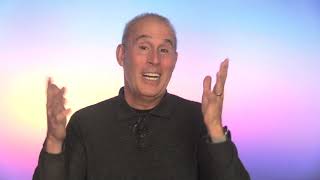
TJ Walker describes media training workshops: intensive, practice-heavy sessions where people do repeated on-camera interviews, watch themselves, refine their messages, and learn to deliver focused sound bites. Most run a full day, 9 to 5, with multiple takes and group critique. Available in-person or virtual worldwide through Media Training Worldwide.
Chapters
Media training workshops, what are they? They are really intensive experiences designed to help you master media skills. Specifically, how to look comfortable, confident, relaxed on camera, how to shape a message, how to answer questions strategically, and how to package your messages with sound bites so that you get the exact quotes you want. That is typically what happens in good media training workshops. It's certainly what I try to accomplish in every workshop anywhere in the world. Now, I have been lucky enough to train people from seven different continents. Even Antarctica. Yes. And I personally trained people in more than 40 countries where I've gone to them in their countries. Here's what I've noticed. Media styles can differ, country to country and region to region. Certainly languages change, the style of a media outlet can change, how much control there is by a government can change. But the fundamentals of what gets you quoted the way you want is exactly the same everywhere in the world. Doesn't matter what industry you're in, what language you're dealing with, highbrow or low brow media, There are certain things that are consistent and those are you need to have a focused media message. You can't just talk about 50 different messages and hope to communicate your message in an edited interview. The other thing are the sound bites. Reporters love to quote you saying something interesting. So when they quote you, whether it's a sound bite for TV or radio, a quote, if it's a tech story, it comes from one of 10 speech patterns. Their analogies, their bold action words, their cliches, their humor, their attack. There's 10 of them. And that is consistent throughout every culture in the world where I have taught executives. Doesn't matter if it's a business executive, a United nations official, a political leader, an officer, entrepreneur, expert. Doesn't matter if it's sports, business, finance, government, it all comes down to that. Now, what does a typical media training workshop look like as far as duration? It's like a lot of things in life. The more time you put in, the more you get out. You could do a workshop in 30 minutes if you wanted. You probably wouldn't get much result. If it's 30 minutes long, I wouldn't call it a workshop. I'd call that a speech or maybe a seminar. Anything up to two, three hours. I typically call that a seminar. I wouldn't even call that a workshop. A workshop for media training is when you're there to actually work. You're not just sitting there listening to some interesting, amusing anecdotes from a former reporter or a media trainer. You're actually there working. Meaning you're standing up, you're being interviewed, you're watching yourself, you're critiquing yourself. This is true. Whether it's an in person workshop or done entirely through a virtual format like Microsoft Teams or Zoom or Skype, you're there to work. So what I think of as a media training workshop, typically the minimum is half day, four hours. The most common flow form of a media training workshop I do is one full day and it's eight full hours where we're eating a sandwich through lunchtime while watching videos. But I also do two day workshops and occasionally an entire week. It's like anything else in life. The more time you put into it, the more you get out of it. All things being equal, people who took one golf lesson once 10 years ago aren't usually as good as people who get a golf lesson every week, year after year after year. So you've got to figure out how much time you're willing to allocate in order to build this skill. That's the typical length option for media training workshops. What is the agenda for a typical media training workshop? At Media Training Worldwide we do follow a very specific agenda. Typical scenario is the training is 9 to 5. I tell people to be in the room by 8:45, 8:30, a couple people start trickling in. I get each one on camera, not one, not two, not three, but four separate short interviews. So by 9 o' clock, everyone has been interviewed. Standard seating, a couple of different scenarios. So they've had these adrenaline rushes going up and down already and they think, oh my gosh, I had no idea I was going to be interviewed on camera. Well, it's a media training. Why wouldn't you expect to be put on camera quickly? It still catches people off guard. So then at 9 o' clock, I hit play and we watch everyone. Now here's what I do. I tell people I need you to tell me everything you like about how you are coming across and your colleagues. And also take notes of everything you don't like. But be fair. A critic, for example, a good theater critic, doesn't just point out the bad, they point out the good. I want you to be a fair and honest critic, but don't just focus on what you don't like. You've got to develop the skill to figure out what you like about how you're coming across. Your voice, your messages. So I have them watch it, they're taking notes, and then I have them all stand up. This could be whether it's one person or a media training with 20 people. And I'll say, okay, here's your first test. I want you to stand up and tell me just what you liked about your media appearance. Tell me what you liked about your voice, your hands, your face, face, your message, your tone, your speed. I don't want to hear what you don't like yet. In fact, I will rudely interrupt you if you start listing anything you don't like. If you can't think of anything you like about how you came across. We now know your number one flaw. Your number one flaw is you're not watching yourself objectively. And you're going to have to do that if you want to get good, good with your media skills. And what typically happens is there's always someone who doesn't like anything about how they came across. And if it's a group training, I'll ask other people what they thought of that individual. And they always have like 10, 15, 20 things they liked about how they were coming across. It is easier to critique other people, to be more objective. We're all a little bit too close to ourselves. We're too used to looking at ourselves in the mirror. And it seems strange hearing your own voice. So, so much of the value of a media training and the agenda of the media training, getting you on camera again and again and again, it gets you to the point where you are used to hearing your own voice, watching yourself. Because for most people it takes a while to get used to watching yourself, to get to the point where you can critique yourself fairly and objectively. That's an essential skill if you want to figure out how to get better and better and better. You've already learned how to do that with your writing. If you write a first draft of something and then you look at it and you see, okay, here's a spelling error, here's where I forgot a comma. It's no threat to your ego. You just see, okay, this worked, but there are mistakes here, let me go through some edits and improve it so it's no threat to our ego to go from a first draft of writing to a second edited draft. The whole point of a media training workshop is to give you this skill set so that you can edit yourself of not how you're writing, but how well you are speaking. So that's really the number one agenda item in a media training. So when people come to me by 9, 15 in the morning, in an eight hour day, they've already been on camera four times, they've watched four different sequences and They've already critiqued themselves on camera. So technically they've been on camera five times because I recorded their own critique. So that's the way a really high quality media training goes. There's lots and lots of velocity, lots of chances to be on camera, speaking and critiquing yourself. And then the rest of the agenda for the day of media training, whether it's one on one or a group, is walking people through different scenarios and then having them come up with messages, practicing the messages, hearing those out loud, and then doing full fledged interviews where you really have to use your skills for answering questions. And then in the final few interviews, it's being able to not only look good, come across comfortable, confident, relaxed, not only have a good message and deliver the message not only to answer the questions effectively, but you must also have great sound bites come out of your mouth on message throughout the interview and make sure you don't accidentally have sound bites come out off message. That is the typical agenda of a media training workshop. Usually people get on camera a dozen times throughout the day. That's what creates the greatest results. A successful media training workshop is when every single person can walk out of that training saying to themselves, I have a new role model for how I want to come across in the media. And their role model is not TJ Walker, it's not Ronald Reagan or Bill Clinton, it is themselves. That is the ultimate test of a media training workshop. Do people now see themselves as great? Are they now excited about their next media interview? Is there a media training workshop near me? Well, if you're willing to do something virtually through Zoom or Microsoft Teams or Skype. Well, yes, because if you can get in front of a computer, you can work with a training firm from anywhere in the world. Here at Media Training Worldwide, my firm, we do conduct live media training workshops for groups and individuals in a virtual way. And that way people can come from anywhere and everywhere. There's no travel cost, but for a lot of people, they want even more in depth training. They want a stronger experience. Quite often they have executives who work together. They may be from different cities or different countries, but they're bringing them together for or other conferences, other meetings, and there's a day of media training. In that case, I fly to them and we do the training in any hotel room, any training facility. It doesn't really matter. What I do. And what most media trainers do is I bring my own video camera, lights, microphone, tripod, and then all you really need is a television. All the other stuff you don't need a big studio, you don't need extra big lights. You just need those fundamentals to put put on a media training. So I have personally conducted media trainings in every major city in North America, but I've also done them in Canada and Mexico. Mexico City, probably half the countries in Europe. Just last year I was conducting media training in South Africa, Kenya, Senegal and the Middle east many times. Whether it's Delawa in Qatar or Dubai or Lebanon in Asia, whether it's Delhi, whether it's Bombay, whether it is Bangkok, training needs are everywhere. I'm happy to come to you and other colleagues. Other senior trainers of mine at Media Training worldwide can come to you if you're trying to really elevate media skills for yourself or others. I think the main thing you need to think about is do you want to do it virtually or in person? And if you do want to do it in person, what are your real goals? If your goal is to make everyone great, then spend a little money and fly in the best expert you can afford to come to you. That's the best way. Don't just hire a media training firm locally because they're local, they may be fine, but it may be a company that's really a PR firm and they do one training every two years and they're practicing on you and they may give you good advice, but that's not a training experience. It won't necessarily help you build these four core skills you really need. Are you looking for a media training workshop to help you with social media? But these days finding a so called social media expert is easier than finding someone to walk your dog or wash dishes. Everybody's a social media expert and influencer these days. I do think you need someone specifically to teach you, train you on how to appear on video for social media. Because so much of social media is about video. Whether it is TikTok, whether it's YouTube, whether it's Facebook video, LinkedIn video. Here's the number one problem most people have with social media when it comes to presenting themselves is they think, oh, I'm not quite ready yet, I'll wait till I get a new haircut, I'll wait till I get a better camera. It's really just about being insecure. Your competitors, at least your top competitors, they're not just typing blogs, nothing against blog posts, they're not just tweeting 240 characters or 280 characters, they're also presenting their ideas in a video format in social media. That's why it's crucial you get trained on how to become comfortable, how to be confident. You might not have to worry about a reporter's question, but if you're not comfortable initiating speaking on camera, then your YouTube channel is going to be empty. LinkedIn video won't happen for you. Facebook Live video won't happen for you. You will be missing out on so many opportunities. So that's why it's critically important that you find a media training workshop for social media skills if you really want to use social media at its ultimate capacity. And that's not just communicating by text. It's not just pictures, although Instagram loves pictures. It's you speaking with passion about what you do.
More from TJ








You're Not Being Judged on Your Work Yet: What New Hires Are Really Evaluated On


