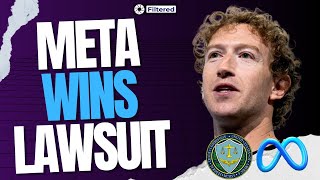
A YouTube monologue by TJ Walker analyzing a federal court ruling that cleared Meta (Facebook) of antitrust violations for its acquisitions of Instagram and WhatsApp. Walker argues the decision empowers big tech to continue aggressive acquisitions (including into AI), harms startups and competition, and calls for reforms to prevent crony capitalism and preserve a competitive free market.
Chapters
Meta beats the government on Instagram, on WhatsApp, it's acquisition of those. Meta has won a landmark antitrust case over its purchases of Instagram and WhatsApp. Judge James Boasberg ruled that Meta did not break the law when it bought those two fast growing rivals. The Federal Trade Commission said Meta used a buy or bury strategy to cement a monopoly. The judge said regulators failed to prove that narrow market exists and pointed to TikTok and YouTube as powerful, powerful competitors. Meta says the ruling shows it faces fierce competition. The FTC says it is disappointed but faces long odds on appeal. The decision clears the way for Meta and other tech giants to pursue more acquisitions, including aggressive expansion into artificial intelligence. So what's the real message here, Meta? You can now do whatever you want. You don't have to tiptoe around acquiring 49% of a company. You can just swallow it up whole. It's great for Meta. It's not good for startups, for investors and for the public. Now let me dig a little bit deeper here and give you sort of the other side. The other perspective from the judge is saying many antitrust scholars say this ruling is a disaster for competent Instagram and WhatsApp could have gone public, built their own businesses and forced Facebook to innovate instead of simply copy. Instead, one giant gatekeeper controls the market. Critics warn this decision will encourage big tech companies to resume gobble, gobbling up smaller rivals, driving the public of innovation, choice and new companies. So put me firmly and am I someone who uses Facebook? So am I a hypocrite? If you want to say that, sure, I use Facebook, I use all these social media platforms. Doesn't mean that you and I can't spot real problems with them. So here's the problem. Facebook can basically charge whatever it wants. It can give you all sorts of spam, it can inflate numbers, it can put your ad next to Nazi content. You're kind of powerless. And wow, if you ever have a complaint or a problem with some good luck finding someone in customer service, you're going to need that luck problem. It's true that Facebook doesn't have a monopoly on all social media, okay? But that's not the only reason you break up huge company. The United States didn't wait till one bank owned every single a banking customer before they broke up some of the big banks. And the world is simply different from the time when Standard Oil essentially control all oil. What we do see is a stifling of companies. So, and it's happening with Amazon. It's happening with Google. So it's not that Facebook is the only culprit here, but there's certainly one of a handful where it is a real problem. So so many entrepreneurs 30 years ago, 20 years ago, even 15 years ago, would start a company, get angel investors, establish things, test what they're doing, go out and raise venture capital, grow, hire a team, grow, grow, grow, grow, and eventually go public. That's really not happening much anymore. The number of companies that can go from concept to going public has shrunk dramatically. In fact, the total number of publicly traded corporations in the United States today is about half of what it was 20, 25 years ago. This means fewer people like you and me and others can really own a piece of these companies, especially before they've gone on to become big and wildly lucrative. It's all falling to a handful of major incumbents. This stifles competition. Anyone who's come up with any kind of new app or way of socially connecting with someone who has a good idea has built a prototype in recent years and then has gone to venture capitalists in Silicon Valley. The first thing they hear is, okay, looks great. Facebook is just going to buy you or copy you. So how do I make any money? It's a great, It's a question I would ask if I were a venture capital. And the reality is the entrepreneur has no good answer for that because they're right now the other, other slick thing that Facebook has done and all the big boys out there have done and let's face it, they are boys, is they said, oh, we're not going to buy a company. That would be bad, that would be anti competitive. Instead just going to take piece of the company. Now the piece is usually 49%, wink, wink, nudge, nudge. So they can sort of say, well, we didn't acquire the company outright. And what they do is they, these are called aqua hires. They're essentially taking the team that created that new product and saying, you're going to come work for us and we're going to give you a salary, some equity, a nice payday. But your investors, we don't need them. And your employees, 90% of them, throw them in the garbage. That's what's happened again and again and again in Silicon Valley. And it is stifling competition. Now, the judge said there's been innovation and therefore it didn't meet his criteria of being a monopoly. Along the lines of, yes, there, there is true competition from TikTok and some other social media platform, but when you look at the big picture. It's not a pretty picture for entrepreneurs in the tech space today because these incumbents, these handful of incumbents, have such a stranglehold over the entire ecosystem of our Internet. It's not good. I think we need a change. There needs to be reform. It's certainly not going to happen under this administration. The previous administration was serious about anti tech, and because of that, they were vilified and demonized by people like Elon Musk, Marc Andreessen, Peter Thiel. Because those guys, life is good. I mean, if you're a multi, multi, multi billionaire, or if you're someone like Elon Musk and halfway on your way to becoming a trillionaire, why would you want to change status quo? Things are good just the way they are now. If you're already a billionaire, I understand completely that you don't want to change anything. Not sure I would. I would like to think I'd want to make the world better, but I'm not sure I would want to change the world if I were a billionaire. But for those of us who aren't billionaires, we want more competition. People love to talk about, oh, I believe in capitalism and free markets, not socialism. We hear that all the time from so many of these technologists. But when you dig a little deeper, no, that's not what they want. In fact, Peter Thiel, the renowned venture capitalist and tech entrepreneur, one of the first investors of Facebook, wrote a whole book about how he doesn't want competition. He wants companies that go from nothing, that go from 0 to 1, meaning they're the only ones in the marketplace and therefore can charge what they want. They can grow quickly, they can get the whole world on their platform and charge what they want. He's very upfront about that. And I get it. If you own a piece of Facebook, as Peter Thiel was smart enough to do as one of their first investors, it's great. It's not good for the economy. So I'm coming to you, not from the standpoint of, wow, let's have a big government control everything. No, I don't want the government take 10% of Facebook, the way a certain socialist recently took 10% of intel for a government. I want free market capitalists. The whole point of a marketplace is competition. There have to be rules for competition. And one of the rules is you can't use the power you have to stifle competition. That's why, you know, Google and Microsoft periodically get in big trouble for forcing every computer to take their search or their operating system, and they were told, no, you simp. I can't do that. It's too much use of your existing market position, and therefore it's ruining competition for others. So I come at this as a sane, sensible centrist, as I assume a lot of you do too. It's not a false dichotomy of big government versus capitalism. No, it's a choice between do you want competition in a free market system, which is what it takes to be a free market system, or are you in favor of crony capitalism? Kind of like Russia after the Soviet Union, where things are just divvied up and this crony gets the mine, you know, the copper industry, and this crony gets all the telecommunications. Do we want crony capitalism? Because guess what? That's only good for the cronies. It's not good for anyone else.