TJ Walker Monthly Office Hours - Your questions on public speaking and media training - Live
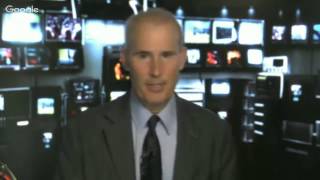
TJ Walker answers live questions on public speaking and media training from his 31 years of experience. He covers handling nerves on camera, cutting filler words with pauses, delivering tight three-minute talks, and approaching sensitive topics directly. The core advice: practice on video, focus on what your audience needs, skip the perfect backdrop.
Chapters
You. Hi, I'm TJ Walker with Media Training Worldwide. Thanks for joining me today. This is the first of our regularly scheduled monthly office hours. Now, I've been in the media training business for 31 years and in the online training business really since the late 1990s. And I gotta tell you, I don't think anybody has all the answers when it comes to online training. On the one hand, everybody loves the convenience, the simplicity, what makes everything available at a fingertip. The problem is it just doesn't seem real to a lot of people. If you can do it anytime, why not do it next week or the week after? And yet everybody appreciates, for the most part, a four year degree at a serious university with a major degree program. In part, I believe, because you're in person with the professor, you can ask questions of the professor, you can have live interaction and the professor has live office hours. So that's part of what I'm trying to do right here, is institute some of the things that actually work in the offline world. In fact, most of what I do is in the offline world because I go to people, live in their offices, conference centers all over the world, and conduct media training and public speaking training sessions, workshops in person where I videotape them, play it back, critique it again and again and again to help them become great with their media skills. So I wanted to give all of you, my online students, an opportunity to connect with me. This is where you can ask questions. Now, a number of you have written in your questions in advance. I'm going to get to those in a moment. Also, I believe there is a way right here for any of you to share with me your questions right here in this format. And you can just click right on the discussion session and do that. So I'm going to tell you a little more about my goals for these. But first, I really want to just hop right in to the specifics because some of you were nice enough to write in with your specific concerns. This is from one of my students. This is from Lynn. She writes, what's the best way to market a difficult message? Recognizing, for example, recognizing and stopping sexual abuse by a friend or a family member for women's groups, how to protect your children. How do I write a solicitation letter for the same? So that's a question from Lynn. Lynn, there's no perfect way of doing this, but there is a perfect way of doing a horrible job. And that is to avoid it, to ignore it, to just say, oh, it's a touchy Subject can't really talk about it. I believe the best thing to do is just hop right in. Don't apologize, don't say, oh, I know this is going to bother you. Don't hem. Don't haw. Just hop right in and explain to the audience why you're writing to them, why you're speaking to them, how you want to benefit them, other people, family members, society, what you think the solutions are. Now, the direct approach isn't always the best approach in every single presentation. Certainly in some sales presentations, that's not always the best. But if you have a difficult subject, why sugarcoat it? Why try to be cute? Why try to dance around it? Just introduce the topic in a straightforward way, let people know it's not a joking matter. It's nothing to be embarrassed about as far as you talking about it, even though it is inherently an uncomfortable situation. And beyond that, the basic rules of communication apply. Look at people if you're talking to them, see if they have questions, give voice to them, give them attention, share their. Obviously, don't violate anyone's concerns. Don't say, well, you know, Jim, you were telling me about this in confidence. No, obviously you wouldn't try to embarrass anyone divulging anything of a private nature. But to the extent that you can personalize it, weave in conversations from people without revealing their identity, people will get the sense that you are sincerely trying to help the issue to make things better. And I think that's, that's really far and away the better way to go and you will be in good shape. Now, did I lose. Excuse me. Excuse me. If you're still with me, it appears as though I have lost our connection. Ah, no, I haven't. Great. We are there. Okay, so again, if you have questions, you can always reach me through this form. It's the first of every month. We're not doing it the first Monday of this month because in the United States is a major national holiday. Labor Day yesterday. That's why we're doing on a Tuesday. But normally we are in fact going to do it on the first Monday of every month. I'm going to shoot for 5pm to 6pm Eastern. I do realize those of you in Australia, Asia, other places, it's not that convenient. So I'm more than happy to take suggestions. We can mix up the time from month to month to make it more convenient for you, but I did pick this time. Now, part of this is going to be a dialogue. I'm certainly here to answer any questions. You have. But I also want to toss out to you questions specifically, what can make online media training and public speaking training more meaningful to you? Because I'm going to be brutally honest with you. I'm going to tell it like it is. I'm going to try to answer you in a straightforward way, but I'm going to have questions for you. One of my frustrations is trying to figure out how to make this whole online training thing more meaningful to people. Because when a group of executives, whether it's with a major corporation, the United nations or whatever, when they hire me to come to them for a day, everybody gets on video 10, a dozen times a day. Everybody sees dramatic improvement. And it's basically 100%. It's a plus across the board. People are extremely happy with me, I'm happy with them, Everybody wins. But when I look at people who sign up for my online courses, even those who pay good money, a ridiculously small percentage of people actually go through the whole course. Beyond that, the larger issue is a minuscule portion of people will actually do the homework. Now, those of you who've been through my online courses, you know what that homework is. The homework is. I need you to practice what it is you're doing. Your presentation, your media messages, and record it on video and watch it and do it again and again and again until you like what you see. And I can tell you right now, almost nobody does that. So one of the things I stress as a presentation expert is ask your audience, test your audience, figure out what works, what doesn't work. I know I'm really good at this when I'm in person with an audience, but nobody's perfect. I'm not perfect yet at communicating this and motivating my online students to do what I want in this regard. So I'm going to ask you, what would it take for me to get you to go through these online courses and to actually practice your presentations on video? View it, figure out what you like, what you don't like, and then post the video. Get feedback from me and from others. Again, an absurdly small percentage. We're talking about less than 0.1% of students really do this. And yet 100% of my students do this in the non digital, offline real world. So that's my challenge. If you have any suggestions on that, please post it in the description. Now I do see we have several viewers who have just joined us. I do want to thank you for joining us. And also if you have questions, please post them and you can see along the side there are positions for you to write questions and I hope I have not accidentally disabled that. I certainly apologize if I did. You can also email me any questions you have. If for some reason you can't post it the right place here, you can always email me tjwalker.com and you can post your comments that way and I'll be happy to answer. We do have a group chat and you can place your comments here. I'm just going to type, make sure you see it. I just wrote here, so feel free to post your comments right there. If you have any questions about any aspect of public speaking, speaking to the media, or anything you've seen in the online courses so far. Again, this was an invitation to all of my students in all the various online platforms that I'm on around the Web. I have 103 online public speaking and media training courses and they're on about 30 different platforms. So regardless of where you're coming from, I do want to welcome you to this platform and thank you for showing up. I want to give you a moment to come up with any questions you have and I also want to share some more questions from people who wrote in in advance. One student is Kanal. She wrote in. She's in my media training course for reporters, journalists, talk show hosts and news anchors. And she and I'm assuming it's a she, but I don't really know. She writes when breaking news comes in, I forget what to say in the end in the discussion and I conclude and I move on to the bulletin. How do I keep from forgetting what to say? Part of it is simply the more you do it, the easier it gets. The reason we tend to forget when that camera is on or when we're in front of people is we're feeling nervous. The body's defense mechanism says when you're nervous, it sends adrenaline throughout our body. It's telling you run, get away. Don't let people capture you. Don't let the lion or tiger or bear single you out from the crowd and get you and eat you. So your body is sending adrenaline to flee the flight syndrome. And when that happens, your brain is shutting down. Your brain simply does not function in a normal pattern, and that's why you're not able to recall. So a couple of very specific techniques I would recommend. For starters, just practice more. Practice more on video so that you're really comfortable with what you're saying. And that way it just becomes more normal. And it's harder to become nervous at something you've done a bunch of times. If someone asks you where did you grow up or where did you meet your spouse, it's virtually impossible to get nervous. Why? Because you've said it a million times. Now I'm not suggesting if it's a live news broadcast, you have to practice today's news a million times, but even once or twice, video will help you dramatically. The other thing is the more you speak on camera doing newscast, the easier it is to do any of this. The easier it is for you to be relaxed. Therefore it's easier to recall information. So those would be my big suggestions is practice more on video and simply look for every opportunity you can to anchor, report, be on camera, do your own broadcast, do additional video, podcast, YouTube videos, things like what I'm doing right now with Google Hangouts. The more you speak, the easier it gets. Generally. Now you don't always get better, but certainly it helps with the problems of being fluid and forgetting oh what am I going to say now? Takes all the pressure away. So again I want to toss open to our viewers and those of you visiting. If you have any questions, feel free to comment on the chat box. I believe that I have have put the settings so that allows you to do this. But full disclosure, this is the first time I have done Google Hangouts. I've certainly done lots and lots of live videos, webinars, webcast, Skype video. But every single platform is a little bit different. Every single one stands out as slightly different. That's why you need to learn it and ideally to do it in a non threatening situation where the stakes are not particularly high. Now I value your time. Your time is valuable. But I also realize that different standards have accompanied different aspects of presentation. If everyone had paid $1,000 to be here today, then I would probably have to have a full staff and make sure everything is absolutely perfect. Now that's no excuse to not be great or to have anything less than adequate. But I do hope all of you realize that I am trying to do something sort of beyond the call of duty. Something that other online training online teachers aren't doing because most online courses do not give you the opportunity to talk with the instructor live. Certainly not without charging. So again with that said, if you have any questions, you can always email me. I can answer your questions either in the chat or also online. And we do have some other questions that were emailed in, so let me pull those up for you and share those with you. Now by the way, even if you don't have a question if you could type in, if you're finding the chat box, if you could just type your name and where you're from, I would find that interesting and helpful. So if at all possible for you to do that, please do so. And I would like to thank those who wrote in. Here's another question. This one comes from Henry says, how do I perform a three minute presentation to convince someone? Unfortunately, the marking criteria for the speech demands that there can be no less than three points in total. Now, I would recommend, in general, if you only have three minutes, focus on one idea. Because it's really hard to get people to remember stuff. The reason I say that is the first thing I do in every presentation. Training. When I'm with a group, it doesn't matter if I'm training one person, five, ten people, or giving a speech to a thousand people. I always ask people this. Think of the best speaker you've seen in the last year, maybe the last five years. Not somebody you see every day in your own corporation. Not a professional entertainer on tv, but somebody in your business where you've seen them in person at a meeting, an event, a convention, a conference, and they are speaking in front of you and others and it's not on tv. Now, I want you to think of every single message you remember from this best speaker you've seen in years. I've asked that question for years and years and years and years. Quite often people say, TJ I don't remember anything. I remember this guy who walked around a lot and he was funny and I say, well, excuse me, but I. It's not what I asked. I want to know what messages? How many messages do you remember? So sometimes it's zero, sometimes it's one, occasionally two, sometimes three messages. Every once in a while it's four messages. And then once every six months, one of my clients will say, oh yeah, teacher. I remember this one speaker, he was so dynamic and interesting. And I remember boom, boom, boom, boom. And they list five distinct ideas, distinct messages they remember from that speech. Guess what? In all the years I've asked that question, I've never had anyone remember more than five ideas from the best speaker they've seen. And they typically remember the stories, and the stories help them remember the ideas. If PowerPoint was involved, they remember the pictures, they don't remember bullet points. So when Henry asked me, how many ideas should he really try to communicate in a three minute presentation? My natural instincts, one. If you can communicate one, one for one, 100%, you would be wildly successful in three minutes. And the problem, of course, people have is, you know, someone gives them some template or format, I would say ignore the format. If you want to put three bullet points with the idea that that's there and you're going to just speak one and they can ask you about the other two, that would be fine. But I guarantee you, if you really put a spotlight on one idea, make it come alive, make it interesting, give an example, tell a story involving a conversation involving a problem with a real person who happens to be a real client or a colleague or a customer, about a real problem, how it was solved, what you said to them, what they said back to you, nobody's going to be upset that you didn't hit three points. They are going to remember you as the best speaker of the day. But it is a challenge. I have empathy for you because quite often people try to put us in these boxes. You only have three minutes and you've got to have three points. No. 1 of the things about public speaking that to me is fascinating and is great, but also scares people, is that once you're speaking, you're the director of the show, you're the producer of the show, you're the star of the show, and you really can do pretty much anything you want. Now, obviously, if you do something horrible and you get up and you just shout obscenities, well, you can destroy your reputation and you could get fired. So it's not that you can do anything and there's absolutely no punishment, but. But once you're standing up there, I believe that your job as a communicator, first and foremost is to say to yourself, what are the ideas I have that I know, the messages I have that are important to me, that could really help this audience, that they would find interesting and useful? Really zoom in on that, then use your time to simply make it more memorable for people. And that's why I really, really want to stress, don't do the data dump. Here's what most people do if they're given three minutes. Hi, I'm TJ Walker. I don't have a lot of time today, and I need to give you the brief overview of how to be a good public speaker. And again, I'm sorry, I really don't have much time, so I can't get into that much detail. But the important thing is to remember when you're speaking, narrow down to three points. Really, really practice on video. Keep doing it. Anybody can be a good speaker. Eye contact. Hold it for at least a full thought. Hear what I'm doing. It's like a conveyor belt or just a water sprinkler going around crazy, out of control. It's not that the ideas are all bad, although some of what I did there was off. But by presenting the idea so quickly in a straightforward way, in an abstract way, it just goes in one ear and out the other of the audience. And that's why it's frankly an utter waste of time. The other thing is, when you have a small amount of time, don't talk about the time. It's not interesting to people. And you're wasting time. When you say, sorry, I don't really have a lot of time, I'll have to go through this quickly. You just wasted five seconds where you could have actually given someone information that was interesting and useful. So why not do it that way? Just focus on what's important to you, important to your audience, and breathe life into your ideas. Don't talk about your speech, don't talk about your time limitations. Don't talk about how somebody else told you your slide has to have three bullet points. Just give your very best presentation and you'll be in great shape. I've never seen anyone fail by following those basic principles. So part of what I'm going to be doing in these monthly events is focusing from time to time on one big topic and really diving deep. And I will be looking for suggestions from you on how or which topics you want. There's also going to be a huge amount of this that's just completely unstructured in the same way that the office hours of any professor at any university, completely unstructured. They just let the students know, okay, four to six on Wednesdays, my open office hours. You can come wait in line or schedule it in advance, and then it's completely up to you. I want to give you that forum too. So certainly if you want to talk about any issues you're facing in the course, I'm happy to listen to that. If you have suggestions for other courses that relate to communication, I'm happy to listen to that and try to come up with a solution for you. If I don't have the course, I'll find somebody who does, or I'll create a new course that will help solve your problems. I wanted to share another email that just came in that is partially a question, but it's partially just a comment that I think is highly relevant to so many of my students over the world. And let me share it with you right now. By the way, I see some other Questions have come in. I see Oliver is written in. And Oliver writes. My question does public speaking have to be used with a structure of who, what, where, when, how and why? No, that doesn't have to be your structure. The structure, I think that's most important, Oliver, is for you to simply ask yourself of the stuff I know that's important to me. What is it that my audience needs to know that will help them and be useful to them? That's got to be your focus. Your focus more than anything has to be your audience. What's useful to them, what's helpful to them, what's interesting to them, and what will be memorable to them. They might not even care about the how. They might not even care about the why. So if you are a beginning journalism student and you're writing a story, that's one thing, covering basics. But if you're giving a presentation, if you're speaking to the media, I don't believe you should follow that specific format. But thanks for asking that question. I do want to take just a moment to go into one of the questions that was sent in earlier this month. Excuse me, earlier. Believe it was earlier today or yesterday. This is for Monica, and I really appreciate you reaching out Monica. She says that she struggled in the area of public speaking for a lot of her life. And I'm not using a full name, so I'm not violating anyone's privacy. She says I've taken steps in the past 18 months to get out of my comfort zone the idea of learning how to be a better public speaker and getting over fear of public speaking. But it still isn't easy for me. I can use all the help I can get. I do plan on posting a video on your site, provided I can figure it out. I just want to address this. I certainly don't want to seem unsympathetic to you or any of my students, but I have to question some of some. And believe me, I'm just as guilty about the sorts of things I'm about to criticize in other aspects of my life as my students are in my sphere of public speaking. But if I told you, gosh, for 18 months I've been really worrying about how messy my garage is and I want to clean it, but, you know, I just can't do it. I'm trying to think about when the best time is, and I'm trying to do the research on the best broom and I don't know what the best size bags are trash to get rid of stuff. And I'm Just, you know, I'm just law. I don't. I think a lot of you would say to me, TJ, you're being lazy. Your garage is a mess. You don't need more plans. You don't read. You don't need to read more books on how to clean up your garage. You need to go into your garage, right? Roll up your sleeves and start putting things in trash cans and trash bags and throwing it away. If you haven't used it in the last year, it might be dirty, it might be dusty. Or put another stack of stuff you're going to give away to Goodwill or charity. And if you haven't used it in the last year, get rid of it. Throw it away. Give it away to a friend, give it away to charity. And you know what? Chances are, within one afternoon, your garage will be spotless. I think that's what you'd probably say to me. And you know what? You would be exactly right. So when I tell you I've been struggling with cleaning my garage and I've been hoping to overcome it, really what I'm saying is, hey, I'm lazy. And you know what? I am lazy. My garage is messy. Okay? That's not a hypothetical example. But it's not because I lack the skill of cleaning your garage. It's not because I lack the equipment. It's just I won't do step one of going in there, rolling up my sleeves and picking up stuff. And at some level, public speaking is exactly the same. You don't need 18 months to figure out how to be a better public speaker or to figure out what the best equipment is or the technology. You want to be a better speaker. Don't take 18 months. Don't take 18 weeks. Don't take 18 days. You don't even need 18 minutes. Pull out your cell phone and speak. Speak on something you have an interest in, something you have a passion for. Record it, Watch it. Figure out what do you like, what do you not like. Then do it again. Record it again. Figure out how to do more of the stuff you liked. Then figure out how to do less of the stuff you don't like. Keep doing it again and again and again, and I guarantee you, you will be better at speaking. You will get over your fear of public speaking. What gives us a fear of public speaking is the fear of the unknown. Well, if you haven't literally watched yourself give a great presentation, then you don't know how you're coming across. You don't know that you're any good. Makes sense to be fearful. But the answer isn't to just not do it. The answer is keep, keep practicing on video until you like it. Similarly, I can tell you I have a fear of a dirty garage. The answer is not for me to keep researching the best bags or the best brooms. The answer is for me just to clean my garage and to just keep doing it until I can look on the shelves and look on the floor and say, hmm, this is a clean garage. So I see this and excuse me if I sound frustrated because Monica, I do feel for you, I really do. But I also want you to realize the technology is not what's holding you back. And if you don't know yet how to shoot a video and upload it to YouTube, it will take you about five minutes to figure it out because you just have to go to YouTube. If you don't have an account, it takes five minutes. You just type in your name, you create an account, and then you upload a video. It's really, really simple. It requires zero technical skill. I'm no technical genius. I don't know what a megabyte is from a pixel, from a gig. I don't know any of that stuff. But you don't have to. All you have to do is to be able to type. Now I don't want to sound like I'm lacking in sympathy. If someone has genuine physiological problems and you can't speak a severe stutter, issues like that, I'm not an expert on that and I don't hold myself out to be an expert on that. What I am an expert on is if you are a person who doesn't have any exceptional problems like that, but you do have a fear of speaking, even a deathly fear of speaking. If you're able to speak to one friend, one colleague, one family member, and you've ever had one interesting conversation with one person, well, guess what? You already have all the skills. You need to be not just a good public speaker, but a great public speaker. So that's my frustration is I see people who have all the talents. It's like seeing someone who is a world class athlete and say, well, I'm not going to play tennis, I couldn't possibly play tennis. And they just refuse to pick up the racket. Now they might not be U.S. open quality player the first time, but if they're already a good athlete, if they've already played other sports and they played racket sports and they played ping pong and they played badminton, if they just pick up the racket they could start swinging and they could hit the ball. That's the starting point when it comes to playing tennis. And it's really exactly the same thing when it comes to learning how to speak. You can get much better, but you have to do it and you have to speak. And if this were 40 years ago or even 30 years ago when I started, you wouldn't hear me give this next piece of advice. But now the advice is you've got to record yourself on video. No one has an excuse because everybody is completely surrounded by video cameras. So let's take another question. This is from Kathryn, and Kathryn writes in what is the best background for a video? Ho, ho. This is a touchy, touchy, difficult subject because, Kathryn, there is no background in the world where you won't get complaints. Twice a week I have people complain about this. Now, I am a media trainer and a public speaking trainer, but most of my clients around the world know me first and foremost as a media trainer. And then they often hire me to do public speaking training. And media training is a form of public speaking training more specialized. So that's why I have a media backdrop that looks like I'm in the middle of a giant TV network studio, because it's a part of my message, of what I'm about, being a media expert. But I gotta tell you, people hate. Some people hate this backdrop. But here's what I found. It doesn't matter what your backdrop is. People are going to hate it. You're going to get criticism no matter what you do. And even if people love it for a month, then someone will criticize you and say, gosh, it's the same backdrop. You need to get rid of it. We need something new. It's one thing if you are a huge network TV newscast or you're producing a big budget TV show, but if you are an entrepreneur, a nonprofit, a finance company where TV isn't your business and you just want something for your brand, you're doing webcast. I think you need to find something that is consistent with what you're about and ideally, isn't that distracting. I've had pictures or video clips of the Brooklyn Bridge behind, by the way. This is just a simple TV screen behind me and this is a video loop. This isn't actually a big studio. I'm broadcasting to you today from a very small studio in my home. This is an old closet. It's a six foot by nine foot closet. I have a couple of broadcast quality lights on the wall. I do have not a wildly expensive, but a $2,000 prosumer video camera mounted on the wall eight feet away from me instead of the typical webcam sort of shooting up the nose. But this is just an old TV screen with a video clip being played on it as a 15 second loop. Some people have commented they don't like the little things. They find it distracting. But again, I have found that any backdrop I use, people complain. The reason I use this is that people complain less about this than any other backdrop. So suggested. Oh, why not use a green screen and you can change it constantly. It's a lot of work, it's extra work. It involves post production, it's much harder to light, and technically it's easier to get fuzz around your head where the green screen has to be matched with whatever image you put. And I try to do things in a simple way. Nothing against those who want to get fancier, but I do believe for many experts, for many corporations, nonprofits, government entities, your message is what's important. And you need to spend more time creating more good messages and creating video that can help people rather than doing this post production time on the backdrop. So suggested. Why not just have a white backdrop and you'll look cool and clean and simple like Apple. It's much harder to light. This is an easy backdrop because it's mostly dark now my face is lighter, I have only two lights on, and it just makes it much easier. The bigger issue though is I have found with organizations all over the world, they will spend months and months and months searching for the perfect backdrop, the perfect camera, lighting package. I've been to corporations where they have half a million dollars invested in their studio and they've never done their first video. There is a tendency in so many organizations to fixate on the technology when the technology is not the problem. The problem is you got to decide to speak. Just create a video, get it out there, get ideas you have that are important to people. Get them out there. You can always upgrade to a better camera. You can always switch backdrops. But too many people, too many organizations use the technology as a stumbling block, as a crutch to keep them from actually communicating. I'm not suggesting you should be shoddy in what you do, but also keep in mind you're probably not Steven Spielberg trying to create the next billion dollar movie. You're trying to communicate messages. So people should not be judging you primarily on your special effects and all that. They should be judging you the ideas you put forth. So focus on that. Get ideas out there. You can Always improve the backdrop, but don't obsess over the backdrop. Let's take our next question. I think we have another question from Oliver. What are the list of words that I'm not supposed to use in public speaking, such as etc. In particular, also, is it okay to pause for a moment without saying these fillers? Yes, Oliver, it is okay. When you pause, when you speak, it's a punctuation. You're telling your audience, I finished one thought. Now we're going to go to a new sentence or a new paragraph or even a new page or a new chapter. Pausing is how we punctuate our words when we speak. It is just as essential as commas, periods, and paragraph breaks when we write. Now, when the English language was first developed, all the words were put together. There were no spaces, there were no periods, just all the words were together. Grammar evolved over time. Well, grammar has also evolved when it comes to speaking, and that's why pausing is so essential. In general, the better the public speaker, the higher paid the public speaker, the more pausing you will hear. Part of what you do when you pause is you give the audience time to think about what you just said, to reflect. Have you ever heard someone do that? Now, I've let you think. You can have an internal monologue answering a question yourself. All confident speakers pause, some more so than others. Pausing creates variety in your speech. It makes it sound like normal conversation. Because real people pause all the time, even if they're fast talkers. They pause to emphasize something, to underline something, to reflect on something to show someone that's so important you need a couple seconds to think about it. I wouldn't fixate on words to avoid. Instead, what I would fixate on is be interesting. Don't be afraid to pause. Sure, the fewer ums and uhs, the better, but I believe way too many fixate on that. That's one of my pet peeves with Toastmasters, which is a great group. Gives people an opportunity. But in some of the chapters, they have somebody in the back sort of ringing a bell every time you say um or uh. And then you fixate on avoiding that. Let me tell you three people I know who say ah. And more than anyone. The former talk show host, David Letterman, Martha Stewart, Bill O'Reilly. What do they all have in common? They made 25 to 50 million dollars a year talking. So perhaps there are bigger problems in the world than the occasional ah. And the bigger problem is, do you have something interesting to say? I've seen plenty of speakers who were all buttoned up and everything was just right, and all the slides were in perfect order. Good eye contact, no ums, no ahs. Nobody remembered anything they said because they were so darn boring. So when you are speaking, your goal shouldn't be to avoid mistakes. Your goal should be in the positive, on the offensive. How can you actually take ideas that are interesting to you, important to you, and make it interesting and relevant and memorable for your audience? Focus on that. Don't focus on memorizing some arbitrary list of words to avoid. When it comes to words, what I believe you should do is use the smallest, simplest word possible to convey the idea. What gets people tripped up, what has them go, is when they're seeking for some perfect word that they wrote out, they tried to memorize, and now their brain is not cooperating. Don't do it. You don't want to have a Rick Perry moment. Those of you familiar with the US Political scene from four years ago, where a famous governor running for president said, oops, he couldn't remember the third branch of government, the third cabinet office, he was going to eliminate, and it completely destroyed his political career. He never recovered. He put all that pressure on himself by saying up front, there are three agencies I want to eliminate. If he had just said, I want to eliminate waste and inefficiency in our government, I will eliminate this agency. And then the second one, and then if he forgot the third, he could have just shut up. Nobody would have ever known he forgot. And that's the problem with listing in advance these seven principles or these three things. Just say it one at a time. And if you forget, no one will know. You don't have to say oops the way Governor Perry did or, or. Or. But, Oliver, let me give you one other tip. If you do say, don't do this. Because quite often when it comes to public speaking, it's not our mistakes that get us into trouble. It is our reaction to mistakes. It is how we handle our mistakes. Because quite often, what's most memorable is that emotion where you see on somebody's face, they're just thinking, oh, crap, I messed up. I'm uncomfortable. And the audience feels that. The audience senses that. It's also memorable because it's the only emotional moment of the presentation. You don't want the spotlight to be sympathy for you. You really don't. You want the spotlight of the audience to be on the ideas you care about. So when you do make mistakes, it's okay. Everybody makes mistakes. I've made numerous mistakes in this Google hangouts today. But I didn't waste time apologizing and tell you how awful I felt. Oh my gosh. I'm supposed to be a communications expert and I screwed. I didn't waste time because I wanted to focus on you, what's important to you, what's helpful to you. And remember that, because mistakes will happen. You're giving a PowerPoint presentation, you're giving a speech, your notes get messed up, the deck freezes, computers freeze. I remember about a decade ago, I was giving presentation training on a military base in Pennsylvania to a bunch of executives. These were non uniformed executives. One of them stood up, gave a PowerPoint presentation. Everything was going really well. Slides were good, person was delivering. But at one point, the computer froze and he hit it. Didn't go anywhere. Hit again, didn't go anywhere. Finally, he slammed the computer shop. Everybody laughed. He laughed. Continue with his presentation. Here's the problem. The only thing anyone remembered from that presentation was that emotional moment, that frustration. It just became so much more memorable than anything else. So that's my advice to you. If you make a mistake, don't feel the need to say, I made a mistake. Oh, I'm sorry. Learn and go on, but don't address it to everyone unless it's really, really helpful to them. It can't be just about you feeling better. So, for example, I didn't apologize 30 seconds ago, but I realize now that I made the video go blurry. This is my first time using Google Hangouts in this sort of extended situation. And right when I said don't do that, it messed up the screen. And I got a message on the screen saying, can't find face. So YouTube is trying to figure out what's going on, are people walking in and out. So it sent me that message, but I didn't sit there and apologize to you. The only reason I'm bringing it up now is because many of you look to me for advice on how to speak more effectively in an online environment. And that's why I thought the tip was useful. Otherwise I wouldn't mention it at all. I do want to give you a few more tips on online speaking, because for many people that is the most difficult. But we're almost out of time here. We're about at the top of the hour. If anyone does have any more questions, please feel free. If you send it in right now, we can possibly get to it. If it comes to you later, or if you're seeing this Google Hangout office hours on demand, you can always email me the questions. The simplest, quickest email for me is is tjwalker.com again, just tj@tjwalker.com and I will answer your questions in video. I will post it in your course, as long as you let me know what course you're in. I'll also post it on my YouTube channel as well and you can see it there too. I do want to thank those of you who join me for this hour, for our inaugural live office hours here on Google. And I also want to make sure that you can always reach me. I realize these are not particularly convenient, so you can always just write to me. You can message me through whatever online service you're using for the online courses or write to me directly. And before we close out, I do want to give you a few more tips on how to give a presentation when you are doing it like this in an online environment. Because for many people this is the hardest form of speech to give because you can't see people, you can't look them in the eye, you can't walk around the room and you can't hear questions. There's not the interaction so many ways. This is the hardest thing. One thing that makes it easier do it more often. Like anything, the more you do, the easier it gets. This is relatively easy for me to do because I've already done probably 100 speeches, presentations, live video talks, something similar to this. But the big areas where people get in trouble is they think, oh, I'll panic, I'll forget, I better read. Well, if your head is down like this and you're reading the whole time, that is going to be insanely boring. The other thing is, I made this mistake the first few live video webinars I did. If you don't have a co host and you're not taking live calls, you're going to. Get very, very thirsty. So don't be afraid to occasionally have a glass of water. Don't act embarrassed about it. Many of you who follow politics closely may remember Marco Rubio, the senator from Florida, getting in trouble several years ago after the State of the Union address. He was giving the Republican rebuttal, and it was only a few seconds into the speech when he lunged all the way to the other side of the room, practically grabbed a bottle of water, unscrewed it, drank, put it on, and sort of lunged back to the other side of the room. And it was just comical. It was the only thing anybody commented on after his presentation. It was a bit of a black mark on his record. The reason it stood out is he looked embarrassed. He looked like a little boy who was trying to steal cookies from a cookie jar and not get caught. I've seen Broadway stars, Bill Maher on Broadway, every famous comedian. Doesn't matter if there are 30,000 people in the audience. They will stop and have a little water from time to time. The thing is, don't do it in a rushed way. Don't act like you're sneaking. Don't act embarrassed. And no one will remember. Won't hurt at all. And you'll feel a lot better because you won't be dry. I want to thank you for joining me in this inaugural monthly Office hours. I'm TJ Walker for Media Training Worldwide. Thanks again. Again. Please send me any questions you have related to spoken communication. I'll address them here next month or right on your course or on YouTube. Thanks again.
More from TJ








You're Not Being Judged on Your Work Yet: What New Hires Are Really Evaluated On


