TJ WALKER - THE HABIT INFLUENCER - Personal Development | LIVE STREAM
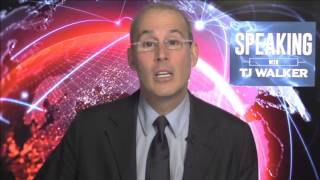
TJ Walker explains how to work effectively with sign-language interpreters when speaking to deaf or hard-of-hearing audiences. Give them your script and slides a day ahead, meet beforehand so they understand your voice and intent, and use longer pauses after sentences so they can keep up. Treat interpreters as partners, not just translators.
Chapters
What is the best way to work with a signer if someone is doing the sign language for your speech? For the hard of hearing.
Speaking the show about effective speaking in public, to the media, at work and in life. Speaking with TJ Walker.
This question comes from Gregory Barton, one of our regular viewers on the YouTube channel for this program, and he writes in TJ, Any tips on working with a signer who is signing your speech for the hard of hearing or the deaf? I have a lot of tips. I'll share those with you today. In some ways it's similar to how you work with a translator, and essentially a signer is translating your speech into another language, the language of sound. So I'm going to give you a number of tips. Most of these are applicable to any translation. So if you're speaking to a German audience and you're speaking in English and it's being translated to German by a translator, a lot of these lessons apply too. For starters, when would you do something like this? Well, anytime you think the audience might have some people who are hard of hearing, deaf, you would. Many, many government officials do this because they need to be and want to be inclusive. Certainly you see this for major events, state of the state, state of the city addresses, public meetings, you'll often see this. And anytime you think it's appropriate, again, more broadly and anytime you're speaking to an audience who doesn't get your language the way you're speaking it. So whether it's translated to German or Italian or sign language, the principles apply. Now, if you are a government official, quite often your speech is written in advance. One of the things you can do is give the signer your speech with as much time, with as much notice as possible. This allows them to read it, study it. You can certainly alert them that you're not going to be reading it word for word. And those of you who follow me regularly know I don't recommend for most people most of the time reading a speech, but certainly if you do have a speech written out and you're going to be talking about that, and some of the sections are going to be quite similar, it's going to be very helpful to the signer and anyone translating you to have the document and not just two minutes before you start, they've got their mind on other things. They've got to focus on other things at hand. So try to give it to them, preferably a day in advance. Even more, if you have it, don't give it to them at the last minute. The next thing I would recommend is try to meet with the signer or the translator, and in advance. Now you may say, well, tj, I'm busy. We can shake hands right before. That's not it. It's about giving the signer or the translator a chance to listen to your speech patterns, hear you, get a sense of your accent, your pausing, how things work. If there are any particular odd ways, at least to their ear, of how you say things, this is incredibly helpful. More tips in a Moment.
Speaking is brought to you by Media Training Worldwide. For all of your media training and public speaking training needs, go to mediatrainingworldwide.com.
More things you can do Anytime your speech is being translated, whether it's into sign language or another language. For starters, put in longer pauses when you speak. I don't mean talk really like a robot, and pause between every word. That's not what I'm talking about. I mean after you finish a sentence, slightly longer pause. After you finish a paragraph, a slightly longer pause. When asking a rhetorical question, a little more of a pause. Now, the larger the audience you're speaking to, in general, the longer the pause is good. It takes time for your sound to filter out through the room. It gives people a chance to process it and think about it. But in this case, you're giving your translator, whether it's your signer or someone translating to a foreign language, time to catch up. Because they're translating what you said a few seconds ago and you're now still talking. So you're forcing them to multitask. Now, good signers can do this, of course, but all things being equal, you make their life a lot easier if you give them time to catch up. So by pausing, you can allow them to stop multitasking for the moment. They're continuing to translate what you said a moment ago. They get that finished. You're pausing. Now, when you start talking again, they have a moment to pause because they're listening to you. It makes life much, much easier, if possible. And it's not always possible if you could meet the person signing for you or translating for you for breakfast. Even a social occasion, if you're at a conference and everyone's speeches, all the speeches are being translated by the same signer trying to meet that person for dinner, drink the night before. So they get used to hearing you, get used to the sound of your own voice. It just makes their life much, much, much easier. If you're going to use slides, give them your slideshow. Something else I like to do. Now, this is this may Be more than what the signer asked for. But if I'm speaking on public speaking and I sense the signer or the translator is interested, I'll give them a couple of my books on public speaking. Now, this does a couple of things. If they are interested, it gives them a much greater framework for understanding what I'm talking about. So if I go off on a tangent or I answer a question and they don't quite know 100% of what I'm talking about, if they've already read other aspects of my work, they are just more familiar with it. They can draw from that. They have greater perspective on what it is I'm talking about. The other thing, frankly, is it builds goodwill. A translator is in a position to accurately portray you. They're also in a position to make you come across better than you actually are. And they are in a position to make you sound worse. So showing some goodwill, giving a present of your books can be a nice gesture. Now, maybe the signer doesn't care about your books or your particular niche. Very few people are offended by that. So there's really not a lot of risk there. So these are some of the tips I recommend when it comes to having your speech signed. Number one, if you do have a full speech, make sure it gets to the signer as quickly as possible. If you don't have it all written out, whatever you do have notes, outline resource materials, get that to the signer. That's number two. Number three, try to meet with the signer in as relaxed an atmosphere as possible. Meaning specifically, not five minutes before you're starting to give a presentation. And number four, have an actual conversation. Tell them what you're trying to accomplish so they can see the bigger picture. And ask them if they have any questions, treat them with respect. Do that and it will be a much better experience for your audience. And that's ultimately a better experience for you too.
For a free, no obligation online public speaking or media training course, go to mediatrainingworldwide.com and start learning today.
Folks, if you have any questions on speaking to the media. By the way, thanks Gregory, for putting your question in. That's what this show is about. This show is not about me just going through chapters of all my new books and promoting. It's really about you. So what always takes precedent in every show are questions from from you about any aspect of public speaking. Speaking to the media, giving PowerPoint presentations, giving financial presentations, speaking during a crisis. That's what I do for a living. Those of you who are joining me for the first time today. I have been doing media training and presentation training for 32 years all over the globe. And it's not that I'm the best speaker in the world. There are plenty of better speakers. What I'm good at, though, is the fact that I really, really think about these issues. I specialize in these issues and this is my little world. This is all I do every day of the week. I'm either training CEOs, business people, financial folks. Trained a student earlier this week, helping him prepare for graduate school interviews. So it's a whole variety of speaking experiences. I'm coaching people, rehearsing them, training them, writing about these issues, creating online courses and podcasts. So I'm not asking you to follow me and say I'm the perfect role model. You have to speak like me. No. But what I can give you is unbiased analysis, perspective and tips on what I think will work for most people most of the time, including you. If your goal is to communicate effectively and how not to distract people, and how ultimately to get people to remember your messages, take the actions you want. If you're speaking to the media, how do you come across the way you want and get the actual messages and quotes you want in the story? So that's what this show is all about. I really appreciate you spending time with me. As always, may all of your presentations in life be a huge success. Thanks.
Speaking with TJ Walker is the number one rated daily streaming TV and radio show devoted to all aspects of speaking and communication. If you received value from this show, then please subscribe to it@mediatrainingworldwide.com Please review the show, leave comments and share it with your friends and colleagues. Today.
More from TJ








You're Not Being Judged on Your Work Yet: What New Hires Are Really Evaluated On


