Disrupting Multi-Family Real Estate: Tiffany Mittal's PropTech Revolution

In this episode of Disruption Interruption, host KJ interviews Tiffany Mittal, founder of Utility Ranger, about her mission to democratize utility billing for small‑scale multifamily property owners. Tiffany explains how traditional utility billing leaves owners of portfolios under 1,000 units—about half of the U.S. multifamily market—without access to third‑party services, resulting in lost revenue and higher water costs. By converting owner‑paid utilities to tenant‑paid Ratio Utility Billing (RUBS) and delivering the process through a SaaS platform, Utility Ranger helps owners increase net operating income, boost property valuations (e.g., $36,000 extra revenue translated into a $1 million higher appraisal), and encourage water‑conservation behavior. The conversation traces Tiffany’s unconventional path from a beauty‑spa entrepreneur to a commodities trader, then to multifamily investor, utility‑billing operator, and finally prop‑tech founder. She recounts pivotal moments: a Harvard Business School program, pregnancy, a stint in fintech, a cash‑run‑out during COVID, a failed pitch to Grant Cardone, and ultimately a partnership with the 10X Incubator and Jared Yellen that secured $600k+ in funding and completed the product. Tiffany highlights the long‑tail market of under‑1,000‑unit owners, the challenges of reaching them, and her strategy of partnering with influential figures like Grant Cardone to create distribution nodes. She shares concrete impact metrics (13% property‑value increase, 20% utility‑cost reduction) and emphasizes the dual benefit of financial gain and environmental stewardship. The interview closes with Tiffany’s personal passions, relocation to Florida, and a motivational message about trusting one’s intuition and persisting through setbacks.
Chapters
All right. Welcome back, everybody, to Disruption Interruption. I'm your host, KJ, and we're here today to talk to another industry leader that has steered off the lame, tired path of the status quo. Today, we have an exceptional guest reshaping multifamily real estate and utility management. It's a big mouthful, but imagine this: 30 million small family units, 30 to 40% of the real estate market, experiencing a 13% property value, value increase and a 20% utility cost reduction. Can you even think with that? Well, thanks to our guest, we're going to find out all about it today. Her journey from owning a beauty spa to at 22 to venturing into international commodities by 25 showcases her trailblazing spirit. After the 2008 recession, she pivoted into real estate tech, amassing 13 years of experience from owning multifamily apartments to excelling in prop tech. In 2020, she launched her own tenant utility building startup, catching the eye of industry giants Grant Cardone and Jared Yellen at the 10X Incubator in 2021. With a master's in global leadership and Harvard Business School's general management program under her belt. Yes, she's a brainiac and an overachiever. She's here today to discuss the future of multifamily real estate and proptech. Please welcome Tiffany Mittal, founder of Utility Ranger. It's a pleasure to have you, Tiffany.
Thank you so much for having me on.
Yes. Okay. Tell me this. Oh, before we get into this, I'm so interested. Like, you have such a diverse background and you've done so many things and you're so smart and you're so beautiful. I want to know, and I know my listeners want to know, what is your fundamental ingredient for disruptive innovation? What steers you? What guides you?
I think what guides me the most is really leveling the playing field for the common man. You know, I grew up with, you know, modest beginnings, and I got into hair and beauty because my parents couldn't afford to send me to college. So, you know, really now fast forward, having a tech company or a prop tech company, um, my goal is to make this technology available to to the everyday investor rather than just the big institutional players and really just leveling the playing field for everybody.
That is beautiful. And I know a lot of pioneers and most all disruptors I speak to, they are serving a market that has this huge pent-up demand and has had this, which you are doing, right? So let's just talk about the average Joes in multifamily real estate, right? Let's like, what has been the status What's just been going on for so many years?
So my husband and I, I got into multifamily real estate after I met my husband, which kind of helped me pivot into property technology. But, you know, we were everyday investors. You know, we were growing our portfolio, noticing inefficiencies within the space. One of those inefficiencies we noticed was in utility billing. And utility billing, for those who don't know, in The apartment space are when the landlord pays for utilities such as water, sewer, trash versus the tenant paying for that kind of, you know, utility which they're the ones utilizing. And so most of the time people sign up for electric right through the electric company, but the water, sewer, trash bills go to the owner. And for the longest time, the owners were footing the bill for this because water Wasn't that expensive. But as we know, across the country, water rates have been going up. And so there is a service available for really large institutional and really medium to large institutional investors, which is you use these kind of third-party utility billing service providers. And they collect all your master meter utilities, and then they act as a utility company, and they bill out your tenants. for you on your behalf, allowing you to really collect those funds back and increase your net operating income. But if you have under 1,000 units, which is about half of the multifamily supply in the US, you're just not big enough.
Wow.
You're not big enough for these service companies to take you on because it's a lot of manual labor. And so unless you have kind of some big buying power, you can't be serviced. And so, you know, it's not so much about the billing. What I found out, and I can get into that in a minute, but when I found out— Yes. We started doing this on our properties and we started transitioning our utilities from owner-paid to resident-paid, our valuation of the property increased dramatically. So one property that we had, it was 36 apartment units. We had about $36,000 of additional income we could bring in that year. So about $1,000 per unit per month that we were able to— not per unit, per unit per year. So about $80 a unit per month that we were able to recoup. But when we went to go refinance that property, the lenders valued our property at $1 million more just from that $36,000 of additional revenue.
Wow.
Oh, like that's one property. What does that look like across our portfolio? And we were able to leverage that additional equity increase, pull a cash-out refinance of $500,000 on the one property and use that money to buy another property. And that's when we realized that utility billing wasn't meant for just sending your tenants bills. It was really a mechanism to grow your portfolio that really only the big guys had access to. And so I said, okay, there is a problem here. The only way we were able to do it is I kind of backdoored the system. My husband— I'd just gotten out of grad school at the time, and I realized multifamily apartment operations was not where I wanted to be at. I mean, you have a lot of tenant issues and bedbugs and maintenance issues. And I said, this is disgusting. This is not my life. This is not where I see myself. But I'm kind of a problem solver by nature. And I said, okay, well, how are we going to deal with these utilities when we went to all the service companies and they turned us away? I said, we're trying to give you business and everybody was turning us away because—
They turned you away. I mean, first of all, I just want to say something. I'm going to go rewind back to this, like half the supply in the US.
Yeah. This is like under 1,000 units in the portfolios. Half the owners—
Under 1,000.
So there's about, you know, 30 million apartment units across the United States. About half of those are, you know, within portfolios that are under 1,000 units. So mom-and-pop owners, maybe they own 30 units, maybe they own a duplex, maybe they own 10 units or 100 units. But unless you have over 1,000 units in your portfolio, which is basically an institutional investor, no one will service you.
Yeah, and you just don't have The resources. Okay, so go— so fast forward up to this point where you were talking to utility companies, right?
They were turning us away. They said, you're 100 units, you're just not big enough. And we said, okay, well, how are we going to solve the problem? And I don't really like taking no for an answer. So I said, what are we going to do? And my husband said, well, you don't want to be in the you know, operations, why don't you go work for one of these companies and kind of backdoor the system? And so I said, that's a great idea. So I went to go work for one of the companies that was local in San Diego.
A utility company.
A utility billing company that services the industry.
Um, by default, you were a plant for a number of years.
Yeah, so by default, they took us on as clients. Um, and I saw firsthand, I grew that company from $100,000 to $20 million in 5 years. We were a rocket ship of growth, and I had to turn people away who didn't have 1,000 units in their portfolio. And I understood firsthand because we were scaling the internal teams to support our clients. And so unless our clients had over 1,000 units, it didn't make sense financially for us to service them. So I said, how do I take this service model and turn it into a SaaS model?
The million-dollar question, literally. Good. So You noticed that by being able to control utilities, right, then the valuation of the properties increased, right? And a lowering in utility costs, right?
I mean, it's more than that. It's a lowering in overall consumption because think about it. You go to, like, let's say you go to a hotel and your shirt's a little wrinkly. You know, I don't know about you, but I normally put my shirt in the shower or hang it on the shower door. I turn on the hot water and I let it go and I walk out of the room for the next 10, 15 minutes or until I get done doing what I'm doing. And I go back in and my shirt's perfectly fine and ready to go, you know, and because it comes with the cost of the hotel room. And it's really like, that's how our tenants think, right? It comes with the cost of their rent.
That's true.
So it's not so much about just you know, giving a bill to my residents because I want to increase the value of my property. It's also I'm trying to change and modify the behavior of my residents. I had a— it's really funny. Initially, when this was first kind of starting off, when we were looking for a company to help us, this really started because one of our tenants called and said, you know, my neighbor's been leaving her shower on all day. I hear all day running. I don't even think she's home. So we sent our onsite manager to go check it out. She wasn't home. She got back from work. And we found out she said she was leaving her shower on because her dog had anxiety and she didn't want her dog to bark while she was at work. And I said, oh my God, who does that? Especially in San Diego. I mean, we're the bottom of the barrel for water.
Oh my gosh.
It's just that same concept of, you know, if you're not paying for it and it comes with a cost, how are you gonna prevent the dog from barking? Or people don't tell you if they have a leak in their unit because maybe they're hiding a cat. Or maybe they're hiding extra tenants. They don't want you in their units. You know, they're doing all that.
Or what about that running toilet that they just don't think to call because it's not really leaking?
Or you do one dish in your dishwasher because you're not thinking about, you know, the cost of water, but it's really wasteful. So how do you get your residents to conserve? We pleaded with them for months and they did nothing. Actually, our water bill went up. You know, and so it's the only way you can get people to really have, you know, some skin in the game is to give them part of the bill and let that fluctuate with what's actually happening. And people just by nature, when you pay for something that you're using, you're going to use less of it.
Mm-hmm.
So you have conservation across the property. So our bills go down. You have increased responsibilities of notifying landlords of leaks or any kind of other issues. Wasteful consumption goes away completely. Completely. And then on top of it, you have this massive increase in your property valuation. I mean, it's really a win-win-win across the board.
But it really is. It's even an extra win because, you know, you're actually forcing in just by application financial literacy, right? Oh, let's not have waste. I'm having to pay for this, right?
Totally.
Okay, so you wanted to turn this into a SaaS model. Tell me, what were the challenges? I mean, like, you know, it's always great to talk about successes, but our listeners also really like to hear about the arrows in your back. I mean, what were the challenges? What were the issues? What did you have to persevere through? Because I know you're a perseverer.
You know, I really thought of this idea in 2015 when I was running the company that we were at $20 million. You know, I was just out of grad school, so I had never taken a company from a small business to, you know, a larger organization before. So that's when I decided I wanted to really refine my skills and have more certainty because we were moving so quickly. I was worried that one wrong decision could completely derail our growth. And so that's when I applied for the Harvard Business Program and got in. Unsurprisingly, I didn't think I was gonna be able to get in kind of coming from humble backgrounds. But I got in and I went. It was a 6-month program, really intense. And I thought of it right before I went there. And I thought, you know, this is meant to be that I was— I thought of this right beforehand. And so we were supposed to all bring our businesses there. And so I brought this new idea and talked about it during my course there. And after I got home, I left my job and decided I wanted to pursue this. I was starting to gain some momentum in 2016. And then got pregnant with my third child and also at the same time was offered a job for a payments company, property management payments company who had acquired a utility billing company and had no idea what they were doing. And so we said, we're not being successful in this. We need to hire an expert in the field and help us kind of reposition our product. So at the time I got pregnant, at the same time I got this job offer and I said, well, Maybe I'll put this idea on the back burner for a little bit, take this job offer throughout my pregnancy and kind of give me some security because it's gonna be really hard to continue to push this new tech company while I'm pregnant. I had this vision of me trying to go out for, you know, pitch competitions with this huge pregnant belly and not that that should deter investors. It's not that that should deter investors, but You know, tech is a very male-dominated space.
Yeah, I would think that would give you an advantage.
I mean, at the time I thought it was going to give me a disadvantage. And so, yeah, and then this was a big corporate job. And so I said, you know what, let me— and they had a lot of— it was a technology company and I was working in prop tech, but very much a service-based business. And so I thought I could learn a lot because I knew my— I knew exactly what I wanted to do, but I didn't know enough about technology to really do it right, right? Like, I didn't know enough about product management or any of this stuff to— how could I have a tech company when I don't really know how to start a tech company, right? I had the idea, but I didn't know how. So I figured I'd use it as a learning experience. So I, I worked there for a couple of years. We had tremendous growth. We completely pivoted that side of the business. And then I got recruited out to work for a fintech company, got, you know, got a lot of money and said, oh, this is going to be a great opportunity. It was in Los Angeles at the time. I only had to go up there one day a week. And so I said, well, maybe while I'm doing that, I can work on my tech company in the background because I only have to go up there once a week and work from home. And so I took the job for great money and the schedule and then realized I really did not like fintech. I felt like I was creating value in prop tech. I was, you know, creating all these property value increase for all of my clients. And in fintech, I said, I don't care if my payment goes through a millisecond faster. Like, this makes no value for me. I was really feeling like I was valued in what I was doing before. So, you know, it kind of went down this meandering path and then COVID hit. And so in the middle of COVID I was completely swamped in my job, not loving the field of fintech at the same time. And I looked at my husband, I said, I can't work another single day on someone else's stuff. Like, I gotta follow my dream. I wanna do this utility billing. SaaS model. I've been wanting to do it since 2015. I know much more about technology now. I'm ready to go. And he said, okay, I know you hate your job. And we're in the middle of COVID anyways. And luckily, being in multifamily, our kind of income was secured during that time. So my husband gave me $250,000 and said, okay, here you go, your first round of investment.
No pressure.
So I hired a software development company and we did the branding on Utility Ranger. We had half, you know, half of it built a year later and I was out of money and I had half-built software and my software—
So deflated at that point, right? I mean, these are the challenges that really happen, right?
We were running out of money and, and I— it was supposed to be done in a year and so they said it was It was only half done. They said it was gonna be another $450,000 and another year to finish it. And I said, there's no way I could go back to my husband and ask him for another half million dollars. He may kill me if I ask him for this.
He might divorce you first and then kill you.
At the time, you know, that was not something that he could just hand over to me. And so I said, you know what, I really need a partner. And at the time, I also knew that in this market, because I'd been in the corporate world, I'd been in the prop tech space. The reason no one's been reaching out to this kind of— they call it the long tail of the market or kind of the extra small to small owners is because, you know, it's really fragmented. Most people don't advertise on LinkedIn, hey, I have 50 units because maybe I have, you know, maybe I'm an attorney or I have some other job and I have, you know, 50 units on the side or 100 units on the side or 10 units on the side. And so nobody could figure out how to reach them.
They're probably not on LinkedIn anyway.
They're probably not on LinkedIn anyway.
And what do you mean by— what does it mean by long tail of the market in this sense?
So long tail of the market means typically you're segmenting your market, right? So we would segment our market by ownership size. So people who owned over 20,000 units would be like the Greystars of the world, people who own like 10,000 to 20,000, people who own 5,000 to 10,000. people who own 1,000 to 5,000. And the long tail is people who are like 1,000 and below, like everybody else, right? That nobody really wants to reach out to because everybody wants the big whales, right? Like I want this big guy. So I have one client and I've really, you know, made some moves. So the really small market gets ignored and because they're fragmented, nobody can reach them. And I said, well, you don't reach them individually, you reach them by finding a node. And I knew at the time this guy, Grant Cardone, who really teaches people how to invest in multifamily real estate, he was the node that all these owners follow. And I said, he needs to be my partner. How do I get him to be my partner? Right? And so I—
Let me guess, he turned you down first.
Of course he did. I know I'd read his book. I had already been following him because we were small owners. I went to one of his boot camps and they said, oh, we're having a pitch competition. I said, oh my gosh. So I like put in my pitch and the next day I made it into the top 10 in his virtual boot camp during COVID Then I made it to the top 10 and got to pitch, you know, live with them and totally bombed. And it was embarrassing. I think I stopped speaking for maybe 20 seconds on a Zoom because, you know, initially, remember in the beginning of COVID when Zoom was first coming out?
Oh yeah, Zoom was massive as far as Picture.
And so then there was a delay, and it was just— you start getting in your own head and you can't remember what you were talking about. So, uh, I bombed. And then I said, okay, I'm not gonna give up. I kept trying to figure it out. And then I saw—
Oh, wait a minute. So you bombed because you just got so in your head because everybody was trying to figure out Zoom and there was delays and this and that. It wasn't working like it does today.
Yeah. Yeah. Exactly.
Okay. That's kind of cute and funny at the same time. You know, Zoom really like beefed— they took advantage of that wholeheartedly during COVID They did a ton of publicity during that particular time.
Ever since then, I always hide my self-view because if I look at myself, I get distracted because I, you know, start thinking like a girl, like, oh, what's wrong with my hair there?
Wrong angle. So, so you totally bombed that one. And then what happened?
So, uh, you know, I was still out of money and I still needed to, you know, get my software developed. So I, uh, continued to follow them and really tried to perfect my pitch. Uh, a few months later, you know, life was going on and I was trying to figure out how to continue on with the development. We'd really slowed down the development. per se. And, uh, yeah, you ran out of money. I mean, we have a little bit left, but we had pretty much slowed down. Um, and then I saw that this guy Jared Yellen, he was saying, oh, I want to start this kind of different type of tech company. I want to democratize the tech space. And, you know, that got my ears ringing. How do I democratize the tech space? Because most people with a good idea, their idea dies with them because they get hosed when they go to software developers. I mean, I was dealing with that same problem.
Yeah.
How do I change this? He said, I've already figured out the formula and I'm gonna build, scale, and sell 10,000 tech companies. And that caught the eye of Grant Cardone and he said, whoa, you know, those are my kind of numbers. Those are my 10x numbers. How do we partner in on this? And so Grant and Jared partnered and created 10x Incubator to basically kind of find these 10,000 tech companies to build, scale, and sell together. And I said, oh my gosh, this is my chance. I just knew it, like with every bone of my body, I knew that this was my chance. So I put in all my information and luckily I'd been prepping for months. I put in all my information. They called me back a week or two later. I met with them. It was probably an hour call and they literally said, we don't do this. We've never done this. We're completely going outside of our, you know, our boundaries here and we're gonna offer you a deal on the spot. And they bought half my tech company on the spot and I was dying. So excited.
Chocolaka and she did it.
Oh, I mean, it was the best day of my life.
And you need to think about it.
And I was like, I don't need to think about it. I'm in, like, let's go. And then they like taught me how to raise capital. We raised another $350,000. They finished my product a year later, and that was all through 2022. And we launched earlier this year, and it's just been amazing. I mean, the team behind Jared and Grant's team, I mean, it's insane the amount of momentum that we've had. And it's, you know, really a dream come true to kind of feel— I was actually on a phone call the other day with one of our clients who was asking me about something in the software, and she was like, oh my gosh, this is so great. This is so easy. I'm so excited. And she was so excited, and it feels so rewarding to feel like your dream, you know, that I've been having since 2015 not only come to reality, but then have, you know, people using it who really appreciate it, love it, think it's easy, and gaining the value that I was hoping to create. It's just, it's really rewarding to kind of get to this point. And now we're really—
That's really it, isn't it? Like the pay of living and they're getting the value out of it and you are democratizing tech, right? What is your— what's your future? What part of the market?
How much of the market do you want to like take over?
And, you know, how do you see PropTech really reshaping multifamily units in this lower half of the market?
I think that right now, and, you know, things happen, I always think things happen the way they're supposed to happen. There's never been so much attention on multifamily real estate and multifamily investing. As you know, the economy is a little bit unstable right now, the market's unstable, and people are looking for different, you know, avenues of investment. There's more and more attention on multifamily investing. And all of these new players who are now entering the market have no idea what RUBS is, which is what I do. It's called ratio utility billing. They have no idea what this is for utility billing because they're just happy to maybe buy their first duplex or fourplex and no one will service them. And then once they find out what we're doing, it's like we can actually help create and help them grow their portfolio because they can leverage this as a value-add strategy outside of just dumping a bunch of capital into their properties. And so I think it's really the perfect timing And really the perfect environment to, to enter the market to help all these new investors.
That's awesome, Tiffany. Okay. So, I mean, honestly, that's not even a good enough acknowledgment. It really is so valuable as far as what you're doing for, you know, mom and pops, right? Small business. I mean, these are small business owners, right? So a lot of pent-up demand, technology today allowing them to peak. compete with the Goliaths. It's really well done.
You persisted. Oh, thank you. Thank you. It's really rewarding.
Okay, so let's go to like outside of Utility Ranger. What are your crazy passions? I know you have 3 kids, 4 kids?
4 kids, 4 kids. I have a 1-year-old, a 5-year-old, a 9-year-old, and a 12-year-old. And it's a, it's a whirlwind. But we recently relocated from San Diego to Florida. And we use that price arbitrage to buy a house on the water. And we go boating. We're big skiers. And we love to travel. So, you know, my husband's Indian, we got married in India. And, you know, the travel bug has bit us. So, we try to travel as much as we can with our kids. We take them skiing in Europe and, you know, do as much as we can with them while juggling everything else at the same time. But our multifamily investments have gained Allowed us to kind of have some more flexibility with our time.
That's great. That's really good. And welcome to Florida. I'm on the other side. I'm on the Gulf Coast.
Oh, we almost moved to the Gulf Coast. It was a big discussion, but I said I wanted to be closer to the Bahamas if we could be.
Well, there you go.
All right.
So tell people how to get a hold of you.
You can get a hold of me through my Facebook or Instagram, TiffanyMittal.com, or that's not Tiffany. It's utilityranger.com is our website. But you can find me on all the social media platforms either under Utility Ranger or Tiffany Mittal.
Okay, fantastic. And you're also on LinkedIn. That's how you and I met, right? Can people contact you there?
Absolutely. Absolutely.
And, you know, I will tell you, she's very gracious. She will talk to you. She will nerd out with you on PropTech. So definitely contact her there. And Tiffany, before we go today, you know, what would you want to leave our listeners with? What message? What, you know, fable? Like, what story to the fable? Like, what do you want to, like, have them take home as something to remember you by and to persevere?
I would say, you know, trust in yourself, trust your gut. You know what you want to do. Um, when you invest in yourself and trust, you know, what you know to be true, I don't think that you'll have any problem succeeding. I think we let ourselves kind of talk ourselves out of what we want to do or what our passions are because it's scary to pursue something else. But giving ourselves permission to pivot and follow our dreams and trust your intuition.
That's so very true. Well, I wish you all the best success. It couldn't happen to a nicer person. And thanks today for educating our listeners on PropTech and what's happening in the market.
Thank you so much.
That's a wrap, everyone. If you learned something today, go tell someone about this podcast and tell people to go disrupt their markets with a tidbit from this show. Thanks for listening to Disruption Interruption, where we transform lives, change consumer behavior, alter economics, and never accept the status quo. Ciao for now.
More from Tiffany


I added $1M in value to a 36-unit buildingwithout raising rent a penny. Heres how.


The Future of Multifamily Space - Unbundled Amenities #RUBS #Unbundled #multifamily #apartments
The Benefits of Implementing RUBS for Apartment Owners #apartments #RUBS #growyourportfolio

Utility Billing Software for RUBS Billing (Ratio Utility Billing) in Multifamily apartments.
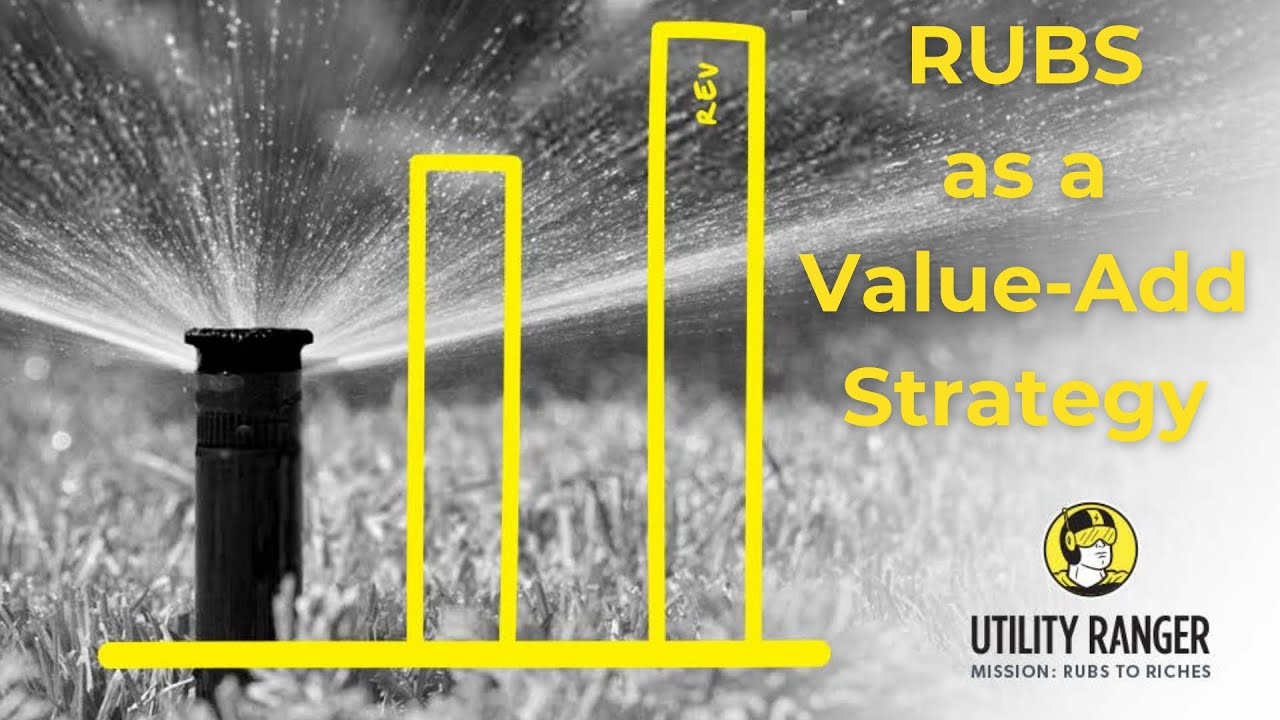
Kahuna Mastermind, Investor Fuel Mastermind, Cash Flow Mastermind with Utility Ranger, RUBS
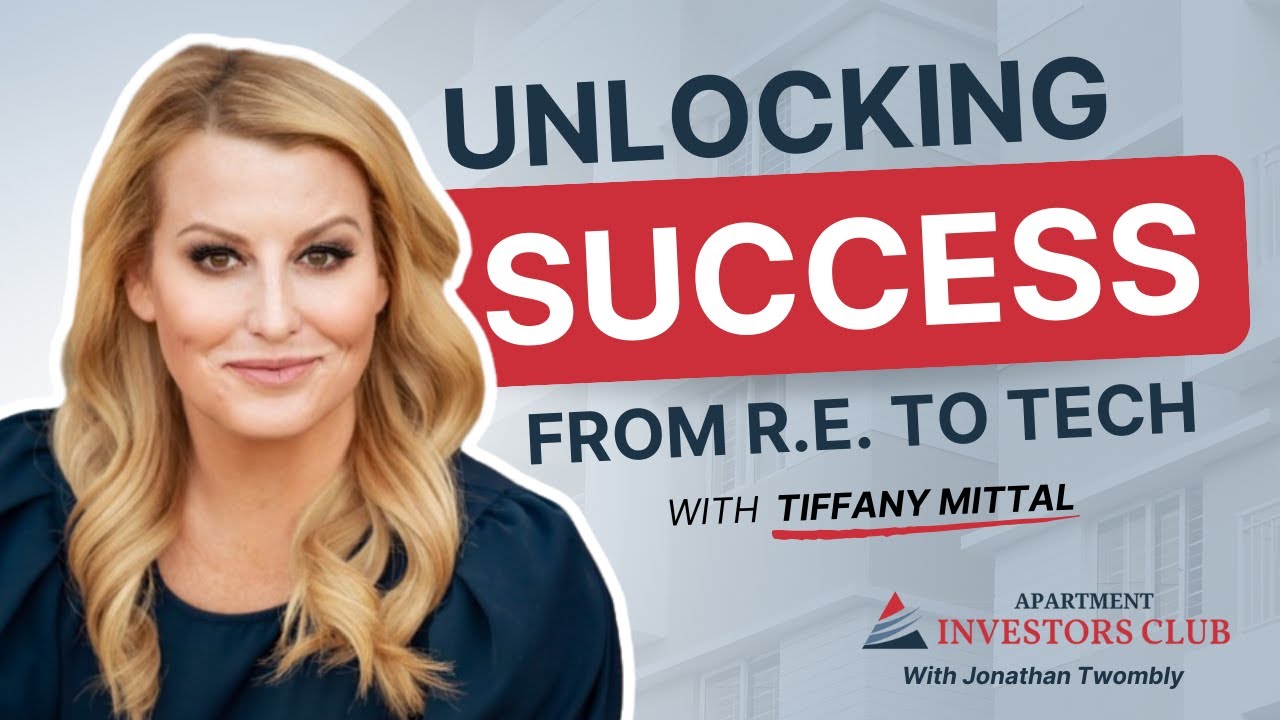
Apartment Investors Club Podcast EP67 with Tiffany Mittal, Founder/CEO of Utility Ranger