Australian Property Expo Keynote 2025
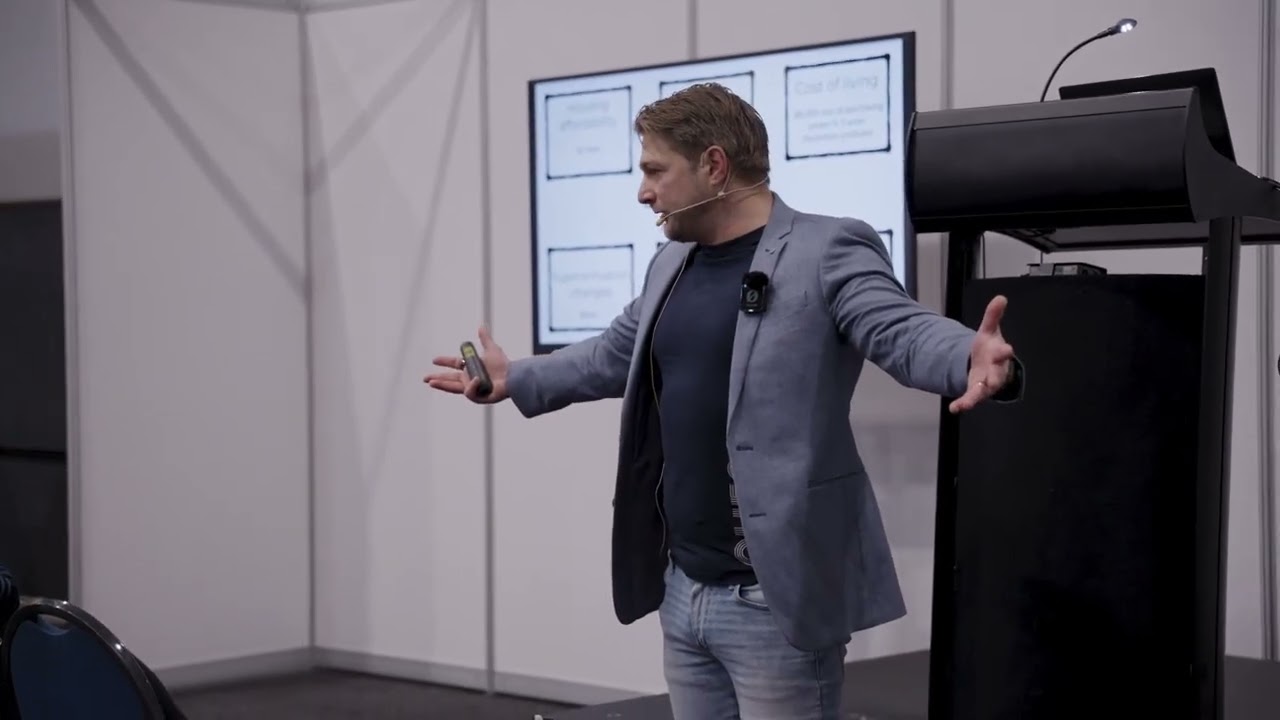
In this keynote, Todd Polke, founder of Portfolio Wealth, outlines a comprehensive system for turning property investing into a reliable six‑figure passive income stream and beyond. He begins by highlighting why most Australian investors stall after one or two properties—serviceability constraints, lack of equity, poor cash flow, and insufficient education. Polke then introduces his Portfolio Wealth Operating System, which is built around three pillars: strategy, structure, and system. The strategic pillar comprises three core strategies—"Buying Gold" (blue‑chip, capital‑growth assets), the "Paycheck" strategy (cash‑flow‑generating assets), and the "Momentum" strategy (short‑term profit‑oriented deals). He stresses the importance of off‑market deal flow, network‑based sourcing, and a four‑layer due‑diligence framework (macro, micro, niche, emotional). Real‑world case studies illustrate how off‑market purchases can generate 10‑20% annual returns and rapid equity uplift. The structural pillar covers ownership vehicles (personal name, trust, company, offshore), tax optimisation, liability protection, and legacy planning, forming a "financial fortress" that safeguards wealth against market, regulatory, and personal risks. The system pillar focuses on converting assets into cash flow through diversified investments—including private lending, business ventures, build‑to‑rent, hemp farms, and crypto—while maintaining a balanced portfolio. Throughout, Polke shares personal anecdotes, client success stories, and a call to action for attendees to calculate their own Financial Freedom Figure and adopt his disciplined, system‑based approach to achieve financial independence and a lifestyle of choice.
Chapters
Welcome. How's everyone's day been? Good? Good. Good, fantastic. Guys, those who haven't met me before, my name is Todd Polke. I'm the founder of Portfolio Wealth, and today what we're going to be talking about is, well, how can we use property as a vehicle to create $100K in passive income and then be able to scale over and above beyond that? Who's interested in that type of topic of creating a 6-figure passive income through real estate and even more than that? Is anyone interested in that? Yeah, yeah, yeah, you all bloody well should be, that's for sure. So, um, today is going to be very much a bit of a practical day as well, right? So I'm gonna be sharing with you some core frameworks. I'm gonna be sharing with you a whole bunch of strategies that I teach a lot of my private investors who have scaled to multiple 6-figure passive incomes. And because I want you to be able to walk away with you with a whole lot of valuable information and tactics that you can take away and be able to deploy straight away. Now, at the end of today, I've got a little bit of a free gift for you guys as well. You know, some additional training, some additional tools and resources for those of you who really wanna take property investing seriously and actually start, you know, I always have a core belief that your wealth creation portfolio is a business and you have to treat it that way. If you don't treat your wealth like a business, then you wind up getting just hobby-like results and that's not why we're here. So what we wanna focus on is how can we actually start taking our property investing a little bit more seriously that can actually take create some real tangible outcomes to your portfolio, which is ultimately about living the lifestyle you desire. That's what the whole game is all about. Now, first things first. There are a lot of property investors who actually get started in the property investing world, but very few actually wind up creating financial freedom in their life. Because let's be real, it's easy to become a property investor. You buy a property, you rent it out, congratulations, you're a property investor. But there's a very, very different conversation around being a property investor that actually to create financial freedom. Now what you're looking at on the screen right here, if you can see it, is that this is the percentage of investors who ever get past property number 1, 2, 3, 4, 5, and 6 properties within their portfolio. Now even getting to property number 2 in the portfolio, only 18% of investors ever get to property number 2. Only 5% get to property number 3, and only 2% get to property number 4. 2%. 2% of all investors who ever get started in the property investing world with the hope and the dream to create financial freedom ever get to property number 4. Now for most people, you're not creating a level of financial freedom just getting 1 or 2 properties in your portfolio. Does that make sense for everybody? You've gotta be able to grow and scale beyond that. And most investors are getting stuck even just after 1 right now. Why do you think that is? Why are most investors getting stuck at this point in time? Who's been trying to get loans anytime recently in lending and serviceability? Has anyone been trying to do any of that type of fun, joyful experience? For serviceability is incredibly tight right now, and I don't think it's gonna be getting much better, right? It's not what it was 15 years ago, right? 15 years ago was a Wild Western property investing where you could be on an average wage and still be growing and scaling 5 to 10 properties in a portfolio. I've got a lot of clients now who have 10 properties that they bought a long time ago. They're very asset rich, cash flow poor, but according to the banks, they can't even afford what they have right now. And so they've hit this serviceability wall and their portfolio has come to a grinding halt just after a few properties. Right, we wanna make sure we avoid that now and start putting things in place now to make sure you don't become one of those casualties and get stuck and wind up having to continue working, exchanging time for money just to pay the bills. 'Cause who thinks life is about so much more than working to pay the bills? Does anyone think that? Only a couple of you. The rest of you just love working to pay the bills by the sound of things, right? Like, that's what it's all about. Now, why do you think most investors get stuck? I said one of them is serviceability. What else? Why do most investors get stuck just after a few properties? What do you think the answer is? What do you think? Not enough equity. Yeah, they don't have enough equity. That's what you're saying? Yep, so they don't have enough equity. or they can't access the equity that they have. Right, what else? Cash flow. Cash flow, yeah. They might go out and buy a few negatively geared properties, for example, and they wind up bleeding money, bleeding serviceability, bleeding cash flow, and it becomes like a noose around their neck that they can't get away from. Right, so cash flow's another one. What do you think some of the other reasons are? Why do most investors never actually reach financial freedom? Another one is they don't know how, they don't have the education. Because in no type of formal education system were we ever taught how to manage money, how to build wealth, how to grow wealth and create financial freedom. Is that true? Was anyone taught this in some magical school that I'm not aware of? We're just never taught about it. We're taught to get a job and exchange time for money. That's the pathway that we're taught. Yes. A lot of other people don't have a strategy. Most people's strategy when it comes to property investing is buy and hope. They buy a property and they hope like hell the bloody thing goes up. Right? And so they wind up never getting— they don't have the right team, they're getting the wrong advice from the wrong people, and all this stuff comes together and they get 1 or 2 properties in the track and they never create the financial freedom that they so richly deserve and that they richly desire in their portfolio. And we want to start moving past that today. So today's session is going to be very strategy-based. I want to share with you some of the core skills and the core principles and the core secrets which help my investors move past those stuck points and actually create those 6-figure passive incomes that they truly do want. Because freedom isn't about the property. Now that's a little bit of a weird thing to say at a property expo, right? Like, it's not about the property. What it's about is the system behind it. Yes. Most investors nowadays who just focus purely on property and that's all they have, again, they come to the grinding halt. So I don't get caught up in whether it's property or crypto or shares or business investment, whatever it is, I do the whole lot. I store my wealth in real estate. Does that make sense? I store my wealth in real estate and I started in real estate. I've made a lot of money in real estate. But what I want you to get your head out of is that it just has to be all about property. What we wanna focus on is how do we build a strategic wealth system to deliver a passive income to fund the lifestyle you desire? 'Cause it's not about the property, it's about the purposes there to serve. So here's what we're gonna be covering today. I'm gonna be sharing with you the system I teach investors to install, that they install so they have a clear game plan that matches their goals. I'm gonna be talking about the 5 secrets that when you know them, they will literally change everything in your philosophy when it comes to investing. I'm gonna be talking about the 3 core strategies that every high-performing investor must master. Every investor I work with, you need to have 3 different strategies running on your portfolio at any point in time. We're gonna be talking about why off-market deals are one of the most powerful wealth accelerators today. Because who thinks the best deals get to realestate.com.au or Domain? Do you reckon the best property deals get to realestate.com.au or Domain? No. Yeah. Yeah, I'll help you with the hard ones. The answer is no, team, it's not, right? That's the leftovers. The best deals are always done off-market. And when it comes to accessing off-market deals, it's not about what you know, it's about who you know. It's all about your network and how you can access those deals before they hit the open marketplace. And so again, I'm gonna talk to you about how you can get a Property Wealth Pack valued at $885 free. And so I'm gonna give you an offer of that later on where you're gonna be able to download that and get access to it. Now, what we're also doing along the way today, so who's got my book already? Just hold it up for me. Oh, come on guys, I just gave you a free book, hold it up. That's the Escape the Middle book. So it's just been published, it's just gone into all the major bookstores and Amazon, everywhere. If you would like a free copy of that today, my team has them and they're giving them to you as a gift to you today. Okay? So if anyone does not have one yet and you would like one, please put your hand up and the team will make sure they get one out for you. I know there's one over here. I've got one. But along the way, we're gonna be giving some of those free copies away. It's called Escape the Middle, and it's a blueprint in a book, a roadmap in a book to help you escape financial slavery and move into a space of financial freedom and abundance. And it took me 2 years to write, been published everywhere, it's about to be translated into Chinese as well and go into China too. So if you want a copy of the book, it's my gift to you today. Is that cool with everyone? Yes. Cool. So those who haven't met me, Basically, look, I got involved in the property investing world when I was 19 years old. I was living here in Brisbane at the time. Before I got in the world of investing, I was a burnt-out personal trainer. Did anyone remember the Fitness First gymnasium at North Quay? Did anyone remember that? It's not there anymore, but it used to be there. Yeah. So I used to be a personal trainer there 20+ years ago now. And I was working 16, 17 hours a day as a personal trainer with this one philosophy of life. The harder I work, the more successful I'll become. And that was my philosophy in how I was trying to live life. Now don't get me wrong, hard work is a good thing, but if it's your only strategy, where does it lead? Death. Burnout, right? And, and that's what happened by the age of 19 years old. I burnt myself out. I broke my body, I broke my health, I broke my relationships, and at the end of the year, despite working 17 hours a day, I was still broke financially. And I got to a point of realizing this shit's broken. There has to be a better way of doing life than just working my backside off for decades in front of me. And it changed everything for me. And in a moment sitting on the Kangaroo Point cliffs, I decided to change my life in one fell swoop. Bought my first property 9 months later. No idea how to do it. I had no money. I was broke, completely broke. I saved up 9 grand, got the First Home Owners Grant. That's awesome. from stamp duty savings, bought my first property for $291,000 on the Gold Coast. That one property deal made me $70,000 in the space of 6 months after buying it, which was more than my entire year's income as a personal trainer. From that moment in time, everything shifted for me. I learnt that profits are better than wages. I learnt that if I didn't get my money working hard for me, I was gonna spend my entire life working hard for money, and I knew life was about so much more than that. And it made me fall in love with the world of investing. And that's what I've been dedicating my life to for the last 20 years plus. Helping everyday people to take control of their personal finances, build an investment portfolio, helps them create freedom. I've been doing this for 20 years, helped investors do well over $2 billion in deals to date. 2 books I've published, Thrive Through Property and Escape the Millers of Reason. Been on, you know, hosted Sky News, Your Money, Property Magazine, all the different things. The reason I'm telling you this is that what I'm gonna be sharing with you is not theory, right? This is from on-the-ground practice, not only in my own portfolio creating financial freedom in my own life, but helping thousands of investors over the years, literally around the world, to be able to create financial freedom, right? This is it, putting it in practice, and that's what I'm gonna be sharing with you today. Now, secret number 1: the game has changed and the old rules of doing life are broken. What are some of the common challenges that we're facing in day-to-day life now? Serviceability was one. What are some of the common challenges? Oh, you're all being quiet with me, eh? Interest rates. Yeah, interest rates have been really, really high. They're starting to come down, which is a relief to a lot of people, but interest rates really high. The cost of living is really high, right? We've also got situations like housing affordability is the lowest it's been in like forever. The average age of a first home buyer now is 36 years old. That's the average age of the first home buyer. And the number of first home buyers in their 40s doubled in the last 3 to 4 years alone. Now, is anyone a first home buyer here? Soon to be. Soon to be? I already bought it. Oh, you bought it? Okay, cool, alright, great. But, you know, congratulations on getting yourself educated and all that type of stuff to be here first and foremost, right? But I think that real estate is gonna be a big part of the growing wealth divide that's moving forward. Who's noticed that the build-to-rent schemes in Australia have expanded at a rate of knots, right? And it's getting harder and harder for everyday people just to own their own piece of real estate, right? And we've got to make a difference on that. AI is coming in at a rate of knots. They're saying it's going to take over 300 million jobs over the next kind of, you know, 5-odd years, that it's going to start— 5 to 10 years, it's going to start taking over. You've got to start asking yourself how future-proof you are on that. Superannuation is changing. The government has been in their economic reform agenda, which is fundamentally all about how can we tax everyone a little bit more. That's probably really what it all is. And that's what's happening literally as, you know, I think it ended on Friday or something like that. Now they're doing that on property too. Yeah, they're doing it on property. Yeah, so they're literally sitting there going, well, let's scrap capital gains tax savings. And they're talking about raising land tax in property, and they're talking about scrapping tax in trusts and things like that that you're using, right? You have to understand that this taxation system is getting out of control and everyday people are going to be impacted. So you've got to choose how you're going to meet the future because it's coming whether you like it or not. It's just how are you going to meet it? Are you going to meet it just kind of reacting to it at the time or are you going to plan ahead to be able to get there? Lending is difficult, income stagnation. has gone down. Like, there's a lot of forces that are impacting you right now, right? And at some point in time, you've got to kind of step over the line and make a decision and go, well, what am I going to do about this? Right? And it's only up to you. It's your responsibility. I can show you how, I can't make you do it. Investing fundamentally gives you the power to choose differently, and that's what I want. Money is just a unit of choice. Does that make sense to everybody? Yeah. It's just a unit of choice. It gives you more options in life, and that's what it is all about. Now, oops. Okay, let's try that again. So here's what I know. Most of you are here not because you just love and adore investing. You're here because you know there must be another way. There has to be something better than just working to pay the bills for the next 40 years. That's why Rodney began working with us. Rodney went from 0 to 7 investments in the space of 18 months. and to $1 million in net worth. Here's what he had to say. I grew up believing hard work was the only path to success. By 34, after 16 years as a chef and then as a postie, I had savings but no assets or direction. I met Todd. His system opened my eyes to a completely different path, one that made wealth building simple, strategic, and achievable. Within 8 months, we built savings, bought our first home and investment property, and created $1,300 a month in passive income. After the first 8 months of working together. 4 years later, our net worth has grown to $1.6 million. We've added 6 income streams. We've invested in deals generating serious returns, with one JV project projected to deliver 55% in 2 years and a monthly income now nearing $4,000 per month. Todd's system gave us clarity, structure, and confidence. Financial freedom is no longer a dream, it's just a timeline. What he said there is really important. Todd's system, right? It's a system. It's not luck. Those who create wealth and create success in investing, in real estate, in wealth and business in general, they're not getting there because they were born under a lucky star or they had the right parents or they were just born into money. They get there because they had a different system than everybody else. The end goal of building a portfolio is this: a sustainable diversified portfolio of quality assets which deliver a consistent and reliable income stream into your bank account to fund the lifestyle you desire. Does that feel like a reasonable definition of a successful portfolio? Who likes that definition? Does that sound okay? Right, that's what the game is all about. Now, there's gonna be some things along the way today that I'm gonna skip over a little bit, team, just because I'm gonna cover a lot with you guys, and if anything looks interesting to you but I haven't covered it, then what I suggest you do is just— I'm the only Todd Polke that exists, you're not gonna find another one, Find it on Facebook, find me on Instagram, and send me a DM, a direct message, which just says, hey, I'd love that financial freedom figure, and we'll get the training over to you, okay? So what this is all about, and it's something that I do with all my investors, is about calculating your financial freedom figure. What's important to understand is that financial freedom is a different thing for every single person, right? It's a different thing, and what that means is that your financial freedom is gonna cost different different, a different amount than everybody else. So what we have to understand when we're starting to grow, build and grow and scale our portfolio is what's our outcome? What's the end goal that we're moving towards? Now there are 4 different levels of financial freedom. Level 1 is your— I'm trying to do this, it's not working. Level 1 is all about your needs. This is all about getting your time back. It's our most valuable asset that any of us have, our time. So the first question you've got to be asking yourself is, how much income do I need to be earning from my portfolio that's going to cover my basic living expenses so I can get my time back? That's the first question you want to be asking yourself. Because as soon as you get your time back, you then have the ability to be able to grow and scale well beyond that. Now, the next question you've got to ask after that is, well, what kind of portfolio do I need to build and grow that's gonna deliver the financial outcome I want to give me my time back. So who's got a figure of like, if you were to earn, how much per week would you need to be earning where you could go, do you know what, I'm, you know, I'm not buying Lambos, I'm not, I'm not first-class travel, I'm not doing any of that, I've just got my time back. How much per week is it gonna cost you just to get your time back? Who's got a figure? Doesn't have to be perfect, but what's your guess? $1,500. $1,500, cool. Anyone else? About $1,500 too? Anyone else? $2,000. $2,000, cool. Okay, so I'm gonna go with the $2,000 figure just because I know the math off the top of my head and for no other reason, but do the math yourself, right? So $2,000 a week is gonna work out to be circa about $100,000 per annum. This is what we're talking about, right? How do we create $100,000 in passive income so you can actually start living the life you want to live rather than just working to pay the bills? Right? My whole system is engineered to get people to that point and then be able to scale beyond. But that's step number 1, 6-figure passive income. So we want to start to understand, well, what value of portfolio do we need that's going to develop that? Here's how we work this out. What do you think a reasonable yield across a portfolio is? What's a reasonable gross yield across a portfolio? 5%. Yeah, I reckon 5% is a reasonable gross yield across a portfolio. Now, we do, you'll see later, like, we've got access to opportunities and deals that do 10%, 15%, 20% per annum with security attached to them as well. So there's a lot better returns and deals out there. Does that make sense? Yes. However, 5% is a reasonable yield across portfolio. So if you want to make $100,000 per annum and your gross yield that you would desire is 5%, All you have to do is you take your $100 grand, divide it by 5%. Is anyone good at math? I'm not, I failed math. I'm not very good at it, right? The answer's $2 million. So what that means is that you need a $2 million net portfolio that you own it outright, renting on average at a 5% gross yield is gonna give you $100,000 in passive income. Does everyone get the line of thinking I'm going in, right? Yeah. What you now have now is, what you now have now is a weird way of saying it. What you have now is a tangible outcome that you can build a strategy towards. We can now reverse engineer that to where you are right now, and strategy is what is gonna bridge that. Now, some of you might be sitting there going, $2 million in net assets, that might feel like a stretch from where some of you are right now. And I want you to know that when you start building a portfolio, and some of you will have experienced this, who's already got an investment portfolio already? Who's already got it, is investing? Me. Right, who's just getting started or wants to get started? Okay, cool. So when you're starting to grow your portfolio, it can feel like it's watching grass grow to begin with. Has anyone had this experience? Right, but then you get this second property and third property, or you add another income stream, and then the momentum starts to kick in. So it's like watching grass grow for this first like 2, 3, 5 years depending on how active you are in your portfolio. But then if you've done it the right way, the strategy and the system kicks in and And things start compounding at a rate of knots. So just understand a $2 million net portfolio is probably closer than you think. Okay? Now, the next level is your wants, and this is a zone of choice. This is all about having some more choices in life. Do you wanna go on some international travel every year? Do you wanna be able to send your kids to a private school, something not just what you can afford? Is it you wanna help your kids out in a certain way? I don't know what the answer is, just whatever it means to you. How much is it going to cost? What extra level of portfolio do we need to build? Dreams, lifestyle phase, then legacy, leaving the world in a bit of a better place or building some intergenerational wealth for your family moving forward. Every single one of these levels has an income for you, a financial freedom for you, but it also has a portfolio value that we want to start moving towards and targeting. But step 1, What's the goal? Let's get your time back. Now I went through that quite quickly. If you'd like a copy of that, find me on Instagram, Facebook, just type in the word FFF or Financial Freedom Figure. We'll get you a full training on it to help you kind of build this out for yourself. What it's all about in the end is this: how can you use property as a vehicle to create more time, more money, more freedom, more choice, and ultimately have more impact in your life? That's what the endgame is all about. Now, secret number 2, it's a bit of an oxymoron. There are no secrets to success, there are only systems. Because as I said before, becoming an investor is easy. Just buy a property and rent it out and you're an investor. But becoming an investor who creates financial freedom requires intention and purposeful action over time. We are not buying property, we are building systems. So I want to introduce you to the Portfolio Wealth Operating System. This is a system that I've been refining and I've been building and refining for literally the last 20-odd years now. I'm not gonna go through this in huge levels of detail because we'll be here till tomorrow or the next day, right? But I want to take some core elements of this and share some things with you which can really help you, that you can take away today and do something with. Now let me talk you through the quick high-level part of it. Financial freedom, the outcome. How can we build our $100K passive income? Everything is engineered towards creating that. We then have 3 different sections as a part of it. Strategy, structure, system. 'Cause if you don't have a strategy, if you don't have a plan, you're just wandering around in the dark and you're hoping for the best and straight out you're just gambling. And investors don't gamble. Your financial future is far too important for you to just go out in the marketplace and give it a crack and hope for the best, right? So you gotta get a strategy and a plan. Today I'm gonna talk to you about the 3 core strategies which fit into this little bucket right here. And we're gonna go— there's a party happening over there, we're in the wrong place, seriously. It's over here. The next thing is that we then need to build a structure because you gotta protect your portfolio. Wealth isn't created just because you can buy a few assets. It's not about how much you make, it's about how much you keep. Now what I haven't shared with you, I mean, Didn't go through my entire story, but I had the outrageous privilege of losing everything in my early 20s. I built a lot of wealth and I proceeded to lose the whole bloody lot and have to start all over again because I didn't protect myself. Now, losing money in investing, it doesn't usually cost you a few hundred dollars, does it? No. It's usually not even a few thousand dollars. It's tens of thousands of dollars, if not hundreds of thousands of dollars, but it's not even about the loss. Money. It's also about the lost what? Time. Time, right? The lost time and opportunity cost that you could have been deploying effectively somewhere else. So you've got to protect yourself like crazy. One thing I'm going to talk to you about is how do you build your financial fortress in this Portfolio Protection Protocol. It's probably one of those things I'm going to move through quickly because it's pretty extensive, but again, if you want the training, I'm going to give that to you guys as a gift. And then finally is the system. This is all about how do we convert our assets to cash flow. The number of investors I meet who are very asset rich but cash flow poor— I'm talking about investors who are actually multi-millionaires because the level of equity you have, but then it's a struggle to live. Every day of the week I see this, and I think it's an absolute travesty. I really do, right? We've got to understand how do we take our assets and leverage what you've already got and turn it into a cash flow stream which actually impacts your lifestyle. That's what the game is all about. So we've got to know how to convert it to cash flow. And part of that is getting access to the right deals and design your deal flow. So today there's 3 things we're going to talk about. We're going to talk about creating a game plan. We're going to talk about protecting yourself. We're going to talk about getting access to off-market deals. But this is the overarching portfolio wealth system that I teach my investors how to install in their portfolio. It becomes the backbone behind every single investor's success that I work with. Now, step number 1 is all about strategy. Build a portfolio with purpose. As I said, it's not about property, it's about the purpose it serves in the property. So I'm gonna talk to you about the 3 strategies that every investor needs to have in their portfolio. Because the secret number 3 is that investing success is not about the asset, it's about the purpose it serves in the portfolio. Now as I said earlier, My background is in real estate, right? That's where I started my wealth creation journey. But then I learned how to trade and trade options. The world of crypto came along. I became an absolute crypto nerd. I love investing in business now, you know, various, various alternative asset classes because I like to build systems because property in and by itself can be limiting in what it can do in the portfolio. Does that make sense? Everyone following me? Yes. And so if we can add in some other elements in there to be able to grease the wheels to keep turning over, So I build a lot of my wealth in other areas and then I migrate it back into real estate, right? That's what I do. And I build the systems so we can continue having the cash flow to be able to move forward. Let's talk about these 3 strategies. Now I had this idea that I was going to have a flip chart or something to write on, but I don't. And so we're just going to manage it, right? Yeah. So there's 3 strategies that every investor is going to need. So as I'm talking, again, if you want a copy of the training Seeing there's nothing on the board, please, I'll just talk to it and then just ask me and I'll get it to you guys. There's 3 strategies you're gonna need. The first strategy is the buying gold strategy, and that would normally be up in that box up there, right? Now, the buying gold strategy from a property standpoint, I'm gonna use property as an example, but only because it's, hey, we're in a property expo, so we may as well, and it's easy to understand. So the buying gold strategy are those better quality properties in better quality locations. What do we tend to call those type of properties? Luxury. Blue chip. Blue chip. Everyone's heard that term before, yeah? So it's all about blue chip style asset classes, blue chip style properties. These are better areas, more desirable areas, and because they're in more demand, what tends to happen to the value of these properties compared to others? They tend to outperform. Right, they tend to outperform the marketplace in terms of capital growth. So the purpose of the Buy and Hold strategy is all about creating capital growth. Does everyone get that's where we create our real wealth from in real estate? And where we create our real wealth from in investing in general is the growth in the value of the asset. Now if you only have that strategy though, it's gonna come some limiting factors. Limiting factors number 1, blue-chip real estate is more expensive. It costs a lot of bloody money to get into, doesn't it? Right, so you need bigger deposits, it's more expensive. You're gonna need more serviceability to be able to access more and more of those deals. The other limitation is the rental yields on residential blue-chip real estate, do they tend to be lower or higher compared to the value of the real estate? Lower. Lower, right? So your gross yields compared to the value of the real estate tend to be around 3%, okay? Sometimes lower in places like Melbourne, 2.5% to 3.5%, but general blue-chip real estate, you're probably gonna be getting something around 3% to 3.5%. Apartments Maybe a little bit higher than that. So what happens? You're getting a gross yield of 3 to 3.5%, so how's your cash flow? How's your serviceability? And so a lot of people make a mistake and they buy 1, 2, or 3 of these, they run out of money, run out of servicing, run out of cash flow, done, dusted, sit on your backside for the next 5 to 10 years, wait for your income to catch up. Has anyone been through that type of experience in their portfolio so far? Yeah. It's really common, I see it all the time. This is why we need to have strategy number 2. Strategy number 2 is what I call the paycheck strategy. The primary purpose behind buying gold is all about creating capital growth. The primary purpose behind creating a paycheck is all about cash flow. Where do most people tend to get their cash flow from in their life? I'll spell it. J-O— Job. Yeah, they get it from their job, right? And so that's where most people go and get it. And if you base the health of your portfolio only on how much money you earn from your job, it's always gonna be a limiting factor, pure and simple. And if you base your only income for your life on your job, then you wind up being a slave to money for the rest of your life, and life's about so much more than working to pay the bills. This is why we need to add some more consistent income streams into the portfolio to create a consistent stream of income to support the continual accumulation of these better assets over here. Because if you want $2 million of net assets you own outright yielding on average 5%, ultimately over time in your portfolio to give you $100,000 passive income, you may wanna own that in 3 to 4 good quality properties in good quality locations that you've got this deep, strong rooted foundation of your portfolio, right? That can never be touched and your financial freedom is secure forever, right? It's not about owning a lot of property. I know people that own 20, 30 properties and they're still not financially free and I just go, what's the bloody point? It's not about the number of properties you own, it's about the purpose it's serving in your life. So we need cash flow to come in for 4 different reasons. Number 1, make sure your portfolio is always positive cash flow from word go. I don't have a problem with a negatively geared property. Now hear what I'm saying. I don't have a problem with a negatively geared property. Some of my best properties have been negatively geared because they made me hundreds of thousands of dollars, if not millions in capital growth. I do have a problem with a negatively geared portfolio. Does everyone get the difference, right? It's not about the individual property, it's about how each property fits into the portfolio construct. So we need to make sure our portfolio is always positive cash flow from the word go. We need cash flow coming in to support our servicing so the banks keep lending us money. We need cash flow coming in to be able to eliminate debt because paying principal interest for 30-odd years is a dumb way to eliminate debt. This is working for the banks. Does that make sense? Right? And if you're just playing by the bank's rules, you're making them money, you're not making yourself money. There's far faster ways to do it. And you need more cash flow coming in to build up more capital for more deposits and costs for more deals so you can compound into more strategies. Is everyone following me so far? I'm moving pretty quick on some things. Is that okay with everybody? I've just got, I've got shitloads to cover with you. I probably overestimated how much stuff I was gonna cover with you guys. Third is your momentum strategy. From a property standpoint, these aren't the properties you're gonna hold forever and a day. But they're there to serve a purpose in the portfolio. So you might reno, you might subdivide, you might develop. You might just buy in a strong capital growth region. I couldn't care less. What I care about is how you're gonna create a result. So you might hold it for 3 to 5 years, trade it back to the marketplace, turn over a couple hundred grand, $300,000, $400,000, $500,000, whatever it might be in capital from the deal, and then you migrate that money to either pay down debt on your better quality assets, much faster way of eliminating debt, buy more of your better quality assets but at lower loan-to-value ratios, so your LVR is down, your income is higher, and therefore your serviceability goes up, or you use it to capitalize back into these other strategies to build up your principal base so you can compound your cash flow and results. This applies across property, this applies across shares, This applies across crypto, this applies across lending strategies, doesn't matter. It all works as part of the strategy. What you've got to start asking yourself the question around, what is your portfolio missing right now? Where's the biggest roadblock in your portfolio? Because that constraint becomes the bottleneck to your success. We've got to unlock that constraint so you can move forward, then find the opportunity that you haven't tapped into yet and and learn how to leverage that safe and effectively so that we can actually grow and scale that personal wealth. Useful? Yes. Is anyone's brains going, pfft? Is everyone okay at the moment? Alright, let's keep moving forward. Because it's not about buying real estate, it's about buying back your time. And this is exactly what Ben and Alice did, couple of clients of mine. By the time they were in their mid-30s, they had 9 properties within their portfolio. Right, by the time they're in mid-30s. Now working with Todd was a game changer. He stopped me from making a costly mistake early on and redirected me towards a smarter deal that set my whole portfolio on a different path. That one decision alone made me over $100,000, probably saved me a decade of wasted effort. Over the years he's helped me a lot. We've gone from accumulation to consolidation. Now my wife and I have choices. She doesn't have to work unless she wants to. That's what the game is about, right? And we're raising our children with the financial pressure, without the financial pressure we would've had otherwise. If you're serious about building wealth but don't wanna waste years guessing your way through it, this is the team to work with. Having a real strategy and someone to help you implement it makes all the difference. These guys earned more from their portfolio than their day jobs by their mid-30s. By 35, they were done. Now, they're not retired because they don't want to. I actually think retirement is a low standard. I retired twice before, I got bored out of my mind. Right? And I got back to work and doing what I love. I don't believe in retirement. I believe in setting up a life you don't have to retire from. That's what I truly do believe in. And that's what Ben and Alice have done. Now we're gonna move on to the next thing, which is all about structure. This is exactly what I was talking about before. Yeah. Yeah. But we've got to think about how we're gonna protect the portfolio because it's all about building sustainable wealth. Not get rich quick, not flash in the pan wealth. I'm talking about sustainable wealth. where it's gonna last forever and a day and something that you can then pass down into the future. Because wealth isn't about how much you make, it's about how much you keep. So the question you've gotta be asking yourself in your own portfolio, do you have a plan to keep your family, your business, and your portfolio safe while growing your wealth? Right, it's a critical thing to make sure you ask the question around. And this is where we wanna introduce the financial fortress within the portfolio so that your financial future and for you and your family can never be touched, can never be impacted, no matter what debt crisis comes around, another global financial crisis, another pandemic, whatever, another stupid government decision, whatever happens, you wanna make sure that you're safe and your family is safe no matter what comes your way. Now, this is the one I said I was gonna move through quite quickly 'cause this is, there's a lot of depth in here that we will really need to dive in on in a deeper detail. I just wanna zoom out so you can just see some of the things that go into it, so you can start thinking about, well, what do I need to start thinking about for my own portfolio? And again, if you want the training, we're happy to give it to you. So building a financial fortress, the center of this is all about peace of mind. That's what the outcome is. How can you put your head on the pillow at night and sleep easy? That's what the outcome is. In order to have peace of mind, you need to make sure you have clarity around what the hell is going on in your portfolio and where you're going in the future. You need to make sure you can trust the systems that you're setting up in place, that they're going to take care of your wealth and take care of your freedom. And you've got to make sure that your structure is aligned with your goals and your dreams and your wishes and your outcomes. Now, there's 3 aspects of this. Ownership. Are you going to own your assets in your personal name? Or are you going to own them in a company? Or are you going to own them in trust? Or are you going to own them in offshore entities and different things like that? Right, so you want to start thinking about how are you going to own your assets which is going to give you the best outcome. Now, what are the different factors that may go into making the decision around where you own your asset? Whether it's personal name or trust, what might be some of the different decisions, the things to think about, about which vehicle and why? Any idea? Tax. Tax is one, yeah, because the most tax effective from getting depreciation is in your own name, right? But the whole outcome behind owning real estate in the end is to own that property outright. So, and then you're gonna have a tax problem later on. Where if you're owning it in a trust, it gives you the flexibility to be able to distribute the income to different beneficiaries, which is going to be more tax effective in the future. So we've got to think about now and we've got to think about the future as well, right? So it's, it's taxation is one. It's all about income distribution is number one. Another one is protection and liability. So these are the different things that we've got to focus on when we go, well, what are we going to own it in? Safety. You gotta make sure your personal life is safe and your portfolio is safe. I have a core philosophy is that your personal life is a business. If you have a business that you're running, well, that's a business as well. Your work life is a business, and then your portfolio is a business. And we want to keep these all separate. What I see happen way too often is that people have to outlay their back pocket to cover the cost of their portfolio, which is painful and it just sucks, right? That's not what you want to do. So you wanna make sure you're quarantining these different businesses so that if something happens in your personal life, it's not gonna go and pull down your portfolio and your whole financial future gets stuffed. If something happens to your portfolio, it's not gonna come and impact your own home. Does that make sense? Yeah. Like, we wanna keep these separate so that you are safe and each individual business is quarantined. And then finally, it's all about the structure, which is all about control and choice. And this has everything to do with when you move to the financial freedom part of it. And also the legacy, right? Who here wants to be able to leave something for their— who's got kids? Who's got kids? Okay, yeah, something that's really important. I've got 2 kids, right? So I've got a 14-year-old daughter and a 2-year-old son, right? So one thing that's really important for me is that knowing— oh, let me ask another question. Who here has kids and you're actually concerned about how they're ever gonna buy their own home? Me. Is anyone concerned about that? Apart from the bank and mum and dad, right? Like, I'm genuinely concerned. Now I've been building portfolios for my kids from word go, right? And my daughter's just got her first job at Domino's doing pizza stuff. Do you know how much they're paying at Domino's for under— she's 13, 14? $10. $10 an hour! I was getting paid more than that when I was buddied. 13 years old. So anyway, I don't know what the hell happened there. $10 now. But anyway, I'm gonna let her keep doing it for a while so she can feel the pain of getting taxed and all that type of stuff and have that joy. But we've just set a goal, like, so every dollar that she's investing, that she's going to invest, I'm going to match it, right? Because our goal is for her to get her first home at 20 years old. Now I've been building a portfolio, she's gonna be just fine. But if she didn't have me doing that, how the hell is she ever going to get a property? It's just never going to happen. We're moving towards a nation of renters, right? And more and more we're seeing that. And so you've got to start thinking about, well, what, what do you want to leave behind? What are the choices you want to give to your kids? Or maybe there's something bigger than you that you really do believe in that you want to give back to the world in a bigger way. Yes. My wife and I, it's land conservation. That's what it is for us. We feel very strongly about it, right? And so we've been buying land and to put under trust, right? So that it cannot be developed, that it cannot be Bulldozed, it cannot be anything, right? And so that's what we've started to do. And we all— I'm— I've been a mad scuba diver since I was— could get underwater. And so, but I've been diving the most beautiful place in the world, but I've also been diving where there's just plastic bag after plastic bag just flying past me, and it broke my heart. And seen like turtles clogged in plastic and seen sharks stuck at the bottom of the ocean wrapped in things, and broke my heart. And so for me, like, these are one of the things that I really believe in. How can we leave the world in a better place because we were here? And so that's all about legacy wealth, building wealth that outlives us. So this is where you get a financial fortress. It's all about safety, it's all about choice, and it's all about having the right structure to grow and scale your personal wealth so that you and your wishes are kept. Finally, we're going to move on to system. It's all about converting a cash flow. What I'm gonna talk about here is the deal flow side of things. How we doing for time, by the way? 15 minutes. 15 minutes? Okay, cool, great, okay. So now the best deals are done off-market. They're not done on Real Estate to Common Domain. They're not done in the open marketplace. They're always done off-market. And as I said, how you get access to off-market deals is not about what you know, it's all about who you know. So, money making money. If you aren't plugged into a system that delivers you high-quality off-market deals, you wind up fighting an uphill battle. I kind of liken it to this. Who's had fish and chips at the beach before? Who's had fish and chips at the beach? Anyone had fish and chips at the beach? Yes. And so as you're having fish and chips, you might be looking around or you might have witnessed it yourself. Who's had the experience where you've seen one chip and it's just started to fall off a table or something like that. And it almost goes in slow motion. And as it does, there's this flock of seagulls, every one of them descend upon this one chip. And they squabble about it and they rip it apart and eventually one gets it and flies off. Everyone chases for a while and then they give up and come back to where they are. Has anyone had that type of experience before? Yes. That's kind of what it's like sometimes shopping on the open marketplace of real estate in common domain. Has anyone gone to look at a property and there's another bloody 20, 30 people there, 40, 50 people there looking at the same piece of real estate? Or maybe you've been renting, looking at rentals, and 30, 40, 50 people are lining up to look at the same rental. That's what it can be like. I prefer to get my deals packaged up very nicely and handed to me on a silver platter where I don't have to be squabbling like a seagull fighting for the same chip, right? And that's the advantage of getting off-market deals. Now there's 3 ways to convert to yield. You can do it via the yield of the property, for example, itself, like the cash flow you're getting from the property. You can do it from earning profits, or you can do it from accessing equity. So there's 3 different ways to be able to create the cash flow. Let's talk about some of these examples. I'm going to share with you some real live examples of deals that I've been out, that I've done and that my team have done, to give you a bit of an understanding around some of the different opportunities that truly are available out to you. Without you having to be an institutional investor or anything like that. These are available to everybody if you know where to look and if you're involved in the right network. And you're gonna see some of these, you'll see how they're gonna accelerate your portfolio at a rate of knots. So let's start in the world of property. All these deals were done off market. And this was bought in 2023. Uplift was $190 grand in 12 months. This was bought in '21. This uplift was $101,000. $449,000 purchase price, $101,000 uplift in 12 months. This one was purchased in $770,000 in Wynnum West. 2023 was $1.15 million. My client who got in on this is now worth $1.7 million. So from 2021 to now, it's gone up from $770,000 up to $1.67 million is what it is. Almost $1 million in growth. This is a deal that I did. I combined a 1-bedroom and 2-bedroom off the plan, $230,000 uplift in the space of 12 months, right? So this is where you can start creating $100,000, $200,000, $300,000 increases in off-market property deals without squabbling and fighting with other people because of being able to do the most effective due diligence. This is a deal done in Kangaroo Point. One of my clients got in there at $780,000 in 2020. 2024 was valued at $1.5 million. In South Bank, like just around the corner from here. $790,000 in 2022, $1.5 million by 2024 when it got revalued. It's now $1.65 million. One of my clients is getting revalued at the moment. One of my clients, Tony, he wound up making on 2 of these properties, this one and this one, uplift of $520,000, $790,000. He made $1.3 million uplift in the space of 2 to 3 years within a portfolio. Who likes the idea of making $1 million in equity uplift in a couple of years? Now obviously that's not guaranteed in every marketplace, but one of the big things about these properties is that they're not your average run-of-the-mill property. These are deals that were specifically researched where they create their own economy. Does everyone get what I'm saying, creating their own economy? Yeah. It's why does this 2-bedroom apartment in this high-rise unit, why does this one go up by $300 grand where this one in another 2-bedroom apartment next door goes down by $100,000. Whenever I think about finding property deals, there's 4 different levels of due diligence. Macro, bigger things that impact everybody. Things like interest rates, things like government policies, things that impact everybody. Micro, the individual drivers behind our marketplace. Population growth, infrastructure, employment nodes. PIE principle is one of the fundamental things we look at, right? Niche level of due diligence. What is different about this property that no matter what the market is doing, that it's always gonna be in demand? 'Cause when we're buying property, we have to understand it's got nothing to do with what you like. When you're investing in real estate, it has nothing to do with you. As soon as you find yourself walking into a property and going, oh, the kitchen's so beautiful, I love it. Or we could have barbecues out here, or we could do this, or whatever it is. As soon as you find yourself doing that, turn around, walk back out, give yourself an uppercut, take off your emotional hat, put your investor hat back on, and do effective due diligence. Does that make sense? Emotions have no place when you're buying a piece of real estate. You've got to be investing based on who you're going to sell it to in the future or rent it to in the future in mind, and how you can make it so desirable for them, for the local demographic, that it's gonna have a massive impact on outperforming, right? And that's that niche level of due diligence I'm talking about. Let's talk about some business deals. Again, in the world of property, we got the seed funding round for a 5-star hotel up in Caloundra right on the beach, right? Now has anyone been up to Sunshine Coast anytime recently? Yeah. Has anyone tried to stay in a hotel on the southern, outside of Noosa and see what you can get up there? Last time I went up there, the closest I got was the 4-star hotel at the Mantra Malulba, which had been there for at least 150 years, I thought, right? So this is the first 5-star hotel, which is gonna be right on the beach, and we were able to access the seed funding round of it. Now, what that's gonna give to my investors who got involved in this is per annum returns of 25% up to 40% per annum returns ongoing. Wow. Yes. Is that a little bit better than 5% gross yields? Now, it's just 'cause we were able to access and leverage some of our networks to be able to get access to it. We're building Australia's first independent licensed birthing center on the Gold Coast. So think about the love child between a home birth and a hospital birth. Think about the love child between that, right? And we just got government approval, the licensure and everything, just literally 2 weeks ago now. And it's a day-style sole setting and like, it's beautiful. It's one of my favorite projects. What we've been able to structure on that, apart from being a values-based investment, is 100% cash-on-cash return in 2 to 3 years. What I mean by that is you put $100 grand into the deal, you get $100 grand out of the deal within 2 to 3 years, and then have shares in the business ongoing that's going to deliver you a 10 to 20% return for as long as the business exists. So you get fully de-risked from the deal, fast cash and cash return in a couple years, but then have an ongoing income stream forever. Does anyone like that idea? Yeah. So some of these deals, there's lots of different opportunities out there outside of real estate, right? Private deals, premium returns. We've invested in some businesses that are doing a billion-dollar planned exit in the next 3 to 5 years, right? When you're investing in the seed capital funding rounds of businesses, angel investing, You can do 10 to 15 times returns. Do you think the risk on those strategies is a little bit higher though? What do you think? Yeah, it is, absolutely. Like when you're investing in business, your risk level goes up, but your potential opportunity goes up drastically as well. Do you think you should put all your money in those type of deals? Please shake your heads. No, you shouldn't, right? But if for some of you who want to actually go, I'm going to take a portion of my portfolio and invest it in some opportunities to have the ability to be able to outperform, Potentially it's not a bad option to be able to add in there. We're doing some build-to-rent strategies, some 23 to 28% internal rate of return, right? I'm down in the Melbourne marketplace. We've been doing, invested in a hemp farm deal, which is really cool, I love it, it's great. And so it's done a 250% return in the last 18 months. Hair regrowth, fast growth company, prime pre-valuation deal. We're moving towards a, we're buying in at $35 million and we're moving towards a $600 million in the next 3 to 5 years sellout, right? But again, these are just parts of a portfolio. Now what type of strategy would you call that? Buying gold, paycheck, or momentum? What would you call that? Momentum. It's not a buy and hold forever. It's not a cash flow deal. It's to create a chunk of profits. Does that make sense? It's a momentum strategy. Is everyone, everyone following me? Right, so each one of these deals can fit in different parts of your overarching portfolio. Maybe you like some lending strategies. We did some lending strategies which are backed by gold which were getting 15 to 20% returns. We did some backyard developer strategies. We've been doing a bunch of these down in, in northern parts of Sydney, right? The North Sydney arena. And so 20% per annum returns. Small little subdivisions. 2 lot, 3 lot, 6 lot, 9 lot type of deals. Right? And how we've been able to structure these with the developers we've been working with is that 10% of the return gets paid monthly. So you get a monthly cash flow. Does anyone like that idea? Monthly cash flow. And the other 10% gets paid at the end of the 12-month period. So 20% per annum returns. You get security. So second mortgage, personal guarantees, caveats, all the different type of things. But you have the ability to be able to turn on some really strong income streams to handle that paycheck element of your portfolio. We've been doing these very successfully for years. Profitable partnerships, we've done some joint venture stuff. This was a deal we did in Avoca Beach. Does anyone know Avoca? Yeah, it's about an hour and a half outside of Sydney, I think is what it is. And so 55% return over 18 months is what we're targeting, right? 4 by 4 bedroom luxury villas with internal lift and basement. It's designed for people who have sold up out of Sydney, Sydney, they want to escape the hustle and bustle, want something premium right next to the beach, right? And that's who it's designed for. And so we're in the middle of this at the moment, that's on track. We're probably running about 3 months behind schedule at this point in time on that. When I say we, the developers that we work with, right? We just have access to some really cool networks, some really cool people that can actually bring great opportunities to the table for a lot of our investors. Another one is in Normanhurst, 25% return over 9 months that delivered. Again, it was just a small 5-lot residential subdivision that was done there. 'Cause the end goal isn't retirement, it's about setting up a life you don't have to retire from. That's why Tony began working with us. I mentioned Tony before. At 60, after decades of running a business and working 60-hour-plus weeks, I realized my wealth hadn't grown much in 20 years. I made a few investments, but it was mostly by luck, not strategy, and retirement still felt like a pipe dream. That changed the day I saw Todd speak. His conviction and clarity hit me hard. I reached out and after a few stops and starts, committed. Best decision I ever made. Since then, we've sold off underperforming properties. One thing I believe is that every single asset in your portfolio has to earn its real estate there, right? If it's not working for you, then why the hell do you have it? a lot of people that hold real estate just because they bought it at one point in time, but it's actually the very thing which is holding them back. We're better off moving it along and opening up that space and the opportunity to be able to do something else with. Reinvest in strategic high-return options, built diverse portfolio, now includes property, private lending, commercial real estate, crypto, early-stage ventures. Um, light deal could return millions. In just a few years, my net worth has grown by over $2.5 million. My passive income now exceeds 6 figures. I fully retired my partner Barb, living our dream life in North Queensland. Todd didn't just give me a plan, he opened doors I never knew existed. He's a mentor, strategist, now a trusted friend. If you're serious about changing your financial future, get off the merry-go-round and give yourself a real chance. I only wish I'd started sooner. It's one of the key things most my investors say to me. But Tony has 7 properties, diversified portfolio, $200K in passive income coming in, and a $200,000 profit train coming in from various different deals as well. So he's sitting on about $400,000 a year in income that he's earning on a consistent basis with a well-structured and diversified portfolio, and he's still investing to this date and just growing and expanding it even though he's fully retired and he's done now. Where before, when he was 60, he was thinking he was gonna have to work for the next 10 years just to be able to get by because he didn't have enough in super. Most never get there. The reason is they don't have the education, They don't have the strategy, they don't have the team, and they don't have the guidance. And I really want to be clear, your success in investing isn't about the amount of money you have to begin with. What I've learned over the years after working with thousands upon thousands of investors, it's not about what you're starting with. What it is, it's all about your dedication to your commit— your commitment to your outcome. That's what the game is. I've seen people on $55,000 income with 2 single mums, 2 kids at home, who wind up with 5 properties, right? She didn't start with a lot, but she was committed, wanted to give her something very different for her kids. And because she was able to do that, she gave her— created a life for her kids that she never thought in the world she was ever gonna be able to have. And I've also seen people who earn millions upon millions of dollars in their businesses, but they're still broke. It's not about the amount of money you start with, it's all about what you do with it. That's what's gonna make the difference in your world and in your life. And so no matter where you're starting from right now, the important thing is that you just start. You gotta take the step forward. And wealth building is a marathon, it's not a sprint. Now that doesn't mean you can't create rapid results. You've just seen a bunch of people on, like they've created results in 2 years, 3 years, 5 years, right? And some have even created their exit plans in 12 months. But you start off with the end goal in mind, with a plan and a pathway to be able to get there, and then you just commit until you get to the outcome. Most people, unfortunately, when they hit their first challenge in a portfolio— because do you think something's going to go wrong in your investing at some point? Yeah. Nod your heads, the answer is yes. Some— it's not all going to be rainbows and unicorns and skipping down the golden path. It's just not. Sorry to burst your bubble, shit's going to go wrong. Deal with it up front. And just know that the people who get there is they, they meet the challenge, they learn from it, they sidestep, and they keep moving forward, no matter where you're starting from right now. So the question you've got to ask yourself now is, where is your wealth plan currently taking you? That's what you have to ask yourself. Do you have one at this point in time? Have you started executing on it? Or is it something you've got to get started on at this point in time? What we wanna do is we wanna make the switch from chaos in your finances, 'cause let's be real, most people's financials are chaotic, and move into a space of clarity.










