Sky Business - With Sophie Hull and James Treble
In this segment of the Sky Business program, host Sophie Hull interviews a seller (identified as Gayley) about a substantial family home. The seller explains that the house is well‑suited for entertaining and has accommodated a large, multigenerational family – five adult children aged 30‑40 and numerous grandchildren. Despite the home’s size and appeal, the family uses it infrequently because they own multiple properties (a farm house in Victoria and a residence west of Toowoomba) and their children now live far apart, often overseas. Consequently, the decision to sell stems from a desire to simplify, reduce under‑utilised assets, and free up resources for travel. Sophie Hull concludes by highlighting the home’s beauty and predicts strong market interest, positioning it as a desirable purchase for the next lucky family.
Chapters
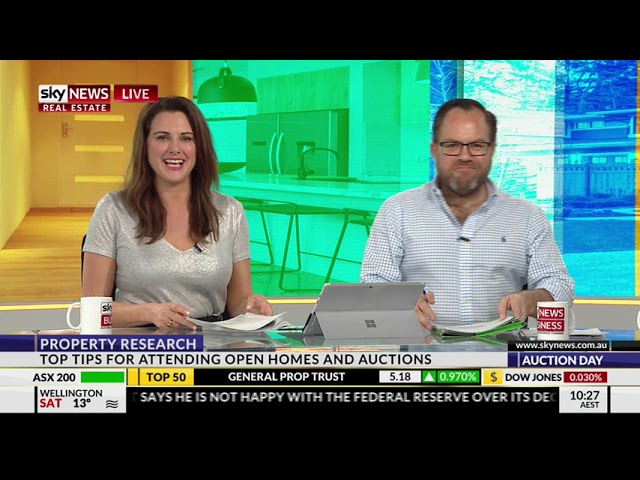
Research is the lifeblood of property investing and home buying, yet many property buyers still get it wrong. Joining us for their insider tips on how to do your research like a pro are our guest hosts, property buyer Veronica Morgan and property coach Todd Polke. Good morning to you both.
Good morning.
Great to have you both with us and to get a bit of insider info on how to invest in property. Sorry, how to research and get it right, because we need to be reminded that not everybody makes money in the property market, do they? On any given day, there's somebody losing.
Yep, that's right, very few, absolutely.
So what's the difference? Todd, we'll start with you. Between, you know, where do you start to do your research to make sure that you do get it right?
Yeah, I always like to take a step back first and go— a lot of people go and try and look for the location, then try and make the deal work in the location, but I think they're getting it the wrong way around. Like, you've really got to start with strategy and let the strategy lead to the location. Location which delivers the kind of results or the opportunity that you're looking for in the location itself. So to me, everything begins with strategy because without a strategy to begin with, you're just kind of shooting in the dark and hoping for the best. And when you've got a well-laid-out strategy that you can then look for the specific parts or the aspects of that marketplace which are really lending itself to be able to meet the primary purpose of that strategy itself. So to me, that's where everything begins. But unfortunately, that's where most people miss to begin with. They start the absolute wrong way around. So strategy first, then finding the area itself which lends itself to serving the purpose that strategy begins with.
Do you want to chip in on that, Veronica?
Yes, I think a lot of people's strategy is, well, I went to a dinner party and all my friends got investment properties, I want one too.
The barbecue stories.
Yeah, and so it's not a strategy, that's wishful thinking.
And as far as these strategies, so is it I want to make money now, or I want to have these many properties in the future, or what do you think is the guiding force for this Yeah, so everything starts from the outcome.
Okay, so what is the outcome that I actually want to create out of building this property portfolio?
Yes.
Right, then you've got to start thinking about, well, what are the different elements that I need in this overall strategy to get to this outcome? And that's where, you know, start with the end in mind. And, you know, especially in the property market as we're talking right now, you know, we're in this massive lending crunch at the moment. And so cash flow and rental yields are low, so cash flow is really, really tight. But what we've always got to be thinking about, okay, well, every deal that we do, it has to be serving a purpose, how it's going to help us get into the next one, and the next one after that? If you can't answer that question, then you're just buying and hoping. So to me, each property is either serving a purpose of, well, how am I going to generate more equity so I can pull out deposits, go and do more deals? Or how am I actually going to increase my serviceability, increase my cash flow so the banks are actually going to keep giving me money? Because this is where most people wind up getting stuck, isn't it? Because they actually run out of servicing, run out of lending, and they get 1, 2 properties down the road and then they've got to sit on their backsides for kind of 5-odd years.
I'm wondering, you know, we watch shows like— well, we— I think we all do, but I do— things like Grand Designs, right? Yeah. And they constantly talk about when they're developing property and renovating and etc., that they put too much emotional feeling into it and don't separate themselves. How easy do you think it is? Because when people are buying property, we naturally think, oh, I wouldn't live there, or gosh, I really like it, and therefore you spend too much. So how do you think you can separate that? How do you deal with it when you're dealing with your clients?
Yeah, to me, property investing is a system, right? And, you know, the successful Successful investors don't make it out of luck. It's got nothing to do with it. It's a system and they follow the system and that's what gives them the results. But as you just mentioned, like most people walk into a property and they fall in love with the kitchen or the backyard or whatever way, shape, or form it looks like and they actually fall in love with it, right? To me, when I'm working with any of my students, it's always about going in with a checklist. And I always focus on, you know, 4 to 5 different checklists that you've got to tick off these different points in the area and the location, the property itself, and even an emotional checklist as well. Because whenever we're buying a property, we're not buying it for us. We're buying it with who we can sell it to in the future in mind as an investor. And so to me, I make sure all my students go in with a checklist, and so it takes the emotion out of it, and it's either a yes or a no.
Veronica, you must see it all the time, people getting way too emotional about particularly investment properties.
Well, I think the thing is that emotion is a very, very important part of the property market because at the end of the day, it's people buying the properties and it's people living in the properties. And so if you're trying to take emotion out, you're sort of ignoring something that is absolutely fundamentally important to how that property is actually going to perform.
100%.
Because even if you're buying as an investor or even if you're buying as an owner-occupier, you have to be able to consider that. If you're buying it for yourself, you have to accept that the things that you might respond to may not necessarily lend themselves to being generally appreciated by the larger market, and in which case you are going to cost yourself. A lot of those properties on Grand Designs, for instance, You know, they're not great capital, they're not great assets, they're not great investments because they're so bespoke and they're so personal. However, as an investor, if they're taking into consideration they're buying public, they've really got to understand what drives the emotion of the future buyer for their property.
Absolutely.
So it's a really important thing to take into account. Now, obviously you don't want to get emotional and overpay for a property because of that emotion, but you do really have to understand the role emotion plays. in order to make good investment decisions, and location on its own is not enough. So if you buy in a great location, do all your research, you find a fabulous location, if you do not buy the type of asset that will do well in that location, you can lose money in an excellent location while other people are making loads of money.
Because you can't forget that renters have emotion too. You know, you've got to find a property that a renter is going to feel happy living in and is going to want, you know, not just They don't want to live in a soulless box either, and there's a lot of long-term renters out there.
Very true.
I'm wondering how you go with the likes of my world. You know, we stage properties, okay? Well, it's an interesting point. So interior designing and staging properties, our job is to make that property look the best it can, and we can stage and hide— I'm not going to say hide, it's a terrible word.
It is true though.
We can take, you know, accentuate the assets of the property and negate the negatives by well-placed styling and to create atmosphere and character when perhaps there's none. Okay, so it is an important job that's done, and you do that with, you know, with great intention. How do you then deal with the clients when you're dealing with them to not see that? Because you're dealing with stats, you're dealing with figures, and not so much that pretty stuff that can sort of—
The icing on the cake.
The icing on the cake. The lipstick on the pig.
Yes.
Well, you know, Veronica just handled this a second ago in terms of that, okay, emotion is an important part of the due diligence decision, but it's not your emotion. To me, it's You've got to be understanding the emotion of the target market that you're looking for and what do they actually find truly desirable in this area, in this location, in this specific property. And as Veronica said before, it's got nothing to do with you. It's really got to do with what makes this person emotional so that they can actually go into a property and fall in love with it. And that's what your job is, right? To accentuate those features which make people walk in and go, ah, I feel at home.
So when you're buying, You've got to basically strip that off.
That's right.
You know, you asked me earlier actually about how to buy a bargain, and I forgot that's one way, is to go and look at properties that are tenanted, for instance, that haven't actually been styled and haven't had all those finishing— all the edges knocked off.
See the dirty clothes in the corner of the bedroom.
Yeah, tea towels still on the bed.
I'm wondering, Todd, when you deal with people and they're coming in with you, and look, if they're starting out, you know, there'd be people watching right now and they are in fear. Some of them are very excited thinking, thank goodness prices are finally coming down, I can go somewhere. But you know, they've also got They've got to watch what they're spending, what they're doing at the moment to build up their budget. What do you start as a— giving them, you know, you create relationships, I presume, both of you, but from the beginning that sometimes it takes a little while for them to become ready to get in.
Absolutely. And everybody is different. We've got to understand that. I mean, I can set a strategy with my students, which is great, but if I'm setting a strategy based on who I am, that's not necessarily based on who they are, which is something very, very different. You know, some people are very aggressive investors and they just want to go, hey, let's just jump in. And you've got to be careful of those people because sometimes they a little bit too fast in what they actually do. Yeah, exactly right. Where other people, you know, it almost takes 6 months of nurturing, just of gentle education and step-by-step process to get them into a position where they're personally and emotionally ready to actually take that step. Because, you know, we can't deny it, property is an emotional decision for a lot of people. But when we can actually kind of move them through a process which is based on who they are, not based on who I am, That prepares them into a position to make an effective decision with a set of clear buying rules which is laid out before them. So they've got to stick within those buying rules.
Now when you list these buying rules, do they apply to any market? I mean, particularly at the moment where it is really hard to get your hands on credit and, you know, it is changing definitely financially the landscape for borrowers. Does your sort of list of rules always apply?
Well, the strategy always applies, no doubt about it, right? And so each strategy, it's not about the property itself, it's about the purpose that the property is there to serve in the strategy. That's the way I look at it. And so then we need to go and look at, well, what market or what property is going to serve that purpose. So when we've got a strategy laid out, that's when we can actually start going, okay, well, what marketplace is going to serve that type of outcome? So to me, I'm not about just buying in one location, I'm about buying wherever actually works. That's what it is about to me. So when we can actually get clear on being able to do due diligence, be able to buy interstate, that empowers people to be able to take advantage of different markets and different opportunities. And while we are in this tight lending criteria marketplace, there are still opportunities to go and increase your serviceability, increase your cash flow by doing Airbnb, by doing small housing, via furnishing apartments or things like that in the right location. One of the great things about Australia is that it's such a diversified market with markets within markets within markets. And so even though we might say that lending is being crunched and rental yields are low, there are always locations which provide and opportunities which provide the outcome that we're trying to create.
I'm wondering, Veronica, you know, you're going to auctions all the time. You love them. They're your going out shopping. You've got to go to auctions. At a time when, you know, we're seeing the market cooling off and we are seeing on the show, you know, Sophie and I were I was speaking during the week about properties that are being passed in. They're not all clearing now, but there's that negotiation afterwards. So how do you deal with people when they're getting their pricing and you're conditioning them to not have that, oh my God, oh my God, and get caught up in it and say, just wait, wait, wait, and there's another side to the auction. It doesn't just finish at auction day.
Very good point, actually. And in fact, what I notice, the podcast that I've created and we launched earlier this year, we've been interviewing— The Elephant in the Room, I should say, just if anyone wants to tune in.
We've been interviewing auctioneers.
auctioneers and agents, and it's been very, very, very clearly coming out from every agent that we've been interviewing that they are very much focused on identifying a strong buyer prior to the auction and actually getting an offer out of that buyer before auction. So if they're a client of ours, they won't be making that necessarily unless we can put together a good case, and there's a strategy in terms of how we negotiate. And so we do talk to our clients about that whole process, about The lead-up to an auction, the fear of missing out that even in a buyer's market buyers have, and then getting to auction and taking advantage of an auction and letting it pass in if the vendor and the agent are not ready to meet the market as well. And so it's very much being very clear about what the property is worth, what the competitive situation is, how that agent operates, and how they are managing the expectation of their owner as well. And so yes, I'm loving it.
Yeah, it's interesting to understand the psychology of the auctioneer as well as the process of what you're dealing with. And you'd be in the same boat when you're dealing with that, calming the people and realizing this is a step in your strategy. And don't forget the strategy, don't take the eye off the ball.
Correct, yeah. It's not a race, and a lot of people go in with a race. They get excited about it and they want to jump in, and they've got the FOMO, the fear of missing out, playing in there, and all these different emotions kind of come up. But yeah, as Veronica said, it's about preparing them for the journey that's to come and realize that each— it's just one step at a time, one step at a time, one step at a time. And that's where the true success really comes.
All right.
Plenty more great advice when we return from this break. And we're going to head to Bondi too for that live auction.
Alright, Trivago, find me a hotel somewhere in Thailand where I can wake up with a view of the ocean. Oh, awesome! And, uh, what about a pool for me and my friends? Oh, and a massage, a nice restaurant. And Trivago, my friends love to party. Yes, this is my ideal hotel. Thanks, Trivago.
Those nuts Mike's eating are turning into small pieces that could get stuck under his denture. Luckily, new Polydent Max Seal forms an all-round seal to help block out food so Mike can enjoy his snacks.
If you ride your bike to work and leave your car at home, real pays-your-drive car insurance could save you big. With normal comprehensive insurance, you pay for the same amount of K's as everyone else.
Hey, off you go!
But with Pay As You Drive, you only pay for the K's that you plan to use. Which saved me $220. Get rid of those useless K's with Pay As You Drive and save up to $220. Go online and search Real Car Insurance. Drive less, save big.
Are you getting the most out of your team? Now you can with Post-it Teamwork Tools. Our range of innovative products help you build ideas together. You'll be able to transform any space into a collaboration space so you can unlock the full potential of team workshops and make your ideas stick and re-stick anywhere, anytime. Get more out of your team with the right tools for success. Post-it Teamwork Tools make your teamwork better.
Rivers clearance has gone crazy! Clearance clothing now nothing over $15. Clearance footwear 50 to 75% off. That's right, clearance clothing Now nothing over $15. Clearance footwear 50 to 75% off. Hurry before it all goes at Rivers.
Live brighter with Beacon.
Make your home the best on the block at Beacon's mid-year makeover sale. Buy one lamp or pendant and receive 40% off your second, plus great prices on fans. Catalog sale on now.
So I bumped into this guy and it turns out he's an electrician. But I lost the business card that he gave me.
Did you try Googling his name?
Nothing came up.
Nothing?
No results.
No website.
Are you sure he even exists?
I mean, I'm not sure about anything anymore.
Maybe he's like—
A ghost?
Dotty's in control of her spending with the new ANZ app, so she knows exactly when to shop and when she should probably stop. It's easy to get on top of your money with the new ANZ app.
Back to the Property Buyer Expo in Melbourne now, where reporter Amanda Lucas is standing by with Dr. Andrew Wilson.
That's right, Sophie and James, I have the wonderful Dr. Andrew Wilson here at Melbourne Welcome to Melbourne's Property Buyer Expo. And Sophie and James, today is a big day according to Dr. Andrew Wilson. Why?
Well, look, today traditionally is the, I guess, the trough of our winter auction market, which means generally our winter housing market. We're seeing the first signs of that. We'll have more auctions today in Melbourne than we had last weekend, so that's the first rise that we've had for quite a few weekends. Sydney's around about the same this weekend as last weekend. Certainly numbers are very low though compared to a year ago. In fact, they're very low compared to 4 or 5 years ago. So we really have an easing of the cycle, but traditionally from now we will start to see numbers lift. We'll start to see not just sellers becoming more engaged but also buyers. So that should mean higher clearance rates. So, but we are coming from a very low base this year. Of course, we know there's a lot of uncertainty in the market at the moment driven by a number of factors. Of course, It is the end of the cycle. Interest rates on hold for nearly 2 years now. Banks have tightened their lending. You know, the economy's, you know, not all roses at the moment, and we certainly have a lot of negative sentiment out there in the marketplace, which is probably typical of winter. So the real question now is, will we get the typical bounce back in spring that we do have that starts to rise through July or the end of July and into August? So we need to watch those— auction listing numbers carefully, and of course the clearance rates, which look quite sobering for sellers at the moment because, you know, they're just over 50%, mid-50s in Melbourne. And, you know, that really does reflect more of a buyer's market, but there's not a lot of stock around at the moment.
What are you expecting to see, Andrew? When you mentioned that bounce back, how high do you think it will bounce, or not at all?
Well, we don't really have anything fundamentally driving a bounce this year. There's no doubt that, you know, interest rates will remain where they are. Perhaps the banks have been good corporate citizens at the moment in the face of the Royal Commission by keeping their lending nice and tight, but they do have to lend. That's what they do for a living. So we may see some easing of that lending, but I don't think we're going to see a spring revival anywhere near what we've seen in recent times. This is a sign of this new flatter-for-longer housing market that we're in. I think prices will remain quite subdued. Now there will be more properties for sale, there will be more buyers out there as there will be more sellers, but I don't think we're going to get that same energisation, that same— is that a word? The same revival that we've had, level of revival that we've had in recent years. So really at the end of the day, still very much a buyer's market in the context of the seasonality.
So where should we be looking? Where is that opportunity?
Well, look, all the drums are beating for Brisbane at the moment, are they not? And that's about people. a return to higher levels of net migration into Queensland. That trend is continuing to rise. Of course, why not? Affordability. 2 for 1 Brisbane houses versus Sydney, nearly 2 for 1 Brisbane versus Melbourne. And of course, we're seeing net loss of migrants out of Sydney, out of New South Wales, and that may be heading all one way, and that's into the southern Queensland capital. And I think that that is good news for those markets, particularly the apartment market that's been struggling to find buyers in Brisbane. We're seeing vacancy rates falling for apartments in Brisbane, which is quite interesting. So of course, you know, it still represents very good value, that Brisbane market, compared to particularly Sydney. And of course, the yields are almost irresistible, yields over 5% for investors in Brisbane. And I think that those yields being as high as they are do show that that's a value proposition, that asset where perhaps the prices are too low and the yields are a little bit too high, so there might be some shifting downwards in yield, which means rising prices. But certainly Brisbane appeals as being the market with the upside, but we're not talking a boom here, we're just talking perhaps a better performance than Melbourne and Sydney.
Because we've been spoiled, haven't we? I mean, it's not, it's not all doom and gloom, as I mentioned earlier this morning. It's just that we've been spoiled for the last few years that we didn't realize how good we had it, and now it's probably just averaged out, just settled?
Well, look, the prospects for the market are actually quite positive because going forward now we're not going to be as much of a hostage to interest rate movements as we have been in previous decades. You know, the roller coaster has finished. We're now in for this lengthy period, I believe, of flat interest rates. And even if we maybe even get a cut this year, wow, I don't think it'll have the sort of drive into house prices that we've had previously. This is a very flat environment globally for growth. For incomes growth particularly. And I think that's a good thing in a sense for our housing markets because we move away from being captured by the lure of capital growth and purchasing decisions will be more about personal agenda. I need a bigger place or a smaller place, I'm going to the beach, I'm going to the bush. And I think that gives our housing markets more predictability and more certainty going forward. And I think investors will start looking at yield as being a more important factor or maybe as important factor as capital growth. I still think prices over the longer term will increase, but they're going to be small numbers, not big numbers, and that's the new reality of our economy— small numbers, not big numbers.
That's a great way to sum it up. Andrew, you mentioned earlier, you know, people looking in the bush. I've read recently a lot about those regional markets, and there's a bit of gold in them, isn't there?
Well, look, we've seen some big results from regional markets. Of course, those bookends to Sydney, Newcastle and Wollongong, very strong, but they were in catch-up mode because of their, I guess, still proximity to the Sydney market and they represented good value. But I think they've sort of reached the peak of their cycle. There's always a lagging effect. And of course, Geelong was very strong in Melbourne. Again, the same sort of affordability drivers that kept prices rising in Geelong compared to Melbourne. The Gold Coast, of course, was a strong market in Queensland, strongest of their regional markets. But look, that's flattened out a little bit. End of the Games, end of the infrastructure boom. But I do think a lot of that Gold Coast energy is heading back into Brisbane now. You know, the Brisbane— the Queensland government, to their credit, are very jobs-focused in terms of jobs creation. And I guess that's a good thing given that people are moving back into Queensland, that they can also find work. So I still think Queensland's a good prospect, particularly Brisbane. And regional markets, maybe they've had their day in terms of that catch-up environment, but they still represent good affordability options compared to the big cities.
Terrific. Well, plenty of great advice there, Dr. Andrew Wilson. Thank you for joining us at the Melbourne Property Buyer Expo. And of course, buckle your seatbelts, folks, because apparently according to Andrew, today is D-Day.
Well, it is.
We've got to really see if we get our bounce or it's just going to be a dead cat bounce, you know.
Thanks, James and Sophie.
Thank you.
Thanks, Amanda. Well, no dead cats bouncing on this show today. It's been all good so far.
Just barking dogs. It's, um, yeah, it is great.
I've got a lot of faith in this next one too, and we're going to bring in our experts to have a bit of a chat about it while we're still waiting for that auction to get underway. This is 8 King Street in Bondi, and we're going to be going to this auction live very shortly. You can see people are starting to mill around and get ready for that one. Um, now it's a bit of a fixer-upper. Would you be looking to Bondi?
I love it.
Fixer-upper.
Fixer-upper.
That's a technical term.
It is. Fun twist to that one.
You haven't heard that one.
Yeah, well, I think absolutely. I mean, what this has got going for it is an A-level block and it is north-facing. You do have the parking, which means also you've got access at the rear for renovating, which you would know, James.
Yeah, the next door's gone upstairs. You can see that in the—
Well, that was built up— I think that was built as a 2-storey originally.
Yes.
But certainly in that whole area, obviously it's been gentrified ongoing, but it started years and years and years ago. So there's a hell of a lot of opportunity with this particular property.
Yeah, Todd, what do you think as far as a strategy there? I mean, it's a strong market for renters. It's a strong destination for people who want to live there and have a lifestyle. It's close to the beach and it's close to the city. How do you think the property goes as far as ticking boxes?
Yeah, I mean, in terms of a strong market for renters, which is great, I dare say the rental yield overall is extremely low, right? So in terms of a yield play is just nonexistent. From pure strategy, you know, you'd really be looking at it in terms of being able to create some value and add some value, which is what it's all about. I mean, being the fixer-upper, or it is, you know, that backyard looks fascinating to me, to be honest. The opportunity that it tends to lend there looks absolutely amazing. My concern is in that area that people can often tend to overpay just because they get emotional about it. So, and then can you add enough value to it to be able to lift the levels of that, what it actually needs to? But definitely good opportunity by the looks of it, for sure.
Mary Howell from the agency was guiding sort of $1.7 on this. Would you think that's a good buy?
Well, without me having done all my research, I'm not going to comment on the value of it. But interestingly enough, and Todd there just alluded to it, that dollar for dollar these days, you know, build costs in a city or in Australia really at the moment are the highest they've ever been, right? So I could see this is probably more likely to be an owner-occupier type buyer or a builder who is able to control the costs because there wouldn't be a lot of opportunity there, I would think, for the general speculator.
Okay.
Alright, bidding is just about to get underway, so let's go there and see if it meets market expectations.
We're a little bit relaxed, so maybe you take the other angle here this morning. You start at the figure that you'd absolutely love to pay, maybe the figure that makes you feel comfortable. Folks here to be able to assist you. Where do we go?
$1,600.
Alright, sir, you made me work for it, but I like your style. Bidder number 8, But let's certainly say you're in pole position at $1,600,000 the call, and we're bidding away now for a fair and reasonable start at $1.6 million. And happy to go north at this particular stage in 50s to $1.650 million would be the logical move at this particular stage, folks. And a simple raise of the bidder card to get you in front at this particular stage. But the bids here at $1,600,000, and I would have expected a sea of hands across the crowd at that particular It's very, very good value at $1,600,000 and $650,000 would be the courtesy, folks. You sing it out, I'll add it up now. $1,600,000 the call and the bid. That's the money now at $1.6 million. What do we say, folks? $650,000 would be next. And again, you think about the location, only moments from the glistening sands and the Pacific Ocean that we have there at Bondi Beach. Hello, sir.
Hello.
It's certainly just good buying at this level at $1,600,000. I hate to apply the pressure, folks. Now's the time and here's the place. Quickly. Fair warning, first opportunity at $1,600,000 here on the right, and $650,000 is next. What do we say? In or out to go at $1,600,000? Called here. Second warning, folks. Contract's up. Prepare to miss it at $1,600,000. Called and on the right.
Sold.
Well below recent sales in the area, folks. Recent sales upwards of $1.8 million and beyond. And then if you look at the renovated semis in the area, well, they're well beyond that. This is cheap and this is cheery. $650,000. Got you there, sir. $650,000 is the money now. And there's your competition, sir. $1.7 million would be the strong play for the Keys at $1.7 million. And he's back in front now at $1,700,000, back with my starter, sir, and against you. And it's A quick bid's a good bid. So what about $1.75 million? $750,000. At $750,000, the bid on top of the million now. $750,000, sir, it's against you. At $1,750,000— What do you mean, no, sir? It's goodbye at this level, it really is. I'll do the yibbity-yibbity, I'll give you a chance to think things through, but the bid is squarely in the center here at $1,750,000. 2 people bidding, and if you're holding back, that is not a good strategy, folks. At $1,750,000, Contract's up, and when it's gone, it could be gone for good, sir. Fair warning, first chance at $1,750,000 here in the center. I'll breathe for a moment. I'll give everyone a chance to think things through. Making it very, very clear, there is no prizes for coming second at auction, ladies and gentlemen, only deep regret. And it's a long journey to finding one just like this in the location With the opportunity. So if you're holding back, that is not a good strategy, ladies and gentlemen, let me tell you now. But the bid's in the center at $1,750,000. Fair warning, second call now at $1,750,000 here in the center, folks. In or out to go for the third and final time. Sir, what do we say? What about for $1,275,000, sir? Shorten the stride. $1,275,000 and he's back in front. Same opportunity to you, sir. The bid's at $1,775,000. $1.8 million. Logical move at $1.8 million. At $1,800,000, sir, and against you at $1.8 million's the money. $825,000? Well, you've said no to me before, sir. I can't believe you now. Let you think about it for a moment. At $1,800,000 here, and what great way to be buying real estate here on a winter's morning. And this is great real estate at that. At $1,800,000 here, and it's in the centre. Quickly, folks, fair warning. Tracked up. First chance now at $1,800,000 in the center. Second warning at $1,800,000, the bid. For the third and final time at $1,800,000 here in the center, folks, and prepare to miss it. Are we sure? Sir, what about for $10,000? It's all money at this particular stage. Make it $10,000, it makes sense. $5,000 more, it's all money. $1,805,000, sir. The $5,000, maybe you'll go for a logical move, do the knockout bid. $10,000? Okay, $10,000's the bid now. $10,000 and $15,000. At $15,000, called and against you, sir. At $15,000 and $20,000. At $1,825,000. At $25,000 and against you, sir. And $30,000. At $30,000, it's the money now. At $1,835,000. At $35,000 and $40,000. At $45,000, sir. At $45,000 and he's back in front now at $1,845,000. The 5s aren't working, sir. 50, and he's back in front now. 50's the call. At 55, he says take that at $1,855,000. At 55's the call, and 60. At 60's the bid, and 65. At 65's the call, and 70. At 70's the bid, and 75, sir. $1,870,000 is the bid here. 75, 80. Don't let me get in the way, sir. $1,880,000 is the bid, and it's against you, sir. Quickly now, I need to know, folks, in or out to go. More drama than Universal Studios here this morning, but the bid's with you, sir. $1,880,000, and still great buying at this level. It really is. First, first chance buyers at $1,880,000. Quickly. Second warning now. At $1,880,000. Quickly, for the 3rd and final time, bids in the center at $1,880,000. Bid instructions, Mary. You heard it here, breaking news, folks. No further bid. We're playing for the keys at this particular stage, and there is no prizes for coming second, sir. But it's a long journey to finding another semi at this price, let me tell you. The bid's here in the center, and we sell it out, folks. No further bid on the 3rd and final time at $1,880,000. Quickly, all silent, all done. Sir, permission to sell? You sure? Even for the sake of maybe $1,000? You go $1,000 and $81,000's the call. At $81,000's the bid and $82,000's the money now. At $82,000's the bid at $1,882,000. Are you sure, sir? At $1,882,000, it looks like you've watered him off. Sir, what do we say at $1,882,000? First, second, third, and final time. We sell it out. Contract hits my hand. We will not reopen. You done, sir? We sell, we sell, and we're sold. Congratulations. Well bought. It's a great property at $1,882,000. We don't underestimate the importance of our underbidders. If you'd like to see the same sold result, the agency and Mary Howe We'd love to help you. Have a great Saturday, folks. See you.
Wow.
There we go. What a great result there in Bondi. When they were guiding sort of $1.7 million.
Oh, we love this red banner, guys. We've got to do our sold Sky News wave. $1,882,000. And like you said, Sophie, the price guide was $1.7 million. So really close to the price guide. It was obviously, you know, pretty well marketed, Mary Howell. The agencies may have—
What are you trying to say there, Jake?
Well, I'm just plugging the name in there.
Well, I'm guessing that on the agency agreement it said $1.7 million plus 10%, which is $1.87 million. I can add up, right?
Can I?
Yeah.
So they've got it just a tad over what was on the agency agreement. That's my guess.
And a bit to be done on that property though.
A lot to be done.
A lot to be done on that one. That's right.
And you were talking there through— it was interesting because we're watching it, you know, live here as well, and you're talking through the whole process of watching the crowd and you must see, you almost look at them like The Matrix. You see them as numbers and tactics of what they're doing rather than really people and taking the energy out of it.
I certainly watched, watching the auctioneer and seeing his different behaviour at different parts of the auction. So there's a couple of times he made it look like it was going to be sold to flush out people bidding and obviously wasn't going to be sold. You could really tell when it really was going to be sold and then he stopped and he really ramped it up, you know, in terms of the pace and he really got the heart rates going and then he slowed down and he obviously looked at the underbidder as it turned out and And lowered his voice, lowered his tempo and everything, and spoke directly to him and got an extra $1,000 out of him.
Yes, we did, which he bumped up another one to compete. So he got that extra little bit out of them.
He got $2,000 by doing that.
So, uh, played them like a violin.
Well, I think it's a great result, and, um, yeah, I hope that they do some amazing renovation work on that property.
I'm sure they'll need to.
Um, lots more exciting real estate when we return after Immerse yourself in Scenic Culinaire, our onboard cooking school, and attend an exclusive Scenic Enrich experience, all included on a 13-day France river cruise from only $7,495.
Call 138 128 today.
Have you noticed how many home loan rates there are? So many banks and lenders, so many different products. So many different interest rates. How do you find the right home loan just for you? Well, visit lendi.com.au. Lendi is Australia's number one online home loan platform, and they can help you search, choose, and settle your home loan online. Lendi will search through thousands of home loan products from over 30 Australian banks and lenders to find the right home loan for you. They do this by asking questions Lendi matches your loan with your requirements to make sure you get everything you need from your bank or lender, and there is a home loan specialist on call to help you. Lendi.com.au also allows you to upload all your documents online to minimize the hassle. Lendi, they do the hard work for you so you can spend more time on the things that matter most. Search, choose, settle. Find a better home loan today.
Beauty isn't defined by age. Did you know menopausal women may need up to 30% more calcium every day?
Caltrate 50 Plus gives your muscles and bones a high daily dose of calcium, extra minerals, plus vitamin D to help keep your bones strong and beautiful.
2 incomes, 3 shareholdings, 4 dependents, 1 accountant, and I just got biology teacher Dave enough tax back to buy this At H&R Block, we're fascinated by numbers. Book an appointment today.
I think being told that your child has cancer, you just can't even compare it to anything.
The best thing to say is that my world is shattered.
Carter's one in a million, I think. You couldn't wish for a better son.
When a child is seriously ill, it can mean the world to make their wish come true. It can turn fear and anxiety into confidence and hope. A wish has the power to turn sadness into smiles. So please, will you help grant a life-changing wish to a seriously ill child? You can do it today by calling 1800 669 312 and giving just $10 a month to Make-A-Wish Australia. Every day in Australia, 6 children are diagnosed with a life-threatening life-threatening illness, but we can't grant their wishes without you. Please call today, because right now seriously ill children like Carter need to know that wishes can come true.
2 incomes, 3 shareholdings, 4 dependents, 1 accountant, and I just got biology teacher Dave enough tax back to buy this thing. At H&R Block, we're fascinated by numbers. Book an appointment today.
As land prices continue to skyrocket within the Sydney metropolitan areas, some older properties are becoming too expensive to repair and maintain, and many apartment owners are currently considering selling their properties collectively. Thanks to the new strata law that New South Wales enacted a couple of years ago, owners are now able to sell or redevelop the whole building with just 75% of owners agreeing. Our colleague Leanne Jones was joined earlier in the week by Catherine Leeser, Director at Strata Communities Australia New South Wales.
I do want to delve into a little bit more detail on these laws and the impact on the strata sector. Perhaps you could just start off by talking us through— we've got an interesting chart actually— that the size of the apartment market, I think I think 9% of Australia's population is actually, you know, taken up by apartments. What does the strata market look like and what are some of the economic benefits, I guess, over and above that of strata?
Yeah, the strata market— well, we know from the census data that 13% of all Australians live in strata of some form. That study you're talking about was referring especially to high-rise, high-density, whereas strata is all different types of form.
Sure.
Some states like New South Wales where we are, it's 20% of the market, and in some local government areas it's so much more. Like in Sydney, it's 77% of the market. This has huge flow-on benefits for tradespeople, for service providers, and of course for the property market.
Okay, maybe you can just tell us a little bit more because considering the size of the market, Tell us a bit more about how significant these strata laws are and how this strata rule actually works. We mentioned that it came in a couple of years ago. Just tell us a bit more about the significance of it.
Up until the law changed, you needed 100% of all strata owners in a strata scheme to agree to collectively sell the building. Now, 100% is pretty hard to get because you've got some owners who are missing, some owners who don't want to sell, The laws changed in November 2016, and it allowed a process to happen where 75% of owners or more could agree to sell the building, and there would be a process, which means there has to be an agreement, there has to be a proper process followed, there has to be proper compensation, and then the court has to sign off on the agreement. So, what's the process? to make sure that those dissenting owners, so the ones that didn't want to sell, are looked after fairly.
Right, because that was going to be my next question. Essentially, if you own an apartment and you're not one of the 75% that have agreed to sell, you don't want to sell your apartment, under these laws you can actually be forced to sell your apartment even if you don't want to.
You can, but there's some very good safeguards in there, and it's quite interesting now that we're almost 2 years from when the laws came in, we've got quite a lot of experience as to what's happening out there in the strata world.
Right.
The law is specifically targeting what they call termination of full strata buildings. So they are not— it's not targeting renovating buildings, it's not targeting adding on to buildings, it's targeting actually terminating the strata scheme and then redeveloping it in some form. So there's 2 parts to that. One of the parts is that all the owners could get together and collectively sell. The other part is that the owners could get together and collectively redevelop, kind of becoming their own developer, if you like.
Yes.
What we're seeing out there now is that most of the buildings start this process off and they are opting to sell out directly to a developer.
Right.
Have we seen an increase Have you seen an increase in the number of strata buildings for sale because of the change in these laws?
It doesn't seem to work like that. So what's happening is owners, they know, they live in their building and they know that 30-storey towers are popping up around them, and they know that the area is being redeveloped. So they're aware that they're sitting on a block that could be redeveloped. So the owners are tending to take charge of the process rather than waiting for the developers to approach them. And it's been quite interesting to see that quite a few of the owners are getting together, they're starting off the process of getting the agreement within the building, and then they're approaching the developers to see what happens next.
A bit of a thorny issue, that one. Back to Melbourne to witness even more excitement, if you can handle it. Can you handle more excitement?
I love excitement on a Saturday.
Right, well, we've got more of that coming up after this break.
So I bumped into this guy and it turns out he's an electrician, but I lost the business card that he gave me.
Did you try Googling his name?
Nothing came up.
Nothing?
No results. No website.
You sure he even exists?
I mean, I'm not sure about anything anymore.
Maybe he's like a ghost.
All right, Trivago, find me a hotel somewhere in Thailand where I can wake up with a view of the ocean. Oh, awesome! And, uh, what about a pool for me and my friends? Oh, and a massage, a nice restaurant. And Trivago, my friends love to party.
Yes, this is my ideal hotel.
Thanks, Trivago!
Rivers clearance has gone crazy! Clearance clothing now nothing over $15. Clearance footwear 50 to 75% off. That's right, clearance clothing now nothing over Over $15 clearance footwear, 50 to 75% off. Hurry before it all goes at Rivers.
Why put up with a blocked nose when there's a fast way to treat it? Choose Otraven nasal spray. Unlike decongestant tablets, which travel to your stomach before they start working, Otraven goes straight to your nose, quickly unblocking your congestion at the source. This is why Otraven works faster. When it comes to being able to breathe freely again, no wonder 9 out of 10 people felt satisfied using Otraven nasal spray. This has been Medifacts for Otraven.
Stocktake sale at Godfrey's!
This cordless iVac does it all.
Perfect for hard floors and carpets, ceilings, upholstery, even the car. It's a total cleaning solution for your home.
Now half price, just $149.
Stocktake sale, but only at Godfrey's.
Hey Dave, have you ever thought about getting real pay-as-you-drive car insurance?
No.
You seem to be paying for a whole load of K's that you're never going to use.
What do you mean?
Well, look, they're doing nothing, just hanging around at your expense.
You're right.
Party's over, everybody out!
Get rid of those useless K's with pay-as-you-drive and save up to $220. Call us on Call 13 19 48 or buy online. Drive less, save big.
Those nuts Mike's eating are turning into small pieces that could get stuck under his denture. Luckily, new Polydent Max Seal forms an all-round seal to help block out food so Mike can enjoy his snacks.
Dotty's in control of her spending with the new ANZ app, so she knows exactly when to shop and when she should probably stop. It's easy to get on top of your money with the new ANZ app.
This is Sky News Real Estate.
And just because too much property buyer expo is never enough, never enough, never enough, we're going to go back to Melbourne where our reporter Amanda And Lucas is standing by with Rory Martin from Frasers Property.
We are here at Melbourne's Property Buyer Expo. Doors are yet to open, but joining me early— I don't know if you've had a coffee yet, Rory, I'm going to get one soon— Rory Martin from Frasers Property Group. And Rory, you're all about sustainability. Now, in a nutshell, what is sustainable housing? Is it all green and, and And, you know, I don't know, I just think going green, but what are the details?
Traditionally, that was always the case. It was a green nice-to-have, let's do the good thing by the environment. That's really shifted now in the past couple of years. Now we're talking key concepts around quality, comfort, health, and well-being. How can those that are investing in the market be sure that they're getting a high-quality home that they will be able to put to market themselves, that owner-occupiers are— sorry, occupiers are going to be interested in? So what we're talking about, we're talking about effectively homes that will keep people warm in winter, cool in summer, and not cost an arm and a leg to do so.
What's some of the tech? Because I know there's some cool stuff around that you guys are introducing into your projects. Take us through some of the high-tech things we can, we can look for.
So while solar might still seem a bit old hat, it's still critical to what we do. Now we're upping the scale. So across all our projects nationally, we're talking 5 megawatts. So that's like thousands of solar panels. thousands of homes now having access to solar. But some of the really cool stuff that we're getting at is around geothermal. And that's where instead of using, let's say, the temperature of outdoor air to heat and cool a home, we're actually using the temperature of the earth. So we're using pipes that go 100 meters down into the soil. They utilize that different temperature down below and they come up and that then temperature is used to heat and cool homes.
What that's resulting in is $500 savings to families per year Wow, that's got to get some families and buyers across the line, doesn't it, when you mention the savings?
Exactly, and there's other benefits too as well. Because we're using this type of technology, it doesn't have your typical condenser unit that we see on apartments and that kind of thing that goes boom when it kicks in. These actually run really silently, so you can actually sit out with your friends and your family and enjoy that cup of tea and have the house cooling or warming inside and not be disrupted by those noises.
How do you sell a concept of sustainable housing to the mums and dads on the street?
We talk about being real. We talk about what that dollar saving is going to be. We talk about what it's going to mean for when they're actually in the home. So when we talk comfort and health and wellbeing, if you're relying on less heating and cooling, you're moving less air around your home. So you're not moving so much allergens and dust and these kind of things. Now, with the growing prevalence of asthma and other respiratory illnesses in Australia, this is actually a really good thing for health and wellbeing. So we talk in these kind of terms. What is it going to mean for people living there in these homes?
And for investors, can you, you know, is there great resale value looking towards the future?
Yes, so there's a couple of key trends emerging. Some anecdotal research is suggesting that, I guess, homes with what we call green features actually remaining on the market 13 days less than conventional product and also going for up to 10% greater resale value. Absolutely, because we're also seeing those occupiers now looking for something a little bit more sophisticated as well. I guess what we're witnessing on our sales floors, we've actually had people come in and ask about passive homes. They're homes that actually naturally heat and cool because of how they're designed. We've also had people come in and inquire about off-grid homes, so homes that are just disconnected from the grid and have their own solar and battery. So this is a really exciting time for us to respond to those challenges.
Fantastic. Now Rory, you will be here at the Melbourne Property Buyer Expo Tomorrow you're speaking, so if anyone wants advice, what time are you on?
3:30, we go live.
There you go, folks. So 3:30 live, you can, you can listen to Rory get some tips on sustainable housing. Back to you.
Beautiful.
Oh, thanks to the lovely Amanda Lucas. Thanks, Amanda, for keeping us updated on what's going on at the Melbourne Property Buyers Expo. Now back to our guest hosts. Now, investing in property is considered one of the safest ways to build your wealth, yet only a small percentage of people even start out on a property investing journey, and there are even less who become successful at it. In fact, the latest stats show that only a fraction, 2 million out of 24 million— not that all 24 million Aussies are eligible to buy property— but only 2 million own at least one investment property. Yet we often hear people who earn far less than the average Australian and still manage to build their property portfolio. So why do some people achieve what many others can't? Here to tell us just how to do that Joining us for that is Todd Polke and Veronica Morgan. Welcome again to you both. Great to have you with us on set this morning. We thought we were going to feel a bit muscled out by our guest hosts.
No, we like sharing the stage with you.
I think we're keeping them in line, and I think they're bringing something to the table.
You think so?
Yeah, I think so. That's very generous.
Well, thank you so much.
It's not what I normally like to share, but when it's for free, you know.
But when we share a collective love of housing and how to get into the market, it's a really, you know, an important love.
It is. So Todd, why is it that Why is it that so few people even tackle the idea of buying an investment property? And why is it that people who are on low incomes manage to do it when a lot of people sort of feel like it's just not an option to them?
Yeah, well, it really goes to show that the amount of money you have actually has zero to do with how successful you're going to be as a property investor. You know, I've met so many of my students, like people who are earning hundreds of thousands of dollars a year in income, yet can't get past property number 1 or 2. Yet I've met single mums and worked with single mums who have, you know, a couple of kids at home and all that type of stuff who have been able to build portfolios of 4 to 6-odd properties. So to me, it actually has nothing to do with how much money you earn. It really has got to do with what you do with what you earn that makes a difference, but also in how you approach it. And that is the biggest differentiator. It's not to do with how much money you have.
I can remember speaking with a guy many, many years ago, and I bought my first house with my twin brother, so we were obviously Obviously, we helped each other, but he was earning a huge amount of income and I think he bought a property not long ago, which is a long time. So sometimes it's not about how much you earn, but how much you're spending, isn't it? To be saving at least some of that nest egg to put towards property.
1,000%. You know, I've met so many doctors earning hundreds of thousands of dollars a year, but they're horribly in debt and they are absolutely broke. And again, I've met single mums who, earning $50,000 a year, have 4 to 6 properties. I go and ask, well, who's closer to financial freedom and living a life life of choice, and it's never about how much money you make.
It looks different on the outside.
It looks different on the outside. It's all shiny and the car and the house and all this type of stuff because they have a reputation that they feel they need to live up to as well, which is really sacrificing the long-term financial future.
Veronica, in recent years where everyone's seen the property market climbing, so many people have felt frozen out, but this would suggest that it is open to all if you know where to look. Is that right?
Well, I think you've got to be very, very careful. And I guess one of the things you talk about, you know, someone who's got 4 or 5 properties, you know, you can have 4 or 5 loss-making properties and not even realize that you have 4 or 5 loss-making properties. So I think people have to understand that it's not actually the lowest risk way to make money. It's actually, I think, the highest risk way to make money because what it is, is you are borrowing an enormous amount. The costs to buy it are huge. 5% of the cost, generally speaking, is to get in. And then to get out is around about 3% of the sale price at the point in time that you do exit from that. But if you buy in an area, some of the people who bought in mining towns, for instance, you know, and some of them have bought multiple properties on a promise of financial freedom and living a life that they choose.
The stories are horror, aren't they?
Terrible stories.
And so positively geared properties that they thought they could live off that for life.
That's exactly right.
And sold them at a huge loss.
Yeah, or haven't yet sold them and they're And they're losing money as they go and the yields are going down as well and they're ruining them financially. So I think you have to be very, very careful about this whole idea that it is about the acquisition or multiple properties that is the solution. It's got to be very, very careful and it goes back to your idea originally about having a strategy, knowing what your end goal is, having a strategy.
We saw a change— sorry to cut you off, Todd— we saw a change where people were buying properties from Sydney and Melbourne in Queensland. Because they were using it as a way to have a holiday, being able to tax deduct visiting the property as a rental investment. And now that's all changed. It's such a great strategy. But it was done. It was a fact, wasn't it, Veronica? So people— it was done. Now that's been removed, and now people are therefore paid possibly more than they think because they're basing it on a Sydney or Melbourne price to be buying in the first place. And it looks great, but then they can't get up there anyway now, and that is not— doesn't look so sound anymore, doesn't it? So how do you weed that So leave all that bells and whistles, that shiny stuff out when you're talking to people to start to create a portfolio.
Yeah, and another big one I always see is that accountants give advice to go and get negatively geared properties to reduce tax. I mean, that's just, to me, it's insane advice, but so many people actually wind up listening to it. You know, if you're not buying a property with the primary outcome of either generating a yield or creating capital gain or actually moving towards that next property, then you're buying it for the wrong reasons. All that other, hey, you get a tax deduction, I get a, you know, well, formally I could do a tax-deductible trip down there, that's just bells and whistles which should have zero reflection on the decisions you actually make when it comes to actually building a property portfolio.
Yes, and in fact, it is interesting because the thing is that you really do need to get, I think, advice from 5 different sources before you buy a property.
Absolutely.
What are they?
Okay, so the 5 sources—
Your mum, your neighbour, Sophie James.
Watch Sky News.
Definitely not down the pub, that's for sure. But you need to have a good accountant, an accountant that understands the tax structures and also understands property. You need to get a good mortgage broker, someone that actually can advise you once again on structuring of actually borrowing, but also strategic borrowing. You need to get a financial planner who can actually help you plan out to the future and looking at cash flows and budgeting and all those sorts of things. You need to get a buyer's agent who also understands the complexities outside of the property, and then you really need to get legal advice so that you also— and the financial planner too helps you defend and protect your assets and your future. But the legal advice also helping you with the structures and making sure you get it right. And if you haven't got your team around you with all those aspects covered, you are likely to make a mistake in at least one of those areas.
Now, Todd, just quickly, what's the biggest trap that people make in a market the way it is now while it's sort of softening a bit? What's one of the biggest pitfalls of a market like this?
Look, I'm going to come back to exactly what Veronica just said just then, right? A lot of people go out into the market and their whole strategy is let's buy property, right? But if you don't have a full circle— I call it a full circle strategy, right? Which has to do with your personal finances, how you structure yourself, how you protect yourself, how you actually buy the great properties that actually deliver a result, how you manage your debt levels and pay down debt, how you increase your income to increase serviceability, then tax situations, and also I call it more so how you show up on a daily basis, right, the mindset side of things. So if you're just focusing on let's go out and buy property, I can pretty well guarantee you're going to get stuck. You've got to be focusing, especially in this marketplace, how are we going to manage this lending situation and how are you actually going to focus on building other income streams. I think relying on one income stream is ultra risky. I think the focus on building other income streams to increase income, to be able to support serviceability and also be able to increase deposits and also pay down debt. So just buying a property, I think, is a terrible strategy. You've got to have a full circle approach.
Oh, see, here I was thinking, do buy a property, now don't buy a property. Strategy, strategy, strategy.
So confusing.
Look, it's really important guidance that you've given us today and it's great to talk to you both. people figure, you know, I use the analogy of the mechanic. I take the car to the mechanic because I'm not going to fix the car. And as these things are getting more and more expensive, these assets that we own, going to specialists like yourselves is just— you're crazy almost not to, aren't you? So it makes sense to have a holistic approach. Thank you so much for joining us.
My pleasure. Thank you so much.
It's been great. Action-packed with information, hasn't it?
Yeah, it has.
Your ears are bursting.
Well, they're only little. I've got to look after them. They're only tiny. Todd Polke from Property and Wealth Coach and And of course, the beautiful Veronica Morgan. Thank you very much for joining us today.
Thank you so much.
Right, we're going to reclaim our set now. Let's have a look at this beautiful serene home which has hit the market in Queensland. It's a private estate surrounded by a tranquil lagoon and stunning views over Lake Weber, making it seem like your very own getaway. This is 1A Lake Weber Drive in Weber Downs, and I was joined earlier on the phone by homeowner Gayley to tell us about this incredible property. Good evening to you, Gayley. What a beautiful home you have there. How long have you been there?
Sophie, we've owned it for about 6 years.
And is it like living in a resort? You seem to have everything there that you just would never want to leave.
Well, I was thinking about that when you asked me to be on this evening. And I guess my main thought was this home is a reflection of our personality and lifestyle choices, I guess. Waikura sort of accentuates privacy and solitude and space. It's on 3.5 acres and there's 100 metres of lakefront. It's really quite serene. There's a sense of calm when you first drive in. That was what we wanted.
Yeah, and you can just see there's not a neighbor in sight, and the house is so beautifully designed to sort of— the lagoon is almost like an extra living space, isn't it? Tell me a bit about how you've used it.
Well, do you mean the lake, or just in front of the house? There's an expanse of water there that we use for the garden, but the lake itself is exceptional for Kitesurfing, because it's so protected as well as it's quite shallow, so if you come off, you can get back on. There's horse riding there, there's people out crabbing. It's just a nice place, I think, for stand-up paddleboarding. You see a lot of people go down there for picnics with their kids. It's lovely.
Now, it's such a substantial home. Do you have a big family, or you've had a lot of visitors? How have you managed to make the most of it?
Well, I guess that's another thing about the house. It lends itself to entertaining, but we do have a big family. We've got 5 children now between the age of 30 and 40, and consequently that comes with lots of grandchildren now as well. They are spread far and wide though, so you might ask why we're selling, and it's simply because we don't use it enough. We live west of Toowoomba. We have a house in Victoria on a farm, and that house has been a holiday home for all of us. But everybody's— their lives just got busier with their children growing up and spreading themselves further out overseas and wherever else. So we've decided we'd like to do some traveling and probably not have that as an extra home for the time being.
Oh well, it's such a beautiful home, and I'm sure I'm sure it'll be really popular and well-loved by the next lucky family to snap it up. Thanks so much for talking us through it this evening, Gayley. Great to speak with you.
Thank you, Sophie. Bye.
Right, plenty more Sky News Real Estate— plenty more, so much more— when we return from this break.










