The 2024 Predictions Review
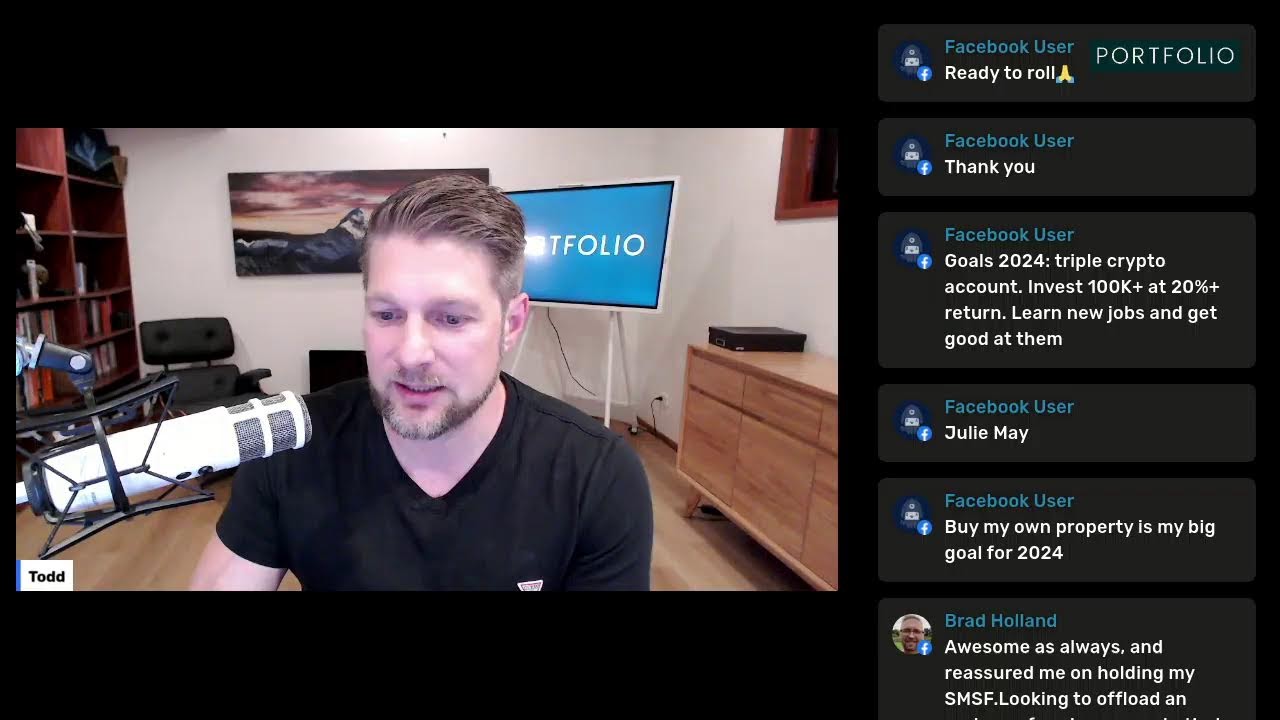
Todd Polke reviews his predictions for 2024. Without transcript details, the specific claims and outcomes he covers remain unclear from the metadata alone.
Chapters
I we are talking predictions today, and we are talking about all the research, all the background, and also my perspective, my opinions, and predictions of what's going to be happening in the economic and the investment environment in 2024. That is our focus today, and I'm super excited to be coming to you right now. Now, before I get into that, first things first, let me know that you can see me and let me know you can hear me okay. want to make sure that all the, uh, goody-goody technology side of things is working really, really well first before I get kind of, uh, too stuck into all the content of today. And also, on another note, have you gotten the, um, predictions report, right? The economic outlook report. Have you gotten that in your hot little hands right now? If you do, type in the words got it. If you do not, type in the words don't got it. And, uh, if you would like to get that, then make sure you, um, might— you let them know, the team. Let me know in the comments if you would like it, and I'll make sure that you— my team get you a copy out of it. Okay, so of what we're going to be talking about as we're talking through this. I took a— spent a lot of time, literally spent probably 2 to 3 days straight on this, literally just kind of doing extra levels of research on top of my own knowledge and understanding and getting a feeling of what everyone is saying and everyone is predicting and everyone is talking about, from economists to banks to, um, you know, to real estate, to when we're talking about cryptocurrency, and literally went across the entire hog to really get a good feeling of what's going on in different parts of the world and what's going on in different asset classes. And also to kind of really, I guess, add an extra level of breadth and understanding to what my, um, what my own predictions are and how I'm setting myself up to focus on winning in 2024. So before I get started in that, what I would love to know from you— okay, so a bunch of you don't have it, right? Okay, if you do not have it, this is what it looks like. I'm going to share it really, really quickly, and then I want to come back and ask you a question. So this is what it's going to look like, team, right? You can see here there is literally 25 pages of research and data and predictions around what is happening in all different realms, from the global marketplace to the Zeroing on the Australian marketplace, to focusing on specific regions and the impact they're going to have, to talking about like some of the things that I'm really paying attention to and some of the big changing themes and moving forward, and also into what I think about a lot of the pathways, you know, asset classes right now. So that's what it is. So if you want to get a copy of that, then let me know in the comments. Just like, I want it, and my team will make sure they get it over to you. So that's what we're going to be going through today. Now, before I get started in this, I really want to keep this session super interactive with you guys. This could be such a valuable conversation when we're talking about what is going on in the marketplace and where to position yourself, what to be careful of, and how to invest most accurately and strategically for 2024. This could be an incredibly valuable conversation. So I want to make it just that. I want to make it a conversation. So what I want to know from you right now, I want to know from you, number one, is how do you feel about the current economy? What do you feel about the current economy, global and also the Australian economy? So just put in the comments for me wherever you're tuning in on this live. We're going live in the Wealth Dojo group. We're going live in my personal page, public page, YouTube right now. We're all over the place. In this one live stream, so what I want to know from you right now, put in the comments, is what what do you think about in terms of what's going on in the economy at this point in time? Put in the comments for me and let me know, and let's have a bit of a conversation around what some of these what's going on in the marketplace around this. Okay, not great, but are they as bad as let me just how do I highlight that? But yeah, as are they as bad as they claim? Yep. Okay, cool. Fair comment. Fair comment. What else? Now, put that back. What else, team? What else do you feel about the global global economy, the Australian economy? What you're hearing about it? What do you feel about it at the moment? Okay, not as bad. A very challenging year financially and mentally ahead. Yep, yep. Fair. What else could it be? Some of you have it in front. Cool. That's great. Perfect. Conflicting information. Yeah, I would love to know what you mean. So what kind of conflicting information? Unsafe and unsaid. Yep. Yeah. So Robert says still going to be a shortage of housing for this year. Yeah, so Rhonda, what type of conflicting information? What do you feel? Yeah, housing and rental crisis will prove interesting. I agree. Like there's a lot, you know, there's a lot in this guide all around that. I have some pretty specific thoughts on a whole bunch of these different things. Yeah, cool. Okay, mainstream versus well-researched. Yeah, 100%, Rhonda. Very, very clear. So The next question I want to ask, inflation coming down and yes. So the next question I want to ask is, what do you think you need to be most careful of? What are you most wary of for 2024? What is one of those things which you think could have a big impact on the market or the economy? Like, what are you most wary of in 2024? Put that in the comments for me. What are you most wary of in 2024? What are you concerned about? MSM? What do you mean, Brad? I probably know what you're talking about, but my brain's not computing the, um, the MSM thing. Um, bank integrity? Yeah, wholeheartedly, Rhonda. What else? What are you most wary of, whether Australia-based or globally based? Doesn't matter whether it's in A political thing, mainstream media. Yeah, thank you. Whether it's a political thing, whether it's global economic thing, whether it's something that's going on, like what are you concerned about which could have a significant impact? Wars overseas, interest rates. Yeah, and I agree, that's definitely a concern. The wars overseas, are they going to be protracted? What's going on? How are they going to impact trade routes? What's it going to do to consumer confidence? It's definitely something which is on my mind. There's no doubt about it. Okay, and final question. Cashless society, digital IDs. Yeah, Kimberly, absolutely pushing this, pushing this agenda hard. And, uh, we will— it will happen. I almost have no doubt about it, but it's when is the question. Stephen, government doing a disappearing act. Yeah, overseas, Russia, China, USA ripple effect. I agree with that. I think the conflict between the BRICS nations and some of the, um, uh, and sorry, you might be on a different even, but the BRICS nations and, uh, the US and that type of tussle which is going on with the global, um, reserve currency is a big one. But also the conflict between Russia and Ukraine and also Israel and, um, uh, Palestine and how US and Russia will— China will all play an impact on that. I think that's definitely a thing. Uh, inflation and cost of living. Yep. Okay, so final question. Where do you see the greatest opportunity in 2024? Where do you see the greatest opportunity in 2024? What is on your mind? Yeah, ATO and government obligations. Yeah, I assume you don't mean that's the greatest opportunity, Rhonda, that you're still on the previous questions. I wish there's some point in time I could say, oh, the ATO is the greatest opportunity. So where do you see the greatest opportunity in 2024? Okay, Bitcoin and property, Brad says. Yep. What else? Okay, crypto, Stephen has says. Yep. Adam says crypto. Diane says crypto. Okay, interesting. So we're pretty heavy on the crypto, on the crypto bandwagon at this point in time. By the way, I am too, if you don't know me well enough by now. I'm very, very bullish on it, that's for sure. Although it may go up and down like a yo-yo, I'm very, very bullish on, on it in general. Yeah, some off-market stuff, absolutely. So what I want to do in this session is that I want to go through this, uh, document of indexing shares. Probably interesting, interesting. Why do you feel the share market? Where do you? And I'm not saying wrong, by the way. But where? Why do you think the share market's going to perform well in 2024? I'm super curious around your response to that. So I'm going to go sustainable venture startups. Yeah, I love investing in businesses. I'm doing a heck of a lot of it. Yeah, sustainable ventures. Yeah, yeah, yeah. So what I'm going to do in this session, I'm going to be going through this document now. Where as I go through this, this predictions. Book, I'll go, is for you. I'm not going to go through every single word for obvious reasons. We could be here a long, long time. So I really want to take some general themes and I want to chat a little bit more about it with you with some of my thoughts around it. There may or may not be a few rants in between there. I mean, you guys know me well enough by now. Some of you just join here to listen to my rants. That's what you do. But I'm going to go through this bit by bit with you guys to give you a little bit more context, a little bit more deeper understanding. And we'll also give you guys the opportunity to ask some questions. Either how I came to this conclusions that might be in here or what I'm thinking about doing about it. Okay, so if you've got some questions along the way, I want to keep this nice and interactive. I have a whole stream of, of, you know, comments and questions which are feeding in here from all the different platforms, so I'm able to have a look at it. Normally I can actually show it, it actually goes, you know, actually lets me show it, but it's not allowing me to do it. So, oh, hang about. Oh yes, it's doing it. Okay, I found it. I was looking at the wrong one. There we go. Adam, best comment right here. Yeah, so okay, I didn't do my preframe. Thanks, Adam. Yeah, so as you guys know, I live in a rainforest and sometimes we have rainforest internet. And sometimes my internet will freeze, and the rule is you cannot screenshot my frozen face in in weird positions, right? That's the rule. Okay, there's I come on here with that proviso. So, but best comment, Adam. Best comment. Love it. All right, let's get on with it, Ted. So, all right. Welcome to my 2024 predictions workbook. As I said, I Spent days literally putting this together for you guys. I don't remember that rule, Kimberly. You're all against me. Anyway, let's get on with it. So welcome to the 2024 predictions workbook he got for you guys. So really how I laid this out is that I started with some big picture understanding. Of the global economy. There's the opportunity so you can zoom out and see some of the bigger picture things, which are the macro things which are really impacting, uh, literally almost everybody in the world, but also potentially impacting how we live life here in Australia and some of your moves, right? What we then do is that, uh, I'm going to tell you some of the big themes that I'm paying attention to right now, okay? So when I'm thinking about how I'm positioning myself, when I'm thinking about protection, when I'm thinking about investing, when I'm thinking about privacy, when I'm thinking about some of the things that's coming in the future, and also how I'm coaching a lot of my investors. So I'm diving into some of the things that I'm thinking about at the moment. I then zero in on the local Australian economy, because obviously Australian-based, and a lot of you guys are. And then finally, I'm going to talk about some of the asset sections, and I'm going to talk about some of the moves that I'm going to be making. I'm going to expand on that when I get to that section later on. So that's how we're going to be talking about this. Now, some big key takeaways from the themes. 12 months ago, everyone was talking recession, all the banks, all the economists, literally everyone was talking about, ah, recession, we're going to be going, and some people are still talking about recession, and the reality is there is still a risk, there is still a risk of recessions in different areas. Now, Australia actually had a recession, we had what is called a per capita recession, Which means Australia's growth is negative compared to the per capita, per person of population, right? But it's a per capita recession. It's not an overarching recession. So Australia actually had a type of recession. Now, are there still some risks in different areas? The answer is yes, of course there is, 100%. But it's very, very different conversation what was happening 12 months ago. What most are predicting is that a soft landing in most of the major economies. Now, and for some economies, that's just kicking the can down the road, unfortunately. So experts foresee inflation trending downward, a move that could stabilize consumer prices in 2024. The job market is expecting to boom in a lot of areas. It should push unemployment further down. Now, this is not necessarily true for all areas. They're actually predicting in Australia that we're going to have a softening of the unemployment, of the employment market. The job market. Now, we've been very, very tight job market at this point in time. If you talk to a lot of big businesses, one of their biggest challenges is all about hiring. It's all about hiring and getting the right person and how much they're paying for the right person and such. So while prices expect to remain high, experts foresee an improvement in housing inventory and affordability. Now, this just depends on where you're talking about and what you're talking about. So I've got some specific conversation. I spent a fair bit of time on this around the Australian property market. And with plans for these policies, stocks are expected to push higher. And despite increasing skepticism, arguments against cryptocurrency, blockchain technology is expected to boom. Okay, so these are some overarching themes around all the different research that we did, um, uh, that we did a part of it. Now, if we actually zoom out and start to think globally, so despite that 2023 was a year plagued by economic uncertainties with sky-high inflation, high interest rates, high cost of living, and continued recovery from COVID hangover and global conflicts, Conflict, global growth still outstripped. And so that was a big, big thing. Now what they're talking about in 2024 is that we're moving into a certain level of recovery. As I said, okay, so some are saying wage growth over the next 6 months, but it's clearly flawed. It's role-specific, not across the board. And that's, you know, that's a really, really good comment, by the way, Brad. Like, it's very easy for media to grab bites, sound bites and use that and make blanket statements, which isn't necessarily true at all, that's for sure. Now, what I've, I've pulled together here is a combination of resources of, um, S&P Global, Brookings, Allianz, JP Morgan, Deloitte, Forbes, OECD, Federal Reserve, Morningstar, and a whole bunch more, and also my own thoughts. You know, I spend a lot of time listening to, um, economics, listening to even politics, listening to global affairs, and The reason I do that is because I want to understand the psychology. So do you know what? Even if you don't agree with a lot of this stuff, the reality of the matter is it's really valuable to understand because then you can actually begin to understand what the global population is generally thinking or the Australian population is thinking. Because when you can understand how the majority of the population is thinking, you can then choose how you act because a lot of market movement is actually driven by consumer sentiment and how people feel about it. What the majority are thinking dictates their actions because a lot of them aren't very, very educated in the marketplace, which then, um, if you can understand that, you can then actually play the game often countercyclically to a lot of how a lot of people are thinking and win because of that. Uh, Warren Buffett said that when others show fear, I show courage. When others show courage, I show fear. And it's about being countercyclical often to the market. So here are some of the forecasts. The International Monetary Fund expects the world economy to grow at no more than 3% in 2024, with advanced economies experiencing more tepid growth of 1.4%. So this again is a very like going, hey, the world is going to grow at 3%. It's very different depending on where you're actually going to be talking about. You know, a China and a US growth rate versus something like an emerging economy like India could be something radically different. Okay. And also some of the lower, the smaller areas is going to be radically different. So you've got to choose where you're kind of talking about here. Emerging economies, including India, expect to see higher growth due to strong consumer demand and improved trade balances. Global growth exceeds— to exceed expectations 2023, but JP Morgan forecasts end global expansion by 2025. So while the global market is still expanding, what JP Morgan is suggesting is that that level of global growth may actually end by 2025 and may actually move into a space of stagnation or even kind of deflation in terms of that space. But interestingly enough, JP Morgan was the only person that was talking about this. No one else was talking about it at all. Now they're talking about stubborn inflation remains a core challenge to the global economy. Okay, so as we know, in Australia, we've seen that interest rates have gone up, I think it was like 15 times in— what was it, 13 times in 15 months or something like that. And that is to fight the level of inflation that we're seeing in the marketplace. Now a lot of places are potentially predicting is going to be stubborn. Now here's the question for you. Do you think we've hit the top of the interest rate cycle, or do you reckon there's going to be more in Australia? What do you think? Do you think we're going to see another increase in interest rates, or do you feel we've hit the peak now? What do you reckon? What's your prediction? What's your prediction? While you're putting that in, projections are indicating a rate of 4.7% inflation levels are expected, with core inflation not expected to return to target levels of 2% until 2025. Okay, one more to come, Robert says. Who else? Who else wants to, wants to throw a little prediction out there in terms of where they think interest rates are going? Okay, Anne thinks we've hit the peak. Who else? This is a good gauge to get a feeling of what you guys are thinking, and you're listening in now, you're often far more educated than the general population. Stay stagnant for some time and then start creeping down. Yeah, Ben? Plateauing, Rhonda thinks. 2 to 3 more than stable until end of year. Yep. So there's a bunch of different ones, different kind of understandings that are coming up here. So my personal perspective is that I think we might have one, maybe 2 more. That's my personal perspective. And because the Australian Reserve Bank— yeah, up to the guys at Reserve Bank. Yeah, it is. But the Reserve Bank are going to play this cautiously and they're probably going to err on the side of caution. And what the side of caution actually means is more tightening. So I actually think we may see 1 or 2 more, but then we'll plateau. And I think we're going to start to see some decreases by late next year. Okay, some people are suggesting by mid next year. I don't think that's going to happen. I think it's more going to be a late next year type of thing when we start to see some first decreases in the marketplace in terms of interest rate cycles. Now, one thing that's happening next year in a big, big way is the geopolitical developments. So nations accounting for 60% of the global GDP, gross domestic product, are heading to the polls in 2024. Along with the potential protracted wars will contribute to uncertainty. Okay, so a lot of big, big nations are heading to— let me see if I can find the list. I had the list of them all. Um, a lot of big, big nations are heading to, um, uh, heading to the polls next year. Uh, obviously the US is going to be one of those major ones. I had an entire list. I don't know what I did with it. All right, doesn't matter. Um, so, uh, US is probably the main— one of the major ones which is actually going to the polls. But this is potentially going to change things drastically because a Biden versus like a Donald Trump type of presidency means radically different things. Radically different things. So it's going to be interesting to see how that kind of plays out. The US is just one of them. You know, India is again going to the polls, and many, many different economies are And also the wars are something which we need to actually take note of and monitor. Yeah, Trump running will radically alter all the markets. Trump winning will alter all the markets, but it could also have an impact on relationships on a global basis as well. Okay, so it's quite interesting to see how that kind of will play out. Now, the wars are some of the big ones, right? One big thing that they're talking about, especially when we're talking about Israel and Palestine, is the disruption. I mean, so put aside the catastrophe of bloody people killing each other and all the bullshit that's going on associated to all that. But like, it's going to impact trade disruptions and things like that as well. Okay. So if trade is impacted and shipping is impacted, that can have an impact on cost of goods. Because the cost of goods may actually rise, right? Because one of the major corridors where all the shipping takes place is in this type of area, and with sanctions and with risk associated to that, insurance companies may not be willing to actually insure these big shipping containers, which may impact it at a deep, deep level, okay? So which may mean that they have to go in different directions, or it might take a lot longer. I was listening to a podcast quite recently where they're talking about that. The cost of shipping may rise by 30%. So if you then think about the flow-on effect of what that means to the cost of goods and the supply of goods and such, so it can actually have an impact. But also, if it continues to go, then the wars are protracted, then what does that mean for consumer confidence in general? And what if there's an escalation that actually begins to happen? So, um, Global debt and fiscal challenges. Rising budget deficits, global debt levels, and fiscal challenges pose a risk to economic stability. You know, the US just keeps pumping up their debt facility in such a big way on a consistent basis, right? In a massive, massive way. They keep raising that debt ceiling and kicking the can down the road, and at some point in time it has to actually come— you know, the, the bill comes due. Okay, this is interesting. Cost of goods for agricultural fertilizers, etc., up due to delays in supply. So cost of food production is up 40%. So really, really interesting the impact that this will have on various different pathways in how we actually live life. And that then is going to have an impact on our own cost of living, which is one of the biggest conversations and stories which is impacting this point in time. Now, I did a bit of digging into some of the specific reasons which may have a bit more of an impact on the Australian and global marketplace. Certainly China is, being one of Australia's major trading partners, its economic success definitely impacts the Australian economy. Now, we're a very resource-driven nation. Apart from some agriculture and some livestock and some food produce and things like that, we're really a resource-based nation. We don't really make anything. We don't really do too much else. We're really a resource-based nation is what what we are. And so our resources certainly have a huge, uh, um, contribution to the global economy now. And the demand for those resources is going to obviously impact our overarching economy. Now, China, after 3 years of a strict zero-COVID control, uh, the second largest economy was expected to bounce back when it suddenly reopened last December, but growth has since been fragile and output constrained due to a property sector slowdown. So property within China is a huge part of the overarching economy. And so there's some big property companies over there which are filing for bankruptcy and are insolvent. Evergrande has been a big conversation around Evergrande. Another one very recently just filed for, declared itself insolvent. And so that definitely has an impact on the overarching Economy over there, like you should see some of the stuff that's going on. There are almost cities which are vacant because the property market was so rampant and building, building, building, building, building. Then all of a sudden, there's literally buildings which are literally empty, and these buildings, these high-rise apartments are getting knocked down rather than just going derelict. Now, some other things that are impacting here is that a big aging population. So because China has a population problem, and when we talk about an age population problem because of their one-child policy, and it was— they all moved to Box Hill. That's a little bit contentious, Brad. Um, and Sunnybank in Brisbane. Yeah, they literally have empty cities. It's— it really is crazy, Adam. Like, Adam, it's really crazy. I just tried to Combine your names, Adam. Adam Durvin right then. I just had the V on the end. Adam, I just called you. So it's really crazy what's going on. Literally have empty cities, but they have a population problem, an aging population problem because their one child policy. We have a serious problem in terms of youth. There's a lot of youth, high youth unemployment as well, declining productivity. an environmental and a real estate crisis. However, the thing there, because of the, uh, the, you know, the communism, um, type government, so high state-based industry support, so China could actually wind up riding through it. But I'm, you know, monitoring this is something that's important to have a look at. The USA, the budget— cop this, right? The budget deficit doubled from $1 trillion in financial year 2022 to $2 trillion in financial year 2023. Right, can you believe that? Like the budget deficit literally doubled, okay, absolutely insane. The US is experiencing a soft landing, a 2.4% expansion in the economy during 2023 attributed to robust household and corporate balance sheets that's established a robust foundation. Lots of use of the word robust there, obviously it's a catchword. Financial strategies like extending debt maturities and securing low interest rates for the Fed's monetary tightenings have contributed to the stability Again, what we're, you know, extending debt maturity just means they're kicking the can down the road. That's all it really means. And the economy is projected, uh, they're just printing more dollars. Exactly, Brad. The economy is predicted, projected to continue growing, albeit at a slower pace, facing economic challenges, a politically charged year with the US presidential election. The outcome remains uncertain. Observers are adopting a wait-and-see approach. Now, Eurozone is more so expected to kind of muddle through the process of what's going on. Um, there's a lot of problems in the, in the, you know, Eurozone. I have some, uh, some, uh, people in the finance and, uh, finance world in the UK which I talk to very, very regularly. Just literally talking to him last night and he's talking to me about some of the stuff that's going on in the UK market over there. Um, but the Eurozone is expected to kind of muddle through things, right? Obviously that's a very big blanket statement. Eurozone is absolutely massive, made up of many, many different countries. Or with individual economies associated. So despite some positive indicators, concerns persist around global economic shifts and geopolitical uncertainties, but overall it's remaining in a positive trajectory in 2024. India is a good conversation, sustained high economic growth, becoming one of the fastest-growing major economies globally with a large youthful population driving productivity and strategic geopolitical position, And partnerships well positioned to be a continued rising economic powerhouse in the future. And this is one of the things in Australia, right? Although we may see a slowing down effect, yeah, like, okay, well, Brad, come to that, Brad. So even with China slowing down, because of the development and the growth of India and Brazil and other nations and things like that, the demand for Australia's resources are really, really strong. So we're very much a lucky country. Remember, the New Zealand Prime Minister once said that Australia is a lucky country. We have all the resources that everybody wants in the world close to the surface where no one else wants to live. And that's fairly bloody true in terms of an apt description of the Australian, um, you know, resource marketplace. Um, so the UK economy post-Brexit, I haven't heard about it specifically. However, what I understand is that— what I know is that the UK was paying huge money to, uh, the eurozone. Huge money to the eurozone for getting a whole lot of next to nothing, right, um, out of it. And so, uh, to me, my understanding was they— everyone saw it as a very, very positive thing, right? Because literally was a lot of money every single month going to the eurozone to be a part of their whole— the whole euro, right? So, um, to my understanding, it actually wound up being a positive thing, but I haven't explored that on a very, very specific level. I'm gonna have to look Now, here are some of the things I'm paying attention to. Ageing populations. So much like many other developed nations, Australia is experiencing ageing population. Factors such as increasing life expectancy and declining birth rates contribute to this demographic shift. The ageing population implicates various aspects of economy and social services, including healthcare, pension systems, workforce dynamics, and in addition can impact economic productivity. This is a big conversation which is happening. It's going to be a big conversation over the next 20 years. And so the aged care industry and all the side industries associated to that will be a booming area over the next 20 years in the marketplace. And so that's something I've certainly been taking notice of, but also understanding the productivity issues associated to that, but also understanding the impact that it's going to have on the pension and the social security system. So it's something that I'm monitoring very, very closely. The reason is because of the superannuation system in Australia, And how a lot of big superannuation companies are making a push towards a default pension. I'm going to talk about that in a moment. And this is— sorry, this is retirement security. This is one thing I'm really, really worried about. I'm not going to rant about this too much more. I've been talking about this for 10 years plus now. There is a push now for the Australian super funds to roll your super into what's called a default pension. So rather than you getting it as a lump sum, the conversation has begun, and this is just the start of the conversation. I think this conversation is going to ramp up and it's going to be changing a lot over the next 5 to 10-odd years especially. And there's a huge, huge risk that your super will not be accessible to you in a lump sum format. The huge risk is that the government, the super funds are going to grab it and they're going to ration it to you as a pension. Few reasons why I think it's the case: government can't afford the aging population, fact. Government keeps changing the rules, fact. Um, it's the government's biggest slush fund and they want their piece, fact. They've come out and said that they're happy to dip into it in, in the case of an economic crisis. How easy is it for them to be able to create an economic crisis, declare that? Just look at the whole COVID situation and how that was declared an economic crisis within a heartbeat and maintains an economic crisis which gave the government emergency powers, including being able to dip into your superannuation funds. I see this as a huge risk in the marketplace. You can see different things that they're doing, like doubling the tax from 15% to 30% on super funds with balance over $3 million last year. What's to stop them from changing that? Oh, now we're going to double it for $2 million, and we're going to double it for $1 million. We're just going to double it in general. I see that happening. I'm very, very skeptical about this, as you guys well know, that anyone's been listening to me. There's a big generation gap in terms of wealth. This is going to be like, this is interesting, right? Particularly driven by home ownership in Australia. While Generation Y has seen a wealth increase of 9% since 2012, people in their mid-50s, boomers, have seen a wealth increase of 14% within the same timeline. Right, massive, massive difference. Therefore, not only does the average Australian household aged over 55 have a net worth exceeding $1 million, but due largely to rising property prices the last few years, also seeing the fastest wealth increases. This is interesting, the average age of the first home buyer in the year 2000 was 24.5 years old. This has now risen to 36 years of age only 23 years later. So the average age of the first home buyer now is 36 years of age, and that's changed in 23 years. Now, the cost that— the price of a house today is 11.4 times the average Australian annual full-time earnings. What that was where baby boomers were entering the housing market was just 2.4 times. So the question is, what is it going to be like in the next 20 years? Okay, Brad. Whilst we all agree control of future income is our responsibility, so we invest a lot outside of super with it being compulsory, do you recommend SMSF with all the associated costs of management or just an industry super but with bearish investment? Brad, great question. Now, okay, I'm not a financial advisor and everything I say right now is not considered financial advice and this is— you make your own decisions and get your own research And blah blah blah blah blah. You get my point. Here's what I think. I think you should have control on your money. That's what I think. I think when you're making decisions, cost is only one aspect, and the cost of setting up and maintaining your super fund is only one consideration. What you have to see consideration about is the other option, other factors. Next factor: flexibility. Next factor: Liquidity. Next factor, control. Next factor, future-proofing. So when I sit there and I look at all of those different factors, I sit there and go, am I happy to pay a little bit more to manage my own money? Any day of the week, 100%, absolutely, without blinking an eyelid, yes. That's my perspective, okay? Because I value flexibility, liquidity, control More than I do the cost. Now, having said that, what you need to be aware of that you're still paying fees with the retailer industry super. So what you need to understand is what is your current level of fees that you're paying, and what is the true cost? What is the true cost of it being there? And then you sit there and go, if I set that up in a self-managed super fund, what's my true cost? Okay, of managing on a yearly basis, and then you go, what's the difference? And if the difference is $1,500 a year or two grand a year, then you sit there and you ask yourself the question, or even five grand a year, whatever the thing it might be. Then you sit there and you ask yourself the question: Is my ability to control my own wealth and my future and my own choices and having that flexibility and liquidity—is that worth to me? More than the extra few grand? Question mark. And that's how you need to answer that. Now, you also have to sit there and go, what is your industry super fund doing in terms of returns? I was looking at QSuper yesterday. One of my clients, oh, listening in right now potentially, we were talking about this and we're talking about this together. Like QSuper, the government super, the government super. The returns on it over the last five years, I think was 5.4%. Let me just try and pull that up again. Good on you, Brad. You got me sidetracked, mate. This is I'm just going to show you this as shits and giggles. Look at this. Five-year return: six percent, six percent, five percent, five percent, five percent, four percent, three percent, two percent. Like what in the actual? Like what is how much has the stock market grown? Yeah, Brad, you got me going. How much has the stock market grown? During COVID and this last 5-year period. And most, um, good old, uh, super funds are just leveraged against the share market. How is it not even keeping up with the general growth of the share market? I just sit there and go, what the— so, and I then go, if, if not this, compared to what? Like I mean, brag, but I've got some access to some pretty cool bloody deals I can do. I mean, shit, 5% is easy. 10% is easy. 15%, 20%. There's so much things that you could do in terms of your returns rather than getting bloody 5% and you have no control over it. And you have no— your best choices are, do I want a conservative balance or a fund or a growth one or a balanced one. Like the Lifetime Aspire 2, this is one we were talking about. It's got a medium to high risk profile, and yet in the last 7 years has done 5.7%. Like, who would be overwhelmed with joy and happiness about a 5.7% per annum return over the last 7 years, given what's happened with asset prices? Almost threw up when I saw this. This is the government bloody super. Anyway, all right, I'll stop now. So Brad, what do you think my answer is, mate? Sometimes here's the point: sometimes flexibility, liquidity is about is worth and control is worth far more than the cost. People always focus on cost, but it's such a narrow perspective of how you've got to be thinking. How we make decisions has to take into consideration multiple different things, but everyone zeroes in on the cost, right? And then you just— yeah, where are the real returns going? Yeah, like, yeah, Rhonda, hey, don't get me started. Yeah, like everyone zeroes in on focus and obsesses about the cost. To me, it's probably the behind Control, safety, security, liquidity, and flexibility. Cost is probably the fifth, the fifth element. I love Todd and super conversations. It's a surefire way to get me going. It's a surefire way. I can't help myself. I just oh it frustrates me so much because it's ripping everyday Australians off, ripping you off, and it's bullshit. It's Anyway, okay, back to where I was. Okay, here we go. So this is interesting, right? In terms of the cost of getting into a house. Like if you sit there and you think about, okay, like who's got kids and who's concerned about their kids getting into the property market? Honestly, who's concerned? Does anyone have legitimate real concerns? Because I do. Now, my daughter's fine. We're putting money aside, we're investing, we're doing things like fine. And there's also going to be a huge wealth transfer which is going to happen. What they're saying is that this wealth transfer, when baby boomers kind of pass their assets down to future generations, that a lot of younger people are just going to sell the property and put in the savings. Which I think is a dumb idea. You know, those asset prices in, in for the future in terms of holding the real estate is going to be enormous. There's a wealth divide which is happening whether you like it or not. Okay. The question is, you've got to make a decision. What side of that wealth divide are you actually going to be on? Yeah. Melbourne stats. 1985, the average house price was 6 times average wage. In 2023, it's 12 times. Yeah. So, I mean, you look at this, it's so true. It's changed drastically and it's going to get a lot worse. Now let's keep moving. Just realized I've been rocking and rolling for a fair while now. How's everyone doing? What's your biggest takeaway so far? Put it in the comments for me. Let me know. What's your biggest takeaway so far? Now global power shifts. This is so baby boomers are holding a lot of the wealth. Yep, 100%. Blah blah blah blah blah. Yep. So this oh oh team my team stuffed something up. Sorry. Okay, they doubled up here. Okay, uh, I, I need to invest more in super. Are you just trying to trigger me, Adam? Like, I think you're trying to trigger me. Um, let me read to you what this is actually supposed to say because this is important. Oh God. Um, no, it wasn't Biden, Brad. This was actually— it was a copy and paste issue where the designers— but one of the teams stuffed it up. This is important. You got to have done This is important. Okay, let's. I'm just going to share with you. Here's my non. Here's my non fancy version. This is me writing it out, right? So the global power shifts. This is important, right? With what's happened. This I'm paying close attention to this. So the global power shifts in terms of things like the BRICS nations and what's going on in that space, I'm paying very, very close attention to this, right? So the BRICS, for those of you who don't know, is Brazil, Russia, India, China, South Africa, and it's soon to incorporate Egypt, Ethiopia, Iran, Saudi Arabia, and the UAE, suggests a potential transformative impact on global power. So what this is going to say is that BRICS is set to represent approximately 46.5% of the world 46.5% of the world's population, $30.8 trillion, roughly a third of global GDP, and 45% of global oil production. Okay, so these are BRICS nations are going to be doing this. And so the conversation around the trade agreement's potential adoption of a common currency within the extended BRICS trade network is what is coming. Now, this is where the conversation of the de-dollarization comes into play, which describes the eroding of the US dollar as the world's reserve currency. Ray Dalio, if you've, uh, this is a great book if you want to read it, Principles for Dealing with the Changing World Order. If you love economics and you love understanding the rise and fall of empires, talks about this, that this, uh, the once reserve currency being toppled is an impact of, uh, early— not an early, it's an indicator of, uh, empires falling. Now whether the US follows suit on this is yet to be seen, but it's worth a bit of a read and worth a conversation to have a look at. Okay, there is a massive global political shift going. Now, you can read all the media around this and it can be quite inflammatory, but what you have to understand is that these nations also don't necessarily have a great history of working well together. So that's the counterargument you have to take into consideration. You've got to look at both sides of the argument. You could just look at this and go, holy shit, the US is screwed. But if you look at what's the dynamic of all these countries working together, they don't have the greatest history, and they have a lot of different types of governments and political systems and things like that, right? Economic interests. So we really need to kind of pay attention to that as well. But it's something I'm definitely paying a lot of attention to right now. Now let's pop back to this economic outlook. So this is a big one. I'm paying big attention to the Build to Rent schemes. And the impact that's going to be having on the marketplace, both in a lot of different countries. UK has had a big impact. Australia, it is about to have a big impact. The US, it's definitely having a big impact. There's no doubt about it. So there's been a big push for build-to-rent schemes in the Australian marketplace. If you don't know, build-to-rent refers to developers, funds, and superannuation companies, and whoever else will build a development. But not offer it to the market for sale, but instead hold it for the exclusive purpose of renting it out to long-term tenants. Now, there's 2 arguments— well, sorry, arguments is the wrong way to put this. There's 2 sides of the story to focus on in this. One, is it going to be good for the rental marketplace and providing long-term security for tenants? Yes. Is it potentially something that can support The rental crisis that we have? Yes. What's the flip side? The flip side, it's going to remove supply from the marketplace for people to buy their own homes. Okay? So as of September 2023, according to a recent report of JLL, whilst there are only currently 4,340 build-to-rent apartments in operation nationally, there are a further 8,914 build-to-rent apartments under construction. And a further 6,862 which have received development approval yet to commence. Okay, so what that's going to mean in this next period of time, 15,000 more apartments are going to be taken out of the marketplace for everyday people to be able to buy and instead be owned by big funds, superannuation companies, big developers, and rent this out over the long term. Okay, now this is going to remove supply from the marketplace. And as you take more and more supply from the market from already existing under supply in the marketplace, what is it going to do to property prices? So you've got to pay attention to these little shifts which are happening. You've got to follow the breadcrumbs in the marketplace and see how the government is setting up the population for a lifetime of renting. Now, it's happening. It's going to happen. There's no doubt about it. You might go, not in Australia. No, we don't do that. The great Australian dream. That's not the same thing as what it once was. And there's a lot of nations over in Europe and such and things like that then the reality of the matter is that there's going to be a— this is just what's going to be happening. Okay. It's not abnormal in the world. We just haven't experienced it so much in Australia, but it is happening now. If you see the average age of the first home buyer is up to 36 now, the percentage of the population at 40 who are buying their first home has increased by 60% in the last 5 years, 60% increase. People buying their first home at the age of 40. Okay, this is the market that we're heading into, and this is part of the thing of setting people up to a lifetime of renting. Yeah, if developers and trades focus on BTR, then there's no new homes for sale, prices go up. Exactly what's going to be happening, right? This is going to continue to grow. It's being pushed, it's being supported by the government. This is a big, big thing that's happening. Now, the solution for this would be Well, just hey government, build like why don't we build more properties? And so they're releasing this whole lot of different things to say that it's going to be they're going to do that. But the government's ability to be able to pull it off is built on a house of sand, and let's talk about that now. But it's a tricky mix. You know, great for accommodation in Australia may help the rental crisis, but it's not going to help the housing crisis, right? Two very, very different things. So in Australia, there's a massive housing shortage. Australia is grappling with insufficient home construction for its growing population, primarily due to a surge in overseas migration. Who knows how many people moved to Australia, immigrated to Australia net, net last, last year? Who wants to fathom a guess? Net immigration last year, what do you reckon? Some of you may have read this report already. Brad says 280. Anyone else? It's, uh, 500,000 people is what my understanding is. Um, let me just, you know, hang on, just let me go to this. Yeah, Australia's population grew by 518,000 people in 2022 to 2023. Okay, 518,000 people. Now this was up until like July, like July to July. So I don't know, like 2023, like January to December. This is like a 2022 to 2023 financial year style thing or something like that, right? 518,000 people. How many properties did we build? How many properties did we build in the last 12 months? It certainly wasn't 500,000, right? It wasn't even half that. Okay, so we need to be aware of this. Yeah, too many around 500,000. Yeah, exactly. So here's what we need to be aware of, right? There is this massive— hold on. Was that correct? I thought that was. Can someone fact check that for me? I thought that was total immigration. Can someone fact check that for me? I thought that was total immigration. Immigration Australia. Yeah, net overseas migration, 510,000. Yeah, so this is from Australian Bureau of Statistics, 2022-2023. In the year ending 30th of June, overseas migration contributed a net gain of 518,000 people to Australia's population. The Australian government announced that planning level for 2023 permanent migration program will be set at 190,000 places. Now, if we go and have a look at some of the other stats that were put together, you'll see that— we'll get to it, hang on, we'll get to it. It's 375,000 people is what they're looking at for the next 12 months is what it's going to reduce to. So shortage, this is a big thing, right? This is a big thing. So housing demand is a massive problem in Australia, a massive problem, right? There's been a huge overseas net migration that's come in. But housing supply is not kept up and nor will it be keeping up, right? So I just love damn liars, damn liars and statistics. Yeah. So this permanent migration program, we said 190,000 places. More recent statistics is saying 375,000 for next year. But let's have a look at that. There's a great report here. You'll see this. There's a link to it. You can have a bit of a read of that, the AMP Econo site. report. There's a good little read associated with that if you're interested. So we're not building anywhere near enough, nowhere near enough. The reality of the matter is that we've seen building companies go out of— yeah, 170,000 houses built March 2023. That's correct. Yep. We had 518,000 people arrive in Australia and we built 170,000 houses. That's not including Australia's population growth or anything like that. It's not including any of that. So what was I getting at? Sidetracked. So the reality of the matter is that we're not building anywhere near enough. We have this massive undersupply of property already. We've got builders going bust left, right, and center. We've got cost of materials really, really high. Government, which is inept at actually Releasing any type of significant land supply and providing the infrastructure for that. We have a situation where budget constraints are going to restrict the amount of infrastructure spent for new developments, and so it's going to restrict the amount of land supply which is going to be going out to the marketplace. Right? They've come out with this whole idea of you know let's do this. What is it? The National Housing Accord. It's a great name. Sounds fancy. Sounds really good. Featuring a key initiative to construct 1 million strategically located new homes over a 5-year span. They later lifted that to 1.2 million over 5 years. This translates to an annual average of 250,000. Now, Australia has never built 250,000 houses in a year ever. Ever. Ever. The highest we got was $220,000 in a single year, and that was before COVID That was before the skilled labor shortage. That was before the cost of materials went sky high. That was before all the development companies went bust. That was before interest rates being sky high. Right? Yeah, Brad, exactly. So there's 2 ways to think about this, right? There's 2 ways you've got to be looking at it. Not Stan House, but as an investor, I'm not accepting the demand outweighing housing supply. So this is where you go. And so this is, you know, I cop a lot of flak for this shit. I really do. Some people who are on their high horse go, oh yeah, yeah. Oh, you're just selfish. Come on, dude. Everyone has the opportunity to invest if they want to. We all just make choices. Okay. But what about everybody else? Okay. Well, I'm providing as a long-term housing For lots of people in the marketplace, like that's I'm providing a community service. It's either me doing it or it's BlackRock doing it or super funds doing it. Like at some level there has to be someone providing housing for people to be able to rent off, right? But this is just reality where it's going. Yeah, it's a good good this is a good question. Like, where do they live? Multiple families living in single rental properties. Yeah, if you— there's a, there's a huge, huge thing of shared housing going on now. Like, it's big. You look at the tent cities that are popping up. There's a, there's a serious problem going on. Like, Australia has a serious housing problem, and the government is inept at fixing it, right? Just inept. And so they've got this great plan. Like, dudes, You've never— it's never happened. The environment is in a worse situation to actually make it happen, right? When they did 220,000, that was in a robust economy without the issues of skilled labor, high interest rate environment, all the other reasons highlighted earlier, right? It's never going to happen. So the objective is basically what they're saying is you've got to construct housing equivalent to grow another Adelaide 1.3 million people over the next 5 years. But it's not even just the housing, it's the, um, develop the corresponding infrastructure to make a, uh, a suburb livable, right? Um, and as I said, the government has budget constraints and they're not going to be investing a lot of money in, in a lot of future infrastructure at great rate levels. Now you look at Melbourne, you look at the Melbourne bloody budget, Melbourne's at the risk of going broke because they've invested in all this infrastructure and the economy's had an impact because good old Dan Andrews went and screwed a whole lot of shit up. And then what's going to be happening is that future generations are going to have to— they're trying to tax their way out of it. The number of new taxes in Melbourne by the government there is insane. It is insane. And they're trying to tax their way out of all their fiscal Mismanagement of money, right? And it's just not going to fly. It's just not. Anyway, let's move on. Technology is a big space. So AI is going to change the way that we're going to be living. What you need to be thinking about is how you're going to— there's a great book, The Future Is Faster Than You Think. Now it's even a little bit old and outdated now. Anytime you talk about technology and yeah, the new Airbnb tax, but the new tax for if a property is vacant, there's the taxes associated to that. There's, there's new land taxes being increased. There's so many taxes that are popping in the Melbourne marketplace, it's not funny. It's insane what's happening down there. Now, you need to be thinking about, like, what I was saying is that when you're talking about books around technology in the future, they become really outdated very, very fast. And so this book, The Future Is Faster Than What You Think, is incredible, right? It's incredible. But it's even getting outdated now. What you need to start thinking about is how is technology And the exponential pace of new technologies, how is that gonna? What's the tourist tax? Tell me what that is. I haven't. I haven't seen that. What's the tourist tax? Tell me. I want to know. Of how that's going to be impacting the future. Is your job future-proofed? Right. What they're predicting is that AI could replace over 1.3 million jobs in Australia by 2027. 1.3 million jobs in Australia. By 2027, right? Rhonda says including land tax on people on your home principal place of residence wouldn't surprise me in the least. This is an insane stat, right? Insane, right? You need to future-proof yourself now, like now, like in the exponential growth. This is going to change everything. Now if we go and come into Australia. Look, what they always say about Australia is this: Australia's resilient economy. Rezoning— oh yeah, this is a bullshit tax. This is— who's— yeah, Kimley, this is a bullshit tax. This is, um, gotta love Vic. It's the testing ground for everything. Um, I won't go into that any further, but yes, it's a good testing ground, Victoria. It's used as testing ground for lots of different things. Um, the rezoning tax is bullshit. So here's what happens. The government rezones an area, and because they've rezoned the area, the value of the property actually goes up higher. Because the value of the property has gone up higher, the government decides they're going to tax you on it. It's called a windfall tax. So they're literally going to go and windfall tax. The government— cop this— it's unbelievable. It's insane just to think about. So the government rezoned. They did it. Their choices. Your property has to be in that rezoning area because it's rezoned. The value of property goes up. So the government goes, oh, I'll have a piece of that. And so then they charge a windfall tax as a percentage of how much your property has gone up by. Can you, can you like just Have a look at that. Like, how can you even think about this? I can't click on that. Oh, here we go. Click over here. Look at this. And you have to pay that immediately once rezoned, but they have time to pay the tax. Yeah, they have time to pay the tax with interest, of course. Of course it is. No doubt about it. Of course it is. First tourism holiday tax coming to Victoria. Like sometimes, sometimes I'm even flabbergasted. And this, this just— yeah, when you incur a loss, there's no shortfall of relief, right? Exactly. It's bullshit, right? It's bullshit. Come on, does anyone else think this is bullshit? Like, come on, just so who's with me? Who thinks this is bullshit, right? This is insanity. Um, here we go. Oh, the Andrews government, new 7.5% tax on short-stay accommodation, will add over $100 to the cost of a weekend away from Victoria. New holiday tourism tax, the 50th new or increased tax charge imposed by the Andrew government since 2014. 50 new taxes in 7 years. By the Premier's own admission, this new tax will do nothing to drive properties back to the long-term rental market. Oh yeah, what a load of— All right, let's get back to it. You lot are incredible at getting me sidetracked on stuff. Yeah, investors leaving the market. Now, by the way, I'm still very bullish on Melbourne. There's no doubt. I'm still very bullish on Melbourne as a marketplace, but it all comes down to what property and what location and where are you buying? Right, so it's very, very different. Look, it's widely viewed in Australia that we immigrated ourselves, immigrated our way out of serious economic downturn with a record immigration, right? We're considered to be a rich economy, that's what it always is, so, but like amid financial strains, achieving financial independence remained a priority of over half Australians, 55%, so, but unsurprising that nearly 2 in 5 Australians have concerns about their financial sustainability. Fearing they would run out of money within a week. This is in 2021, but it seems Australians are really doing relatively well considering. So there are also expectations that the RBA will kick off a modest monetary easing policy from September 2024. Anticipation of a soft landing, optimism due to driving force of high population growth, relatively low unemployment trending down, and support through crises, challenges due to high cost of living, and high inflationary environment. So predicting that inflation will return to 2-3% in 2024. This projection puts us ahead of the RBA's forecast and close to the government's latest projections. So they're actually predicting that inflation will come down faster than what they were just last year. Cost of living is having an impact. However, all the Black Friday sales and Boxing Day sales didn't kind of stack up with that kind of conversation. There's a lot of money still spent on that. Interest rates and borrowing challenge is still going to be an issue and it will remain that way. Serviceability as property owners or property investors is going to stay constrained. That's why I keep telling you guys, you cannot have a traditional just buy property strategy. It doesn't work anymore unless you've got super high income to handle servicing. The days of buying 5 to 10 properties just off your own income is gone and done and dusted. Most people will be lucky to get 2 in their portfolio based on normal serviceability unless you go set up a more broad-based strategy and strategic pathway to actually increase your servicing moving forward. Yeah, RBA take a cautious approach, blah, blah, blah. I'll let you guys have a look at this. Australia's population grew by 518,000 in 2023, but net migration expected to slow to 375,000 in 2024, easing tight labour market conditions amid accelerating— decelerating economic population growth. Calls for targeted immigration programs to address skill gaps and support infrastructure and housing development. Recognizing immigration's significant role as a significant driver in housing demand. So this is still a really, really big thing. We've still got supply chain challenges. The budget moving into a budget surplus. Now, of course, the whole government will go, oh, look at what we did, hooray. But hang on a moment. It's because the number of workers, we've got such a tight labor market and the level of taxes have increased quite substantially. It's not because of your incredible bloody budget management processes. Um, but anyway, it's happening nonetheless. So it reserved the reserve steering inflation back towards targets. That was going to help, there's no doubt about it. Always better being in a budget surplus than a deficit. And, um, record-breaking employment has played a pivotal role in achieving the first budget surplus for 15 years. Substantial increase in tax collections while contributing to the surplus's implications of purchasing power. Additionally, there is anticipation for implementation of Stage 3 tax cuts Sets to take effect in July 2024. Now let's move on to assets. Now what I'd love to know is what do you think about the Australian economy? Where do you think we're going in 2024? What are you thinking and what's your thought process? I'm really curious around your— what do you think is going to happen? Are we going to do well in 2024? Are we going to do shit? Is Australia going to perform? We're going to get some growth. How's the property market? What do you think is going to be happening? Like talk to me about your thoughts around what's going on now. Equities, so a more challenging macro backdrop is anticipated for equity markets in 2024. Now this is really a U.S.-based conversation, right? So, but it's some similarities in Australia. Okay, so J.P. Morgan analysts estimate S&P 500 earnings growth of 2 to 3% and a price target of 4,200 with the downside. Side bias in the US, whereas analysts predicting a strong growth rate of 5 to 7%. So JP Morgan is a little bit more bearish, it seems, than a lot of our analysts right now. Um, so in 2022, the S&P slid close to 20% in the wake of the Fed's decision to rapidly hike interest rates. However, there's been some recovery. Uh, there's been growth in the stock market in Australia in the last kind of 12-odd months for sure. I think that we will, uh, have some moderate growth in 2023. I'm sorry, 2024, not much. I'm not expecting like crazy things to be happening. There's a lot of global uncertainty right now and there's not the reason. And with the job market easing a little bit and things and businesses still having challenges and still the high cost of living, which isn't expected to change anytime soon, I expect that equity markets will be more subdued in 2024 is what I think is going to be happening. Having said that, I don't spend a lot of time looking at the equities markets. Uh, it really hasn't been on my radar for, for a number of years now for various reasons. Um, not that I'm against it, not that I don't play in it a little bit, but I haven't been paying a huge amount of attention associated to it. I just think with the, with the global marketplace how it is, and, um, with the risk of wars and uncertainty in BRICS and uncertainty in the US government and, and a whole lot of different stuff, I'm just a little bit more cautious around it than I am just per se, you know, the property market. Um, AMP's Shane Oliver warned that 2024 will be a rougher ride for the share market than the previous 12 months, citing still slowing growth and a tendency of shares to fall during the initial phase of cycles. Okay, what's this say? Yeah, lots of opportunities where there is a robust plan. I got a tax refund this year, $3.85, and the ATO posted a check to my account. Amazing. Uh, Now, so I'm gonna be done soon, team. I'm going to talk to you about some of these more asset things. I'm going to talk about positioning. My very first live event I'm running is happening on the 18th of January. And this is where I'm gonna be running my $100K Wealth Plan event. And it's going to be a live event where I'm gonna be talking you through a roadmap to grow $100K passive income within your portfolio. So you're going to see in this guide, if you want to join that event, if you want to have some conversations with my team about growing your investment portfolio in 2024, get access to off-market deals and such, you're going to see some links in here where you can book some calls with my team. The call is absolutely free. It doesn't cost you anything. You're going to spend some time with Baden getting a clear understanding of where you are right now, where you want to be going in the future. Laying out what's possible for you, where your challenges might be, and really talking about what some key next steps might be for you and potentially even how we may be able to help you get there. There's an opportunity for you to book a free course. You're going to see this in there, so make sure you take advantage of that. It's absolutely free, doesn't cost you anything. Your absolute worst case is that you are going to walk out of there with an understanding of what your next steps are going to be, and Baden will help point you in the right direction of where you might need to go next. And whether that's working with us in the team or whether that's something else or giving you some really cool resources. Now, by the way, has anyone had a great conversation with Baden, who's part of my team already, and got anything good to say about it? I hope there is. There's a bunch of you listening in right now. He's a great guy. You'll get a bunch out of it. And it really is the next step. If you're keen to kind of grow your portfolio in 2024 and make it your most profitable year ever, because there are some shit-hot opportunities, there's no doubt about it. This year accumulating real estate, I think it's going to be great because I think the real estate market is going to take off again in 2025. So what a time to position yourself. That's what I think about. Yeah, no, he's great. He's a great young— he's a great fella. And yeah, Kimberley's a great fella and he'll be able to help you guys out a lot taking that next step in where you are in terms of your own portfolio. So yeah, golden conversation. Yeah, yeah. Top guy, Anne. Hundred percent. Yep. Yeah, book the call team if you haven't. Like if you're keen to really take control of your financial life in 2024, just make the move and get on with it. Like stop honestly stop fucking around with your money. I just want to say it, like some of you sit there and you stuff around and stuff around and stuff around and you wait and wait and wait and wait. You make your entire portfolio about waiting, right? Team, get on with it, right? It's more and more important to do this. Your financial future isn't waiting for you for the perfect time for you to sort your shit out, right? You've got to get on with it. Anyway, I'll stop ranting about that. So metals, you know, big market for the metal, metal market is talking about, have a bit of a look at it. I'm more bullish on silver than I am on gold. That's where I'm spending more of my time. Biden, I didn't get my check, so no comments from me. I'll let him know that. Let him know he hasn't bribed you yet. So I'm a fan of the metals market. I really like silver just because of its industrial application. So I like gold is just, it's good conversation, but I like real-world uses. So I'm a big fan of the silver marketplace. I'm massive in crypto in 2024. It's been moving really, really strongly. So I like it a lot. We're going to have some ups and downs. We always are. But we've had a growth rate of 2023 to 2024 has gone from $15K to $43,000. I've been telling my clients just continue dollar cost averaging in time and time again. And they've done a 3 times return. I've been telling my investors, get put a play in the crypto marketplace. And even if it's a small amount, if it's a large amount, a portion of the portfolio, 5% of the portfolio in the crypto market, and they've tripled their money in 12 months. Okay. And I think it's going to be going higher. I'm definitely a big believer in it. Um, I'm a big believer in that it's going to become more and more mainstream. We are— there's been a war on crypto. Um, the SEC has been a war on crypto, and, uh, which has actually been a good thing for You know, we had FTX, the bill, you know, FTX, um, was guilty of stealing from its customers to the tune of $8 billion. We had the Binance CEO plead guilty to a federal charge associated with money laundering, fined $4 billion, right? This is actually a good thing for the industry. It's just a cleanup from being the Wild West. So I actually think it's a good thing. Uh, we're moving towards the spot Bitcoin ETF. We've been talking about this for years, but I reckon we're, we're pretty close to it. Um, have we had any news about that? Anyone who's following it, if we had any news about that. Uh, but as a sector, I think it's where the greatest gains are going to be, but you need to play cautiously, okay? The crypto game could be an absolute roller coaster. Anyone that's been in there for a period of time— I've been playing crypto since 2016— anyone's been in there for a period of time, you will know that it is a bit of a roller coaster in the marketplace. There's no doubt about that. So, uh, here's where I think there's some opportunity. You know, 2020 is opportunity in a lot of areas, but I think there's opportunity to get yourself positioned in real estate in 2024. Right now, the banks were talking about drops of 15 to 30% in 2022. Oh my goodness, how wrong could they be? We said it was nonsense. I said it was nonsense. You rewind to my predictions when I was talking, when I was doing the same type of conversation in last year. I told him it was nonsense. I told him it was bullshit. Yeah, mate, like with your— like it all depends on your position in your market. So, um, Brad is in what you're doing, having a 10% hold in the crypto marketplace. I have zero problems with that. Um, zero problems. I would suggest that mine is Maybe 10 to 15%, something of a similar nature. That's where a lot of— that's probably where my allocation is. Maybe it's a little bit more, but yeah, maybe 10 to 15% is where mine's sitting. So for you, Brad, with your experience and your knowledge and your maturity as an investor, I don't see a problem with that. Now, property prices did well in 2023 is the reality of the matter. We had year-on-year growth of 8.2% on the 8 capital city dwelling price, but there were markets like WA and Brisbane and such which are at new time highs again after reached COVID highs and gone over and above that. So the 13 increases in interest rates in 15 months has had an impact on living pressures and restrictive lending policy. 2024 as a reality, but I see 5% growth rates still in 2024 and probably more and more around the 8% market, maybe in kind of that Brisbane and the Perth type of marketplace, where I see that kind of 7% or 8% market in some of those other markets is what I'm expecting. However, as I said, this is a time to position. The thing that's holding— we have this massive undersupply in real estate in Australia. We have huge immigration that's coming in. We're not building anywhere near enough. These forces are going to continue to make the market go up, but what's holding the market back right now is is the cost of living and the interest rates. As well, here's what I think: I think as soon as we start to see these interest rates drop, this where I think we're going to see some consumer confidence come back in the marketplace, and I think we'll see another kick in the in the property market. So by end of 2024, mid-2025. I also think we're going to see some drops in the interest rates. We're going to see some consumer confidence kick back in again. I think we'll then move into another reasonable growth rate in the marketplace, especially in some areas more than others. So I'm a big fan of getting positioned in the property market. And as I said, it's a long-term game. Time timing the market is far more important than time in the market is far more important than timing the market, right? If you're positioned in Australian real estate now, and even if it doesn't grow substantially in the next 12 months or whatever it is, and you're waiting for the perfect time to jump in, what's it going to be like in 10 years? What if you were sitting on the sidelines waiting for drops of 15 to 30% like some people were? Oh, I'm going to wait for a big drop in the market. Sorry. You missed out, right? And here's what I think is going to happen for a lot of people again, just sitting and waiting. Okay, like you got to get on with it because this is a long-term game. I think if you're not positioned in the next five to ten years, I think you'll never get in the property market unless you inherit property. That's what I think is going to happen, or if you earn shitloads of capital. U.S. housing market still seeking some solid ground. I'm not going to spend a lot of time on that. Activity could pick up sharply if if. Um, if rates moderate further, um, price expected to rise 2 to 3%. Okay, so there's some more conversation you can look at over here, right? So here's my, here's my attention. I'm definitely gonna be getting myself positioned to another couple of pieces of real estate, a couple in Australia and potentially one overseas as well, is where I'm going to be positioning myself. I will certainly be accumulating in the cryptocurrency marketplace. I mainly focus on the majors. I don't have the time or inclination, to be quite frank, to be researching little all the time. My time is better spent on other with family and growing business and businesses. So I have more of a Yeah, Brad, I know a bit about it, mate, but not like— I'm, I'm, I'm in, um, Dubai for reasons because I spent a fair bit of time in Dubai, uh, and, and but there's other things I've been looking at like Georgia and stuff. I've been looking at some random stuff over time. I've looked a lot in the US marketplace, um, so there's certain areas that I've spent a bit of time, but I'm not an expert in a global property, if that makes sense. Um, I just have some understanding of some areas I'm diving in on. So there's certain little crypto projects that I'm— blockchain businesses. I've invested in a blockchain business, um, you know, just recently, and, uh, and a bunch of my investors have. We got a pre-IPO price, a 75% discount, and, uh, you know, it's, it's been accepted in CoinMarket incubators program and things like— cool market capping, really, really cool little deal. And, um, you know, so little businesses that I'm interested in that have blockchain behind them, I definitely see some value associated to that. There's no doubt about it. But, uh, I'm definitely accumulating into crypto markets, no doubt about it. Very, very bullish on this, very bullish on the marketplace itself. Uh, now my world, and when it comes to gold and silver, I don't hold a huge portion of my wealth in gold and silver because it doesn't earn an income, quite frankly. It really is a hedge thing and it's a growth thing. And so I certainly have a portion of my portfolio in gold and silver, but my whole thing is I dollar cost average on a monthly basis. Now, like my read is stopped. Okay, we're back again. I may have just frozen. Hope you took some great. I hope you did not take some good freeze-frame photos. And big focus on lending strategies and joint ventures. Okay, so I'm massive in this. So let's cap it off. I'm looking to still move into the— yeah, crap screenshot. I'm looking to still move into a few more properties this year. There's no doubt about that. I'm moving in the crypto market. I'm very, very bullish around that. I'm dollar-cost averaging into more silver. Is the, is the real, uh, real place where I'm putting things. Um, I'm accumulating equity stakes in different businesses. I'm a big fan of that marketplace and certainly doing some, uh, profit chunk-based strategies, lending and joint ventures where you can do kind of 10%, 15%, 20%, 25% style returns per annum. And so that's where my mix that I'm focusing on. Um, I've got some other interesting things I'm looking at in terms of like whiskey investments and Goodness, what else? Some stuff in FX and some other gold stuff and things like that. Some really interesting deal flow that I have access to, which is just fascinating and really quite incredible returns. But the core of what I'm doing is property, business, crypto. That's the core of what I'm doing. And this is the buy and hold portfolio that I'm continuing to just moving into on a regular basis. Team, next steps. So what's your number one takeaway? We've just spent an hour and a half going through this. What's your number one takeaway from this last 90 minutes? A, did you get a whole bunch out of that? Was that useful? B, what was your number one takeaway? C, what are you going to do next? Put those in the comments for me. Was that useful? What did you take away? What are you going to do? What's your action steps? And D, what's your big goal? Financial goal for 2024. What's your big financial goal? Put that in the comments for me. What's your big financial goal for 2024? Now, as always, if you want some help with that, team, this is why I'm here. This is why I do what I do to support everyday people to be able to create financial freedom in their life and break free from the financial slavery trap, which is this whole. Work to pay the bills bullshit that we're sold along the way. Um, I see what I didn't put in here was all the other things I'm looking at in terms of privacy, what I'm talking about in terms of the control mechanisms being placed by a lot of, you know, the government and, and things like that. Um, and like central bank digital currencies and digital director IDs and a whole lot of different things that are going on. So I didn't put any of that in here, but it's a big part of what I'm focusing on— control needs to be your name of the game in terms of your finances for the future, because a lot of things going on is that, uh, is that, um, it's going to have a huge impact for the future. It's going to have a huge impact in the future, and I don't want any of you to get steamrolled. So I want to help you break free. So, um, to do that, this is why I put on these free events for you guys. So I've got a first event is coming up in, uh, in just a, you know, on the 18th of January, right? It's going to be a 3-hour event where, which is called my $100K, um, Wealth Plan, where I'm gonna be talking you through the wealth system and the roadmap to, to build a $100K, uh, income stream from your strategic investment portfolio. So if you want to come along to that, uh, there's gonna be a link in these comments which has been posted in different places. You need to get, get in now. Register your details. There are limited spots. It's absolutely free, doesn't cost anything. Share it out to your friends and family who want to be a part of this or invite them into the Wealth Dojo. Anyone you love and care about that you think needs some support in terms of their finances and create financial freedom as well, get them to be a part of it, right? Because it's going to be an incredible event and everyone needs a financial education that operates in the real world to secure your financial future. So team, that's it for me right now. We've been rocking and rolling for ages. Hope that was super useful for you guys. If you can, whether you're watching this live or if you're watching this as a replay, what was your number one takeaway? What action step are you going to take from listening to this? What's your big goal in 2024? And as I said, if any of you missed out in getting access to this guide, just type in the word guide into the comments and my team will make sure they get it over to you. Other than that, much love to you all and thank you so much. Welcome to 2024. I can't wait for this year. It's going to be an absolute cracker. So much cool stuff is going to be creating and I look forward to helping a whole bunch of you guys getting on your pathway to creating financial freedom in your life. Other than that, go and enjoy your evening and look forward to chatting to you guys super duper soon. Okay, goals, triple crypto account. Yes, I like it. Nice, Nico. Invest $100K, 20% return, learn new jobs and get good at them. Yeah, boom. Um, cool, Brad. Awesome resource, reassured me on my holding estimates. Looking to offload an underperforming property that has gone negative, looking for better opportunities, park funds. Yeah, boom shakalaka. Yeah, so this is great. Priorities will play a great part of '23 for Australia, and Todd and Brad show is great. Yeah, confirming for investing in crypto. Yes, yes, sounds good. Ready to roll. Love it, love it, love it. All right, team, uh, go and enjoy the rest of your evening. Ciao.










