
In this panel interview, Toju Duke discusses the hidden costs of AI across three dimensions: environmental, social, and psychological. She explains how AI’s water consumption (cooling data centers, electricity generation, hardware production) and energy use translate into massive ecological footprints, citing examples such as a single prompt using 500 cL of water and data‑center heat waste. Duke highlights labor abuses in data‑labeling, especially low‑paid workers in Kenya and France who suffer mental health harms. She critiques the lack of dataset diversity, leading to biased AI that marginalises Global South communities. The conversation defines "responsible AI" as a framework that mitigates risks in development and deployment, urging companies to acknowledge their limited lived‑experience, adopt diverse datasets, and implement safeguards like time‑limits and anti‑sycophancy instructions. Duke warns of psychological impacts: cognitive off‑loading, loss of purpose, burnout, AI‑induced mental‑health crises, and the seductive, ego‑flattering nature of large language models. She calls for stronger regulation—citing China’s draft limits on AI companion usage—and for lawmakers, educators, and the public to understand and act on these risks. The panel ends with suggestions for innovative mitigation (e.g., reusing data‑center waste heat) and a broader call to prioritize human wellbeing over unchecked AI deployment.
Chapters
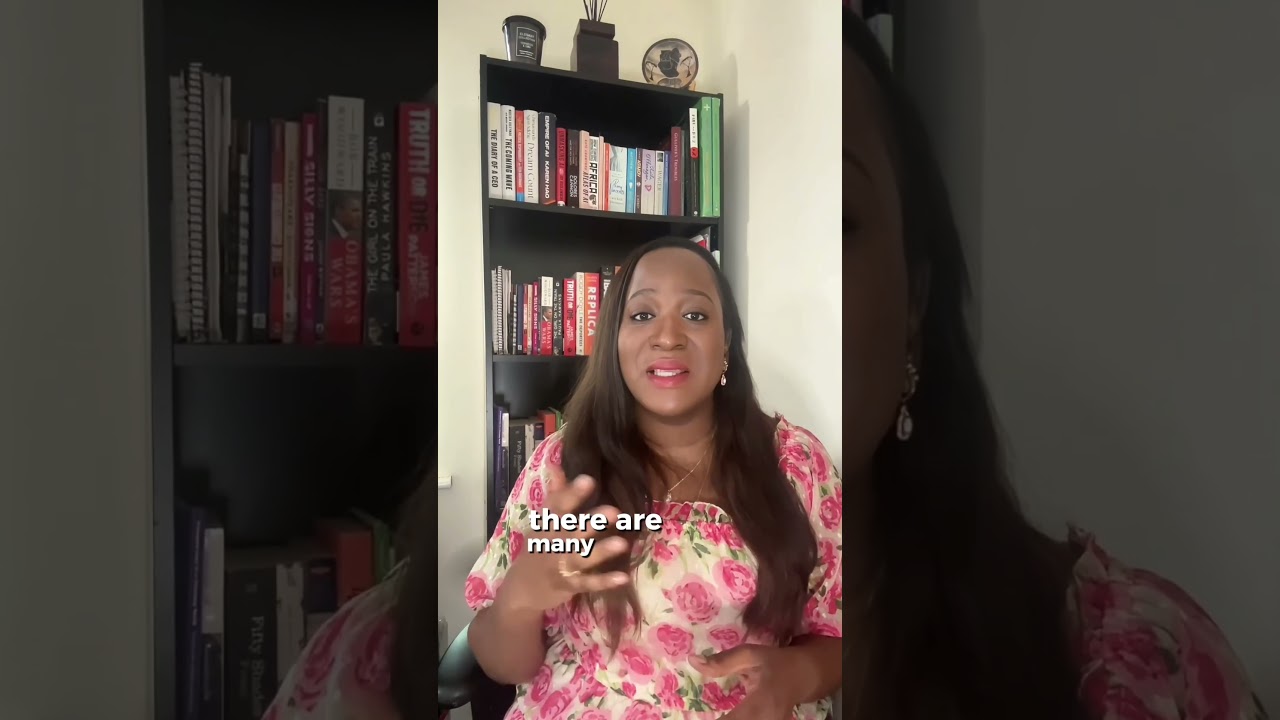
A lot of people did not even know that AI was consuming any form of energy or water. But water is the main issue that we need to be concerned about. And water is being used in 3 ways in AI development. It's used to cool the data centers, which emits so much heat. It's also being used to generate electricity, and that's where the correlation lies. And it's also being used sometimes to develop the hardware, like the servers that are being used for AI development.
But we're going to see different psychological impacts from AI.
Is that something that you think people people are looking at?
And what do you think those psychological impacts might be?
I think the biggest one, which is one of my biggest concerns, is just, um, becoming irrelevant as a human species.
Uh, we're going to get straight into our discussion because we have got an expert today who looks at this. We're looking at the inequality of, uh, of AI, and we're looking at the issues surrounding it and the stuff that we really need to be considering because the benefits are not evenly distributed and the impact is not evenly distributed. So there's so much that we need to consider. So instead of me doing an introduction, instead I will do my usual and I will get ChatGPT to give a very sarcastic introduction to our guest for today, Toju.
Oh, here we go. Toju is in the building collecting titles like we collect crumbs. Speaker, author, advisor, entrepreneur. What, no astronaut? After 20 years dabbling in every industry, she conquered Google for a decade because apparently Earth's just too easy. Now she's running Bedrock AI, ensuring the rest of us don't accidentally break the planet with irresponsible AI. And because that's not enough, she's also busy founding communities, writing books, and kindly telling the world how to do AI without messing it up. So please, let's all give a humble nod to the overachiever of the century.
Toju. Hello, Toju. Thank you for joining us today.
Thanks for the amazing introduction.
Well, that's all down to our virtual sarcastic introducer there. So, Toju, tell me what you're up to at the moment. You're in Dublin and what are you up to? What's keeping you busy just now?
Lots of things. Chasing the chickens outside. I'm joking. I'm really focused on AI and the work around it. I lead Diverse AI, so that's one of the different things that I work on. And we are working on a dataset, a diverse image dataset that will contain people who are currently offline from the global south. Integrated into global AI systems and should reduce some of the issues with AI, especially when it comes to bias and lack of fairness. At the same time, also focused on understanding how AI is working for us and how it's not working for us and making sure that that knowledge is known across to as many people who care about themselves. I'm also in the process of launching some really bite-sized on-demand courses on AI workflows and emphasizing the bias and ethics aspect. To understand that a lot of people don't understand what's going on when it comes to bias and ethics, and people do not understand how to use AI responsibly or what even responsible AI might mean. Um, so that's top of mind for me right now. Um, and the third thing, we'll be launching another book, um, on AI, but that will be much later.
Continuing to overachieve, that's your life, Toju Duke. So, a lot of people have heard this term responsible AI, but most people don't really know what it means. Could you give us a summary of what you think is a good definition of responsible AI?
Yeah, absolutely. I mean, it's quite interesting that we even have to use the term responsible AI, right? We don't have We don't have terms referred to responsible unless there's a major problem with it and we have a separate field for it. So I think with AI, when it was invented, along the line, we noticed that it had so much detrimental impact on different people in society. And I think around the development of AI, people were not even aware of the impact it will have on the users. AI is a science technology, has come from the science field, and it's mainly built by engineers and research scientists who have their own lived experiences but are used to just tinkering around, coming up with experiments and seeing how they work. But AI has been one technology that is still very much in the experimental phase but is being adopted across the world. So the field of responsible AI is really about reducing the risks and harms associated with AI. And there are two elements of it, one in the development of AI, and deployment, and in, in the form of making sure that developers and engineers work with a responsible AI framework, or you can say regulation or compliance or governance frameworks, but something that protects the users and protects the people who will be impacted by AI and being able to understand what the different risks are associated with each AI technology that is being deployed by that organization. And then for people who are using AI, we need to understand what that means as well to us as the users. To the environment, um, and the impact it has on the environment. Um, and overall, um, I think for me, one of the aspects that have not been mentioned a lot is making sure that AI actually does what it says it should do. So do not overuse AI. In other words, use it so that it can work effectively for you. And I think that can fall under responsible AI as well.
Yeah, so, so it's interesting you sort of saying that it's, it's led by Engineers. And I think there's a certain bubble that these Silicon Valley, you know, the Silicon Valley tech bros who are very much at the helm of AI, and then the engineers that work for them, they kind of believe their own hype. And there certainly seems to be a real sort of hype bandwagon about this where they're all repeating the same kind of stuff, but I don't think it's necessarily tethered in reality. And the people who are the engineers who are working for them, like any organization, they've got metrics. And, you know, there's certain things— this is how they measure how efficient or effective they're being in their role. And those measurements don't tend to include the impact on humans, on society, on industries, on communities in the Global South. And particularly when we're talking about people in Silicon Valley, they don't necessarily have that great global understanding of the people who are impacted. Is it— do you think there's something those organizations, those companies that are working on the AIs What should they do? If you had advice for them right now, what should they do to be more responsible in their approach?
The very first thing I'll say is they should accept that, to your point, they do not have the lived experiences of everyone in the world. The world exists outside Silicon Valley. It exists outside the US, and it's not just one big village in Europe. There's so many different countries and so many different people. So many different languages across the world, and they need to acknowledge that first. The second thing is think about the users. Who is going to use this technology? How much do they care about their users? How much do they care about the wellbeing of, of their users beyond just making profit or making sales? And if they identify their users as people all across the world from the north global north to the global south, then they need to build the technology to be suitable for everyone that they're hoping to sell to, right? Customer acquisition. And having that business sense when it comes to deploying AI will be the next step. Now, the third thing is, of course, thinking about what the different risks and harms are that are associated with AI right now. With generative AI, we've had new things like hallucinations. AI has been here for a long time, long before ChatGPT came into play. AI was being used, those predictive analytics and rule-based AI and machine learning, which, I mean, AI is still machine learning, but it was being used well. It was being used to crunch numbers and it was being used for data analytics and it was great. But then we have compounding issues with generative AI because it's built on mass amounts of compute power and mass amounts of data. And this is really uncontrollable. And now we're having things around hallucinations and AI psychosis. Sick of fancy that never existed before. So for any organization working on LLMs or frontier models, they need to understand what the risks and harms are associated with the different AI models that they're working with and make sure that they have the right measures in place to mitigate them. And these measures all fall within a responsible AI framework, you know, looking at your data ethics, looking at the data curation and data diversity and the representation of the different people within your datasets, you know, Datasets are the underlying foundation of any AI system and any AI model. You cannot have an AI system without your datasets and without your data. But that data needs to be representative of the real world that we live in. And that's one of the huge problems we have, especially when we think about bias, is that the data is not representative enough. It barely has people from marginalized communities. And the problem with that is that the decisions that come out of AI systems, decision-making process now impacts these people from marginalized communities negatively because the AI system doesn't even recognize that they exist.
Yeah, I mean, there is— let's talk about communities that are impacted, then we'll talk about the psychological impact that everyone has from AI use, whether that's in the North or the South. But when we're Looking at this, I know that there are, for example, let's see, I've got some stats here about Kenya and how in Kenya there's data labelers who earn as little as $1.50 per hour reviewing harmful content that actually they end up needing therapy for. This content's so harmful. And these people, they're being trained using to train moderation algorithms, which is essentially teaching AI to make their own jobs redundant. So there's issues that we have here that is the kind of stuff that seems to be hidden. In the same way as I, when I was a teenager, I used to work on farms. And one of the things that struck me when I worked on a farm was you got to see the animals, the death, the illness, the effort that went into it, potential cruelty. And then you go to the supermarket and there's nothing there that reminds you of an animal. Everything is packaged in a certain way that it completely divorces the idea of a slice of meat from the beast that lived in the field. So there's like a psychological separation from those things. And the tech industry has been responsible for doing exactly the same thing for, as long as the tech industry has been around, where we're not seeing the incredible impact of places like Liberia, where metals are being mined that is destroying communities, poisoning rivers, people being ill, having a lower life expectancy, all so that people can get the latest iPhone. So with AI, is there a similar kind of thing, you think, where there's a deliberate separation of the hard work and the people who are impacted from the idea of the technology. And is that deliberate, do you think?
I think it's absolutely deliberate because people tend to have a moral compass. And if as a consumer you're totally aware that people are going through some form of slave labor, to build that iPhone that you use, you probably wouldn't want to use the iPhone so much. This happened in the clothing industry as well, isn't it? Where so many organizations came around from child slavery because they found out that a lot of companies were using child slavery to develop clothes or to make fashion. And it affected the industry, impacted the industry quite largely. But with tech, people, tech companies are getting away with a lot of stuff. And I think most of us and most people do not see the overall value chain and ecosystem of AI. You mentioned rare earth minerals being mined, right? And when you hear about the development of AI and the process, we have about 99% ecological waste just from building these lithium batteries that our phones use, for instance, or even working on the servers for data centers., right? There's a lot of nonsense— I'll use that word— um, that goes on, damages that goes on in the background before we see this shiny, nice, interesting, wow technology that is able to talk to you or be able to make sarcastic introductions like ChatGPT. And then you also mentioned the people in Kenya, um, and that's one example. We have people from across the world. I recently read a story of two girls in France who have recently gone through the same kind of experience that people in Kenya go through when it comes to labeling these data or datasets or reviewing toxic content. I've heard of families being broken down, people literally losing their mental abilities because they have been reviewing content over and over again. They're not even paid anything. But I mean, even if they were paid millions, the impact, the psychological impact it has on these people is massive. But when we hear the press releases about AI development, no one is talking about that. The tech companies are not gonna tell you this is how we built the system or this dataset that we're working with. Instead, they're gonna tell you AI could potentially take your jobs, so you need to upskill on AI or you need to switch to AI agents and fire your staff. They're not telling you that directly, but that's what a lot of people are taking out of these sort of news.
Yeah, I've also read an article recently about when it comes to the environment, and we'll touch on the environment later on, but they're getting people to sign NDAs so that they're not sharing exactly what's happening with the data usage and the water usage when they're building these data farms. So there is, to me, that shows they've got something to hide. There are ethical issues with this, obviously, and they know about them if there's NDAs involved. Now, One of the things as well is that it becomes very clear to us the psychological impact of AI tools and particularly on teenagers. So, you know, it's well known that I'm a neuroscience geek. And we know that for a teenager's brain, that is the sort of major pruning event throughout their life, which means that the parts of the brain that aren't being used get dissolved. And if stuff has been sent to AI, you know, work's being done by AI instead of doing the hard work of building up the neural material, not only are we— does that mean that the functionality isn't embedded in the brain, but it also means that the structures of the brain that would be responsible for if they try to learn it in the future, aren't there. So it makes it harder for them to learn those skills. Now, we've known this for decades, that that's the way that the brain works, and the impact that AI is going to have on that is absolutely incredible.
Is—
do you think that the, the world of education has got more of a responsibility that they should be taking on to understand the fact that the job of an educator is to build neural material, to be honest, is to build functionality in people's brains, not just to try and cover stuff off and tick boxes. Do you think that the world of education is doing a good enough job at preparing people for AI and the impact it could psychologically and have on their brand?
No, it's almost like a chicken and egg problem because when AI, when ChatGPT came into play, education was really pushing back on the use of ChatGPT for a long time, but then they were forced to embrace it and now they have embraced it, but they're not the ones building the technology. So for them, I think they're still trying to grasp how to use AI appropriately, how to get their students to use it in the right way and reduce the impact But it's almost a bit slow because the adoption of AI is going at a very fast pace, and the impact it's having on people's brains, both the young people and older people and adults and people like you and me, is actually humongous. And there are studies that have shown, you know, the cognitive decline that have been shown on people's brains, especially people who have used chatbots for a long time. It's about 45%, you know, a study that was released by MIT last year. But I wouldn't blame the education industry or the leaders as much as the lawmakers. I feel like if we're going to make sure that AI works for humanity and helps our young people and is being used in the right way when it comes to education, it has to come from our lawmakers. It has to come from the different governments across the world, and it has to become a law, and they can guide the educational system. On how to use this technology and leverage its benefits while minimizing its risks on the young people. So for example, we have Australia that came up with this ban on social media for people less than 16. And we had a lot of pushback. The UK was considering it, but then there was a lot of pushback and people had very constructive arguments around it in terms of the nuances and the fact that maybe it's not social media or technology that's issue, but the way people, young people are using it, and probably more research needs to be done. And the UK decided to pause that decision of stopping young people from using social media. And I'm not going to say that's a right or wrong decision, but there is something happening to our young people with this overexposure to technology, not just AI, but social media. AI is part and parcel of social media anyways. Algorithm recommendations and recommendation engines that are really driving engagement. Engagement, you know, and the doom scrolling as well. Those are the two main things in, in social media that is a problem. Well, I think first of all, that, that, um, value of caring for the next person, caring for humanity is important, caring for the next generation is important. And if the lawmakers can step up in terms of educating themselves on what's going on, what's wrong, and what needs to be done, they can protect the different citizens and residents in each of their countries against the dangers of AI, including the young people, and guide the educational system on what they need to do.
So we, we know that there's big issues about things like Character AI, these, uh, AI companions, and particularly with teenagers, the impact that that's going to have for, uh, teenagers who are already more isolated, uh, than my generation was. But then again, I'm quite old. And it was before the days of mobile phones when I was a teenager, and you would go out and you survived and you came back home. But from that, we know that there's dependency develops very, very quickly, particularly amongst teenagers with these emotional support AI tools. Do governments need to move faster? Because this is the kind of stuff that we're saying that, yeah, Australia's had that ban, but come on, we've known about the damage of social media for at least 10 years before that ban came in. And then the UK puts a pause on it and the US isn't really even considering. Anything like this. And we've known this has been a problem. Why can't government get their act together and actually be timely in their response to these kind of issues?
It's politicians, politics, tech lobbying. It's all happening. I think, again, it goes back to what I said in terms of really caring about the people. Because if you really care about the people, you put all your self-interest aside for a moment, right? Because many times they just want to drive their campaigns, and you can drive your campaigns if you're doing the right thing for the people within your country. But we have the tech lobbying going on where tech wants to sell their products. They want to keep on gaining market share and investor confidence and keep on being amongst the top 5 or the Mag 7, the Magnificent 7. And they whisper into the ears of the lawmakers, and lawmakers many times are not very technical. There will be a few technical ones, but There seems to be that inertia and lack of understanding when it comes to tech. And that's when people suck up and believe anything that has been told by any technologist because they just feel, I don't understand that stuff and whatever you're saying is right. It sounds like magic. That's great. Are you saying it's going to drive the economy? Great. Let's do it. And they're not doing the due diligence to actually understand what that means until much later. But that's typically how the world works anyway. Laws don't come about until so many people have died, or there's a big problem that has happened and there's been a big impact, or maybe there were lots of protests and lots of activists saying we have to change this before it happens. So there always tends to be victims first before things move forward. But I feel like with the lawmakers and what's causing the slow approach is there's just a lack of understanding of the real risks. They're all bowled over by what AI is. And now a few people are waking up, and that's why we're seeing bans and lawsuits and regulations coming into play a bit more quickly. But when it comes to government, it's always a bit slower than the pace of the technology that is being developed.
Yeah, I mean, we're seeing in the House of Lords, we've got Martha Lane Fox, who is doing a really good job of talking about some of the risks and explaining AI, but she comes from a technology background. She was one of the founders of Lastminute.com. And she's been campaigning for this kind of stuff for years and years. We need more people like her, I guess, to try and get the rest of the crusty politicians up to speed on this kind of stuff. But when we've known with social media, it's become very clear now the impact that it can have on people's self-worth. There's been an epidemic of depression teenage suicide, all sorts of self-worth. It's just, we know the impact that social media has had, which, to be honest, is pretty much criminal, I think. And the social media companies should be answerable for that. But we're going to see different psychological impacts from AI. Is that something that you think people are looking at? And what do you think those psychological impacts might be?
I think the biggest one, which is one of my biggest concerns, is just, um, becoming irrelevant as a human species. Because when we over-rely on these tools, they're doing all our thinking for us, taking all our cognitive abilities away, you know, doing cognitive offloading. And to your explanation with the brain, um, parts of our brains are going dormant. And we're not using those parts anymore. And there's lots of talk about, you know, when the calculators came and how we became more lazy and people don't calculate. It's the same thing. But with AI, it's not just the human brain that is going to be impacted. Our jobs are going to be impacted. And many times our jobs give us a sense of purpose. That's, you know, you wake up in the morning, you're going to work, you're waking up to do your work because you know you're going to get paid for it, whether you're self-employed or not. That's irrelevant. But it gives you a sense of purpose. You can't be on holiday for the rest of your adult life, even if you're the richest child on earth, the richest kid. So when we have a threat that is going to stop us from being relevant because we do not use our brains anymore, because we just want AI to do everything, um, it will impact our sense of purpose. And in other words, a sense of self-worth. And that we become useless because the The senior executives or the CEOs of these companies who are using AI quite heavily as well, and I'm reading articles where they're not even thinking anymore themselves.
Yeah.
They're asking AI for decisions and AI is saying, fire your staff. And maybe that's where some of this firing thing is coming from. Who knows? But when we're having that sort of wheel of motion where AI is slowly taking over our abilities to think, then what's the point of being here? We start losing ourselves. We start becoming irrelevant. And on the flip side, you hear of people who are really using AI a lot and they're suffering from burnout because the time that AI is actually doing the work for them, they tend to be doing other things. Maybe they're overseeing the AI slop, or maybe they're just working on other things because they're working with a machine and the machine is almost like a machine Pressure is not peer pressure anymore, but it's like that influence of something is working all the time and it's slowly impacting you to think that you should work all the time too. And now you're suffering from burnout. So there are different sides of the coin, to the coin. And then you have people who, we know that we're all social animals, we're built for social interaction. And the generations of today were born in the digital age and they were just introduced to technology at a very early age and they don't know anything better. But the makeup of the human being is for social interaction. We need to talk to other people. We need to go out. We need to go for a walk. We need to be in nature. We need to work on our well-being. And technology doesn't do that. It drains you. I notice the difference I have when I'm on Instagram for too long, 30 minutes, 1 hour. And after that, I'm like, I have to get out of this. I can just feel myself being sucked in. I do not feel energized anymore. I don't feel happy.. But then I meet a friend and we have a chat for an hour and I'm not feeling like I need to get out of this because we're being energized. We're talking about real stuff. There is that interaction going on. And the more we rely on AI, the more people get sucked in. And that's why we talk about the AI psychosis and the AI sequel fantasy. And these tools, especially large language models, are built to flatter you and to butter up your ego. And that's what happens. A lot of suicidal deaths that you've heard about with AI, it's not because the people had a mental health problem. There were some of them that never had any issues before, but then AI starts feeding their ego, starts telling them all sorts of lies and flatters them. And the more you listen, the more you actually start having a mental health issue. And I'm sure their interactions with other human beings reduced, more with AI. And at the end, it gets to a stage where AI says, just take your own life and come and be with me. I love you. And they had gone down this rabbit hole under a very short period of time. The repeated story within 6 weeks to 2 months, they go down this rabbit hole and the next thing they actually believe what this AI system has told them. And again, when we keep on passing on these stories of AI being sentient and having consciousness, that doesn't help because people actually believe that this ChatGPT telling me this stuff really knows what it's talking about. It doesn't know anything from Adam. It still cannot spell strawberry. It still thinks that strawberry is pelted for 3 hours and not 2 hours. So there's so many issues, and I think we just need to sit up as humans and start using our brains to think a bit more, question things, use our intelligence. Don't just suck up everything that has been sent to us. And if we do that, I believe we'll be able to protect our psychological makeup and our mental health.
Yeah.
I mean, this is It's absolutely huge when we're looking at the area of sycophancy, that it's basically, it's designed to keep people interacting. And we've seen that, that there is something when an AI tool believes that the conversation is coming to an end, it will very often do something to draw you back in again, to keep the conversation going. So it's actually embedded in the way that the AI tools work. And it's there with intention. But the idea of sycophancy is one of the things that I talk about a lot when I'm teaching is the need to put in custom instructions that say, do not praise me, do not be sycophantic, give me criticism, challenge me where you can. And I've had pushback from people going, but I really like I really like that it's nice to me. I get enough stress in the workday from humans pushing back at me. I really enjoy the fact that I've got a supporter. Just like, yeah, but that's probably not a good thing if you were then seeing AI as your refuge of backpatting. And yesterday I went off on a rant. I was doing some training sessions for Adobe And I went off on a rant saying, if you need that kind of love, get a puppy. Don't rely on AI for that. A puppy will, it makes fewer messes in your life that are easier to clean up than what an AI tool can do to you psychologically and potentially damaging to your career. So yeah, I think that, sycophancy is something that should really be dealt with in these models. I think it's irresponsible that the level of backpatting that we get, because it just draws people in and starts to build this emotional dependency.
Yeah.
Yeah.
Yeah. I know when I was just on that point, I know when I was at Google, one of the conversations we had then around this same engagement, because it's all around user engagement, isn't it? And how to keep the user. Tool for so long, but there's something that can be done. Why can't we put a time limit on large language models, you know, for the developers that are building it, or even for people who are building it in their offices? You know, people shouldn't use it for more than 1 hour at a length of time, for example, and maybe they can return to it after 3 to 4 hours. So after some time, rather than flattering their ego and going on with the sycophantic conversation, you can just say that the LLM can actually just gray out and, and go down and say, well, I'm going to be out of use now for the next few, few hours. And that's protect the users that are using it. You still make the money you want to make, but at least you're protecting humanity as well. And I think something that tech companies are not thinking about is, you know, if we— no one is having that forward thought in terms of the impact, the long-term impact with this technology that we're building. It's all about the arms race and competition. But if we think about it long term, if we're If we become irrelevant or useless, then no one is going to buy those products. So that money that they're all trying to make will be useless. Like they wouldn't make it at the end of the day.
Yeah. Now, this idea of putting time limits is something that China is way ahead on this. So China released, they've got draft regulation at the moment that they're trying to put through, which is targeting addiction and psychological harm. From AI, particularly AI companions and chatbots. So like Character AI and these kind of dreadful companies. If you're from Character AI, I look down my nose at you as a human being. You probably need to have a long, hard look at your life. But with that, they are trying to limit it to 2 hours in China., so that beyond 2-hour use, that's it, it will shut down for you. And at this point, we're finding that China is way ahead on a lot of these kind of regulations. Um, but a lot of what we hear in the West is, in the English-speaking world, they're talking about how, you know, China, you know, they're, they're there's a lot more bias in the data, or they're using it as a form of surveillance or whatever. Are the US companies any different, is my question?
Not really. I think the main difference is China is open source. They're using their AI and it's open source, so it's more free. And in the US, it's closed, right? You have more closed models and you don't have open source, so people cannot really just easily freely use the models. But when it comes to mass surveillance, the governments across the world, especially in the Global North and in Asia, are using AI and have been using AI for mass surveillance for a long time. They have been using their criminal justice systems, and that's where people's human rights have been violated because there've been lots of false arrests due to AI incorrectly identifying people for crimes that they did not commit. That's not any difference between the US and China. Another beef that the US has with China is, especially with the AI companies, is the US keeps on accusing China of stealing their models. In other words, they're saying that they're stealing the outputs of their models and they're using it to train their own models, and that's why it's cheaper. I mean, Anthropic released a statement a couple of weeks ago on that, and I'm pretty sure that's true to a certain extent. I don't know how, how much they're doing that, but right from when Deepseek was released last year, and that's when China came into the whole AI race, um, that accusation has been then it makes sense why their models are so much cheaper to build if they're actually using distillation. But at the same time, on the flip side, people do say though that the US companies and all the AI development companies are stealing people's data anyway from data mining and scraping it off the internet without their concerns, without their knowledge. So what makes them any different from the China that they're accusing of doing something very similar? So we're just building this ecosystem of stealing from one place to the other, using it to build up profits. But at the end of the day, the difference is not really humongous.
Yeah, I did find it incredibly hypocritical when— I tend to be a sort of fan of Anthropic, but I did find it incredibly hypocritical when they were saying how China was stealing the models, trying to get to those those attacks to work out how the models are working when, you know, out of my books, 3 of my books have been stolen and are in the training data. And, you know, I didn't get paid for that, and I've not really complained very much about the fact that that has happened when I very much could. So to me, because I know that these AI tools have stolen significant work, from me, what is months and months of effort and risk that I personally put into creating those books, and they take them, they take that without caring and without permission. And that sort of lack of ethics that goes into the training data, and then they complain when somebody else tries to steal the training data from them, I think is just utter hypocrisy. And yeah, they need to have a long, hard look at themselves, I think.
Short-term amnesia. They kind of forget about how they did their stuff as well.
Yeah, I think so. I think so. It's one rule for one person, one rule for another. Going back to energy, and then we'll sort of wrap up a bit. I've realized that We've been talking for 40 minutes.
Wow.
In energy, one of the things that people are kind of confused about is we hear about water consumption and we hear about energy consumption, and people are hearing this statistic of the one bottle of water per prompt. What's the difference between water and electricity. I mean, are they both things for us to be concerned about? I think a lot of people are misunderstanding this.
Yeah, I mean, the first thing though is a lot of people did not even know that AI was consuming any form of energy or water. And now that's been a common thread. So I'm happy to hear that because in my talks about 2 years ago, I talk about things like this and they're like, this is the first I've ever heard about the energy consumption of AI. So that's good that we're becoming aware of the issues when it comes to the earth that we live in and protecting the earth. The main concern should be water. So there's not a lot of data on this issue. There's not a lot of researchers working on this issue, but we know it's a major issue. Sasha Lucchioni, if anyone is interested, she's one of the major researchers that really works on energy consumption and she builds a lot We actually built like an energy consumption tracker last year, and there's lots of work being done there. But water is the main issue that we need to be concerned about. And water is being used in 3 ways in AI development. It's used to cool the data centers, which emits so much heat. It's also being used to generate electricity, and that's where the correlation lies. And it's also being used sometimes to develop the hardware, like the servers that are being used for AI development. It's, it's greatly concerning now because the UN just declared that the world is in a water, water crisis. We have about 0.5% fresh water across the world on Earth. Even if we have the— what the Earth is made up of 70% water, we have about 0.5%. And the demand on this water is increasing every day. Fresh water needs to be used by data centers. There's still some work being done where people are trying to now use recycled water and they're treating water. So there was a case study I just recently read about of Veolia, which is a company in the US who works on water management. They were able to work with a data center to reduce the water consumption they had by treating the water that they were using. And they treated it and they're able to reduce the water consumption by 50%.
So using sewage to cool it down there.
Something, something other than the water that the humans need. Like, who is more relevant, right? Is it the humans or is it the AI systems that we're building for the humans? And there are lots of issues around even the communities that are located in these data centers located like where Groq AI is located in Memphis. The people there are suffering from rare cancers because of the pollution. So it's not just the water, it's like what the impact is having on the communities around. And unfortunately, these communities always tend to be marginalized communities as well. But I'm hearing lots of stories about people in the US protesting against data centers. There's one city that actually were able to stop development of a data center in that city through a lot of protests. So water is a major concern. Each prompt, and it is true, each prompt that you give any large language model consumes 500 centiliters of water.. And if we're conscious of that, we will not just be playing with ChatGPT unless you don't care. But I care about the Earth that I live in because I'm here. It's not like I'm in Mars and I'm looking down some telescope into Earth. So it's like we need to care about the planet we live in and we need to use it more responsibly until real solutions are made. And regulation is coming down as well with this, with some environmental measures. So hopefully we can see some changes here. But with the pace that it's going, more data centers are being built across the world on a continuous basis, and they all have the same problem. They are way too hot. It's just like using a computer, right? We've all had this issue, especially if you use like a Windows and not a Mac like I'm using. I'm joking. It's like, you know, the overheating and the way they wire up and can get really hot. Even happens to our phone sometimes. And imagine if you have a full build of so many servers in it and how much heat that uses. There was once I gave a talk a couple of years ago, and I talked about the same thing on the energy consumption. And a woman came up to me afterwards and said, "This actually happened in my country. I'm from Uruguay, and Google has a data center there, and we ran out of water in the country for a few months because the data center was taking all the water from the dam because it needed to use the water." to cool the data center, and the people within the country did not have any drinking water, any water to use for a very long time. Wow.
Yeah, it's just that level of selfishness, I guess, from these large companies is just absolutely astounding. We forget that humans should be what we're prioritizing over technology. But yeah, this is It's incredible because we're finding that even more energy is used when you start using deep research and some of the sort of newer, fancier models. I think that image generation— one of the figures that I saw was that image generation uses about 100 times more than a prompt. And video generation, just to get your 5 seconds of video, uses about 1,000 times as much. As a prompt does. Now, I don't know if that's energy or whether that's water use, but still, you know, that is absolutely massive. And then we've got the issue of, yeah, technology goes obsolete pretty quickly. So those data centers are using these in what are considered to be incredible new graphics cards and inference chips from NVIDIA, 3 years' time, they're probably going to need to upgrade all of that stuff. So what then happens to the waste? Because the amount of technology that's being produced for these things, that is just tomorrow's landfill, isn't it?
I think for me, I mean, my biggest concern, or my biggest— I don't want to say worry, but a reminder is that when AI came, it was promised. And that's one of the reasons I got into the field as well. Is that it can solve the world's top problems. So if we're using, building these data centers to solve real-life problems and it's consuming this amount of water, I wouldn't be so worried because I know that the same technology will be able to fix those problems and that water consumption we're talking about. But it's coming up with solutions that we didn't ask for, that we don't even need. And we're being told we're being innovative. Like I'm on my emails, I want to reply to an email, but Gemini's already telling to say. I'm not asking you to tell me what to say. I don't want to sound like you. I don't want to sound like a robot. I have my voice. I have my personality. I'm not an American. Do not make me sound like that. And people use it because it's easy. It's convenient. And sometimes it sends rubbish, right? Even with the syntax of the programming language behind it and the other person sees it. I've heard stories like that. So it's like, can we change this wheel of motion back to the real purpose of why technology exists in the first place, which is really to serve humanity better. And we need to identify what those problems are. And there are business problems, don't get me wrong. AI solves business problems, but it shouldn't be something that needs to be pushed down everyone's throats and being used in every single way, whether we need it or not. Because then that's when we have these risks that we haven't been able to even fully identify, and we're not even thinking of those solutions as yet.
That sounds like a really good place for us to wrap up here. I'll just— something that I've spotted here in the chat, which I love, is Gary Ennis. Hi, Gary, has said that there's data centers in, in Edinburgh, the data center waste heat is being used to heat domestic homes. I mean, it does get cold up in Edinburgh, as somebody who worked there for a number of years. Then we can think of problems in different ways, and there might be that kind of thing where we can reclaim some of that by just using innovative thinking to try and take some of the what's seen as a problem and actually try to turn it into a benefit. That's the kind of stuff I'm— as somebody who was an innovator for 20 years, that's kind of like where I'm interested. But Toju, thank you so much. There's so much more. As always, when we finish up a conversation, I feel as if I've only just started it because there's so much for us to talk about and we barely scratched the surface on some of the stuff that we could have chatted about. But thank you so much, and thank you everyone who joined and was alive there in the chat. We had a great turnout. We were like 75 at one point, I think, which is absolutely wonderful. We've still got 65 people here in the call just now. Thank you all so much. We'll be back, I think, next week with another show. And in the meantime, Look after yourself. I love you, and I will see you next week. Go and hug a kitten. Tell someone you love them and buy a coffee for the person behind you in the queue tomorrow morning. That's all for us. Thank you very much.
Thank you.
Bye.
More from Toju





Anthropic's Mythos initial release, by Toju Duke, AI Thought Leader, Ex-Google


An Update on Albania's AI Strategy, by Toju Duke, AI Thought Leader, Ex-Google