15 MINUTE PANEL HIGHLIGHTS: Optimizing Manufacturer and Distributor Relationships with Data
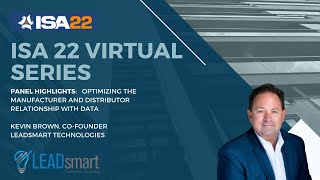
This ~15-minute panel highlights video (Tom Burton, May 27, 2022) gathers industry experts (Joe, Pradeep, Kevin) to advise manufacturers, distributors and IMRs on using data to optimize channel relationships. Core recommendations: start with internal sales/transaction data to segment partners and tailor business plans; move from transaction-focused to customer-focused data views; overcome cultural reluctance to share data by demonstrating mutual ROI; and operationalize with a clear plan, an inventory of data sources, an appropriate tech stack, and a crawl–walk–run rollout. Practical tips and examples (e.g., supplier segmentation, inventory optimization, customer retention) are offered along with a four-point checklist from Kevin for getting started.
Chapters
Foreign.
We've been talking throughout ISA 22 and at ISA in general on how we can optimize channel relationships. And we want to bring in a separate angle on this this time. This session is titled Optimizing the Manufacturer and Distributor Relationship with Data. What's one piece of data or one set of data that companies in this channel, remember, we have manufacturers, distributors and IMRs on this, on this broadcast today, watching today. What's one piece of or set of data that they can be looking at to help fund their business? Let's kick it back to you, Joe. And remember, this is about strengthening those relationships.
Sure, sure. Thanks. The first one that I would start with, and there's certainly several to talk about here, but the first one I'd start with is a company's own sales data. This can really tell a story of which of their channel partners are trending in the direction of churn versus growth or help kind of segment their partners according to certain criteria, whether it is growth, margin, SKU count, et cetera. Once that analysis is conducted, they can develop customized business plans for each of their partners. And that's really just using their own internal sales data.
Okay, definitely looking internal sales data. Everyone's got it out there. So definitely that's a place, excellent place to start. How about you, Pradeep? Where would you go?
I would agree with what Joe said because I think the sales data or transaction data, if you call, if you will, that is the data that connects your customers, your suppliers and your products. I mean, that is what we're looking to add value in the supply chain. So that is where we need to begin with. And often companies are sitting on a mine of transaction data, but then they go out seeking additional information. Absolutely. Additional information is great, but there is so much we can do with existing data. To give you an example, there are two perspectives for the distributors and the IMRs. What they should be looking at is which suppliers add more value to them because not all suppliers are equal. Right. So everybody needs a different strategy. Some of them are strong in terms of performance, some of them are strong in market share. So having that segmentation of suppliers helps them create those specific strategies with all the suppliers.
Kevin, how about you? Are you able to take that to the next level?
Well, I think I'll give a little different take and I was just kind of giggling to myself because I would have been shocked if we got through this without you throwing a curve ball into it. But great question, right? I think it's interesting and as we look at the panel, I Think we talk a lot about transaction data on a consistent basis. I like to kind of view things as that. That is historically what we've always done has been focused on transaction data in history. But. And that's where we end up kind of myopic if we're not cautious about this. I think if we there's an opportunity to take data and transaction data and other types of data and actually change that to be customer focused versus transaction focused. And I think that's some direction that we're going to start seeing more and more things move towards. Doesn't change the importance of the transaction data that both Joe and Pradeep talked about. But we also see a number of different types of data that are out there. And Joe and Pradeep both mentioned the traditional ones that we look at. But there's a lot of changes going on in the world right now with the types of data and how we get it and how we use it. So within organizations and what I see commonly with the customers that we work with is I use the term siloed. So we've got data siloed in an ERP system. We've got data siloed maybe in a CRM. It's astounding the number of organizations in our industrial distribution world who haven't embraced the CRM concept where they can aggregate data together. But they might have marketing automation, they have an E commerce tool and they have these in different places. But they're not necessarily taking advantage of bringing all that together yet. So that's a big opportunity for us right now.
There's got to be some challenges that people face when you want to share data or be transparent because that is where some magic happens where you can combine two data sets that don't normally sit together. You find something that's actionable, you find something that's unique. But there are challenges getting those two together. Can you guys share some examples of what you've seen as a challenge and then maybe how you overcame it? Remember talking about, you know, two companies that maybe like to transact and have an individual interest that they have to protect. So how about we start with you, Kevin, back to you.
Sure. Well, this is near and dear to my heart because I've been in this industrial distribution channel for 30 years plus now and I started my career working for a national distributor, then was an IMR for 10 years and have also been on the manufacturing side before we developed our software system. But you know, historically there's been that kind of scarcity mindset of this is my data I can't let you know. Now typically the manufacturer has been very open with sharing information but you know, I remember in my days as an IMR very different than today. It's been 20 plus years since I was in the business. But you know that was really what as an IMR I looked at as that's proprietary stuff for me is you know, yes, I would happy to have XYZ manufacturer know the distributor but all of their people and where they're calling on and so forth. That became a little bit more of a challenge because that was an asset of the business. Right. Distributors have historically had a similar mindset to that where they looked at things from a standpoint of oh, I can't let you know where I'm selling, I bought a pallet from you and I'm selling it in the each's we're in this new place now where we have to get rid of that mindset. We see some very forward thinking people out there. My assumption is Pradeep has probably worked with a number of companies that are very forward thinking about this, but that's where we need to get. I think we see Brendan, some of the buying groups that do a nice job of that, of getting their members to talk. Some even one of the largest ones, they even have a national account program program that they work with distributors and they're sharing data across platforms and so forth. I don't know that any of them really have the technology side of that figured out yet, but they are getting in that place where they're sharing data. But if we go back to that thought that I brought up a few minutes ago about customer focus, if we all were thinking about making the customer experience best, then that sharing of data becomes much more valuable. I think there is part of the question was challenges is I would suggest it's kind of maybe as an overview it's twofold. One is the willingness to do so and getting past that and doing it in a way that not just says I'm sharing some data so I get more leads or I'm sharing more data so I get a better discount. But how do we interact so we grow our partnership that benefits the customer is is key. And then really the second piece of that is solving the challenge that comes with how do we do that from a technology standpoint?
Absolutely. So what I'm taking away is that you need some sort of unifying alignment and the customer is a beautiful one. Obviously everybody wants their product and their company in front of a customer and they want it in front of a customer in the best possible way. I think that what you want to do is you want to have a culture in your business that understands the value of data and one that is there to help you drive data in your decision making. So Kevin, great suggestion on incorporating sales and marketing in there. You want your sales and marketing people to just have a rough enough understanding of the data that they have available so they can connect the dots and put two and two together. So Kevin, anything to add there that Pradeep or Joe didn't touch with big company, small company, everyone's invited to the party.
I think just a couple things to go with that. First is I'd always I've used that Pradeep's comment for years about consistent to being inconsistent as associated with my golf game, but now I'm adding it to life in general. But I do agree with what Pradeep and Joe are saying here. I think the reality of it is that, and I think Joe kind of started on this is that for a smaller organization this can absolutely be a competitive advantage for them. You know what I have experienced quite a bit of and I think you've probably all seen is large organizations that decide to sometimes jump into working with data and so forth, start buying tools, different types of software tools, maybe they've got some consultants involved without really setting any type of plan. You do not have to start working with data by saying I've gone out and spent another hundred thousand dollars a year on software and I've gone out and and brought in a large group of people. If you take siloed data within a small organization, this could be as simple for a let's just say even an IMR agency or maybe a 3 to 5 million dollars a year distributor even, you know they've probably got data either obviously in their erp, but maybe you've even got somebody that's small and using QuickBooks, still using Mailchimp versus a marketing automation component, has a Shopify store. All of those are areas of data that you do not have to have huge AI systems that describe what you need to do next and things you don't need that to get started in this. You can get started by taking each of those areas of data, pulling those together to make small business decisions. I would suggest the comment I made earlier about focusing on the customer versus transactions but using transaction data to get how we help that customer is going to help our businesses grow. And I would almost suggest that in some instances because of hierarchies and spend and so forth, that small organizations might actually be able to do this better. I think the key is that you aggregate your data. You have a clearly defined plan of what you want to accomplish from it. You have a tech stack that goes with it. Right? What are, what's the technology that I have, how am I using that properly and do I need to add to that? But by doing it by a plan versus a, you know, a shoot, ready, aim idea. And then the other side of it is, and I think Pradeep actually mentioned this a little bit earlier, is think about crawl, walk, run. You do not have to boil the ocean of data when you start. You can start by doing some very generic things.
All right, we're starting to get into the advice portion of this, guys. So I hope everyone in the audience is paying attention that this is, this is a game for everybody. That's what I'm taking away. And it's a game if you're not playing it. If you're not looking at your data, you're missing out on a part of your business that helps you make better decisions, helps you identify opportunities, lots of stuff. What about roi? Say you're year two of your data strategy. Can you quantify the ROI of a data initiative both internally and externally? And remember, the external is really important because if you're convincing channel partner to share their data with you, you want to say, that was worth it because of this. So I'd love to hear your thoughts on that. Can it be quantified? And really how. How about you, Kevin? What is something that we can do to create? Because I think that what we're aiming for is how do we create data evangelists out there in the world that say, yes, I will give you whatever data you want because it helps with business.
Yeah, I think you kind of put that into a nutshell a little bit there. Right. But we didn't talk a lot through this yet about kind of the external side of it. And I think historically there might have been a little bit of an effort of, you know, manufacturer A says, you know, if you share this much information with me, it'll help your pricing, you know, column, it'll help certain programs, maybe there's marketing funds available, whatever it is. But I think what really people need to do before they even figure this out from an ROI standpoint is understanding really an internal plan that says, okay, if I'm a distributor or an IMR and I'm being asked to share this data, not only what do I want that to do to be compliant, but how Do I turn that into something that's of value to my business versus just I'm an IMR and the factory asked me to send him some more data about customer visits or whatever it might be. Right. That's another just set of data points for us. But I think having a plan in place becomes really critical that says, how is this going to translate into my growth and my partnership solidifying relationships better and then looking across the board.
Right.
What, based upon that, what do I want to accomplish? Is it growth? Maybe it's only growth. Is it growth in margin? Something we haven't talked about today at all is customer retention. Customer attention could be huge when you're using data correctly. Right. And that flows all the way across from a manufacturer, distributor and imr. Customer attention is critical with that. Is it inventory optimization? Some of the things that Pradeep was talking about, having a plan going in will make it so much easier to get ROI at the end. Right. Because you know what you want to see, what you want to accomplish.
Absolutely. So the ROI is there out there. We just need to. We need to find the ways to package it up and tell those that are looking at us internally. So if you're going up to your board and saying we need to keep doing this data thing because of this, you need some firepower there. It's there. And if you need to go externally to get the data sharing going, it's there too. You just need to understand how to package that up in a way that makes sense from all perspectives. So I've got one last question. This is a quick one because we're running out of time here, guys. I want you guys to leave some parting advice for this audience. Where do I start? What should I do? As the first thing. Kevin, why don't you start that off? What's the first thing that they should do?
So I'm going to shock you and I'm going to go really fast. I have literally four points to consider. Set a plan with goals. How will this help the growth of my company, my people, my customers and our partners? Set that plan in place right off the bat. Clearly identify where all of our data sources are within our business. Most businesses have many of them and they're typically siloed, as we talked about. And then before taking steps forward, identify what the right tech stack is so that you're going to use these pieces not just internally with finance, but your customer facing your consumption, as Pradeep called it earlier. Right. Have an identified, clearly identified tech stack. It doesn't need to be overly sophisticated and then think about potentially doing a crawl, walk, run scenario. Pradeep made a great comment earlier. Right. This is a marathon. I like how we say it's a journey, not an event. So think about it in the long term of the business. Not that I want to dive in and just have this big bang happen. And now I'm a data company. It's a process, not an event.
Absolutely. All right, thanks so much, everybody. Enjoy a little break here and we'll see you soon.
Bye. Bye. Sam.
More from Tom



What does AI actually mean for a wholesale distributor #WholesaleDistribution


If your systems don’t talk to each other, your AI won’t either #AITransformation




This is why one AI agent isn’t enough for high-stakes decisions #WholesaleDistribution

