Are Distributors Growing Faster Than Manufacturers In eCommerce?
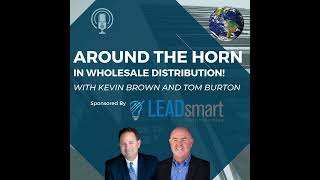
Live YouTube/podcast episode (hosts Kevin Brown and Tom Burton of Lead Smart Technologies) reviewing wholesale-distribution news and industry trends. Major themes: West Coast port volume declines and routing shifts; reshoring/nearshoring and large industrial investments (semiconductor and steel projects) driven by resiliency, ESG and Industry 4.0; rapid, practical opportunities from AI and chatbots to mine distributors' rich ERP/transactional data for sales, quoting and supply-chain decisions; younger B2B buyer behavior driving distributors' faster eCommerce growth vs manufacturers; examples and practitioner notes (Fastenal digital efforts, recent acquisitions, ISA emerging-leaders programs). Episode includes several concrete figures and case references discussed conversationally.
Questions this video answers
Mid afternoon on Friday, April 28 (year implied by episode context).
LA ~35%; Long Beach ~30%; Oakland ~12% (March decline cited).
33% of European CEOs and 24% of US CEOs reported confidence in resiliency.
Samsung investing $17 billion in a Texas chip factory; total investment referenced ~ $192 billion for 11 additional plants (article aggregation).
Intel announced a $20 billion investment into two chip factories in Ohio.
Chapters
Foreign.
Welcome to around the Horn in Wholesale Distribution with Kevin Brown and Tom Burton. Sponsored each week by LeadSmart Technologies. Tom, Kevin and their guests review the news of the week and dive deep into the topics impacting manufacturers, wholesale distribution, independent sales agents and the global wholesale supply chain. Whether It's M&A SaaS and cloud computing, B2B, E commerce or supply chain issues, we peel back the onion with our guests into the topics that impact your business the most.
Good morning, Tom. How are you?
I'm doing good, I'm doing good.
How can you not be happy with that music, huh?
I saw you dancing again.
I was doing my thing, man. It just gets me, gets me going. So I'm glad, glad that's what we're doing for TUNE to get us going on this Friday morning. So we'll welcome everybody. We're happy to have you with us. We see some folks starting to come in this morning. Tom, what are we going to talk about today? What's on our agenda?
Well, let's see. Today we, we definitely have some interesting things about supply chain and related to that, you know, near shoring or taking a lot of things from offshore and onshore. Some really interesting takes on that and some really interesting data on that. We're also going to talk about, I know, believe it or not, the changing buyer and I wouldn't be surprised at all if there's a little bit of AI talked about before the day is over. So.
Well, you know what's funny is if you jump out there and listen to look at a lot of the podcasts out there constantly, the articles that we're reading, it is the thing right now. So I think it's good that we're kind of trying to stay on top of that and, and help the, the audience that we have here to get engaged with that. But those are great things we're going to talk about today. Supply chain on shoring, near shoring type stuff, changing buyers and how we can take advantage of that, I think is what will be really good, that distributors and both manufacturers can take advantage of that changing buyer that we'll chat about today. But before we dive into that, let's kind of do our housekeeping stuff, as they say. So my name is Kevin Brown. This is my lifelong friend and business partner, co founder of Lead Smart Technologies, Tom Burton. Tom is a, as if you're a regular listener, you know that Tom is our technology guy. He's a computer scientist by education. So he, he's the whiz bang here. We both are the as I mentioned the co founders of Lead Smart Technologies. We're a CRM that is industry specific for wholesale distribution and manufacturing. We also have a channel collaboration solution as well as a customer intelligence solution built into our product. So Lead Smart is a sponsor of our podcast. Each week, every week though, what we're doing here, we really, it's important we share this with you because later in the day what we've recorded live this morning is going live or it's not, our live broadcast will be going right onto our podcast. So by mid afternoon on Friday the April 28th on all the popular podcast formats, this will be available as well. The reason that I share that is what we review when we're here live is a email newsletter that we send out every morning to a few thousand people that is called around the Horn and Wholesale Distribution. And we go through some of those articles and topics. So if you don't get that email and you'd like to, the simple way to do it is you could message us here if you're live on the chat, if you're listening to the podcast or the recorded version, email us@helloadsmartech.com we'll get you on that list and make sure that you're getting that. But because some people will be listening and not seeing, we wanted to make sure they know what we're doing here. So the last thing we'll say is if you enjoy coming to the regular broadcast that we do, Whether you're on LinkedIn Live, YouTube Live, Facebook Live, or listen to the podcast, click the like button, maybe share a comment with us today. Share this with your network on LinkedIn with what you're listening to each week and we would greatly appreciate. So that's almost like a publicly traded company's forward looking statement in safe harbors, right?
Yeah. And you know, we don't give financial advice either, so we should.
That's right. Exactly. Exactly right. This is the opinions of your hosts only, right?
Yeah, exactly.
Good. All right, let's dive in, why don't you. Let's look at this. What's the first one we've got here to talk about, Tom?
Well, let's see. First one here is about some of the stuff going on with the ports.
Yeah. So what's interesting, we talked about that briefly last week as well. And literally last Friday the, the Union and the ports in LA and Orange county came to a at least a short term agreement. But it's interesting, the reason we brought this up. Right. Is that the focus of our listeners and folks here with Us live are wholesale distribution where they're on the manufacturing side. We call it the ecosystem manufacturing side, sales agents, manufacturers reps and wholesale distributors. So what's going on in the ports kind of does matter to all of these folks. So it's, it is interesting though that I caught was, you know, they mentioned a couple of reasons that, that there's a big decline in March in the shipments into the west coast and they talked about the busiest on the west coast are of course LA and Long Beach. You know, if they were, I don't know if this is still the case. I've mentioned this before. I know historically if those two ports were combined because the only thing that separates them is a, a spit of land that's man made and if they were combined at one time they were the third largest or busiest port in the world. But if you look at la, Long beach and then Oakland are the ones that they reference here. I think LA had a 35% reduction in containers going through Long Beach 30 and Oakland 12%. But the reason behind that I think is interesting to look at is they say that there's emptying warehouses of older inventory. To me that reads we had all that problem last year of stuff backed up in the ports and people overbought, filled those warehouses that's caused the slowdown while they're emptying those warehouses out. But interestingly enough, and I don't know if you cut this, but I'd like your thoughts on it. But there people are moving to the ship and stuff to the east coast and the Gulf coast right now to move around the West Coast. Challenges.
Yeah, I think it's, I mean it said it was stockpiling, right. So there's been a lot of stockpiling and, and so that's, you know, going to have to level out a bit. I agree. It's kind of related to the next article we're going to be talking about as well is some of the supply chain strategies that are changing whether that's, you know, where you're getting things delivered or where you're making things altogether. So I think those will have more of a longer term but I think probably most of this short term decline that we're seeing is more related to stockpiling than, than anything else. So it'll be interesting to see how that, you know, plays out over the next couple months.
Yeah, they, they talked a little bit about some of it being lower based upon, you know, lower buying habits of consumers right now. But that seems to be the smallest part of this. When you look at it globally, but they talk about things rebounding here as well fairly quickly because they. One of the port managers talked about, executive directors there talked about ready for a rebound in retail. And so we'll see if that happens. But anyways, we can move on from there. I just thought it's important we kind of share, share some of these as we talk about supply chain issues on an ongoing basis.
Yeah, this next one is I think really, really interesting on a number of fronts, which in the article it talks a lot about, you know, companies bringing their supply chain and their manufacturing back onshore or near shoring. And the idea being, while it may be potentially more expensive, quote unquote, right for resources and to get labor and all of that. And this is probably one of the areas I found. There were two areas in this I found really intriguing. But there were two major plus things that kind of make this viable. One is just environmentally right with the whole ESG thing and all of that. There's a lot of environmental potential benefit by not having things shipped from halfway across the world or around the world or whatever the case may be. But the other thing, and again, this goes back to technology. They called it, I think, technology 4.0 in there. But you think about AI, you think about a lot of things we talk about and how much more efficient potentially the manufacturing process can be by using AI or technology. Then it becomes really viable to have things onshore.
Right.
Because you're, you're not, you're not relying entirely on, on human resources to get those things done, which can be expensive. And if you are going to use technology like that, you're probably much better off having that operating onshore rather than trying to figure out how you're going to implement all of that type of stuff offshore. So I think we're, you know, this is what I love about AI is the, or the proliferation of AI is the downstream shifts that could happen to just, you know, traditional business models or traditional ways of doing business that can be rethought because of some of the capabilities of the AI side.
I'm glad you kind of mentioned that part, but there's a few other things that caught my attention. But I want to comment that in that, you know, Industry 4.0.
Right.
Which we've talked about before, and there's so much going on from the technology side that's leading to that, obviously. But it said the quote that they had there said the smart factory factory era is contributing to reshoring, the reshoring trend by revitalizing and digitizing manufacturers, local factories to meet customer demand while remaining viable and profitable. So, you know, that's a lot of words for the basics of that. Saying it, we can serve our customer better by using technology in our manufacturing process. And we can do that in a way because of all of these tools that we're doing and all of these benefits that we get from it are by bringing things, bringing things closer. I looked at this, it was really interesting to me. They said, while it's not necessarily always the lowest cost option, relocating manufacturing may be the best overall option, given the dire need for resiliency in supply chain. They mentioned that a survey, and it was done here, and it said the survey found only 33% of European and 24% of US CEOs had confidence in the resiliency of their supply chain. I mean, that's crazy low. Right? So if you think about that, if you're in wholesale distribution, you know, if you're a distributor or a dealer.
Right.
That just said, if you're in the US of this large group that was surveyed on only 24% of the CEOs of your vendors. And you know, this not statistically perfect here, but you know, if you played this out, the vast majority of your manufacturers that you represent, their CEOs aren't confident in their supply chain.
Yeah. So they think it's very, they think it's very fragile right along the way. And yeah, you're just gonna, you're just.
Gonna reference Ron Paulson's comment because he complimented you. I see this coming.
Yeah. This is a brilliant comment I'm seeing here. But no, what Ron's saying is that I was at the beginning of the Internet for distribution and Tom is spot on on how AI to me is.
He mistyped.
I think he mistyped same impact and potentially even bigger. Data is once again going to be key in the center of leveraging AI and OFF capabilities. Yeah, I mean, of course, you know how I feel about data and all of the things related to that. But he is right about, you know, what Ron's saying about the Internet. Right. The Internet absolutely created fundamental. It wasn't about the Internet, it was what the fundamentals of what it did to business and traditional business models and traditional business, you know, how business operate. And it's the same thing here again. Obviously, data is the fuel that fuels a lot of this, which is a different conversation. But I believe it's going to have a impact much larger. And some of the people that are even more closer to this than I am or we are Kevin, some of the major investors and VCs and others that are looking at this expect minimally a 10 times greater impact from AI than what we had from the dot com era 20 years ago or 20 some years ago. I believe that because we both lived through the dot com era. Great. I believe that and I and I know the impact there and I do believe that the AI impact is going to be way more significant than the dot com impact was.
So I think you're right on right. That that all in podcast, which is just such a great if you don't listen to that, if you're a podcast person, all in is great. Just talking about technology and I mean literally this week they even talking about you know, the race to Mars from the what's Musk's rocket company. Anyways, they they talk about everything from venture capital to supply chain to rocket ships. It's a great podcast but they had some great feedback this week on that. But you know to to look at to RP's comment there that is so relevant just what he described and he literally did it in a few sentences about what's going on there. What I always appreciate when when folks like RP are with us today that are veterans of wholesale distribution. Right. Ron retired a while back from you know, one of the world's largest wholesale distributors, Grainger. So he had a chance in that part of his career to watch the you know, going from the paper days probably with lots of transactions moving to spreadsheets and then getting into using the Internet and E commerce and so forth. So, you know, that's pretty insightful stuff. I think he's right right on track with that. So back to this article. The last thing that are two two last things I wanted to mention about it. If you get a chance to read this article that was in our in our newsletter today about supply chain strategies and reshoring and so forth that there is of the I think I added it up. It was like a quarter of a trillion dollars that was commented on Samsung investing $17 billion on construction of a chip factory in Texas with a total investment estimated to be 192 billion because they want to do 11 more chip making plants. US Steel $3 billion factory in Arkansas General Motors is reshoring all their battery production. Intel announced a $20 billion investment into two chip factories in Ohio. And these are just a few of them. So there's literally probably right now if you do these are just the ones they talked about half a trillion to a trillion dollars that are being put into the US Economy by bringing this stuff back and making businesses stronger. So last thing I'll catch on this one is it talked about a few key points that these companies were looking for. Better control over products and quality I thought was really important because they can watch that closer by not having to be invest or not investigating, but auditing factories offshore as well. Better visibility and transparency across the supply chain. You mentioned reduced greenhouse gas emission and improved ESG scores. The government is helping with different programs, including funding on this. And then we talked about the last one, which was industry 4.0. So it's going to be interesting to watch this. I think it's going to be good for all of us. You know, they, what they weren't able to comment on is how they're going to fill all those jobs, which is a challenge out there right now. So.
Good. Yeah. And it also reduces the fragility of the, of the supply chain over time.
Well, those 24 of us CEOs that are concerned about their supply chain, that number is going to, going to be, you know, or 24% that aren't concerned. Right. That those numbers are going to get better.
Which takes us to the next article here. Chatbots stepping up towards supply chain. Well, this to me is just all part of that 4.0, right? This is just an example of the, of the 4.0 technology that they're talking about. And you know, that is one of the things that I think people are starting to understand even about ChatGPT, that maybe in the beginning, kind of the next chapter, right? I think there's going to be definitely chapters that we're going to go through here in terms of how we understand just not only chatgpt, but generative AI in general. And at first it was like, wow, look at, you know, I could create an article or I can create content or whatever. But now you're starting to realize that it can be used to make sense of data. And one of the, you know, we see this all the time, Kevin. One of the biggest challenges is our customers have a lot of data, right? And we take a lot of data and we, we fuel it into our, or we funnel it into our, our platform, our CRM platform. We create dashboards, we create reports, all of those types of things. But it's still a lot of data to sort through. Even if you have it in a way that's dashboard and reports and all that. What you want to be able to do is take that data and make sense of it quickly in ways that either you're just not going to be able to do as an individual manually or because it's looking at things and you're obviously it's going to be doing it so much more quickly. So I think this is going to have a lot of ramifications on quality. Like you were just talking about quality, how supply chains are operating, all of those types of things. All of this stuff can look at these things and look at data and make decisions. I mean, you know, even go back to sports, right? In sports. And if you even go back to the, you know, Moneyball and all this stuff, the analytics and baseball, and think about how that was sort of a manual way of looking at data or taking people to look at data. Now that can probably be looked at and evaluated in 30 seconds if the data is there. So. But being able to do that interactively through a chatbot I think is huge.
Well, I think you're spot on with that and it's interesting, right, because you had commented with the customers we work with at Lead Smart and we see this as we describe it as siloed data, right? They've got data all over the place. You know, they've got their ERP data, they've got, they may have some CRM data. They've got marketing automation, e commerce data, maybe a data warehouse that they had used for a project with loads of data in it. They've probably got. I'd love to do the research. In fact, I might ask Chat GPT later today, you know, what the average wholesale distributor or manufacturer has in the number of spreadsheets within their organization. You know, I'm going to guess most companies have thousands and thousands of spreadsheets with different sets of data. Well, you have these people that are sitting around now scratching their head. If they don't have a process for managing and using their data, right? Or consolidating it into a centralized system, which is what, you know, we try and help our customers do is where's that spreadsheet? I know, I know marketing sent me a sheet on something or I know that accounting sent me or warehouse guys sent me a spreadsheet about this stuff and they got this data everywhere and they don't know how to really pull it all together. Well, now we start looking at bringing all of these pieces together into a central point that an AI tool can start looking at. And now to the, you know, using an example of what you and your team are working on, right, is, you know, we call a genius feed, where a salesperson is in their CRM system and they're getting pop up notifications to remind them about customers that haven't bought something recently or what they should be talking to somebody about buying or contracts that aren't in compliance and so forth. So these tools are in your, your team time grateful for is using AI and chat bots to do these things. So it's a neat time to be alive and be in this business.
Well, in wholesale distribution and manufacturers, distributors, they have more data than a lot of other companies they have. It's a big advantage because you have big ERP systems with tons of transactional data, tons of customer data, customer way different than say in the tech world where you don't have that kind of data. So as I say, we're kind of seeing on an oil field, wholesale distribution is seen on an oil field of data. You know, even like Ron was saying earlier, it's the key to the center of leveraging all of this. But they have it, so let's use it. And you know, whether it's in the supply chain or whether it's in the sales side or customer service or whatever the case may be, it's really, really big opportunity to, in this industry because it's there. Other industries are going to have to either create it, create their own first party data because they don't already have it, or they're going to have to rely on third party data or external data which is certainly not as good as your own first party data. So it's just anyway, it's a great, it's a great, great opportunity.
Well, for those, we're going to talk about this a little bit later but for those that are willing to take advantage of it and make the investment to, to mine that or, or drill for that oil as you described. And you think about it to your point, right? You think about service businesses whether it's a, you know, a lawyer or even like a technology company, right. It just, you know, our customers as an example, work on one year contracts, right? So we're not pumping out hundreds of invoices a day and a wholesale distributor is doing hundreds if not thousands of orders going through their business a day. And you multiply that over many, many years and the trends that you're able to see are just phenomenal, right? And we're in a position, you know, with our software and other companies are working on doing the same type of thing where you can take advantage of that and you bring all that silo data together and, and as they talk about here, right, they said these tools can eventually answer questions such as, which is my most profitable option to solve this customer's problem? Because sometimes a distributor will have three products that they carry that do nearly the exact same thing that would all work for that customer. Technology can now say, I have the right amount of inventory and my margins are better. Or even more importantly is which one of those comes from a vendor that's part of my buying group? Or who do I have a promotion with this month and can push that forward? And then the other question they talked about is, and then which one of these would make my, my customers the happiest?
Right.
What, what do we have with return data or review problem with reviews that we might getting on our E commerce site about that item? Well, maybe this item would do a great job, but I've got two other items that I could sell that have better reviews and better customer satisfaction. Yeah, we mean, that's just stuff we've never been able to even remotely imagine.
Yeah, no, completely good.
All right, we'll jump ahead.
Hey, more. I told you, I told you we might have some conversation about AI today.
Well, I think, you know, we joke about that. Right. But look, if you just, whether it's, you know, industry publications or the Wall Street Journal or you just turn the news on, we'd be remiss if we weren't talking about this. Yeah, right. At this stage.
Well, and I think that you heard it here first. You're going to hear it here first is, I really believe, over the next, say, 12 to 24 months in this industry with our industry. Right. Manufacturers, distributors, all of that, as people start really understanding the data and the data oil field that they have and they start using it and, and using the tools and things, we're going to see growth in this industry. Profitable growth like we've never seen before.
Absolutely.
Yeah.
Yep.
You know, again, we don't give financial advice, but if I were, if I.
Were you give me financial advice all the time.
Yeah.
It's usually pretty good.
Yeah. Buy low, sell high.
Yeah, well, you know. Yeah.
But anyway, it's, it's, it's. There is a real opportunity here and I, and I see this not from just speculation, but I see it day in and day out because I'm looking at this data and I'm looking at what we're doing with it, and I don't even think. I know we're not even scratching the surface of what could be done with it as we go forward. So that's what gets, you know, if we look ahead to the next 12 to 24 months in this industry. The potential growth, the potential revenue growth, profit growth, efficiencies, all of that stuff that's going to start to come to the surface, all the things that we're talking about is, is going to be miraculous.
So, so I'm going to take, I'm going to take what you said and I'm going to take it one step further. This is a sea change, pivotal, dramatic point in time change where a small or mid sized wholesale distributor and, or manufacturer can go head to head and be chasing right after the big guys right now. So whether you're, whether you're a small manufacturer and you want to chase after the biggest abrasives or the biggest respiratory manufacturer, whatever it might be, or you're a wholesale distributor that has four locations and you want to take advantage of these tools to go after a Fastenal, a Granger and Air Gas, msc, whoever it is, you have an opportunity as a smaller organization to be more nimble and get ahead of the game because so many of these tools are available now. You know, Mahesh made this comment, which is great. We're appreciative of him being with, with us. He references the idea of associations like the Industrial Supply association and even the, you know, trade associations and buying groups across the board can help. Right. Distributors that are looking on channel strategies to use these tools to grow. I had an opportunity last week in Phoenix at the ISA event to spend some good time with Mahesh talking about some of the strategies and tools that can go with this and, and these associations, one, they bring vendors like our company together, but two, they have speakers and so forth. So great point. Look at that.
And I want to.
But let's focus, let's focus on RP's comment real quick. There we go.
I don't see anything. Did he say something?
I want to screenshot this. All right. But you are actually pancakes.
You are actually spot on with this. And so is Mahesh is, and I see this every day. Right. Even small local distributors, like really small local distributors or we have a client that sells predominantly through like machines, you know, vending type machines and in companies or whatever. But the amount of data that they have and even coming out of a QuickBooks in some cases.
Sure.
But you know, a typical ERP or something like that, the amount of data that they have, the potential intelligence that's in there and how fast that we can take that and turn that into actual value is amazing.
Yep.
And so now you have, not only can you be competitive or More competitive, potentially competing with the big guys. But you're going to be able to grow faster. You're going to be able to grow probably more profitably. So I believe it's a big advantage for the smaller family owned regional distributors. What is Dirk Beverage calls the noble profession of the family owned.
Family owned profession. Yep.
It may sound overwhelming, right? I know for a lot of them, oh my God, overwhelming. It's like, you know, they may not have ever had any technology beyond an erp, but the good news is, is that it doesn't have to be overwhelming to do that. And then that comes back and I'm starting to really like Ron here other than the last comment, which I'm a little bit skeptical of but you know, he was saying here the data around the scheme of the products and on top of that all the customer analytics, the billions of data elements that are now. Which is exactly what fuels the AI. AI just wants those things that are going, you know, know, on and on. As he says, I can go on and on. Yeah, me too. So don't get us started. Yeah, so anyway, yeah, I mean those two comments together I think are, are really powerful.
No, I think, I think you're spot on. Both, both Ron and, and, and Mahesh with this is, is fantastic as you look at this, right and, and now is the time. Things are changing fast but the technology is available. And you, you know, you mentioned some of our customers that you and your team work with on the implementation side of using our technology. We're, we're seeing people that are starting to embrace the idea that says, and this is one of the biggest challenges. We did a webinar last month about you know, smart CRM and digital transformation. We've done general digital transformation. I'm going to be speaking, it's not announced the panel yet so I won't say where but I'm doing a presentation for one of the large buying groups this fall at their national meeting on digital transformation. And there's a, a large group of industry leaders that are going to be on a panel after those presentations talking about this. But you don't have to be, you know, a multi billion dollar company to go take these things on.
Right.
We, we work with, you know, 25 person companies up to, you know, two 300 person companies on the revenue side of their business and people are starting this crawl, walk, run strategy where they're saying okay, I'm going to, I've got a good ERP system now I need to plug in a really solid customer intelligence and CRM solution. And then we start pulling, I call it the four pillars, right, of erp, CRM, marketing automation and E commerce. When you start pulling those sets of data together and you look at them through a single lens, the business decision that can be made are phenomenal. But to your point, right, you don't have to be huge and you can get started with this.
Well, and I'm almost to the point where from. And again, this comes from hands on. So this isn't speculation. I'm almost to the point that I believe that, you know, ins and our company and what we do, but not just us, but I just look at it from our vantage point. We could walk into any size distributor that has an ERP system, has some background of data and within 90 days, using our technology and AI and some of the things we're doing increase their revenues and profits by 20%.
Absolutely.
Well, we're proving in 90 days and it's not quite cookie cutter yet, but it's close to being that. Follow this recipe, right? If we follow this recipe, we will get this result. And in a year from now, I think I could be able to stand here and say we can increase it by 50% or 70% or even more from the things that we're doing. But right now, at this given point in time, I feel confident that any distributor, you know, as long as they can move and there's nimbleness, as you said there. And we're seeing that it's not. This isn't just speculation. We're seeing it, it's not automatic. We're seeing it to be repeatable and scale.
Yeah, exactly. Right, right. You tell me all the time, right. It's not auto magic. They have to go make some moves with this. But we're just getting ready to publish a case study, right, on a, on a distributor that is a building materials distributor that started using exactly what we've talked about today, connecting ERP data into CRM and bringing other sources of data in. And they grew 90, or, I'm sorry, they grew 30% in 90 days in the first quarter of starting this process. Now, you know, that's the same exact sales team that they had the previous year, but now they're getting. And the biggest part of this can be, you know, some of the folks we have on today see this regularly, you know, with, with quotes, right? Wholesale distribution, most of your electrical, plumbing, H vac, building materials, you're doing, you know, 60, 70, maybe 80% of your business is tied to quotes. What's your quote? Management system. You talk about quote management systems to 90% of these people. They're like, what? We've got some spreadsheets and we've got some data in our erp. When you can bring that data out and. And even apply some AI to it, that now illuminates where I should be spending my time and what I should be talking about with my customers or checking on those quotes. Start driving dollars up that you can track.
And it's funny because quotes sound so boring, but there's a lot of intelligence in these quotes or a lot of intelligence about the business and these quotes and the health of the business. And that's just one little element of the whole thing. So. Well, before we leave here, I think. Yeah. Just to touch on what Mahesh is saying, again, I think we've hit it. But I. I do agree that bigger is maybe not better in this case because of bureaucracy and decision and all of that kind of stuff. And I do think that smaller companies have an opportunity to really get a head start on some of this stuff, but it's not something you want to even wait around with and say, well, we'll do this, Nate, in 90 days, or we'll do this next year. It's like, now is the time, because in 90 days, you could be 20% better. As I just talked about from. Sure. By following the recipe that.
But. But to Mahesh's point, I. I was, you know, and I think he works.
For a little tiny company. Right. So he's. He understands it well.
I talked to another company a while back, and he does. He works for a large global organization, and he's a sharp guy. But, you know, I talked to another large company a while back, and they had approaching 100 people that had the title in their organization of CRM Salesforce or data. And they cannot solve some of the most simplest problems that some smaller technology companies have figured out. Right. And then you have the smaller distributors and smaller manufacturers who are leveraging those solutions. So to Behesh's point, you know, RP said it as well. Right. The smaller guys. We said it here. The smaller guys have a great opportunity.
All right, well, let's touch on this last one here. And then I know we're going to start it especially, you know, we can go on and on, as Ron said.
Yep.
But, yeah, this last one here I really found intriguing as well. It says distributors are growing online faster than manufacturers with that. And the reason that they're growing or that are growing online faster, distributors are, is because Their buyers are younger. Now, where did you hear that?
I told you that a while back, didn't I?
I don't know, we may have talked about it like, I don't know, a few episodes in passing maybe.
Right. But your forester.
Yeah, so with that, I don't know, I was reading between the lines. I'm interested in your take on this. Is. Does this is what they're saying is okay if I'm a distributor. My end. You know distributors are selling to end users, right? Yeah, the end users are actually getting younger. But as manufacturers who are working with distributors are the distributor sales agents not getting as young as fast as the end users are. So in other words, the end user population is getting younger faster than maybe the. The teams that we're working with within the distributors from the manufacturers, if that makes sense.
Well, I think you just. This will be the highlight of your day. I think you just made my 30 plus years in the wholesale distribution ecosystem irrelevant to this podcast because you exactly read between the lines on that. You are now officially a wholesale distribution manufacturing ecosystem expert. So the. I think you nailed it.
Right.
For the most part, manufacturers are working. And I'll just say this in generality, but for the most part are working mostly with distributors. Distributors are that millennial worker this talked about. B2B buyers born in 1981 or later hold the keys to decision making.
Right.
And it's probably more like 1990 and later is what's really going on. And so while a distributor is face to face for that end user that has a lot of movement within their organization, the leadership at wholesale distribution is typically our generation.
Right.
Or maybe a little bit younger than that. So I think you absolutely nailed it. Is that the distributor is seeing that change happening much faster. You know, younger buyers, you know, this is 14,000 B2B buyers that Forrester Research did a survey with and talked about that they prefer digital self service. Commerce is what it was termed at. And what we know is that it's Omni channel.
Right.
I want to be able to look at what cutting tools I'm thinking about using on my phone Saturday while I'm at the car wash. And I might want to hit a chat bot with one of my key vendors to get some data on that. And then I might want somebody to bring one of those samples out to test in my factory. They want to be able to get it however they want. We're going to talk more about that a couple of articles later. But it is a changing experience.
I think it'll catch up. Right. I think that the end user world is getting younger and we certainly see more and more changes even within distributors in terms of the sales, the profile of the sales organizations and the people involved on the revenue side of the business. But it may not be of happening as fast as it's happening on the end user side. But it will start certainly it will level out as we go forward.
Yep. No, absolutely. But again this ties back to the comments that some of the folks with us today had made and we've been talking about. This is that leverage point for you know, smaller mid sized, regional and even national privately held, you know, distribution companies to really leverage this forward. And then manufacturers need to absolutely be thinking about this because you know, if the distributors are, are if the distributor customers expectations are changing, they're going to evolve with them and have those same expectations of the manufacturer.
Yep, yep.
Right, yep. You better be able to serve me like I'm having to serve my customer.
Of course.
So it's good. So that jumps ahead to you know, this industry scuttlebutt stuff we talk about each week. I dropped in an article though here that ties exactly in with these. Just kind of didn't want to continue with this week. We did five articles of the main news point instead of four and I didn't want to do six. But if you get the newsletter and again for those of you that might be listening on the podcast where you're not seeing our screen, we're reviewing articles that we post in our around the horn newsletter that goes out every week. If you're to going like that, you can just Message us@helloadsmartech.com We'll get you on that list. But this Fastenal mounts a full court press for more. Digital sales is just literally a continuation of these articles that we've talked about about digital sales and what Fastenal is doing. But you can see some of the, the numbers that they're throwing up by this is working well, how this is working for them and a big part of this, you know, we, we talk about, you know, the technology mostly from the software standpoint, which is where we've really spent a lot of time today on. But you know what, what's going on with this E commerce solutions and digital solutions. It's also tying into the data and the resources that they're getting out of vending machines that are on site. They're getting data out of their EDI systems of just moving orders back and forth. They're getting data out of, you know, in the Vast majority, as we've learned of wholesale distributors. What they're really leveraging their websites for and their e commerce systems for is letting people build orders and seeing how their orders can look and saving that and actually turning that into a purchase order. Right. And so a lot of different tools here that, that are going on out there in this where Fastenal is having big successes taking data out of their, out of their vending machines as well of what's being used and when.
Yep.
So a couple of an acquisition there that went on. Let's go backwards Tom there for a second. Bishop Lifting bought General Work Products. We know some of the folks at General Work Products, so I talked to one of them yesterday. They were thinking that this is going to be a big move by being acquired there. And then Rexell, the big electrical distributors got and, and plumbing and lighting has got some good results coming up. So let's jump up to that Tech Spotlight article that's in our. They're embracing the digital mentality. First. I love this. This might be my favorite article of the day.
Yeah. So what did, what did you like or what jumped out at you?
It was published in Industrial Distribution magazine and it was a question and answer with a gal by the name of Claudia Hughes. I don't know her, but I want to. And she talked about the, the change. Right. That we've been talking about today. And she said a generation ago the world of distribution sales was a much different place. Sales representatives made calls to potential buyers and they were generally dealt with very specific people in purchasing departments. And you know that we talked about this like the donut run. Right. I see Joe in purchasing on Tuesday mornings and I bring donuts. And on Wednesday I have lunch with Judy over at this other plant to talk about what we're doing. And historically what people have found is that, you know, and I experienced this in fact doing some, some work with one of the largest national distributors out there. In fact, RP's old company at some of the automotive plants, you know, you would be going in to see a buyer that a sales distributor, salesperson was comfortable with. And oftentimes you could start asking questions and you're looking at this monster plant. And I asked this question countless times is who else could we be talking to here? I was a manufacturer at the time and they were like, well, I work with Francine. Well, Francine has got to have five counterparts that are also buying MRO related items in a plant of this size. And so many people would get pinpointed on the people that they worked with. Well, now we've got tools from, you know, third party data sources. Whether it's a zoom info or whatever, we use those bringing that external data into lead smart channel cloud so we can look at broader decision making units. And that's what's starting to come out of this. And so they talked about now with this that she made the comment that in at the end user she said everyone's a buyer and they're joining sales conversations armed with much more information they would have in the past. So now what we're, what she really means by this and I just love this and it really is interesting because it tied into a conversation I had with my wife last night about TikTok. People are putting tooling solutions, safety equipment videos, how to use fall protection, what is this particular cutting tool used for? In short, snippets on Instagram and tick tock and so forth. So it came to my mind, you know, I think what she's part of what she's talking about here is, you know, now we've got this situation where historically we've said Joe and Jane are out at the tool crib, you know, and working with the people that need new cutting tools, right? A new, some new fluids or whatever going through, but they're working through all of that and they're bringing what they need to purchasing. Purchasing then works with the distributor, right. Well now all of a sudden that person might be on TikTok and see a new cutting fluid that they had never heard of that says this would make my job easier. And they start researching it and they start watching other videos. They may go to that vendor's website and learn more. And now the guy operating the tool is part of the process where in the past is like, well, we're, you know, maybe on the bathroom floor is a six month old magazine about, you know, new cutting tools or whatever from industrial distribution magazine or something like that. But now while they're thumbing through TikTok looking for their barbecue smoker recipe for the weekend, up comes this opportunity.
And I wish we, I wish we had a lot more time to talk about this and maybe we'll talk more about this on another episode. So you, you've always heard in the past, right, and we see this from customers is well, we want to identify the decision making unit in an organization and that tends to be like an executive or if it's in the safety world, it might be a safety director, something like that. And while there's some relevance to understanding that, I wouldn't even call them the decision making unit anymore. I would just call them maybe some of the key executives in the organization. What's happening is the decision making unit is becoming much more influenced, right, by a lot of other players in the organization and they're being influenced by what you just described as what's called dark, Dark Social. In other words, there's a lot of things going on in the social world and the, in the Internet world that are influencing these people that may not be quote unquote, part of the decision making unit, but they can certainly influence the buying process of things. It's impossible really to track. There's no way to get attribution on it or to know that, that, you know, Joe saw this on TikTok or whatever, like you said, when he's looking at a smoker, that kind of stuff. Yet it has an inherent influence. So the way that you, the only way that you counteract that is that you have to look at how do I then market and promote and sell into Dark Social in such a way that you have broader coverage. So even taking what we're doing here as the show or a podcast or any sort of content for that matter, to be able to get that out there, you don't know who's going to see it. You don't know where it's going to show up. You just need to know you need to be there because that's the only way that you're going to be able to kind of COVID all the things that are going on in Dark Social. It changes the mindset of branding, it changes the mindset of marketing and promotion on the whole thing. And yeah, there is, I don't believe there is really a decision making unit anymore. In a lot of cases there's a lot of influencers involved in making a decision. And so you want to be able to cover that. And if you do that well, right, if you have now some of those influencers that you have influenced through dark, you know, through content or other things like that, you again, may have a big advantage over a company that may have really tight relationships with, over the, with just the executives and the organization. So like I said, we're running out of time today, but we could definitely spend a lot more time on this.
No, I think that might be a good topic for us to maybe, maybe sometime in the next few weeks, maybe let's unpack that a little bit more. Maybe we'll do fewer articles that we talk about and unpack that. Because Dark Social is, I'm not crazy. About the term, but it is such a factor. And you know, I talk about it from a, whether it's, you know, Google Ads, Facebook targeted marketing, it's any type of social targeted marketing. It's, you know, having a podcast or a newsletter, whatever it is, Right. You don't know where that newsletter is going to get forwarded to. Right. You don't know when somebody's going to click the like button and someone in another country is going to go learn about your product. Right. And wholesale distributors and manufacturers really need to embrace that. Again, back to that omnichannel term, right. It's not only an omnichannel buying, it's also you marketing from an Omni Channel standpoint. So that's super positive. We're running out of time. Let's two things real quick, right. ISA has launched the Industrial Supply Association. We talked about them a lot. We've had Brendan Breen, their president, on with us multiple times here and Jody Strobo as well from ISA with us. They've just launched this emerging leaders channel certification. And back to that whole concept that we talk about all the time, right. Changing buyers, changing sellers. Right. So the people that are coming in within wholesale distribution are younger as well. And so they're doing that now. I know affiliated distributors, we talked about that a little bit a few weeks ago with, with Marty McLaughlin, their chief marketing officer. They've got an emerging leader program going. ISA is offering one as well. And that's getting these folks up to speed in so many different disciplines from a supply chain issue, marketing and so forth. And there's a lot of major distributors are behind and really helping with this. In fact, ISA has a whole beside that new program at all of their events. There's an emerging leader track that's there as well. So it's solid stuff.
Know, I think it's. It's great and aligns some of the things. And before we wrap up, if you do get a chance to read that, five customer service mistakes. I just thought it was hilarious. Like, well, one of them, one of the biggest ones is telling the customer that you're wrong and you don't know what you're doing. So yes, that, that.
But how often do we want to. Yeah, but just before we end there. Tom, you're back to the point. If you're listening and not watching what we're doing in the newsletter that we send out every week, we cover four or five topics in the global news as they relate to supply chain and wholesale distribution, so forth. We have some industry scuttle but we talk about which is usually three topics and then we have something about tech talk, whereas a tech related tool we have industry updates if one of the associations or buying groups are doing something unique and then we have what we call a good read. And so Tom's referencing an article that was called five shocking customer service mistakes you're making every day and how to fix them. So again, if you're not getting the newsletter, let us know. We'd love to get it to you updated. Upcoming events are listed on our newsletter as well. That's the around the Horn and wholesale distribution newsletter. So again, if you're not getting that, come on in. Ron Mahesh, the others that commented on things today, thank you so much in and that should wrap us up for today, right Tom?
Yeah, boy, that, that was a lot. But yeah, great conversation today. Thanks for everybody who's contributed and everybody have a good weekend and we'll, we'll see you next week.
Yeah, yeah. Be safe, have fun and do good things.
We hope you enjoyed today's episode and our guests, each week we try our best to dig into the topics that are impacting your your business. So please reach out to us and let us know how you think we can make the show better or topics you'd like for us to tackle or talk about more often. And even guests you'd like to see join us. We're looking forward to bringing you next week's session and hope that until then you stay safe, stay focused and do great things. If you haven't already, please subscribe to the podcast and leave a review to help others in wholesale distribution get access to the conversation. And finally, please check out our sponsor, Lead Smart Technologies and their manufacturing and wholesale distribution industry CRM customer intelligence and channel collaboration platform. That's leadsmart technologies@lead smart tech.com.
More from Tom



What does AI actually mean for a wholesale distributor #WholesaleDistribution


If your systems don’t talk to each other, your AI won’t either #AITransformation




This is why one AI agent isn’t enough for high-stakes decisions #WholesaleDistribution

