Around the Horn - Episode #11
A recorded weekly ‘Around the Horn’ discussion (episode 11) hosted by Tom Burton and Kevin covering recent industry news and practical insights for B2B distributors and manufacturers. Topics include hurricane response and the role of distributors in infrastructure recovery, 3M’s anti-counterfeit initiative, Peloton’s shift toward omnichannel retail, and data-driven/virtual B2B sales and enablement (buyer intent, sales enablement tools, and workforce changes). The hosts also preview upcoming trade shows and guests.
Chapters
Kevin, good morning.
Hey Tom. Good to see you.
Today we are, we are live with all of our around the horn friends for episode number 11. So we're in double digits now. Soundly in double digit.
Who would have thought?
Yeah, yeah. Okay, so I know we have quite a bit too. Go ahead.
No, I was just gonna say why don't you finish with that? And I want to kind of do a little bit of an intro as well and. And welcome to some. I think we've got some new folks coming today to join us.
Yeah, I was going to say let's jump in. I know we have quite a bit to cover today and some a range of interesting topics that I'm excited to get into. So let's do it.
Yeah, well, so let's just introduce what round the horn is because I know we've got some people that were scheduled for today that we've not had with us before. So we do every week on Friday mornings about 5:00', clock, 5:00am Pacific Time and email goes out to a few thousand people and it has this newsletter that Tom mentioned. And the reason we've done this again some of you have heard this before is we work through our technology company, Lead Smart Technologies and our SAS software products channel Cloud. We work with a diverse group of Companies that are B2B, either manufacturers, distributors and dealers, or independent sales agents or manufacturers representatives. But we do this in a dispersed group. It might be industrial safety products, it might be electrical products, it might be medical solutions. And what we've tried to do because we get so many newsletters and we see so much information is consolidate some interesting ideas and some interesting articles. It's not that we wrote these. We're giving all the credit out to the other companies and the other groups that might have posted these things. But we're trying to bring this together for our audience. And when I came up with the idea of doing this, Tom says, well, great, let's get together every Friday morning and talk about it as well. So here we are, week 11. Our audience keeps growing. I was at a trade show last week, heard a number of people that I don't think it even had a chance yet to join us but had. Had said they wanted to soon. And our audience is growing with us. We hope it's a value to you. If you're not getting the newsletter and you'd like to just put either one, hit us with a direct message on LinkedIn or Facebook or if you're in watching this on YouTube, you can click the subscribe button or we have the chat here and you can get with us that way. We'll get you the newsletter if you're not getting it. And then lastly with that, if you know of other friends that you'd like to share this with, certainly forward the email on if you're getting it and or the invitation from LinkedIn because all of these sessions are work that we do live, are recorded on LinkedIn, Facebook and YouTube. So there's my disclaimers and my rah rah for the morning. Tom.
Yeah, and make sure you don't do any forward looking statements and things that we're doing here. Okay?
Yeah, good. Hey, so let's just jump right in, let's just talk about that, the hurricane briefly and you know, I think everybody's been seeing every, the damage that's gone on in Florida. We have a lot of both friends and customers. In fact, your wife is traveling there right now, Tom. She's in Tampa and happily safe and sound through all of that. But we've got customers and colleagues and friends there. But the reason that, you know, we posted that this week is everybody is, you know, certainly hasn't been able to miss this. But you know, when we think about wholesale distribution that we focus on and around the horn each week here is, you know, these are the people who day in and day out are helping get the infrastructure of this country and the world keeping it up and running. So that image that's there really triggered with me. I think they commented about between people that were on their way to Florida with utility workers or pre staged, plus the utility workers already in Florida, I think it was some 30,000 trucks were staged or ready to go. So assume at least 60,000 workers probably with that. And they were coming from 27 states. So we see on the news all the time that boom, boom, Boom, you know, 1.8 million people without power and 2.2 million people without power. And that's just, you know, households and there's you know, another 4 million people without power because that's per household and all of this stats. But the neat thing is is we can see that there are these folks that are out there that are prepared to go help with that. And the reason that that's meaningful to me is with my career in the industrial and related distribution world is you know, our distributor partners that are using our product lead smart and the folks that we've become friends with and colleagues with, they're the ones either manufacturing or distributing and supplying the equipment that these workers are going to go in and use Whether it's the cable that they're going to be pulling or a tool that they're going to be using, volt meters, whatever it might be, all the way down to their PPE equipment. The folks that we work with day in and day out are the ones that are behind these folks getting this stuff done. So in all the mayhem and destruction, there's some good planning with infrastructure rebuilding being done there.
Yeah, no, I think they really did a good job of proactively doing what they could. They had real, as you said, real army of. Of trucks and people to deal with the power outage piece. And, you know, from what I can tell, it seems like most of the damage is in a fairly contained area, which is good, but there's still a lot of damage. Right. So there's not just electrical, but there's other things that are going to have to be handled. And it seems like, you know, that's the good thing on this, is that the preparation, all things considered, was, was pretty impressive, maybe because we had enough, you know, everyone had enough time to kind of know what was happening.
Yeah, I think you're exactly right. I think you're exactly right with that is. And that's. I mean, I think the beauty of the difference where we live here and you and I both live in Southern California, you know, the ground shakes here unannounced, so there's not a lot of planning you can do for that. But when you get into the, the Gulf coast and the southeast part of the US Typically, then that's a different story. So anyways, we just wanted to kind of shout out and clap for those, those folks, not only that they're there to do the rebuilding, but the ones that are supplying them as well.
Yep.
So why don't we just. The, the next two stories we have, they're kind of tied together. Let's come back to those because that's where we're going to start talking about some sales and marketing stuff. But, you know, interestingly enough, Right. Ferguson being mostly on the plumbing side of the world and pipe, valve and fitting part of the world, is seeing good results. Right. We're still seeing these folks that are working on whether it's industrial supplies or plumbing and so forth, that they're still seeing some reasonably good results. And while things might not be as strong as they were the last couple of years, they're certainly not negative results. They may not be reaching those. The higher levels, but they're still doing well. And I think that's the key thing we talked about. This last week. Right. The key thing to be thinking about here is, you know, when you see somebody that says, oh, profits are off by 2%, it's not that they lost 2%, it's that they didn't make as much as they did the previous year. So things are still going well in a lot of industries.
Yeah, that's a pretty, pretty sizable growth, 21%. It'd be interesting to understand behind the scenes kind of what happened there, you know, and why, you know, what, what, what is the catalyst that's driving that growth. So, but that's, I mean, that's meaningful growth. That's not just, you know, a slight, slight improvement.
Yeah. You wonder about what that's from. Right. Is that from the acquired somebody? Is it market share? Is that they've captured what, what is it, was it drive to? And that could be a number of things. So anyways, I just thought it was good to talk about that briefly. More on the acquisitions that we see going on consistently.
Right.
There are people certainly driving growth through acquisition, sitting on a lot of cash from a number of good, previous really good years. So we can see kind of that happening. But there's an interesting thing Here with this 3M launching this new platform about counterfeits. And I think that's kind of an interesting thing to do. Really interesting. We might have some folks that might be 3M distributors that are with us today that may want to comment on this if they, if they have the opportunity. But I'm going to be interesting to watch this, right? Because, you know, it's been, what, probably 25 or more years ago that Thomas Friedman wrote his book about the World is Flat. You know, we can do business across continents very easily. And, you know, with E commerce and the Internet, the tools we have between an Amazon and an Alibaba and these types arenas, the reality of it is, you know, you and I could sit down this afternoon over a beer and decide to put, you know, $15,000 each into a pot and we could be getting respirators delivered in four or five months. That dust masks are N95s that look exactly like that item there delivered to us just because we decided to get in that business, because those factories are simple and easy to find. So this is going to be kind of interesting because it is an issue, right. When you start having lookalike products out there, when you're talking about people's safety in particular in the, you know, in the industrial and construction and medical markets as well, it's easy to Slap AN, ANSI Z87 3, I think it is for safety eyewear, but that doesn't mean that they've been tested truly. Right. So there's a lot to be thinking about with that. So it'll be interesting to watch how this works out for, you know, for 3M, I think for their distribution network, probably a pretty good thing, right. If they could get some, some charlatans out of there, that would probably be a good thing.
So interesting thought at a high level. What are they doing to actually address the issue?
Yeah, so there I. Basically there's. They've got a hotline, they've got a website where you can kind of post products out there that you identified in the marketplace so that they can either go after them themselves if there's patent violations and things like that, or, or check on the regulatory standards. Right. Because you've got the ansi, American National Standards Institute, you've got NIOSH with respiratory protection, you've got a number of different bodies. And at least here in the us you know, and as you know from some work we've done with some PPE manufacturers in the past, right. You've got other parts of the world that rely on the standards from here in the us it's important that these products really meet those requirements. So I, I think you got patent issues and you've got regulatory compliance issues. And those regulatory compliance issues tie into, you know, in this case. Right. If we're talking about safety related products, you know, I don't know about you, but I don't want to be working where there's flying particles with a safety glass that's not truly certified the way it's supposed to be.
Yeah, no, I totally see the issue and I see the challenge. It'd just be interesting to see how they're really going to address it. Right. On the 3M side. So that there is some sort of actual kind of proof of. I won't call it proof of ownership, but it is proof of, you know, proper ownership that I'm buying a genuine 3M or whatever product that has all of those standards that you just described. So.
Yep, yep. So this will be an educational piece as well for them.
Right.
And then obviously there's no such thing as bad press.
Right.
So. And then you got to keep the lawyers going. So that's a big part of that. But let's jump back up. Just because of time today and those two other stories that really tie together, we kind of start talking about sales and marketing. You know, we talk a lot about B2, B buyers, the buyer journey, and so forth. You wrote a book recently on the revenue zone, you know, and how those journeys work. And so I cut this article earlier in the week. And you've been hearing a lot about this, right, with peloton and, you know, their rise to fame in the pandemic and then, you know, just getting hammered right now because people are back to the gym and their lives are changed and they're not locked up at home. But part of this is, is them reacting with peloton, looking now at selling brick and mortar versus this model that they had that was, you know, completely only online. And they have a SAS model for using their, their, their training classes and so forth. You know, interesting model.
Right.
But it's collapsed around them since we're kind of back to work and back to the gym and back to wherever we're going. But it's interesting. Part of that, too, is the buying path, right, or the buying journey of the people that want to use their product. And you talk a lot in your book. We talk a lot in on this event every week as well, about buyer journeys changing. And we can see that part of this now too, right? They are responding here by selling brick and mortar and, and selling online sailing. We're going to do this omnichannel piece and do that.
So, yeah, no, it's, it's totally omnichannel. And it's interesting to our. The gym I belong to just got peloton bikes in the gym, which, by the way, are super cool. The first time I had used them. And it's really, I really thought the experience was awesome. But that's, but that's aside the point. But yes, I think that, you know, they need to become omnichannel. Not only direct to consumer, but even by going into a gym like that now somebody like me gets exposed to it. Then you go, oh, God, I would like one of those at home. Right. And then I, yeah, I don't necessarily want to wait and order, or maybe I want to go and, and check it out at Dick's Sporting Goods or somewhere like that. And then maybe I will order online before it's all done. Right. So it's all about how do you make that, how do you enable that buyer to not only buy in different places, but get the data and information that they need in different, different places.
Well, and isn't, you know, isn't that, isn't that so much to your point there about, you know, the, the experience of the buyer?
Right.
And, and I have this. I've got something on our dining room table right now that I thought I was going to love from Amazon and it's going back to Amazon because the dimensions of it is a travel bag and the dimensions of it weren't what I anticipated or how they described it. And you know, had I looked because of the cost of that and if they had that at the mall, I would have gone across the street to the mall or, you know, around down the road to the mall and, and get a look at that. And I think that's what this ties to as well. Right. You might decide that you're still going to do that purchase online because who knows how many of these dicks is going to have in stock. And, and, but from that standpoint. Right. The reason I brought it up is that B2B buyers are changing. We're going to talk about that more in a moment. And because of that, people need to be able to respond. And it doesn't matter whether you sell, you know, medical equipment or hard hats or safety glasses or plumbing supplies. Right. You need to be paying attention to that changing buyer. And that changing buyer, as we've talked about, is becoming younger. He uses different ways of buying than, you know, we might have done when we were younger buyers that we sold to did so anyways, just interesting to watch this shift of this omnichannel approach from a solely online to a brick and mortar combined strategy with peloton. I thought was interesting.
Yeah. And I think, you know, just one last is, you know, peloton, if I were them, right. I would give deals to gyms all over the place and drop them in. What a great way to get exposed to it and then decide, oh yeah, but I'd like one of these at home, you know, for when I can't, when I can't go to the gym. So a lot of different interesting strategies. Yeah, they've gotten hammered recently, but I think there's, you know, their product is really good and I think it's definitely the direction that a lot of exercise is going, which is more expert experiential versus, hey, I just go on there and pedal or run on the treadmill for a while.
Well, it's interesting that you brought that up about the gyms. I thought about this a few minutes ago and didn't mention it, but I've been a couple of times in hotels that have had pelotons in the hotel gym and if in that setting, right. You can just log into your personal account. In fact, when I was there, I made an account so I could go. I've got it. As you know, I'm leaving tomorrow morning for the NetPlus event, Net Plus Alliance Buying Groups event in Las Vegas. So maybe the MGM grand will have a peloton bike there, but then I could just log into that account and it will learn and remember how poorly I did when I rode at the, the previous gym that I saw. And so that's, I think, a great venue to, to market the products from as well.
Yeah, sure, absolutely. It's a great way to get exposure.
Good.
Right. So should we. Speaking of sales and B2B buyers. So this, this was my favorite article this week. Just because you said this is an area that I'm a bit passionate about and passionate about it. Let's see if I can make this bigger. So this article was about a month old, but it's certainly, certainly very relevant. And the thing that was I found very interesting about it is some of the statistics they had here. And I'm sorry, I can't get rid of this little thing that's down here. So I'll try and try and work around it. But basically from the research they said, which aligns with the research that I've been doing, is that 86% of B2B buyers want to be sold to virtually.
Right.
So that means that, it doesn't mean that there wouldn't be an in person event along the way, but the sales process is driven virtually versus an entirely face to face thing. I mean, that's massive. That's massive. And that got, and that got accelerated by the pandemic because, you know, a lot of older buyers prior to the pandemic probably would have just stayed with the old school way of in person meetings. But now everybody was forced to virtual during the pandemic. People realize the productivity that can occur by doing things virtually and just the ease of that. And so it's not surprising that people want to stay with at least, if nothing else, a hybrid model, but a digital first model and what they're actually doing there. That was the first amazing statistic that jumped out.
Well, man, I'm glad you found this article for us to talk about today. And by the way, is there, is there a way we can Bill Keen for this ad we're doing for them?
Yeah, we'll send them an invoice when we're done here.
Okay, let me know if that gets paid, would you? But I just thought you're really, this first sentence in here. About 86%, as you mentioned, right. Want to be sold to virtually but the next sentence is probably more important, right? Most salespeople say their organizations aren't ready to do that. And we don't know, right. We might get into the truck every day and get job site to job site. We might be going doctor's office to doctor's office or you know, distributor to distributor, whatever it might be, right. Companies have to be preparing for this. Right. And you know, we know that technology is a big part of that, but I just thought it was really interesting. What's, what's cool about this report is from Showpad. We know some of the folks at Showpad, their sales enablement tool where you can bring all of your marketing materials, PDFs, pricing, whatever it is, and it's right there, as well as how to do presentations and so forth. And there's a couple of handful of companies out there that are similar to Showpad that do a really nice job. But this enablement technology that they do is becoming more and more important. The stuff that we do with customer intelligence and our CRM solution channel cloud is critical this as well. But what we're seeing, right, is people want to be sold to differently. You know, you might even hear Cooper, my dog is just reinforcing that. He wants to be sold to differently.
And I think it's important though that we're, when we, when they say virtually here, it's not just, hey, I want to have a virtual experience with a salesperson. The buyer also wants to be in control of what they're doing virtually, like we were just talking about. So the experience is a virtual experience which is part self serve and in other words, part of it. I want to do my own research and then at the right time, I want to be able to interact with a salesperson virtually again as part of that whole process. So it's so yes, having the right analytics, the right technology. I mean, this comes back to the conversation we had last week about technology. And even what I gathered from my time at Dreamforce, the Salesforce conference a week ago, is this, this change is making the, the necessity to incorporate, you know, technology into the business and the right technology essential because you can't survive. You can't survive with this, you know, hey, well, I, you know, my sales guys just know everybody because they go out and have, you know, donuts and coffee with them every week. That doesn't work anymore with this model.
Well, I mean, you can still do that, but you better know what else is going on. Right? And, and, and you know, I, I'll even use the, you Know, the old bagel run or donut run or whatever it was from my early days in sales. But, you know, while that those personal relationships are important and they probably won't go away, what really, what we're learning from all of this is that, and we talk about something similar to this almost every week, right? Is that that buyer wants to get his data and make his decisions differently than just me showing up and saying, here's the new widget, let me show you how it works, right? And he wants to do that at his timeline in the methodology that he wants to do it. So, you know what's, what's interesting, right. Is, and I was having this discussion, I've had it a couple times this week with potential new customers, is when you start connecting your E Commerce data into your CRM system like we encourage all of our customers to do, right? And now all of a sudden you're seeing that, you know, Joe at the Ford plant was looking at these items and then he was researching something else. And then he has an abandoned shopping cart and that data gets brought in and a salesperson gets notified and can know the guy that I bring donuts to on Thursday is looking at items that he doesn't buy from me. I need to find out one of two things. Is he buying them from somebody else? Right. And then two, if he's not, why didn't he continue with the purchase? Maybe he just wanted to save something in a shopping cart to go back and look at it and was going to ask me, but if I can proactively go to him and say, hey, you know, have you thought about buying this type of fastener or this type of equipment or whatever it is? And we have that information. We didn't need to even tell him we have that information, but now we see where he's spending his time, right? We can look at in our marketing automation data, right? Whether it's mailchimp or HubSpot or whatever it is, if we bring that data into a central location for a salesperson to see, right. We're now arming them with the data that they need to be able to serve that buyer that's responding to these types of questions.
Yeah. And it's an interesting, this would be an interesting topic just by itself. Because what you're doing is you're basically trying to understand intent. Intent, information. What is the intent the buyer has? Now some people will say, well, that's spooky, right? You're following me around and all of that. So, okay, I can expect that. But but the fact is if it's used the proper way, it can be used to provide much, much more superior customer spirit. Experience.
Experience, right?
Customer service. Because if I know that you're interested in certain things or maybe you, you know, a lot of times on E Commerce, right, in B2B they'll go to E commerce, but they don't actually transact there. They may research there and then they do a PO or something else outside of the E commerce perspective. Right? So again, yes, there are ways to. The whole idea here is to be able to provide a superior customer experience in that virtual world, which I think also ties into part two of this article, which I, I really find intriguing. We don't talk a lot about this, but is not only are you need to be thinking about the vehicle of how you're, you know, using technology and how are you the foundation of doing that, but then the mindset, right? Because if you look at here, nobody virtually or in person wants the more traditional hard sell approach. You know what they're saying here? Why do they want to do things more virtually? Well, they don't, you know, sellers not taking no for an answer or persistent calls and messages which I call swarming, right? How many times have you downloaded something and then you're swarmed with phone calls and all of that or getting, you know, hassled or so the mind goes.
I was just gonna say, or your LinkedIn post that you did this morning about, you know, somebody that comes back and wants to do discovery call with you right off the bat and you've not even identified any buying signals or any level of interest or any level of intent, right?
It's a pitch slap, right in the LinkedIn world. And that's a turn off, right? That doesn't cause you to want to do business with that organization. So there's kind of a double transition that has to be thought about here is one is do I have the right technology and the right infrastructure to be able to deal with that virtual buyer, but at the same time, do I have the right mindset with that virtual buyer? Which my job is, is to help enable that virtual buyer to be successful on their, on their journey versus hassling or, or doing the things that's being done here? Because it just doesn't work, right? It just, you know, no matter. And I get it, right? We all want to like be in control of the sales process and you know, we have the same thing. It's like, come on, we want to move this along and all of that.
But I never hear about that from you.
You can't force it. You have to enable it. That's right. That's really what we're, we're talking about here. So.
Yeah.
Anyway, you can tell I can get a little excited about this.
No, but I think it's, it's super relevant. Right. To, to the folks that we're. We're looking at in the audience that we have with us here. And I think what's interesting too is the further discussion here that it has about social media. Right. You know, people wouldn't normally, or historically people involved in wholesale distribution wouldn't be thinking about, well, wait a minute, you know what, I sell laboratory supplies. Right. Or I sell hard hats.
Right.
Well, my, my audience isn't looking for that on Facebook. Apparently they are.
Right.
Apparently they are interested in what you have to say on Instagram and YouTube and so forth because people's way of gathering information, you know, is changed. And it's one of the things I think you and our friend Brandon Lee have talked about a little bit before. And you know, Brandon, with Funnel amplified is your TikTok. Right. I just, I can't get my head around that yet. My wife has embraced it fully and. But from a marketing standpoint, you know what, you got to get to where people are, and some people are looking to follow the brands that they like or the brands that they're interested there. So I think this, these statistics here are pretty astounding to me when you talk about B2B.
Well, and there's one more down here that's very subtle, but this one here where it says nearly 60% say they've already made a purchase following a metaverse or augmented reality demo. But now you're starting to get into the whole web 3World of blockchain and all of that. And that's an area again, that I did quite a bit of research on at the show last week. And it's an area that's we should, it's. It's coming faster than we think, Even in this B2B world of, of distribution. But there's a lot of tremendous power associated with that. So anyway, just some really interesting to me statistics here that kind of, to me are lead. Maybe not even so much they're leading indicators of, if not trailing indicators, but certainly foreshadowing where we need to be thinking as we go forward. And that status, status quo is certainly not the strategy. The right strategy.
No, absolutely not. You know, as we, we talked about where I think the statistic Gartner shared recently is that, you know, 75% of of B2B buyers are millennials. Right. And if it's. If you look at some other statistics and correct me if I'm wrong here, but I think the other ones say that we're within a couple of years of that if we're not already there. But the thing that, you know, we read a lot about that, but the other side of that coin is I was talking to a prospect of ours earlier in the week, and we were talking about this, is that, you know, the buyer is changing, but so is the salesperson that you want to hire. So if your organization is. If you're a leader of a distribution company or manufacturing company, you know, the people that you're out looking to hire have different expectations than the person that you've had that's been with you for 10 or 15 or more years. Right. Different world that we're living in. And we need to be able to service both our employees, provide them with the experience they're looking at.
Right.
We had that article that we talked about, I think it was the week before last about quiet quitters. You know, the people that are just kind of disenchanted with their job and you're not getting the maximum out of them or anything close to it.
Right.
But they just trug along in your organization. And oftentimes it's not always, but oftentimes that's the fault of the organization because they're behind the times or not providing what they could in a work workplace. So this is going to be interesting. You know, I think it's something we're going to need to continue to talk about, you know, on an ongoing basis.
Well, and I also see just taking it back to lead smart in our own business. If I look at our. How we're going to shift in 2023 is we have to help our customers with the stuff, Right?
Yep.
You can't just say, here's some technology and good luck we have and we do this already. But I see this even more so as we go. And we have more of our own customers using our product and working with our company. It's not going to just be about our how they use our technology, but it's the processes and the mindsets and everything like that that helps enable to get the most out of our technology with these things that are. That are here. And I think that's part of going to be a big part of our job in the next 12 months, is to be that steward, if you will, to help some of these Things occur with our, with our customers because it's, it's just so, it's so important. It's a. We talk about transformation a lot. There's a lot more to the transformation than just the technology.
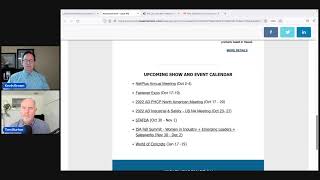
Yeah, very good. Well, hey, let's do this today. Let's end on time. We haven't done that in a long time. We're just, just a touch over. But I did want to mention in fact Tom, if you can go back to our around the Horn newsletter, back down to the bottom, just. We'll talk really quick about some shows coming up. If you've got other shows or events you think we should add to this, please let us know. We're happy to do that, but I leave tomorrow morning for Las Vegas till Tuesday with the good friends at NetPlus alliance for their annual meeting for their members. We're looking forward to meeting some existing customers and some new ones. The two ad events, numbers three and four, they're coming up. We'll be exhibiting at. Will be at staff to the Specialty Tool and Fastener Distributor Association. They've got big meeting at the end of October and then we just committed earlier this week to help sponsor the ISA Fall Summit which is the Industrial Supply association in Orlando. So back to Orlando for me and twice in the next 45 days. And so those are going to be some great events. If you're, if you're in the industrial world at all and you're not involved with the Industrial Supply association, please take a look at, at what they're doing. Their website is isapartners.org and they're doing some really neat stuff to support the industry. So we're going to be sponsoring an event there and, and enjoying some time with those folks. In fact, we've got somebody from ISA going to join us next week to talk about this event a little bit. That's kind of the last thing I wanted to hit is that over the next course of the next 45 to 6 or I'll say starting next week and out over the next 45 to 60 days. We have some pretty interesting guests that are going to join us. We've got kind of a, I'll say maybe even world renowned keynote speaker and author and consultant in the e commerce world that works exclusively in the B2B world. And so I've got a call with him later today to work on finalizing that. We've got some channel consultants that help manufacturers and distributors and independent reps work closer together. Got quite a few people coming on that. The schedule's growing with that. So keep coming back.
Folks.
We hope you enjoyed what the time you spent with us today. And we'll hope to see you soon.
Have a good weekend.
Thanks, Tom.
More from Tom



What does AI actually mean for a wholesale distributor #WholesaleDistribution


If your systems don’t talk to each other, your AI won’t either #AITransformation




This is why one AI agent isn’t enough for high-stakes decisions #WholesaleDistribution

