Around the Horn - Episode #110 Replay
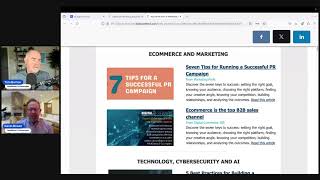
Episode #110 (Around the Horn) is a live-recorded discussion (Kevin Brown, Tom Burton, Scott Costa) focused on a recent U.S. port shutdown/strike and its downstream effects on distributors, manufacturers, and supply chains. The hosts debate automation vs. labor concerns, contingency tactics (stocking, shifting routes, air freight), and the need for frequent, transparent supplier communication.
Chapters
Sa Sam, Good morning. Good morning.
It's bright and early here. You have me sitting in the dark.
Yeah, well, you know what, you were up anyways, so it's good. Scott, you're in, you're in St. Louis.
Yeah, yeah, exactly. Thanks for having me back. I really appreciate coming on.
No, it's fantastic to have you. I am in Boulder, Colorado, so we're hitting at a conference. So we're hitting three time zones today and, and getting together. Scott, you're joining us kind of last minute. You were a great guest when we had you in the past. Very appreciative of you being with us in this setting. And we brought you in because you had done some great work yesterday, getting some good feedback on some labor issues and the, the dock workers strike. So we're going to chat about that a little bit. Why don't I really quickly do our little bit of housekeeping work because we're a little short on time today. We're starting early. We're going to cut things a little bit short, but we didn't want to miss the show. So we're doing it kind of remotely here today. But I'm Kevin Brown here as I am almost every week with my lifelong friend and co founder of Lead Smart Technologies, Tom Burton. Tom and I work together at Lead Smart. Lead Smart is a AI enabled customer intelligence and CRM solution that brings new and innovative insights into distribution and manufacturing businesses to gain greater insight on customer intelligence, sales teams and overall business views to help accelerate growth within distribution and manufacturing. Lead Smart is a sponsor of our show, which is why we talk about them there. But we get together every single week when we can. I always joke and say, unless somebody's in the hospital, on an airplane or stuck in the middle of a presentation or something, we get together. We have guests like Scott that join us that are industry leaders and thought leaders that can help us unpack the news of the week. What we do on our show is we review a newsletter that we publish each week. It's called around the Horn. And wholesale distribution and manufacturing goes out to about 10,000 people each week. If you don't get that, we'd be happy to send that to you. You can send us an email@helloadsmartech.com and we will send that out to you. And you can also go directly to the website for the podcast, which is www.aroundthehornpod.com and sign up there as well as well as looking at past episodes there. So we go live each week, as we said on LinkedIn, live, YouTube live, Facebook live. Later in the day, John, our producer and editor, takes all that data, puts it together and will be then on all of the popular podcast formats around the world. I think last week when I looked, we had been downloaded in over 60 countries. So kind of an exciting stat to start seeing. I didn't know that they were focused on listening to podcasts on wholesale distribution in Nepal, but we had downloads there. So we'll take them, right?
We'll take them.
Yep.
Time to miss anything there. Before we dive in.
Let's do it. I want to say good morning to Bob and Paul. Scott, you have a fan already coming in. It's good to see we have people here even though we change the time and we're on so bright and early. I guess it's not so bright and early everywhere else but just here, just.
There and you and you and anyone in Hawaii, I guess, and, and maybe a few other parts of the world. But Scott, before we dive in and talk about the news, let's talk about, Scott, your work with the Electrical Distributor magazine. Why don't you give us just a little bit of feedback on that so we audience can know who you are and where these great insights you're going to have in a few minutes come from. Sure, sure.
So we're the TED magazine is for the electrical distributor. The T is lowercase ed is electrical distributor. We're the publication connected to the national association of Electrical Distributors where the magazine's been in business for almost 60 years now. I've been with the magazine for almost 13 years. We've obviously changed radically over the time that I've been with the magazine. We've certainly ramped up our online coverage with TedMag.com and reporting daily news news that happens today. We post today like the dockworker strike, which I know we're going to talk about here. But in addition to some other things, we started A second website July 1 called Electrified with the capital ED at the end of it, which focuses on electrification, which is the new the rewiring of the United States through renewables and clean energy, which is a massive, massive under trillion dollar undertaking plus. And then we still do a publication, a magazine, it's digital only. We do 24 issues a year, not 12, not six, twice a month, the first and the 15th. So we just came out with our issue a couple of days ago. It is all digital. It's free to anybody. Just go to TedMag.com in the top corner. You see where it says current issue. You can click on that you can check out what we're talking about. It's filled with best practices strategies, things that are happening throughout the distribution community. So we really enjoy working on the publication. We work in a great association filled with really top notch thinkers and pass that information along as best we can and as creatively as we can, obviously.
But Paul Kennedy guy's kind of involved there, right?
Paul Kennedy is the NAED chair for the next year and what is it, eight months, I guess. And he provides a column every other month in the magazine. And I keep in close communication with him. He's one of our speakers at our regional conferences. So we talk about the content of that and I help him. We do rehearsals that, you know, the day before our meetings. We're, we're almost in constant contact, Paul Kennedy and I. So it's great to have. Yeah, it's great to have people like him as a part of my life, I gotta tell you. I mean, he's just a great guy and I'm not just saying that because he's the chair. We've had a long relationship and I always enjoy people rather than that, just the truth.
Very good. Well, I've got some time on the calendar scheduled with Paul in Chicago, a couple of weeks for a little social time and catching up and chatting biz. So we're looking forward to that. Well, let's, let's kind of dive into the newsletter again. If you're listening on the recorded podcast later in the day or sometime in the future, you would not be seeing the newsletter that we're reviewing right now. And you can certainly reach out to us to get that. But we're going to start off by talking about the port shutdown that started on Tuesday this week ended last night, or at least pushed pause, I guess is a better way to push, put, put a finger on that. So across the eastern US from Maine, down the east coast all the way across the Gulf coast was a shutdown of all of the ports. Large percentage of the goods and certain goods that come into the US market come through there. A vast majority of produce and things like that come through those ports. So really big risk to the supply chain in general. But we'll kind of talk a little bit more about the wholesale distributions and kind of the markets that we all serve. A little bit closer about that today. But Scott, the reason I reached out to you last minute yesterday, you've been a guest with us before and we enjoyed having you and want to get you back for a full show. But you made a post yesterday on LinkedIn that caught my attention right away. And you reached out to your broad network on LinkedIn and asked for some good feedback. So, you know, before we dive into some of the feedback, kind of our thoughts, the three of us, on what's been going on and then we certainly welcome any comments that come across from those that are listening live this morning. Maybe any other thoughts, Scott, from you or Tom, about what I missed about the overview of the, of the strike?
Not for me. Tom, anything you want to throw out there, go ahead.
No, I mean, I just, it, it sounds like obviously the, the strike, you know, got suspended last night. You know, Scott, be interested in your take on this on as it relates to what you think may be happening here. So are they kicking the, the automation can down the road a bit? Is this a strategic move from the management side of things to maybe give, you know, throw the bone over of some, you know, a pretty substantial pay increase? But really the big issue about automation is, you know, we're just avoiding that and maybe we can dodge it all together. What do you think is happening here, I guess strategically, or is it just what it looks like?
Yeah, there's, you know, I'm going to be as equal as I could possibly be. I'm not going to be a, you know, a pro business side or the pro worker side on this one. You know, there's, there's certainly, like you said, there's two big things at play is one is, you know, the union has reported, you know, these companies are making record profits without, you know, significant pay increases for the, for the union members. So, you know, I kind of, I get that side. I'm not trying to say that I don't get that side. The flip side to that is again, so they, whatever they agreed on a 62% pay increase that is, you know, pushed this strike back at least until January. You know, the second part of it, like you were saying, Tom, is the automation side. And the fact of the matter is if you're a business today and you're not embracing automation in some way, TED magazine going to be embracing, TED Mag is going to be embracing automation in some way between now and 2040, 2035. And I'm sure that the same thing is going to happen at ports across the country, whether you're on the east coast or the West Coast. So if you're going to be the last company, I'm not saying that you want to be the first, but if you're going to be the last company to embrace automation, you're going to have a hard time staying in business. So this just kind of pushes that automation thing. It doesn't matter if it's ports or McDonald's or you know, companies that make shoes. I mean automation, you know, Amazon's, their warehouses are fully automated for crying Outline. If we're not going to embrace this and accept this and figure out how to negotiate our contracts with, with automation being a part of it, it's really going to force some businesses into a tough situation. Maybe not today, but certainly in the very near future. And that's going to be an issue.
Well, I think, you know, I think you're right with all of that in. In to your point, Scott.
Right.
The two critical issues were the union is saying zero additional automation. Right. We're not doing this and we want. They wanted an 80% pay increase over the six year or whatever the contract was going to be. Right. So now we're at 61 and a half. I've got CNBC on in the background here, my hotel room in Boulder and 61.5% pay increase over six years. All right, that's settled. Right. But now we've got this automation issue. And you know, Eric Hoplin with the CEO of the national association of Wholesalers has been I think three times in the last week on live TV talking about this topic and this morning watching CNBC and reading some other things from Bloomberg and so forth. The reference point for this on the automation side is to Rotterdam and the port of Rotterdam is nearly fully automated now with very few employees in comparison needed safer environment, more efficient environment. Automation doesn't go on strike me it breaks occasionally. And to your point, look, I think there's a need for people there. I think it might just be a need for different jobs in that setting. Right. We talk a lot about AI and other types of automation on an ongoing basis that are going to augment people. So maybe we don't need as many jobs there because of automation. But I think my big struggle with this and we're going to get in and talk about some of the conversations we've had with industry folks and their feeling and preparations with supply chain with these things going on is the issue for them is that unlike, I would say unlike an automaker strike, I don't feel an impact from an automaker strike right away. A port strike, big input, right. 75% of bananas that come into the US coming to the Gulf coast.
Right.
So when you look at that, these types of strikes and the this was a pretty aggressive position from the union Right. That the words that were coming out of the union leader's mouth, Bloomberg said this morning, makes a million dollars a year in salary were pretty darn strong about crushing the other side and so forth. That's what I kind of struggle with from this standpoint is, look, I get it, you've got this group of workers that you're working to protect, but we also have the economy of this country that is going to be impacted by that. So that's where my struggles kind of lie.
Yeah, I think on the, you know, you mentioned Rotterdam. I, it's adopting, adopt or adopting automation. You're not being an early adopter. Right. It's not like you're the very first one to try it. So it's clear, I'm sure with the point reports that are automated, the value that they receive from those, both financially and overall, maybe on just the overall service and value to the customer. So to me, it's, it's an interesting. Your take, Scott. To me, this automation is inevitable. And I think by giving, if I, by giving them the, so to speak, the pay increase now and then pushing the other issue down the road, I don't know, it seems to me it makes it a lot easier to potentially start introducing more and more automation over time, especially since, hey, I gave you the big bone of the, of the pay piece. I just can't see how you can ignore that and just say, oh, we're not going to automate for six years.
Yeah, right. And an additional sort of angle to that is, I think, you know, a lot of folks were talking about, you know, during the strike, you know, prices are going to go up because, you know, like you said, we can't, we don't grow bananas here. We have to bring them in from other countries. So prices were going to go up, which is, and there was a concern about that. Well, you know, what with a 61.5% pay increase over six years, prices are going to go up because you know, that company's going to pass along, you know, their expenses. I mean, look at what the airlines did. You know, they were reporting record profits for multiple quarters. And then the pilots and the flight attendants union started saying, well, you got to, you know, they got similar 50% pay increases. And I travel, so I look at the price of plane tickets and guess what, they're way up. So this, I'm sure, is just going to get passed along anyway. And as you know, if you're going to take off your business hat and put on your consumer hat, consumer is probably saying, okay, well, if prices of bananas are going to stay around 49 cents a pound, then you're going to have to automate. At the end of the day, most people are probably going to say, okay, I mean, I want my bananas to still be 49 cents a pound. So this is what it's going to take. You know, it's. And again, I don't want to stab the working man in the back by any stretch because they do valuable work. And that's not the point that I'm trying to make, but I just don't know if I want to pay, you know, 99 cents a pound for bananas without automation.
Yeah, well, I think that's the case. And then when you look at the magnitude of what comes into this country, I was just, I took a couple screenshots yesterday. I was just looking at my phone from cnbc and, you know, this show is not about produce, but 82% of chili peppers, 90% of cherries that come into this country. Right. And then we start talking about what we're going to get to here in a moment. In a moment. Why we're here to talk about this today is what's the impact on an electrical distributor, pipe, valve and fitting distributor, H vac distributor, industrial, industrial safety, office products, whatever that might be. What are those, what are the, what is the implications that. So we'll get to that momentarily.
But I think we've got, you know.
This is a pretty big, big issue because, you know, and there was a comment made a moment ago, you know, about, you know, there's got to be a huge political component to this. I'm not, I won't claim I'm smart enough to really understand what's going on behind the scenes with those things. But you know what? There is one party that plays a lot more to organized labor or works too. And big election coming up, so never know, never know about the time.
If I'm fortunate enough to have my union contract expire, you know, 35 days before a presidential election and it's a major, you know, supply chain contract, then why wouldn't I politicize it? Yeah, you know, I mean, I guess that's, that's, you know, that's just the way it is. I mean, another part of this, too, that I think we, we haven't touched on much. Again, we talked about bananas because you can't, we don't really grow them here. It's hard today to build manufacturing plants in the United States and avoid ports. Just so we're clear. And again, I'LL take the electrical side. Everybody's talking about, hey sure, from both sides again, I'm not being included. You're from the Republicans, you're from the Democrats. We need to increase American manufacturing. It's hard to build factories today. Just so we're clear again, just taking electrical. First of all, we're short electricians. Anybody will tell. I talked to, I was at the NECA conference last weekend and every contractor that I talked to said we're way short on people. We have to turn down jobs that we would love to take because we don't have people to do the work. Flip side to that is doesn't matter anyway because we don't have switch gear. We can't turn the power on anyway because it's going to take 40 something weeks, 40 something months to get switch gear. So I don't have products to install anyway. So when you're talking about hey, we need to fix American manufacturing, we're still probably two years away from if we started today, we're still probably a couple of years away from just building the factories that are needed to make American products. So we don't have a resolution to importing key components or products that we need to be a functional society, basically. You know, I mean we just, we don't have what it takes right now to build more factories and that's a problem in terms of labor and products.
Yep. Well, Scott, let's dive in a little bit to to what you heard yesterday of what you can share. You don't necessarily need to say the who and unless it's appropriate, but you reached out to your network and when we were messaging yesterday afternoon, you mentioned you had heard from manufacturers, distributors and some manufacturers reps. My first question would be and maybe you can weave this in to what you share a little bit with. This is was similar sentiment between all three of those roles in the supply chain, manufacturer, manufacturers, rep and distributor.
Yes, very similar sentiment. In terms of one, everybody wanted to work together in the supply chain. Whether if you were a manufacturer, you wanted to work with your distributor partners, you wanted to work with your reps to make sure you were getting as much product going. You're a distributor, you certainly were working very closely with your supply chain partners. So there was no doubt that there was a lot of increased communication effort to try and make sure that the most needed products were on hand and were going to be available over what most of us just were saying was the short term, obviously because nobody knew how long this strike was going to last. So there was Quite a lot of effort to on the manufacturer side to get products into the country, whether they were going to shift, literally shift coasts, which I couldn't imagine what the expenses on that or load airplane. I talked to abb, they're fine with me talking about that. Loading products onto airplanes and flying it in instead of having it on ships. At least they're what they consider their key component parts. But there was, yeah, there was definite opportunities for constant communication to make sure that you knew where everything stood in terms of at least key parts to keep jobs or job sites function.
Right. So any idea from your experience and maybe others that might be listening could give us some feedback on that. I don't know what, what it does, but it's got to be significant. When you are putting electrical parts, which some are lightweight but many aren't onto aircraft, what does that, what does that add to your costs at that point in time?
Yeah, I would, yeah I would think that it's you know, cargo planes are big but not big enough obviously to, to ship like you know, like ships do obviously. So again, I'm just kind of looking at again what ABB sent us and they, they really again one of the things they knew this was coming so they were increasing inventory trying to get as much product into the US as they possibly could before last Tuesday. Yeah, it said that they were, they were just again I'm looking at what they say it's part of our standard operating procedure. Yeah, they're doing, they were data said that they were doing everything they could to remain unaffected over the short term in terms of the products that they had through air shipments.
So I mean I guess the way to maybe think about that is we don't put containers on aircraft, we put pallets on aircraft. Right. Yeah, exactly.
So you're certainly talking about. Right.
Yeah, so we're, we're probably talking about smaller components but that's got to add a very significant. I would obviously it's got to be double digits of what that adds to the costs of getting components in that trickles down. Right. We already have had. We're just working coming out of the COVID supply chain issues. Right. We're probably safely, it's safe to say we're out of those issues now. But now we've got this and you know probably a three day strike didn't have the impact that a week long. Right. But I think they were. There was a statistic I said, I think they said it takes was it three to five days post strike per day to catch up now, you know, we probably had some slowdown on some ships and some ships sitting out in some harbors waiting to come in. And we'll have those slowdowns. We'll probably come out of this pretty quickly. But I think the bigger, the bigger factor to talk about, we talk about this on the show quite regularly is so we had last year we had the threat of a strike on west coast ports. Didn't have the strike, did have a strike on the ports on the west coast of Canada. We had a rail strike in Canada earlier this year.
Right.
Which you might say, well, that's Canada. I'm in the U.S. well, guess what? A big part of the oil coming to the US Is coming on rail cars into the US From Canada, from oil sands or wherever else it it might be. Then we have had threats of a handful of other slowdowns. And then you push the things outside of the U.S. right. We got geopolitical issues, China, Taiwan. Right. That we're watching concerned about. We've got geopolitical issues in the Middle East. We've got the Panama Canal that was low in water and couldn't get enough containers through for the last 18 months. That's slowly improving now. And then you've got Houthi rebels that are throwing, you know, low cost bombs from, from drones at container ships right in the Suez Canal. And you start putting this together and we have a very different supply chain than we might have had even just pre Covid I'll say with that. Right. And so the volatility has probably never been higher globally than what it is right now in the overall supply chain. Scott, that's a big statement I made. Would you, you're probably tied a little bit more to this than Tom or I are. Would you agree with that statement from a volatility standpoint?
I would, I would absolutely agree with that. And, and I think, you know, there again, there's a number of manufacturers that are looking at different ways to shorten up the supply chain, which has been an issue for it's not like this happened, you know, last weekend. This has been going on for more than a decade. I think, you know, it's so much we certainly hear about a number of our manufacturers just within the 48 states who are like we're, you know, we're, we're opening up new warehousing or new production facilities on the west coast because we were east coast based and we don't want to make people wait two days to get copper wire or fittings or whatever it might happen. To be. So, I mean, we're, we hear that a lot. And that's going to be, again, I think that's going to be a key to some of these problems is shortening up that supply chain distance from where a product is made to where it gets delivered. It's not like I said before, though, it's not magic. It's not going to happen in a weekend. But it is definitely something that I'm hearing from manufacturers small and big about trying to kind of tighten up that distance traveled because of, like you said, these, these crazy things that are happening. You know, again, the fact that there's the rebels firing, you know, firing bombs from drones, nobody wants to be dealing with that, which is crazy.
No, it's, it's crazy. Tom, were you going to add something there? I'm sorry to jump in on that.
Yeah, I wanted to. We talked, I think it was last week, right. We were talking. There was an article, we were talking or maybe two weeks ago about the complacency that is set back in, in a lot of organizations about supply chain right post Covid. It's like, oh, wow, okay, we're back to quote, unquote, normal. It's not really an executive issue anymore, all of that. But you know, Scott, I think we were talking a little bit about this before we went on. I'm not sure there's ever a place where you can be complacent about your supply chain process. And you just never know right when it's going. Well, enjoy it while it lasts because it's probably not going to be permanent and you better have contingencies and other things on there.
I think.
I agree. And flexibility is tough. And let's add on tariff potentials that are going to add costs. If you wanted to manufacture stuff in Mexico, which by the way, Mexico doesn't have a lot of capacity left for manufacturing anyway, especially near the, you know, near the, near the borders of Kelly, of course. Yeah, yeah. So it's a, you know, innovation I think is going to be a key on the manufacturing side. It'll be interesting to see how they work from an electrical standpoint, how they work with their distributor partners to try and speed up supply chain issues over the next few years. Because I think this is where a lot of folks are going. No wants to wait 52 plus weeks for a generator. They're still doing that. That's been going on for four years.
I think there's a significant factor here though, that we should talk about a little bit. Scott, I'm really Interested in what one, what your thoughts are and what you might have heard. You know, I, I've spent my entire career in, in distribution and manufacturing and was a manufacturer's rep myself for about 10 years. And I just think back to the days, you know, and this was sold the agency in 2003, I guess it was. But you know, it used to be if you were a distributor and it doesn't matter what you're distributing, but you're a distributor, supply chain is like you got a fax from, you know, in the old days. You got a fax for old days. You got a letter from, from 3M or Honeywell or ABB or whoever it might be is, you know, in reference. There is, you know, about some issues. Then you got a fax, hey, you know, we're concerned about this and we may have to adjust some pricing or we may have some shipment delays or order now. And then emails started with that, well, now we're in a. And that people waited to hear from their suppliers. And I think now we're coming into a world where we've had, we've had distributors on this show that said that they're literally in communication about supply chain issues weekly or multiple times a week with all of their key suppliers where, you know, years ago it was. Yeah, for the most part things are just going to move along and we'll wait to hear from them. Any issues, what thoughts on that, Scott?
I think that's, that's absolutely the case. And again, technology and automation and communication has certainly provided that opportunity. So why not take advantage of it? You know, there's a, I'm looking at copper wire these days, you know, and there's only so much copper on the planet. Yeah. And China wants about 75% of it. And the United States is trying to rewire itself. So the competition is, you know, I mean like what's available and how do I know what's available and what's the price? The price is, you know, you know, the price changes every minute for crying deliveries for copper, you know, project out. But by the quarter, I guess they're projecting out toward the first of the year today. And so there has to, you know, I think that there are, that's why there are procurement people working in major positions that distributors these days, that's all they do. They need to know what's out there, where it is, what the price is, how fast I can get it. And those are now major roles that are being played at distributorships large and small again across the country. And Regionally, like, if you're a major, if you're Rexell, you've got dozens of procurement people and that's all they do, you know, and that's really, I think, been a radical change from, like you were saying when you were getting a fax, you know. Yep.
So what did you hear from your post yesterday and your network from the distribution side of things?
Yeah, yeah. So they were. And they were great. One of our distributors, you know, they.
They were.
It wasn't a surprise. So they were stocking up well in advance. You know, they said that they had at least 30 days worth of, you know, full, full stock products where they really believed that they would be able to fulfill all needs and not be impacted. And that's probably about as good as you can do. I mean, there's only so much warehouse space on the plant. You know what I mean? You probably can't do much better than.
Their.
Their approach was that they were going to maintain a higher level of stock materials and move them around their multiple locations as needed at their own expense to try and meet whatever those needs were. So they were certainly like, everybody was hoping that it wasn't going to be an extended strike, but they were certainly paying attention to it and had done some proactive work. And I kind of got. They didn't say this, but I kind of got the feeling that it was sort of one of those, look, you know, in times of trouble, in times when you might have a hard time, you know, sourcing products, we're gonna. We're gonna take good. We're gonna take as best care of you as we possibly can. And we hope that down the road you're gonna remember us whenever you need anything, you know. So it seemed like those who strategized well felt like it was really going to have a longer term. Yes, it was going to take care of everybody short term, but that was going to kind of create the tattoo, the stamp of, we're there for you all. We're there for you 365. Not just during, you know, what potentially was a 30 or 45 day. Yes.
So being a very short strike, probably didn't get to a place of allocations either, from manufacturers to distributor distributors to end users.
Right. I'm wondering a little bit about unwinding, to be honest with you. You know, again, some of the. Some of the manufacturers said, we're going to ship stuff to the west coast. Now there's massive expense there, you know, taking a boat around the, you know, through the Panama Canal, which is Hard enough as it is. So now they're going through some unwinding of saying hey, how do I turn this back around again, the lowest expense that I could possibly have. So there's yeah, still a lot of play.
That's a big, that's a big issue when you start putting. Sending a ship that's supposed to be going to the east coast, to the west coast in a lot of instances. But I also saw something of interest earlier this week. Tom and I are both born and raised in Long Beach, California. Funny, funny fact other than we've been friends forever, we were born in the same hospital. But the. I saw an interview of the executive director CEO, I'm not sure what his title was of the Port of Long beach and you know, the Port of Long beach, the Port of Los Angeles are just separated by a spit of man made peninsula there that they have. But if you put those together, I think they're combined, I think they're the third busiest port in the world. But the, the head of the Port of Long beach was talking about being interviewed on the local news is before I left town on Tuesday or Wednesday I guess. And he was talking about the, they would be interviewing him about the port strike and, and they talked about the implications in the port in Long beach and or la. And he was saying, you know, we're seeing a slight uptick of, you know, maybe a little bit of containers wouldn't normally be coming here. But it was really intriguing to me and I wish I could remember the wording but he was alluding to the fact that their unions in the Port of Long beach are not excited to have extra work because it's being pushed away from their brothers right in the Gulf coast and the East Coast. So now you had this. And if he was willing to even go there at all and touch that topic, you know that there's a pretty significant factor there of, you know, nobody being excited about unloading, at least unloading quickly. Anything coming that had would have been. Not been able to be unloaded in another spot. So that kind of got to me and made me a little bit nervous. When you think about again the issues that go with the supply chain that we work within, within wholesale distribution manufacturing.
So it sounds like you should automate.
Well, I searched that a little bit this morning before we got on and I didn't have a chance to or read the article but the articles that came up. But as we talked about the automation component of that there was a. I just searched Port of Rotterdam and one of the articles I saw was written in 2015 and it was comparing the Port of Oakland with the Port of Rotterdam and the efficiencies or inefficiencies compared to the two of those. And I'm thinking about, man, we've been talking about this, you know, I mean, 2015, nine years ago, almost 10 years ago. But it's a long time to be having not made really any progress in this country along that line. So we'll, we'll see what's next. So I guess the big issue is what happens in January as these parties will be talking throughout the holidays, evidently, and see what we come up with. Scott, any, any takes on any other takes from your you had mentioned manufacturers, reps, distributors and manufacturers reach out to you. Any other key takes that you saw or anything unique that came from the feedback you got from your network?
Again, I think the last take was again, the ability to communicate where we're at. And I think that again, the folks who communicated with me had not just a strategy to source as many products and create and bring into this country as many products or provide for their, if they were distributors, provide for their customers as many products as possible. They also, you could tell, really had a specific communication plan that they were not going to let anybody guess what was going to happen.
Awesome.
And I think that's a huge, you know, asset to any company. I mean, they obviously were like this is what we're going to do this week and the next day and next week or whatever, however long this takes. And I was really impressed by the fact that there was going to be they were going to take guessing out of the equation. And that I think is really essential to their success.
That's awesome. And you know what, that is a great place for us to kind of jump off on this topic. I'll add a couple things at the end is we live in a world where we can communicate instantly and to have any ambiguity in a supply chain discussion, you know, there's information we don't know yet. But to look across the supply chain and not be able to communicate efficiently and transparently is it's just unacceptable in this day and age. So I did with chief revenue officer of naw, popped a note up that Eric Hoplan from NAW is again on Fox News this morning walking through what all of this means and what's next. Dan Schubert posted that Maria Bartiroma on business this morning and about what we might be seeing next between now and January. That's coming up. Any other thoughts, Tom or Scott, on.
This No, I think we've, I think we've hit it.
Strike.
I, I, I'm interested to see Kevin. You're, you're breaking up and you're, Is Kevin frozen for you, Scott, as well?
Yeah, he's frozen a little bit for me too.
But I think the big thing we'll have to see what happens in January and I think part of that could be a function of who our administration is come January. So it'll be, you know, at this point it's a, it's up in the air, but anyway should play out with some interesting stuff. All right, Kevin, I think you're moving again, so maybe not. Maybe not.
Well, Scott, thanks for being with us. So hopefully you guys can hear me. Be able to hear me.
Yep.
Good. Scott, thanks so much. You know, coming with us last minute, we're going to get you on the, on the docket to join us again soon for a full show. And I don't know if you're going to be in Chicago for any of the upcoming electrical buying group meetings in next month, but if you are, let's make sure to, to connect during that time.
I will be there the end of October, definitely.
Very good, Very good. Let's make sure we make sure we break some bread or spend a few minutes together.
You got it. Thanks you guys for having me. I really do appreciate it.
Thanks, Pat.
Good bye.
Hey, Tom, let's, let's kind of throw the newsletter back up. Let's look at a couple articles and we'll call it a day. How's that?
Yeah, as Bob said, I think there's a solar flare here in Boulder that is making you.
My apologies. Yeah, but my apologies. So we'll just kind of, just as we remember, we talk about each week we talk about breakdown, the economy and the supply chain. We spent the whole part of today's show talking about the supply chain, which I think was of real value to us. We had some info about manufacturing contracts in September. Good article there from Industrial Supply. There was some good news to the economy this morning though, Tom, with the jobs reports and unemployment. Did you get a chance to read that? How are you feeling about your stakes?
Well, I mean, it's like I said, you can't trust these statistics, I don't think.
But wait 10 minutes.
Yeah, yeah, but, but certainly the job report was much better than expected. They also revised prior reports to be higher than what they were significantly, I think it was 72, 000 jobs. You know, I mean, I don't know what to think. Right. You've heard, you've heard a lot in the last week about with pal, talking about, well, we're going to look at the data, we're going to make our decisions. As Bob said, they'll just adjust the report down again next month. Yeah, exactly. I think it's like, hey, how do I turn the dial based on what I want to hear, what I want to hear given any week. So that's why. So I don't know what to think about it. But if you were to look at the data and there is one more jobs report that comes out in November before the next Fed meeting. So you know, if that report is higher again. Right. Significantly or if they decide it's going to go down, I think that's going to determine a lot of what's going to happen at the next Fed meeting. But yeah.
Go ahead.
Anyway, I, I mean I, you know, you could say there's their politics behind, you know, but again there's, I think this would, I think this would be the last job report possibly before the election. I think if the election's on the 5th, and I think you're right, there would be one more before the election. I believe.
We have to look that up. I don't, I don't see the jobs report substantially impacting voters at this stage of the game.
I don't think it's a job report. I just think it's quote, unquote, shows a healthy economy. Yeah, right. Which is what it's trying to point to. So.
Yep. And I think it's interesting, right, that we're, I don't know, a lot of conspiracy theory potential with some of these things as, and the timing of them as, as they come together. But we'll have to see. Watching the pundits this morning on, on CNBC at least talked that they talked to three or four different economists and then the opinions of their economics team that they have. There was only one person said no more cuts. Everybody else said at least one more cut this year but 250 basis points versus 500. So we'll see what comes out of that. Go from there. So some good news out of The Industrial Distribution Big 50 list has been released. So if you are interested in seeing who the top 50 are in, in distribution from an overall growth standpoint, revenues, product categories, so forth, check out industrialdistribution.com Tom it's probably time for us to kind of wind down today, but in our E Commerce and marketing section we've got a handful of good articles each week we publish the Newsletter with the technology and cyber security in the eye segment. And then we also talk about sales and M A. And all good articles will be posted this week. I think all total. We've probably got 15 great articles in the newsletter or so this week.
Yeah, no, I agree. And there's, there's some, there's some here that I think, you know, this. The solution selling one, interestingly enough, was quite good. Is really talking about, you know, solution selling right is salute selling a solution. But as it says here, the biggest challenges we have in sales is recognizing is the customer recognizing the problem. Having them, you know, the customer being able to define their problem, understand their problem and take action about it. So it's kind of like going back in the sales process and saying how do you create that demand that actually gets somebody to understand the problem and the opportunity that's there. So I thought this was a good article.
I can't help you if you don't want to be helped or don't understand the problem.
Good.
There are some good tips in there on conversations and communication. And then in our People and Leadership segment, we had a couple articles about generative AI1 relating to having policies within an organization and then another one about training within an organization. So we've added that earlier this year, our People in leadership segment. So those are some good articles. So Tom, let's start our wind down for the day here. I really appreciate everybody being with us. I'm sorry about my hiccups with my solar flare as papa.
Everyone know we're leaving early because you've got a. You're at a conference and plus you've got to go deal with that solar flare so well.
And I've got to get to this conference and get a flight home home next week and then three straight weeks on the road of four different buying, group and trade association events in three weeks. So a lot of movement going on, but good times out there. Look forward to seeing a lot of industry folks over the next few weeks. So as we wind down, the quick reminder, what we reviewed today and talked about was just a this is probably the first time we've done this where we've spent most of the show on a single topic. But the supply chain issue is getting more and more complex all the time. So we appreciate everybody that was with us today, certainly Scott joining us. We do this every week. We review our newsletter around the horn and wholesale distribution. If you don't get that newsletter and you would like to feel free to reach out to us@helloadsmartech.com we'll get that out to you every week. And you also go to the website for the show, www.aroundthehornpod.com and see past episodes there. And we'll look forward to people joining us again in the future. We think again, Scott. We appreciate our editor and producer of the show, John Taylor, that takes care of things each week. And obviously, we couldn't do this without the support of Lead Smart Technology. So, Tom, that's it for me. I'll check in with you on my way to the airport later. How's that?
All right. Sounds good. Thanks, everyone. Have a good weekend.
Thanks, everybody. Have a great weekend.
More from Tom



What does AI actually mean for a wholesale distributor #WholesaleDistribution


If your systems don’t talk to each other, your AI won’t either #AITransformation




This is why one AI agent isn’t enough for high-stakes decisions #WholesaleDistribution

