Around the Horn - Episode #12
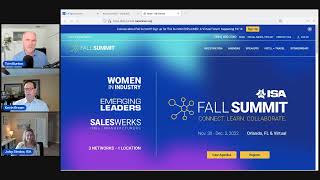
Tom Burton and Kevin talk with Joby Strobo from ISA about manufacturing trends, remote work, and Amazon's B2B push. The ISA Fall Summit runs Nov 30-Dec 2 in Orlando with keynote speaker Joey Coleman and tracks for emerging leaders and women in industry.
Chapters
Good morning, everybody. We are live and we have definitely kicked up our game today. Kevin. We have Joby Strobo, the Director of Strategic Initiatives, with us at ISA and really helping us take this to another level. So welcome.
Hi, guys. How are you?
Good. Good morning. It is still morning there, right?
It is morning.
Morning in Austin.
Yes.
Yep.
It's good to have you with us, Joey. We appreciate it. So I think we'll. We'll get diving in today. We're going to do kind of our normal working through the. The newsletter points that we sent out early this morning. And then we're going to kind of dive in later in the show with. With Joby and talk about some of the ISA initiatives, plus a couple other big events coming, most importantly the big Fall Summit. So we'll spend some time talking about that today. But, Joby, we're going to ask you to dive in as we kind of chat about some of these other topics as well, if you have thoughts or ideas about it. So. But Tom and Joby, before we get started, I kind of wanted to mention what we do every week and kind of describe pretty quickly what. What we do here with around the Horn. This is. What number is this, Tom? 12.
12. Yeah, we've done. We've done actually now a quarter or 90 days worth.
Three months worth.
Yeah, three months worth.
And people are still coming. It's pretty cool. Yeah.
So, yeah, going for the next three months. Yeah. Right. That's.
That's. Well, we got to make sure we're surviving through it, man. A lot happening, fun stuff going on with lots of travel. We're going to talk about some shows and events at the end of our session this morning as well. But again, what we do with around the Horn each week is we try to bring together both economic data, technology data, kind of what's going on in the general world, and how that impacts wholesale distribution. And then on top of that, we try and talk about a handful of key items at M and a new product announcements, that type of thing. And we bring that in from not just industrial distribution, not just oil and gas or any one particular arena, but we try and kind of bring a. A broader scope so that we send that as this email every week, get that out to everybody early on Friday mornings. Which, by the way, if you don't get this around the Horn email that Tom mentions there, do one of two things. Check your spam folder. And two, just send us a direct message. You can put a note here in the comments right within. Whether you're watching this on LinkedIn, YouTube Live or Facebook Live, you can put a note in. We'll see it and we'll make sure that you get it. Usually each week we get a couple of people that aren't getting the newsletter that want to get it. So that's kind of the reason we're here. We're trying to share some information, get some conversation going with folks and let's kind of get started. But before we do that, we're going to try something new because the format that we use for broadcasting this doesn't give us a lot of feedback. We would love to hear wherever you're at today, watching the show with us, pop a little note and tell us where you're at. You know, if you're on the East Coast, Joby's in, in Austin, Texas. I'm in South Orange county in Southern California, near Laguna Beach. Tom's up in Santa Barbara. So let us know where you're at. Pop a little note in the comments. And then as we go on about the day, feel free to share a note or an idea in those comments about your thoughts on the topic or if you have questions for us, let us know. So let's dive in, huh? Anything to add?
No, I think you covered it. Well. Let's, let's get into it.
Let's do it. So I think that first article that we talk about, about, you know, just about each week we mention something about manufacturing and what's going on in the world out there. And, you know, in this particular article, I think the takeaways for me were that, you know, the figures that they show in this say that they're, you know, there's expansion overall in the economy, as I mentioned, for the 28th month in a row, but that while it's expanding, it's at the lowest rate it's been since we've started the recovery of the pandemic. So, you know, what that really says and makes things feel like is that there's a little bit of caution, right. Coming into the, into the marketplace, the environment from a manufacturing standpoint, people are probably starting to scale back slightly on inventory levels, wondering what's kind of going to happen next. But some of supply chain issues are easing a little bit. Some of them are still in place, but I think folks are kind of balancing out their manufacturing, which is what we're seeing right now. Now.
Yeah, it's really interesting. You know, you, I don't know if you saw the, the job report and welcome. Philip. Phil, I'm sorry, from downtown Plainfield. He's near the Indianapolis airport. Yeah. Run over to St. Elbo's for us and get us a steak.
So Phil and I were at the same event earlier this week, and that's what we were chatting about. Right. Is some, some spicy shrimp at St. Elmo's.
But anyway, what I was about to say is, you know, if you saw the job report this morning. Right. The job market is still really, really strong. And if you look at the economy, it's very, very strong. And the fact is, is we're. We, as you know, the, the federal or all of us are trying to slow it down. I kind of look at it as like, you know, the plane, when it comes, when it lands and it throws up the things and tries to slow this plane down and tries to keep the momentum. Yeah. The flaps going and where the economy seems to be very resilient. Right. I mean, there is some definite slow, but at the same time, the resiliency, it's, you know, hey, I mean, that's what we're here to do. Right. This is what we do in this country is we grow and we succeed, and it's really hard to kind of tamp that down. So, you know, I don't know, it's going to be interesting to see how this plays out because it's certainly not caving at this point anyway.
Right, Right. It's not like a traditional, you know, slowdown or intercession. There's a lot of optimism as well. So it is sort of a wait and see kind of a thing. You know, like Kevin mentioned, you know, we're being cautious but optimistic as well.
Yeah. And I think the optimism and the opportunity and the things that are, you know, still, you know, taking place are. Are maybe outpacing the caution or at least staying equal. And I know maybe the Fed reserve and all of that would like our caution to happen a bit faster, but I don't know. I mean, that's just not the. It's just not the world we live in. Right.
It's not how we're, you know, we've talked about this a lot over the last 13 months, as you mentioned now, and you know, what concerns me about this is where. And listen, I'm the last one that can be a pundit about, you know, economic theory and so forth, but to me, it just feels like we're using the Fed, Wall street, everybody is using these evaluation methods that are 30, 40, maybe 60 years old, some of them. Right. That we've just been looking at. And we live in a different World, right. The world is flat. It's, you know, we can be doing business in an hour. We could be importing a new product because of Alibaba or other online platform platforms in, you know, we can be doing businesses any country around the world, basically, you know, the next day, just because of the technology and the tools that we have. But those aren't necessarily being factored in, I don't think, very well to this. It's like, well, if we have X number of months of, you know, lack of gains or this or that, and then now we're pre recession and then we're, you know, nearing recession and I don't know, I don't think we live in the same world that we live in when those concepts were developed. And that's why I think we get this feeling like if you, if you turn off CNBC or CNN or Fox Business or Bloomberg Business or turn any of those things off and look at what's happening in the economy, in manufacturing and distribution, things look solid, right?
Yep. Well, speaking of the world changing, the second article certainly reflects that really well that, you know, there. And I guess this kind of comes back is that CEOs are saying they're considering cutting jobs. Certainly that isn't being reflected in the, in the employment numbers right now. But then remote workers may be the first to go. Now, obviously that's probably someone's opinion, but I think that, boy, there's a whole lot that could be looked at on that, you know. And Joby, you were saying before we got on here, right, about how just in your business, how much you can attract more talent by being remote and in different places. So if everyone's going to go back and say, well, everyone has to be in an office, what does that do to your ability to attract talent? And it's just we've learned a lot over the last couple years about how remote can actually be of value.
Absolutely. I mean, we're a nonprofit, obviously. And so we what we, we do of course, make profit so we can serve our members. But in order to do that well, we have to attract the best talent. And that often times is nationally. And it's really served us well the shift to fully virtual because we've been able to do that, you know, otherwise we, we'd all have to live in the Pennsylvania area, which is a nice area. But it may not, it may not attract all the talent that we need.
Right.
To serve our members the best way that we can. And it also, and this is, this is different than our members, our Members have other challenges with remote work and such. But for us not to have overhead, cost is a huge thing. It enables us to hire an additional person to have a producer on staff that helps us do video and online marketing. We, you know, we have a brilliant marketing department. So we're, I wouldn't say we're an exception. I know that there's chatter about bringing, bringing people back to the office. Like Tesla has a huge factory in Austin and they've, you know, Elon Musk has really put the. He's. He's told everybody we got to get back to the office. Totally understandable for his world. But I don't think it will all go back to the same way. I think that there's been wonderful benefits from having remote workers around the globe.
You know what's interesting, There's a couple of things that come to my mind with that we can expand upon this a little bit further. But you know, we have all these businesses that, you know, almost three years ago got forced. Right. Worldwide to go remote. And some responded really well because they maybe already even had a policy of allowing, you know, people to work from home a day a week or something like that. I was just talking to somebody a week or so ago about that. I think it's actually, I want to say it was Net plus Alliance that was already doing that, if I'm not mistaken, that they already had a policy that you could work from home one day a week. So companies that were already doing that pre pandemic really responded well when everything went crazy. Something is likely to happen again. Right. Whether it's a hurricane through South Florida or it's another pandemic or whatever it is. So I think this hybrid model is really going to play out long term to fit well for most organizations.
Absolutely.
Well, I think and we can move on. But I think the joby to your point, the ability to hire a diversity of talent and you know, even in the Philadelphia area or Pennsylvania area. Right. It's not that there's not a diversity of talent, but there's a limited pool relative to everyone who's trying to hire there. So it's just, I don't know, it just seems kind of. Anyway, you're. You definitely reduce your opportunities as you. Yep. As you do that.
It's an interesting kind of. In closing on that is just. Just probably joby. When was it? It was like two weeks ago. You and I got on the phone to kind of talk about our role in your upcoming event. I think so. So it was, I think the Week before. So about three weeks ago, Brendan Breen and I, the president of isa, we were on the phone for probably an hour one day. And this was not the topic that we got on the phone about, but we spent 20 minutes talking about this whole concept and what's going to work and what will really play out. And I think what we both left with is you're going to be in trouble if you don't have at least a hybrid program within your organization. That means different things for different companies and probably most importantly, different roles within a company. And there's going to be plenty of companies that are going to go to complete remote like ISA has, and there's going to be people that are hybrid like we are. But I think we have a lot to learn about this over the coming years.
Absolutely.
So, Kevin, in the interest of not spending all day on the, on one here, what do we. What's the next topic we want to hit on Amazon?
Yeah, let's chat really quick about that. Cause that's really important to wholesale distribution, right. Amazon got into the B2B or A wholesale distribution world trying to sell the businesses versus consumer years ago. The story that they've even acknowledged in some reports and some interviews is they looked at the. I think at the time was the $3 billion a year that Grainger was doing online and said, well, wait a minute, you know, we have warehouses all over the country full of boxes and we don't care what's in the box. Right. I was, I was at a meeting one time at Amazon and somebody there told me, they said if, if it's. What did they say? Legal, reasonably ethical in some other term, and it can go in a box, we'll sell it. Right? And so that doesn't matter, right? If it's a hammer or, you know, a vice, the hard hat that's going to a construction site, or it's something for our home. They, they want to be there. But they did some interesting research here. It wasn't a big sample group. I think it was just under 500 companies. But they're talking about 91% of buyers prefer an online purchasing model for themselves. But it's interesting when you kind of break that down a little bit. I looked at the Numbers and in 2021, their survey said 56% of buyers said they plan to make at least 40% of purchases online. This year, that number went from 56 to 68%. But this is the crux. And Tom, we talk about this a lot about omnichannel buying or Having a broad presence so that buyers, because you can talk about this and follow up about buyers changing is it said only 2% of total respondents reported that they plan to purchase exclusively online.
Right.
So that's powerful. So what we're seeing is this curve going up quickly of companies that want to do online purchasing, but it's staying low that they want to do that exclusively, which really speaks to wholesale distribution to be online, have a strong E commerce presence and allow that omnichannel process.
Well, and I have a feeling if you peel the onion a bit more on this, you'll find that they're using the word purchasing. But what they really are saying is researching and doing the homework and doing due diligence and having the option to do. And then actually the transaction may occur in a lot of different places. So you know, they may go to Amazon, read reviews, look at things, even throw something in a shopping cart. But that, that doesn't mean that they make the actual transaction there. So I think that's probably, you know, again, if you peel the onion, you might see any. Something like that.
Yeah, I think you're right. I think one of the interesting things that I would love to see a statistic on, right. And, and I can only base this on, you know, my buying habits and, and discussions with other people, but I would love to see it see a statistic of a B2B buyer, let's just say an industrial supply buyer at the moment as an example of how many of those people had got an email from a wholesale distributor about a new item or a special, went and looked at it on that website and then quickly looked to see if it was available on Amazon because so many people, and I'm, I would say most people have an Amazon account whether it's a prime or not, you know, not a prime. And we have a confidence in that process. Right. I go through here and I mean my process is I throw out the best reviews and I throw out the worst reviews and I look through this and say this is right. And I may still go buy it from somebody else. But that Amazon review process and how do they look on Amazon impacts my decisions. And I would love to see a statistic on B2B buyers that says how many of those, look at those on their, you know, it might be the wholesale distributor that they have a contract with, but how much do they also research on Amazon and not just that wholesale distributors website. I think it'd be an interesting stat. I bet it's really high.
Oh, I'm sure. And I'm sure that, I mean, we know, right, that we know the research is taking, not just on Amazon, but it's taking place all over the place. And then the purchase, the transaction is going to be done well, based on convenience, based on protocol. Right. If I have to have a PO or something like that, I may have. I mean, there's just all, all kinds of different things that determine that influence the transaction. But the decision making process is a different, different animal, which is definitely omnichannel.
I was talking to a couple, you're right on track with that. I talked, I was talking a couple weeks ago with Ian Heller from the Distribution Strategy Group. And if you guys don't follow Ian and Jonathan there or listen to some of their podcasts, check them out at Distribution Strategy Group. They have some great insights. But we were talking about E commerce and they had just done a session and you know, the reality of it is, is that people are starting to buy more through web, you know, wholesale distributor websites. But, you know, the conversation was, the reality is that people aren't actually doing the transaction there. They want to be educated there. They still are looking for the, you know, typically the human interaction. We're moving to more of that.
Right. And that's sort of what I was, what I was thinking about when we were talking about this Amazon report. I still believe that business to business, business is coming from relationship building and that sort of ties into what ISA is all about and what associations are all about. So. But it's hard to track that. Like you were mentioning Kevin. Like, it's like, well, how do you, how do you track that? Like they, you know, saw different prices and, and that, and they initially bought online. But what else went into that? That purchase?
Yep.
Yeah, I mean, that whole area, you know, sometimes people call that dark social or whatever you want to call it. Right. You can't, you can't pin down the direct attribution to that. So what you have to be able to look at is, okay, well, you know, as I bring on customers and I build relationships, you have to understand and talk to those customers to understand what they're doing. Right. And if you start talking to them, you'll understand they're doing what we've just talked about. Yeah, I'm going to Amazon, I'm checking out Google, I'm looking at all of these different things. And you don't know that. Right. You don't have those attribution datas, you don't have that touch point. So therefore your strategy has to be okay, how Do I make sure then as that person is doing that research, how do I influence them in the best way possible? That's going to lead them to become a customer of mine, which.
Absolutely.
I think we have another episode on that. Kevin.
Right?
Definitely kicked up our game today, Kevin. We have Joby Strobo, the Director of Strategic Initiatives, with us at. Is that yours? Okay, let's move on. I think they're telling us we need to move on. Morning. Morning in Austin.
That's weird.
Do you have LinkedIn running? Kevin? Okay, can you. Can you hear us still? We don't hear you now.
He's on mute. Can you hear me?
I muted because of that background. I don't know what that is. With Joe being talked about some of the ISA initiatives.
All right, well, I'll keep going. I don't know what's happening.
Let me see. I'm gonna mute, make sure it's not something, but anytime.
Okay.
Okay.
He's in stereo with us. He's hearing us from every angle. So I think, you know, these other items here on our. On our last part kind of aligns with some of the stuff that we were talking about earlier. Right. There's certainly a lot of activity taking place. M and A activity, acquisitions, consolidations, you know, strong earnings reports. All of those types of things still continue to be occurring in this industry despite, you know, quote unquote slowdowns or threats of slowdown and all of that. And Joby, I would suspect, you know, you work with a lot of companies all the time. Are you seeing similar. Similar things or similar, I guess, results with the companies you're working with is that maybe there's some caution, but there's still a lot of optimism and a lot of growth.
Yes, I would say, for sure. We talk to members all the time. I mean, that's. That's one of the. The things that I really enjoy about my job is I get to connect with different Men members, be that distributors, manufacturers, IMRs, our business solution providers all the time. And that is not, at the moment something that comes up in conversation a lot. It just doesn't. I think people and companies right now are moving forward. I think, Tom, you were the one that mentioned that that's sort of how America works. We just get in there and work. And so we're not. We're not really seeing that at the moment. We're not hearing that so much from the members. It doesn't mean that that slowdown isn't happening, but it's not. It's not the shadow over, if that makes sense at the moment.
No, they're focusing on the job at hand. Right. And their business objectives and, and what they do. And, you know, we all have. I mean, heck, there's barriers all the time that we're going to run to. There's pandemics or economic barriers or whatever, but we. We just kind of keep rolling. So. Interesting to see that. Kevin, are you sorted out or.
Yeah, you know what? I had a separate browser open in Safari and somehow it just started. Yeah, whatever. You're the tech guy here for our company. That's embarrassing. But here we go. So I was listening to you guys in the same time, so my apologies for that.
Well, let's jump in and talk a little bit about the. Your show, Joby, and, And you know, what's happening at the show and, and just fill us in.
Yeah, Maybe before you get started and you. You might have done a little bit of this while I was away, but maybe talk a little bit about ISA first and, you know, the whole concept of what the mission is, and then let's dive into the fall event.
Sure. Yeah, absolutely. So ISA is a unique organization within the channel, meaning that we're association that services very different sectors, so manufacturers, distributors, IMRs and business solutions. And we're the only association that services everybody. And so our mission is, of course, to deliver the best education, networking tools and strategies for each one of these members with the end user in mind. So we're really leading that channel forward, and that's what we do. And our vision is to become the leader in all of those things. ISA really had a good year. Like a lot of organizations coming out of the pandemic, whatever that means, we experienced a lot of change. We had a leadership change. Brendan Breen came on as our president, and we had a little bit of staff change. Positive, positive change. And, you know, we. I was telling someone yesterday, this is the most exciting and challenging and amazing job that I've ever had, because every day we get up and we say, what can we do today to further our mission and to help our members more? And it's like an idea factory. We're always working towards those things. So something that our board has challenged us to do this year, and rightly so, is to really think more strategically about our initiatives and our goals. And. And that comes from listening to our members. We've really listened and we've gotten feedback. And of course, the pandemic, like a lot of organizations, gave us a pause to sort of gauge what we've been doing, find A way to listen to that and pivot a little bit to do it better. So that includes more education, more engagement, more value for my esa, but really more networking, more opportunity for each one of these. These companies types in our membership to engage together and network more and do business more. And I think that's what we do best. So, yeah, I think it's another question.
Give me a quick question before I forget is, you know, you mentioned you're the only association that deals with really all of the different constituents in the ecosystem. Do you see that? A lot of what you're doing is helping to increase the overall power of that ecosystem and how these companies partner together, work together, communicate together, because this ecosystem and wholesale distribution, wholesale distribution doesn't exist without this ecosystem. So it seems like the power.
Well, yeah, and that kind of goes back to what I mentioned about associations earlier. It's funny, I've worked in associations, not in this industry, but for the past nine years or so in health care and then a different industry and then now I'm in the industrial supply industry. But you hear sometimes from naysayers that associations are sort of going away, right? Oh, associations are old school and they're dying. And I vehemently disagree with that. I think especially now that our world is more global and virtual, associations are about creating community and about expanding beyond a location. And it really does bring people together. I mean, just in our, you know, our networks, our three networks, which I'm going to talk about for our fall summit. ISA is enabling people all over the US and outside of the US too, to sync up with other folks that are in their industry and specific to what they're doing and learn from them. And, and that of course encourages business, like you're saying. Tom and I, again, I think that's what we're really leaning into for 2023 is how we can encourage business relationships and do that better.
Interesting.
I think that's, that's a great, great answer to me from that. And what I really like seeing and really appreciative of is watching isa's involvement in almost partnership with a lot of the buying groups as well, because they have a similar scenario, right? They've got members they're working hard every day to provide value to. But when you start putting the affiliate distributors, the NetPlus alliances, some of these other groups together, that partnering with isa, it's kind of a win win because especially when you see the events, right? And it's nice because for us as a partner, a supplier partner to a number of the trade associations, when we're at your event, we get to interact with them as well. Right. So we're not only seeing your membership, but we're also seeing those other folks there. It's interesting. You know, I've spent, I think, you know, I've spent 30 plus years of my career in the industrial world and you know, I've kind of for most of my career known of isa, but there was a number of years where ISA in general kind of, I think was just maybe a little back burner for a lot of people. And I think, you know, that your prior president, before Bradley Brendan joined as president, was boosting things up some. But now I did there just feels like there's a big momentum.
Oh, absolutely. I couldn't agree more. And again, I think coming out of the pandemic and, and doing our ISA convention this year in Houston in April, we were like, what's going to happen? How are people going to take this? Are they going to come? And we brought down our registration expectations just because it was a whole new world we did not know and we exceed seeded those quite a bit. And so again, you cannot do everything virtually. It is about relationship building, it's about connections, mentorship, you know, peer companionship and that is face to face in a lot of ways. And that is what associations and primarily ISA can, can do for the industry.
So I think the takeaway with this before we jump into your talking about the Fall Summit is get involved. Right. And I, I've been trying recently, been introducing quite a few people that I, we do business with that are. And then I know have been introducing them into, into Brandon and need to start doing that with you and the rest of the team as well. And you know, the more that are involved, the better this becomes for everybody.
100 great segue into the Fall Summit. So very quickly, because I know we're kind of out of time here, we're.
Good, we'll keep going.
We want to talk. So ISA has three different networks, which we call them within our organization and each one is very unique and powerful and has a loyal group of folks that really operate this and make this what it is. So the first one is our Emerging Leaders group and that is for young professionals. It's for Everybody that's under 40. And what we're doing here is offering mentorship, peer group learning, togetherness and then also education for these folks so they can become better participants within their organization. They know more about what's going on in the economy, they understand more about business cycles and they're able to take part in discussions and conversations within their leadership so they can contribute more. And we have as selfish a little bit for this group. We've had several of these folks that have gone through this program throughout the years that have ex. Accelerated their career within their organization and come back to serve on our board. A really good example of that is Maria Ford with Stanley Black. And Deckard was just the chair of ISA and she went through this program and it speaks to it just really wonderfully. So, so we're really excited about that. The second network that ISA has is our Salesworks Network. And this one is pretty unique and exciting. So this network is four IMRs. And I'll skip to a little bit about the Fall Summit later about what the Sales Work Network for the Fall Summit is. It's for IMRs and manufacturers, but what Sales Work is doing is creating two different certification programs for IMRs to become better at what they do. So it's sales training and it's also business planning and learning about their partners so they can make better connections with the manufacturers within the industry. And the final network is one that's near and dear to my heart as I am the staff champion for this network and it is the Women in Industry network. And this again, super excited group of people that are behind this, women within our industry that power this, that push this forward. And it's about inspiring and empowering women within this industry which is typically male dominated and being able to create a group that helps with professionalism, leadership skills, peer mentorship, friendship connections within that group. So we're really excited about that as well. Long story short, so we used to have three different summits throughout the year for each one of these networks. And last year or a couple years ago we sort of looked at this and decided that it makes more sense for the, the networking and the engagement like we just talked about, which is what ISA is really good at is if we put these groups together and have a larger summit but have an opportunity for each one of the networks to be together by themselves. So first, everybody's going to come to Orlando, Florida, November 30th through December 2nd. It's going to be exciting. We're going to have a wonderful first day of a keynote. His name is Joey Coleman and. And he actually talks about the relationship a customer, a relationship with a customer cycle which pretty much all people within a company have to touch somewhat. And he's got a really great take on it. He's energetic and exciting. So everybody's going to see that shared keynote, we're going to go into a really wonderful opening night reception with all groups. So lots of connections, lots of networking there, a lot of fun. And then on day two, which is December 1st, we're going to break off each one of these networks. So emerging leaders, salesforks, IMR and then women in industry. And each one of the networks is going to have a full day of education dedicated to them. So we still, we get best of both worlds networking and then education and specific time with that group. So very, very high level here, kind of going over some of the education for each one of these groups. Like I mentioned with emerging leaders, what we wanted these folks to come out of this event with this year is really getting a better understanding for the business as a whole. So that's understanding business cycles and using rates of change. It's thinking more like an economist and being able to calculate your rates of change and communicate that back to the business. Forecasting is another big one. And then forecasting competition too. And then we're going to hear from Maria Ford, like I mentioned and her journey from an emerging leader to a C suite executive. So really great, great education there. Something to capitalize and, and build upon for these folks. And then going into the second networks education just a little bit. So this is for sales works and it's for IMRs and manufacturers. It's the one that you guys are going to be participating in. So super excited there. So again, the whole concept behind this is strengthening the manufacturer and IMR relationship by becoming true partners so they can business plan and learn how to maximize traction collectively align expectations and develop better sales goals as a team. So this whole agenda is based on that. We've got a few sessions that just are about planning. So manufacturers will host IMRs, they're going to get at tables, they're going to conduct actual business plans to put together for 2023. We do have some sales training. We're going to have a session called Just Negotiate. I think we all could use a little bit of, a little bit of sharpening our skills there in this world. And again, each one of these groups is going to end the day with a reception just for their group. Now moving on to the last, the last education track was, which is the women in industry track at the fall summit. So our committee really wanted to create the education with a circle theme of leading with intention. And something that women in industry has done in the last few years recently is become more inclusive to all titles within an organization. So initially this started out as a Women executive group. But we've decided over the course of a few years that that's not what we want to represent. We want to make this education and group applicable to all women within the industry and any men that are allies as well that are interested in this, this education. So the education surrounds around confident communications, learning how to speak up, learning how to unmute yourself. There's going to be a peer led by the Women in Industry leadership team roundtable session and we're going to discuss hot topics and get sort of a report out from the group. It's of kind to be a lot of fun, a lot of interaction, lot of engagement, which is what they asked us for. And then we're going to hear from a woman named Gina Schaer and she is an owner, operator of about seven Ace Hardware stores in the Maryland D.C. area. And she's going to talk about her path as a woman in a non traditional career. She's got a wonderful story and she really focuses on personal brand and learning how to promote yourself. There's a, there's a way to do it the right way. Right how, why and when. And we're going to end the second day with a panel session from many different leaders within our industry, women leaders. And that session is called Lessons learned in Leadership. And the panel will have one IMR woman leader. It will have one distributor women woman leader and one manufacturer woman leader. And each one is going to tell their own story and their path to what they perceive as success. Not everybody on the panel is, is an executive.
So.
Yeah, so really, really neat event. It has, it's really two, two pronged and, and two different things about it that are important and why you should participate. Okay. One is it's a great professional development opportunity for anyone that finds value in anything that I just said. Number one. Two, it's a great networking opportunity as well. And again, that's what ISA does well. And we are growing into this event. We're going to have another one in 2023 and we may add another track as well so that I don't want to spill beans on that too quick.
I'm excited to hear about that.
Now Brendan might be like, wait, wait, so.
But we will tell him. Yeah.
But anyway, so yeah, super exciting stuff and we're just, we're just happy about it. We're gonna have a really good time. So feel like I talked a lot.
But no, that's good Joby. So a few things to go with that. I wanted to kind of take a step back. You talked about ISA 22, that was in Houston in April. We participated. I thought it was a phenomenally well run event. Location was just worked out well. The events, how the things flowed was really good. Really, really thought it was well done. We participated lead Smart Data in helping sponsor Sales Works virtually last year and it was really impressed with the people that were there and how engaged they were virtually. So I'm excited to be in Florida. I think this is at the Hyatt on International Drive in Orlando, isn't it? Where the old Peabody is that right?
I don't know the street name but it's the Hyatt Regency downtown, so probably so yeah.
So I think it's the same one. It's the old Peabody Hotel where they walk the ducks down and I think that's where it's at. But great spot for these meetings and I'm looking forward to being there. What I'm happy to see that really that ISA is doing is that you've got these networking events where everybody comes together so I can go for the track that fits for, you know, for me I'm not an emergency emergency leader nor am I a woman in industry. But Sales Works is the right place for us to be because of our software working for manufacturers. And we're actually got some exciting things that we'll be launching at this event that will impact manufacturers reps or IMRs. So it's. We're looking forward to the event. I wanted to ask you though two, two quick things. One is, do we have the dates? Are the dates announced yet for ISA 2023?
They are. So ISA 23 is going to be in Phoenix, Arizona, April 17th through the 19th.
Great.
And it's, it's going to be super exciting. We've been working on a lot of different things for it.
Good. So we're looking forward to that. And I love it. It's close to home, so don't ask.
Yeah, that's right for this.
But I think in wrapping up on this, Thomas, you had something to add. You've got an event coming up in the next. I think it's next week that people can log into. They can see it on the ISA website as well as all of your LinkedIn posts. In fact, folks, if you're not following ISA on LinkedIn, you're missing out. They publish some great information on a consistent basis. But you've got this event that kind of does a broader overview coming up as well. Right. Want to tell us about that?
Absolutely. So we have what we are calling the ISA Fall Summit Explained. And it's going to be our president, Brendan Breen and myself, and we're going to get on this just live webinar and we're going to encourage everybody that has questions, very informal, just to come on and ask us questions about the Fall Summit and have us answer them. And it is 12:30 central time. It's 30 minutes, so we won't take too much time. But Brendan and I are there to answer any questions that we can about Fall Summit. And I think it's always good to hear from somebody in person. If you have a question about it, we'd be happy to share that information with you.
I registered for it yesterday.
Don't take up 30 minutes of questions.
No, I think I got my head around what they're doing actually already from previous discussions in today. So, Joby, this is great. I'm glad you came with us today. We'll probably look to have you do this again with us for ISA 23 and talking about this. And you know, we're big supporters, not just as a vendor, you know, that's coming, that's showing our wares there. But, you know, when we bring people in industry together, we share ideas and good things come from it. So the mission of ISA is fantastic. We're big supporters of it at Lead Smart. So, Tom, anything to add in closing today? We're. We're kind of took a lot of time, but that's good. We do it here and there.
No, I think I need to come with you out to Orlando. So you should. This sounds like a lot of. Of interesting stuff. So we'll see. Maybe we'll make that happen. Pardon?
I'll have plenty for you to do if you.
I'm sure you will. So.
All right.
Well, yeah, thanks everybody. And yeah, have a great weekend and we'll see you next week.
Thank you so much.
Thanks, Joby.
Bye. Bye.
More from Tom



What does AI actually mean for a wholesale distributor #WholesaleDistribution


If your systems don’t talk to each other, your AI won’t either #AITransformation




This is why one AI agent isn’t enough for high-stakes decisions #WholesaleDistribution

