Around the Horn - Episode #13
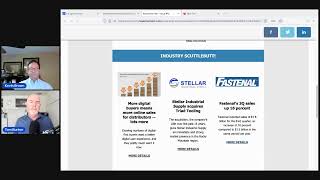
Episode 13 of "Around the Horn" (Lead Smart Technologies) — a conversational YouTube livestream featuring co-founders Tom Burton and Kevin Brown. They recap weekly industry items: rising wholesale prices and supply-chain/energy pressures; enterprise cloud migration (energy and cost benefits over on-prem servers); Amazon's private-label activity and risks to manufacturers; rapid growth of digital buyers/shoppers (article cited $1.4 trillion); and omnichannel/e‑commerce strategies. They announce guest Brian Beck (upcoming episode) to discuss marketplaces and e‑commerce. The hosts also note events and recent distributor acquisitions.
Chapters
Foreign. Hey, Kevin. Good morning. Guess what, Tom, how are you? It is LUCKY Episode number 13 today. Episode number 13 on the 14th.
Yeah, it's, it's, it's good that we're doing this. We're kind of hearing some good stuff out there. In fact, before we even dive in with things, I was just thinking further. You had heard yesterday from one of our customers that we were kind of happy to hear that they've been watching these episodes, maybe, I'm guessing maybe on plane flights or stuff like that that are recorded. So, you know, kind of a reminder that we keep all of these on the lead smart technologies LinkedIn page. They're also at YouTube live and they're on our YouTube page as well as Facebook page for Lead Smart Technology. So it's nice to hear. I heard at a trade show recently two or three people commenting on that, and we've had some notes come in and you mentioned earlier this morning in our discussion about a conversation you had had the same. So it's good, good news, right?
Yeah, no, I've heard from several people this week that have. And, and I want to just, you know, tell everybody we appreciate it a lot. But I heard from several people this week. They've either been watching live or watching the replays, which is, which is great. And yeah, if you're on and you're. And please comment and ask questions. And we also have some pretty cool stuff coming up between now and the end of the year with some great guests as well. So we'll keep it rolling.
We'll talk about that a little bit more. So before we dive in, let's kind of do our weekly kind of update about why we do this. So I'm Kevin Brown. It's Tom Burton. We're kind of co founders of Lead Smart Technologies. We make a CRM and customer intelligence platform that also allows manufacturers to communicate with their, their networks of dealers and distributors and sales agents, as well as a module for distributors to manage their business relationships as well. And we built that focused on the wholesale distribution arena. So how did all this come together with around the Horn? A while back, I guess 14 weeks ago, Tom and I were talking about putting a little consolidated newsletter together, which you're getting now. And by the way, if you're not getting this newsletter that's up on the screen, pop us a note. You can do it in the chat here. You can send us a message@helloadsmartech.com on our website, whatever it might be that works for you, and we'll get you on that newsletter but we started looking to do is consolidating information from multiple markets.
Right.
We've got, you know, industrial markets and building supplies and a lot of other, lot of other different types of products that go with that and categories that go with that. And we try to consolidate a lot of information here regarding wholesale distribution. So hence these key points that come out that we've consolidated across the week of events and announcements and so forth that might be of value. So that's why we're here. Hope it's a value to you. So let's dive in tomorrow.
Yeah, so we've got a few articles here from cnbc it looks like.
Yeah, that's where I got trapped yesterday with some pretty cool stuff that I was able to see there.
So, you know, let's, I guess we can start with which, with the first one. What I think probably most people know already and I think it was what Wednesday that this came out is that wholesale prices again rose a bit. I guess that's not expected. There's still a lot of supply chain issues and issues with energy and energy costs and all of that kind of stuff. There's all this talk about, well, even consumer inflation was up. But about the Federal Reserve, why is this happening even though we're raising all these interest rates? Well, there's a lot of other variables in the equation other than interest rates. Right. Whether it's the cost of fuel, whether it's supply chain, whether it's a lot of other variables that go way beyond interest rates. I mean, interest rates certainly can influence this stuff, but there's more to it. So not shocking, I guess, and hopefully we'll see this starting to stable out a bit. But I guess not completely shocking, right?
No, I think that's the case. I think we're going to see continue to see some of that. But it's kind of interesting as we see that. We'll talk about this more later, but one of the other announcements that we saw is, you know, last quarter Fastenal sales were up $300 million. So, you know, you've got now that doesn't relate to what their prices were. Their prices obviously probably have been going up as well, but although if they weren't, I can wait for the friends at Fastenal to start pinging me here momentarily. But you know, that's what we're seeing, right? We're still seeing demand in the wholesale distribution arena for this. So I think we're going to see more of this, but we're going to try and copy or kind of share some content each week related to these topics regarding what's going on in the economy. But always trying to relate that back to our friends that are tuning in with us here that are in the wholesale distribution world.
Yeah.
So talk a little bit about this move to cloud and cloud spending as Microsoft's talking about it.
Yeah, I thought that were some, some really. I mean, we've talked about this in past episodes, right. As the move to cloud and some of the reasons people are moving to cloud. Obviously there's, you know, things about security and performance. And I think the reason we're seeing this right. Is again, in a period of an economic downturn or, you know, there's. Everyone's trying to do more with less and you know, one place that you can probably a lot of companies I'm sure are replacing in house server farms and server racks and things like that with, you know, maybe more cloud cost effective ways of doing things. But I thought there was an interesting point in here that, you know, Kevin, you pointed out about kind of energy in the, you know, aspect of, you know, how much. Talk a little bit more about that.
Well, it was interesting. I thought there was an interesting comment that they made and it specifically was relating to things going on in Europe. Right. With the war in the Ukraine and so forth and energy kind of crisis that's building up throughout Europe and prices are going up significantly already. And so with that they were relating to the cost savings by moving to the cloud. And you know, when you have a room full of servers, even if you have a single closet with a server rack, those are running all day long. Right. 247 and consuming energy. And you made a great comment when we were talking about this earlier this morning. Right. That most companies don't have those optimized. Right. So, you know, we think about, you know, our audience of wholesale distribution manufacturers in that arena and so forth, that they're in a place where they probably have an IT manager, but not necessarily somebody that is really running and optimizing that. And when you move to the cloud, you have an organization, whether it's AWS or a private cloud that's run by maybe a software company that you work with. Every single piece of data has been optimized for energy. And it's not something that we would normally think about. But there's energy savings with it.
Yeah, no. I mean, I've been in no shortage of server rooms and installing servers in my career and I've seen over and over. Right. Where companies will install a pretty high powered server to put one piece of software on. And that server is not being utilized anywhere near the level that it could be, but it's still running, it's still taking power. So yes, in these big cloud farms, everything is optimized to the nth degree. Right. They want to get every ounce of power out of every server and every drop of energy that's going in there.
Well, I think it's really powerful though, as we talk about that into the audience that we do our show here on Fridays for we have a number of existing customers and, and prospects that we talk to on an ongoing basis who have kind of, I'll call it legacy ERP systems and so forth, where they probably have, you know, a server or multiple servers in their facility. So not only are they probably an older or legacy technology that they're using, but those servers are not optimized for what's going on in the world today either. So that migration of the cloud is just something that, you know, we encourage. Of course, our software runs in the cloud and I think it's just something we're going to. And you mentioned. Right, we've talked about this a number of times before, but I think it's something we're all going to continue to talk about because what's interesting here is this gentleman from Microsoft is talking about, and Microsoft owns the Azure cloud platform, right. Which is, you know, probably top two in the world. Is that reasonable to say, Tom, you.
Would know better than your AWS is, you know, Google, you know those. There's a number. But yeah.
And so, you know, as we talk about that, when Microsoft is really kind of saying this article is, hey, the economy might be struggling, but the migration of the cloud is not right. There's real value and benefits to that.
So yeah, and it goes back to getting more with less. Right. How do I get more optimized with my, with my dollars, which always, you know, happens in these types of time periods.
Cool. Yeah. Let's jump ahead though and let's talk a little bit about this Amazon private label thing. You know, the reason that we, we shared this is that we, we talk a lot about Amazon and their business to business side of things, or as they call it, Amazon used to be Amazon Supply, now Amazon business, you know, it's nothing new of them being here. But this was an interesting article, it was an interesting video there, you know, and it talks a lot about in the video in this article though, that's featured there, you know, about consumer products. They were focused on a company that made A camera bag. And how Amazon, like just literally through, you know, their own private label program, you know, same icon size on the same exact location on the side of the bag, everything to make the consumer look at, oh, well, that's the same at, you know, a third of the price or whatever it is. You know, there's, there's a lot of issues that go with that related to quality and even the, the ethics that go with doing something like that. You know, at the end of the day, right, Amazon's going to do what Amazon's going to do. And while the government might be wanting to try and handcuff them at some level, they're not able to do that at this stage. And the reason I put this here, though, is we're starting to see some of that right now going on in wholesale distribution. And it was as I was watching this video yesterday and again this morning, you know, there was a, I'm not a industrial glove expert, but it looked like, you know, one of the heavy duty padded gloves that are often sold into the, into the oil fields, right. In oil and gas production, specialty glove. And boy, that's, you know, we start thinking about it, right. You know, and we've talked about it a lot. You and I could throw a couple of bucks together and would not be difficult through Alibaba or another resource to go find a handful of glove manufacturers and we could go market our own gloves. And I think what we're going to start seeing is Amazon doing more and more and more of this and it kind of leads into the next topic and then next week's guest. So I'll let you kind of chime in on your thoughts about the private label side of things in Amazon.
I mean, it's, you know, as it says in the article, right. It's used by other retailers. I don't, you know, I think Trader Joe's store all around the country now, I mean, they do that all the time, right? They bring in products from other people. If the product really starts to sell, you can pretty much count on within, you know, shortly thereafter they're going to have a Trader Joe's brand of some sort. So it's like success can be a killer. And that's what was going on with that camera bag, which as an example, right? So, yeah, it's, it's something to be, you have to go eyes wide open when you're dealing with these types of situations. Don't know if there's any ways around it, but certainly in your business plan, I think, you know, If I were going to launch a product on Amazon, my business plan would be it's a great way to get some visibility and some traction, but I better have other channels other than Amazon and other ways of building my, you know, my market, my database of buyers and all of that kind of stuff, which I know it's going to lead into something we're going to talk about next week, but you know, it's just got to be part of the strategy.
Yeah. So I think that's really great, you know, as you mentioned that. Right. Because what it really triggers on is what we talked about ongoing, you know, here on our Friday discussions is about Omni Channel. Right. That's where these wholesale distributors and manufacturers that we work with, this is where they really, really shine and show their value in the marketplace is that ability for somebody to research on your website 24 7, they may go to Amazon and look at some of the reviews about your product there. But when you have that person that can come out and do some on site installation or technical support or training, that's this differentiator that when, when we're able to be in an Omni Channel when my friend Andy's here saying I'm not a glove expert. So he's. We'll talk about Andy's comment there in a minute. Boy, he's, he's. No kidding. I'm not a glove expert. Why don't we jump in and kind of talk about that.
Okay. That you're not a glove expert. I'm sure everybody talk about that.
It's been 25 years since I've sold a glove, so. Okay.
Yeah, no, it's, I mean, I think what Andy's saying here, right. Is that neither is Amazon. Right. Or neither are a lot of other companies, you know, are. They're not anywhere next experts. They're probably just looking for a way to find ways to do a cheap, as you said, a cheap knockoff here.
Yep, yep. And that's, that's really the reality of it. I think Danny's comment, you know, here at the end too, it's that it's probably, you're going to see those things going into small and maybe even medium sized businesses, but the larger organizations, they see the value and you know, Andy's company to give them a little shout out is, you know, Mallory Safety. And they do safety and industrial supplies nationally, you know, big contracts with, you know, automakers, huge energy companies, shipyards, stuff like that. So it's interesting. Thanks for chiming in on that, Andy. I appreciate that. And Yeah. I can always count on Andy to remind me about what I'm not good at too. So that's, that's not, not unreasonable there because he's, it's right. It's probably 20 years since I've sold a glove, but, but it's, I think we're going to continue to see more of this. And I guess the reason that we're talking about this is less about, you know, a glove or a safety glass or something like that. It's, this is an issue going on in the wholesale distribution industry. It's not going to change. The question is what's your strategy to embrace that, to accelerate your own growth? And I think, Tom, let's, we're going to talk in a moment about further about the value of this. But I want to, let's just talk real quick. We'll mention it again at the end. But I want to mention next week's guest real quick as well. Sure. We have Brian Beck joining us next week. Brian is an author. He's a keynote speaker, if you were at last year's is where I met Brian for the first time was at Affiliated Distributors National E Commerce event. He was a keynote speaker there. He keynotes constantly, though. I think when we spoke last week, he had been two that week. But Brian and his, his company are really some of the top experts in the company country about working with and consulting with and coaching manufacturers and wholesale distributors on their e commerce and marketplace strategy. So we've got these two kind of concepts that we're going to really unpack next week of, you know, online e commerce and then marketplaces and, and Brian's really going to cut to the core of that. In fact, we're going to have him on the show next week, but then we're probably going to do a series of webinars with him as well because great feedback on strategies, how to make sure we're aligning these omnichannel ideas and then how to even look at participating in marketplaces as well. So Brian's sharp guy. I think everybody's going to enjoy having him here.
Yeah. Again, obviously this, the relationship of this into what we do at Lead Smart is how do you constantly keep the customer right or, and, or the prospect at the center of all of this and that you have, you know, whatever you're doing, whether you're a manufacturer, distributor or whatever, that you're constantly built keeping that relationship and having that relationship with the customer. So we're going to talk about with Brian the difference between marketplaces and Just more traditional E commerce. How to best leverage those, how to make sure again, you can kind of keep that relationship with the customer even if you are working with an Amazon and so forth along the way. So Tom may. I don't know that we can have him come back again. He's late today and I'm just not sure we can invite him. I don't know what you think, Kevin, but that's funny.
Yeah. Tom, we're gonna have to maybe put you in the penalty box for next week.
Yeah, yeah. I hope he enjoys this one because this will be his last step.
Tom's a great, great friend, elite smart, and a great friend of mine. So it's nice to have Tom with us again. So we miss you here on the west coast. Now that he's in the Charlotte area. Let's kind of jump in though and talk about that digital buyers, Tom, a little bit. You know, that's as we kind of leads right into what we're talking about with Brian next week and then with, with that previous article related to Amazon's activities and digital buyers growing and growing and growing every day. $1.4 trillion is what that article talks about, which is just a crazy concept of amount of money. And I think the takeaway with this is really that on wholesale distribution, whether it's medical products, it's agriculture products, or it's industrial products, Right. This is just going to continue to grow and having a place at the table, whether you're a distributor or a manufacturer in this arena is going to be critical for folks, folks growth moving forward.
Yeah. And I think we touched on this again a week or so ago, but I really want to emphasize, you know, they use the word buyer, but I think you need to look at that one step broader, which is shopper. Right. The number of digital shoppers is even growing faster than even the number of buyers. So whether they. It's like we were just talking about with Omnichannel, right. I will likely do all of my research or most of my research digitally, but I may not actually make the final transaction digitally depending upon the situation and what I'm buying. So again, what they're talking about here is, you know, growing numbers of digital first buyers. I'll take that and say growing numbers of digital first shoppers. Either way, they want a better experience. And really if you don't have that experience and it's, it's, you know, again, we could do a whole episode on this. It's not just about, hey, I've got a place for them to go. But I also want to be able to help facilitate their buyer journey, enable their buyer journey as they move along. If I can provide that experience, then I'm going to have a big, big leg up every day. I'm going to have a bigger and bigger leg up over my competition. I think the thing that's more relevant about this is that, you know, sometimes people may think, well, this is only for the big guys. But I think even if you're a smaller or regional or, or you know, distributor or manufacturer, you've got to be thinking about this. As it says now, this isn't something to be thinking about in a year or two years or three years.
Well, and I think what really goes with that, right. Is you know, buying an E Commerce plugin for your website, getting some, some digital content from some manufacturers and putting that on your website. That is not an E Commerce or digital strategy. Right. That is, I clicked the box and said, yes, I have something now. Is that a good start? Of course it's a good start if that's all you can do at the moment. But we're going to talk about this further next week. But I think it'll be very powerful with Brian and looking at this is the idea is taking that buyer journey how he wants to or she wants to buy it. You know, it just, it makes me kind of laugh. Tom, I'm just looking, you know, over your left shoulder there, you can see that little folks are watching us. They can see, see Tom over his shoulder. He's got a TV monitor. And I. It's a perfect example of the purchase of that. Right. I'm. Tom and I are about three hours away from each other. I live in Southern Southern California and Tom lives at kind of the northernmost part of Southern California, almost the central coast in Santa Barbara. We have a small officer. I was there meeting with Tom earlier in the week. The TV monitor that we have in the conference room there that we've normally throw spreadsheets up and different things on that we're going to be meeting about had a big crack in it. We needed a new one. So just before lunch we were going to need it in the afternoon, I literally went to Costco.com looked at some inexpensive TV monitors. Half hour later we had one in the back of the car because we decided to have lunch at the place by Costco and we were able to. To go get that. Now is that a silly little example? It is. But if you look at that and translate that over to a wholesale buyer, right. Or B2B buyer is I could go to, I could have gone to Amazon. I just knew the Costco was right there. But I got looked at some reviews, checked the price, could have looked at other reviews online with other people. And I went to that brick and mortar store that was half hour away, should say half hour away, about five minutes away, to get lunch. We were back with the tv, you know, within an hour, including lunch. Right. So that's what people are doing. Right. And they're doing more and more of that. And I think if we were in a mindset that says that, you know, buyers are not gonna go look at reviews, I'm sure we have lots of people that join us here. I know you do this, I do this. I oftentimes will buy something somewhere else because I want that buying experience. But I might go and look at the reviews on Amazon. Sure. So getting a digital strategy together is key for E commerce. We're going to be talking about this more next week and we really hope everybody can join us for that as well. So.
Yeah, and again, I want to emphasize, you know, it'll be interesting. You know, I'm sure Costco, when we went to their website was at least tracking and so forth about what we were doing. And I would almost be surprised. In fact, I think I have seen already some remarketing ads on my, you know, other things for Costco and TVs.
Yeah, right.
So again it's, it's. And I'm not saying that it's really keeping and tracking that, that buyer and that prospect along the way. Obviously that's a big deal of what we do is constantly saying all this activity. How do we make sure that we have as much data as we can not to necessarily follow the person around, but to again, have more and more. I mean, that's our heart and soul. Our heart and soul of our business is, you know, is having that relationship with those prospects and customers.
So Tom makes a great point here about the billing off credit terms for digital buyers. You know what, that is a great, great point related to where a wholesale distributor can be differentiating themselves.
Right.
We talked about some things like you having the ability to have a salesperson come on site. Maybe that salesperson brings a factory expert with them to talk about a cutting tool or a medical device or whatever that might be, what that distributor is selling. But when we start talking about terms, purchase orders, you know, trying to do a bid or a large quotation with Amazon or somebody like that, that's not going to work. Trying to get them to Work with your credit, how you do credit, needing 30 day open invoices or whatever that might be. To Tom's point, great service that a wholesale distributor can do because their systems are already set up for that. Right. Because of their, you know, inbound buyers coming into their branch locations and, or their typical, typical distribution customer. So great point about that, that there's just many, many things that wholesale distributors that have brick and mortar and online locations can do to differentiate themselves from the big guys like that.
Well, and I'm going to go way out on a limb here and we could talk about this more later, but I'm going to kind of show you my tech geek roll.
You're not going to get geeky, are you? We got to go. Hey everybody. Have a great weekend?
No, what Tom is actually talking about is that problem and challenge is going to be addressed and solved by a lot of what's going on with Web3 and the blockchain and all of that, which I know people have heard a lot about. But at the end of the day, the ability to have sort of smart contracts for digital buyers and be able to track all of those things and that is where the future of Web3 is going to really make an impact in this industry. And one day we will have a conversation about Web3 and how that will impact the industry as we go forward. Because it's a great point, right? Is you have buyers that have terms and you have agreements and you want to have essentially smart contracts with different buyers, regardless of where they're actually going. So I won't digress anymore on that.
No, I think that's great. It makes a ton of sense and it's, I think it's, it's a challenge for us kind of right now to, to get our head around that, I guess I would say, but I think it's absolutely where we're on our way to. And I think how we buy is going to be very different over, over a period of time.
You know, it's just how it's, it's not even how we buy, right? The consumer, the buyer is still going to buy the same way. How as a company we best facilitate that. And I think Tom brings up an excellent point, right. Is the one tiny example of that is how do you offer terms and credit terms and, you know, everyone, how do you make that again so that they get the experience based upon the, you know, relationship that they have. So even with an omnichannel environment. And that is where the world of Smart contracts and Web3 will really open up the door for those capabilities. It's not going to change anything that the buyer is doing. It's just going to make it even easier for the buyer as they go forward. So we can definitely chat more about that on a future episode. But that is.
Yeah, I think that might be something we should consider maybe just doing as a separate webinar as well, talking about blockchain and you know, Web3 and that type of stuff. As you, I know you've been doing a lot of research on that and you're trying to keep me up to speed on it. So I think that's a good thing to talk about and not just globally, but how it relates to wholesale distribution, I think.
Yeah, well, it's coming to B2B rapidly and the technology that's available is, you know, constantly getting better and better and you know, whether it's in a year, two years, three years or whatever that it becomes more mainstream, it is coming. But that's what these types of things are going to open the door for is, you know, the types of things that Tom's talking about and, and a lot, lot more. A lot more.
Right.
Some amazing things, you know, over time.
Good. Well, Tom, let's kind of move ahead because I think we have an opportunity to end on time today. I've done a good job of recently, but I wanted to kind of make a couple of notes here. Great news there at Fastenal about their growth. We've got Andy Mitchell that I mentioned has been with us earlier today. Andy's vice president and oversees all of procurement and supply chain issues with Mallory, another national distributor. I know they're doing really well and having a good year right now as well. And then you can see here that Stellar Industrial and John Wyborg and his team acquired another company recently. So we see quite a bit of acquisitions going on. Mallory's been doing the same. But shout out to the folks at Stellar for, for their, their growth and their ongoing acquisition. It's, it's event time this year. Maybe we can scroll down a little bit quickly, Tom, and to our upcoming events. So you know, interestingly, we had a great event last week that we participated in with NetPlus alliance, the industrial and construction related buying group in Las Vegas. Really good event next week for us that I head out. Next Monday is to the plumbing and heating, air conditioning and refrigeration and pipe valve and fitting division of Affiliated Distributors is having their national meeting in Orlando next week. The following week I'll be in Denver for the industrial Industrial Safety division and the North American meetings for AD as well and then got decent chunk of. Well back for basically a week then back to staff to in San Diego for me and then later in November after a few weeks home is the Industrial Supply association event. In fact in an hour. If you're questioning maybe going to or attending or getting involved in the Industrial Supply association they have you can find it on their LinkedIn page or their website is isapartners.org they're having a overview this morning of their Fall Summit event which is great. We're participating as a sponsor in the sales works part of that event. So if you can see there's four events for me in the next. What is that 45 days or so. So I'm going to be hustling so.
So are you going to be giving a keynote at the Industrial and Safety show on gloves?
I will, yeah. That's exactly.
You are a glove expert. So yeah, I figured that would probably be your. Your thing.
Yeah. Well what Andy really meant to say that was he meant to put an E at the end of his Y O U R and didn't mean to write not. He's been saying experts these days. I know I have two hands and I can put gloves on them. So hey it's 9:30. Let's nail this down. Thanks for everybody that either joined us here today is watching this as a recording later on on any of the three channels, YouTube, Facebook and LinkedIn that we promote this on each week. Share with us. And he says sounds like a sleeper presentation if I'm gonna talk about gloves. Yeah, well that's good but probably right. But we appreciate everybody joining us. Hopefully you're finding some value for this. We put a lot of work into preparing for this but come back next week. That discussion with Brian is going to be fantastic. I think it's going to really bring some insights into what's going on in E commerce and and then we'll do that webinar with with Brian follow up to that which will not be asleep. So great weekend everybody. Tom, talk to you later today I hope and everybody thanks everyone. Cheers.
More from Tom



What does AI actually mean for a wholesale distributor #WholesaleDistribution


If your systems don’t talk to each other, your AI won’t either #AITransformation




This is why one AI agent isn’t enough for high-stakes decisions #WholesaleDistribution

