Around the Horn - Episode #14
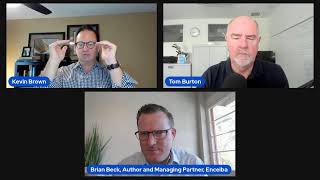
Tom Burton and Kevin Brown talk with Brian Beck, former e-commerce head at Harbor Freight and author of Billion Dollar B2B E-commerce, about how B2B marketplaces work. Amazon Business does roughly $30B in revenue. Beck breaks down open versus controlled marketplaces, why distributors are building their own, and what actually moves customers to buy.
Chapters
Okay. Good morning everybody. We are here again live for episode number 14 of around the Horn. You'll notice that there's more than two of us here today and Kevin and I. Good morning, Brian. Good morning, Kevin. Brian, great to have you here. I know we're going to be talking a bit more about you and your, and your, in your business and your world of E commerce and so forth here going forward. So anyway, really excited to have you here today.
Great to be here guys. Thanks for having me.
Good. Well, let's kind of jump in because we want to get through what we cover each week and dive in and take advantage of having Brian with us today. So let's kind of talk about a little bit about the news, but the first thing I wanted to do is just do the quick reminder that we always do each week. Why are we here? Right, so Tom and I work with Lead Smart Technologies. We're a CRM, customer intelligence and channel collaboration platform. We do this because we work regularly and consistently with companies across the wholesale distribution range, from whether it's medical related companies to industrial tool manufacturers and distributors to construction supplies. And we get all of these newsletters coming in consistently. So each week we try and consolidate some of that news maybe interesting to our audience. We send out this email, you'll see that's on the screen right now. So if you're not getting this email early every, well, early California time, where we are every Friday morning, pop a note in, send us a message at hello atLead smart tech.com or a direct message on LinkedIn or a note here and we'll make sure to get you on that. But we do that each week. So we'll dive in a little bit to this week's news. Maybe we can pull that first one up there if we can. Tom, BMW invests $1.7 million or one place on a billion dollars, I should say, in South Carolina. Well, you know, that's interesting news. Obviously the EV market is growing quickly and there's a lot going on. But you know, one of the things that caught my attention on that is, you know, what does that mean to our audience and the companies that we work mostly with in the wholesale distribution and manufacturing of hard goods. What does that mean to them? Well, you know, I don't know the dollar number, Tom, if either you or Brian have any thought to that, what that might bring to the local economy. But I know for effect, right, we've got not just the, the building materials suppliers, manufacturers, tools and equipment, you know, power transmission, you've just Got category after category of vertical that's going to be highly impacted. This, whether it's plumbing supplies, electrical supplies, whatever it is, this is, this kind of stuff is great for our audience. So every time I read something like this about a big new plant, it's going to help the local economy, Right. It's going to bring great work and break great sales into our target customers and partners. So I always like to see this.
Yeah, for sure. I'm sure it will bring a lot to the area. It's also pretty cool that, you know, they're investing so much in the whole electric vehicle thing. I thought it was funny. I'm going to date myself, but I remember when I was a kid, you know, we used to have these big cars, right? These big, huge cars, you know, eight V8 engines and all of that. And then if you remember, in the 70s, I think it was when gas prices went up. That's when the whole idea of compact cars came out. Right. And all of a sudden we went from a Chevy station wagon to a Pinto because we needed to, we needed to save gas. And so now we're seeing, pardon, I.
Remember that Pinto your dad had.
Yeah. And so now we're seeing that shift from people realizing, hey, I need alternative ways of doing this. So this, you know, this really could be the way to accelerate the adoption of electric vehicles in general. And clearly, you know, companies and BMW and other car companies and investing. So I think it's pretty cool all the way around.
I think that's a good point that you mentioned there. Right. Because, you know, it's not just the Teslas or, you know, what GM has done so far. And Ford's in key in here, but now the luxury industry is getting into that as well. I got to tell you guys something kind of funny. Yesterday I was traveling earlier this week and came back from the east coast. Yesterday I got back into town and jumped in an Uber to come home. And it was a Tesla. It's a nice ride, of course. Comfortable and yeah, and it was like, not UberX because those were like a half hour out. But it wasn't like the luxury one or any of those. It was a guy in the, you know, lower end. I say lower end, lower cost, probably Tesla. But what I laugh about, the only reason I mentioned this is when I looked at the bill when it came on by email to me, there was a fuel surcharge. Got me probably no way I can avoid that. But it's like, hey, we just came home an electric vehicle and I paid 85 cent or whatever fuel surcharge.
That would be pure profit, right?
Yes.
That'S all going to the bottom line.
Yeah, exactly. I hope the driver gets it, but I know he does it right, so it made me laugh. Anyway, so.
Hey Kevin, before we, before we, we move on to the next one, I, I want to welcome Tom May and acknowledge that he is on time this time and that he is now back in our good graces of around the horn. So I'm sure he is relieved and will sleep much better this weekend. But thanks Tom, for, for, for being on time.
So as he called it, the penalty box. Right?
That's right.
Good, good, good, good. Let's just kind of jump ahead. There's just some, some good, good articles here to follow up. I don't want to spend a lot of time, but manufacturing output rise. That's great to hear. I think, you know, and I think you were commenting, I can't remember something you wrote this week, Tom, or I was listening to another podcast you were on. But you know, you were kind of talking about the self fulfilling prophecies of, you know, CNBC and Fox News and you know, CNN and all the pundits say enough that we're going to have a recession. We're going to have a recession. Right, right. And so we're kind of seeing some things going on within wholesale distribution, the manufacturing arena that are saying, well, it's not good but maybe it's not as bad as we had been thinking things might be right now. So that's kind of positive. Brian, what are you hearing out there and with your customers that you talk to about how they feeling about the economy?
Yeah, I think it's cautious, cautiously optimistic, Kevin. I mean, you know, in terms of the, you know, how they're thinking about their business. I mean some businesses, some of the tech businesses have slowed down a bit. You know, Amazon for example, you may have seen the news, froze hiring. So I think there's a, there's a cautiousness right now. But yeah, to the extent, you know, but business results pretty consistently are still strong. So you know, I think, you know, in terms of revenue, profitability has been squeezed a bit over the past, you know, year or so just with, with rising costs and things. But at the end of the day no one's sort of sounding the alarm bell in the sense that they're doing massive layoffs or we haven't seen that. So I think businesses are cautious but still optimistic. That's how I'd characterize it.
And you're seeing that I want to reference before because we haven't done a full introduction to you, which we'll do in a couple minutes here, but extreme value, with your background in B2B E commerce that we'll chat about today. And so I love hearing you say that. That's your reference point. Is it fair to say more on the manufacturing side than the distribution side?
Yeah, Kevin, I would be. Most of our clients, most of the companies I work with, I work with distributors too. Our company does, but certainly a lot of our day to day interactions are with the manufacturing side. Mid market to in some cases very, very large global enterprise manufacturers.
Good, good, good, good. Well that's good to see. So we hope that this whole recession concept is, I think the president said last week it might be small, but I'm not counting on him to tell me what's gonna come out of this. I'm looking at what our customers say, which is really gonna tell us a lot. And we do a broad mix of working with both manufacturers and distributors. So. But you know, as I mentioned, it's kind of, I said trade show season. There's some trade shows going on, but really what it is is the trade associations and the buying groups are all having their fall and winter meetings coming up now. Right, going on right now. And I've been to three in the last three weeks or four weeks. Three in the last four weeks with four more to go between now and the end of the first week of December. So a lot of travel going on with all this. But I'm feeling that same kind of thing. Talking mostly right now on the distributor side or distribution side of things is there's people having banner years still now they're, they're, you know, doing this right, they're paying attention to what's going on. But I've not heard one person talk about hiring slowdowns or layoffs or anything like that yet. So we'll, you know, you use that term cautiously optimistic, which is, I think is, is important to do. So let's kind of jump ahead to this, this, this article there about shipping snarls and things starting to turn around a little bit. You know, I laughed. We were all talking kind of pre show here that you know, are people buying less, spending less and that's why there's fewer, fewer ships out there waiting to get into Long beach and LA and other harbors. I'm not sure we know about that yet. But what I can tell you is I live here in Southern California. I live about 40 miles south of the Port of LA and Long beach and you know, last spring and early summer, all the way down to where I live in south Orange county, there were ships lined up, I mean, waiting to get into that queue. And the queue went down into, you know, if you were to look at a map, you know, south Newport beach, which was crazy. Never seen it before in my whole life living here. And now you look out there and there's about maybe a few more ships, but you don't see any down this way. They're all still clustered up, waiting to get into the harbor. So I don't know, what are your guys thoughts on what we see here about supply chain stuff?
I see it starting to ease like you, That's a, that's a great example actually, Kevin. I'm, you know, just looking out your window and seeing if there's ships lining up. But, you know, I mean, talking to, you know, the manufacturers, I mean, there's still, there's still some issues related to supply chain, but it's nothing like what we saw a year, year and a half ago. You know, it's in a lot of our clients in the business where we run Amazon programs and we'll talk about that in a few minutes. But where we're working on Marketplace and Amazon programs, a lot of these folks are manufacturers and we had a lot of shortage of product. We couldn't get product into Amazon to sell. The demand was there, but there was no supply. That has eased up considerably in the past, really six to eight months or so. Although it is, it remains, we still have some issues with it. But, you know, sort of anecdotally reading the tea leaves, it feels like that is, you know, that is easing from, from our, our perspective anyway.
Yeah, I think that's the case. By the way, I would love to be able to look out my window and see ships. I live as, I, as I joke with people all the time. I said I, I live an eighth of a mile and a half a million dollars from an ocean view.
That's funny. That's great.
Yeah, I wish, I wish I was there maybe one day, but you know, short drive and you can see him out there, so. But I, I think you're exactly right. I think probably what we're feeling right now is that, that digestion factor, right? It's like you can't just try and pull all this stuff in at once and think that we wave the magic wand and this goes away. Right? We have to move through this process and, and I'm sure there's still quite, you know, Quite a bit of backlogs in the, in the ports in China and Shenzhen and Shanghai and other areas that they're shipping major goods to the US from. Sure. There's still a backup there, but we're seeing that easing here and that's, that's good news. And we'll see. You know, I don't know that we'll ever know the exact cause truly of what's gone on with this, but I think the impact is slowing, as we said. So that's good news. So, Tom, any thoughts on that before we jump ahead?
No, I think we can jump ahead. One of my favorite ones here was your August cutting tool, Consumption rises. Does that mean companies are cutting costs? Is that what we can read into that?
Very good. No, no, no. That means you don't get anything there in your office or in your home that came out of a factory that they didn't use cutting tools of some sort. So that's, that's really what we're, we're tying to. And then, you know, this picture is really tied to. I think that was interesting came out of the article. You know, you see some gardening things and stuff like that, but a big part of that really is tied to, you know, drill bits, saw blades, that type of stuff that go into manufacturing side of things for the most part. But the reason we try and, you know, as I go through and curate, you know, a lot of this each week, I'm. I'm looking for the good news, right. And what I like to can honestly say is I'm not bypassing bad news to get to the good news. This is the stuff we're seeing, right. People are still doing acquisitions. There's a lot every week we talk about. And this was just one of probably four M&A transactions that went on in the past few weeks that we could quickly mention. And that's on the industrial and I'll call it building materials and industrial side of wholesale distribution. That doesn't take into account what happened in the medical markets or food equipment or whatever it might be. So, yeah, good stuff.
Okay, well, I think, Kevin, let's go ahead and move on and let's get to the, to the star of the show here and what we want to talk about today. So not me, not Kevin. So Kevin, we can. So, so Brian, welcome again and again. Good to have you here. So, yeah, tell us a little or tell everybody here a bit about you and your background and then we're going to dive in and talk a bit about E commerce and marketplaces and Just some of the things that are, that you're seeing in this area.
Yeah, looking forward to it, guys. And again, thanks for having me here. Yeah. For those of you who don't know me that are on the broadcast today. So my name is Brian Beck. I'm primarily first and foremost an operator. Right. I spent, gosh, I've been in this industry for 20, 22 years, the E commerce field. And 17 of that years of that time was as an operator. I ran E commerce for Harbor Freight Tools. If anyone knows Harbor Freight Tools, more on the consumer side. But we did a lot of B2B business as well, selling to contractors and you know, really a lot of my career was in building e commerce businesses for companies like that. About six years ago, sorry, we got an ambulance going by here.
Somebody coming to arrest Tom. I know.
Yeah, exactly. Dom, you're not close to me though, so. So the. So, yeah. And so from there I got into the B2B side about six years ago, I really kind of flipped the script and went and started looking at and working in the B2B sector. And what I realized was that, my gosh, there's so much opportunity to take the best practices from consumer that we had done over the course of two decades and bring them to the B2B market. But it's also much more than that. When we talk about whether you're an industrial distributor or manufacturer, et cetera, you know, there's huge opportunities to transform the business. And you know, I would get questions from clients I was working with about, you know, sorry, another one going by here. We get questions about, you know, is there something I can read? Is there something I can look at that you know, would help me and you know, there wasn't anything in the market. So I foolishly decided to write a book which I, you know, I thought wouldn't take very long. It ended up taking four years. Yeah, it's. And I see why people don't write books every day.
And you see Tom commiserating with you there, getting books written.
Yeah, it's a lot of work and Tom knows it. And yeah, so I interviewed, gosh, probably close to 100 companies and really documented a lot of what I had learned over the years and published this book called billion dollar B2B E commerce. You're looking here at the website. Thanks for sharing that, guys. And so since the book published back in, beginning of 2000, it came out, you know, who knew? But right at the time the pandemic hit and you know, when a lot of companies in the B2B side manufacturers and distributors were trying to figure out how to get better at E commerce. And really since then I've been doing a lot of speaking. I have a thought leadership series called Master B2B with Andy Hoare and he's a former head of B2B E Commerce at Forrester. He and I started that and we do what we call Unwebinars which are a lot of fun and we debate these kinds of issues and and I also have a firm called in Siba at Insiba and that's what we're going to talk about today guys. Right. Is really marketplaces and kind of how that's evolved E commerce and so in Ceba does runs Amazon programs for product manufacturers and some distribution. But all B2B focused. Right. That's our, that's our business. So that's a little bit about me and I'm excited to talk to you guys today.
Well, we'll dive in in a second one. I wanted first to just say thank you for being with us because I know you're very much in demand for these types of presentations and so forth. And we'll talk more later but we're going to do a follow up webinar. The three of us are on these topics soon which we'll promote as well out to this group. But you know, we met last fall I think it was and I don't if you mentioned I didn't catch it. You're quite well known as a keynote speaker as well and, and a very good keynote speaker.
Thank you.
So I went up and introduced myself to you after I heard you speak. I think it was at Last Falls Affiliated Distributors. That's right. Event in Washington D.C. and you know, keynote speakers come and go but yours was super solid. We've kind of stayed in touch since. So I, I, I share that one as a compliment to you with. It's well deserved. But secondly is we are involved through our company Lead Smart with quite a few trade associations, buying groups and we're, we're growing in that arena in partnerships with them. And I'm throwing this out there that if people haven't looked into having you come speak, they should.
So thank you, Kevin. I appreciate that endorsement.
No, it's good. It's, it's heartfelt. So I mean I think we all go to lots of events, right. And sometimes keynotes are really good and sometimes they're the chicken's better. You know.
I'm glad I'm better than the chicken.
So.
That sounds like a T shirt Another T shirt. Right. You know, it's better than the chicken.
Better than the chicken. That's right. I might copyright that. So that's. Anyways, you do a great job at those things. But I think there may be people here that have heard you speak before. So let's kind of dive right in. And I think the best place to start, and I wanted to share this with both of you is we have a broad audience of people here from manufacturing, from distribution, from buying groups, from marketing agencies, from all kinds of different arenas that people that interact with us, other software vendors, so forth. So we're going to talk about a lot of terms today that maybe we talk about in dialogue ourselves. But we'll let's Tom and Brian, let's try and break some of these things down before we dive too deep. Let's get some big overviews. Maybe even we can start with some of the terms or I'll let you feed them in where. But we break those things down. I think one of the big topics we'll discuss today is marketplaces versus true E commerce and so forth. But I did want to set that groundwork for the listeners that we have.
Great.
Yeah. And maybe that's a good place to start. Brian. So what, you know, what do you see if you were to, you know, give the high level explanation, marketplaces versus E commerce and you know, what are you seeing in those areas? In the areas that, you know, Kevin was talking about.
Yeah. Well, thanks guys. Good question. And there's a lot of confusion about what a marketplace is in the marketplace.
In the marketplace.
Right.
Because you know, really it's, it's a buzzword right now. You know, a lot of people talk about well, are you going to launch a marketplace? Are you selling on marketplaces? And you know, at the end of the day and then you hear, you know, like Digital Commerce360 comes out with this report that says marketplaces are the fastest growing part of digital Commerce now and B2B and you know, so what the heck is it? So I mean I think the folks probably have a good understanding on the, on the broadcast today about what a, what E commerce is. Well, marketplaces are really, it's a flavor of E commerce and within the world of, you know, marketplaces itself, you know, I start with kind of at the, I have different flavors that I describe in my book and papers I've published and things. But, but you know, you think about at the top level it's, you know, think about Amazon, right, as sort of the most sort of the preeminent example of what I would call an open marketplace. An open marketplace being a place where somebody can come in and set up an account and sell products through a website. So if I'm a seller, for example, on Amazon, I can come in, one of you guys can come in and set up an account. And if you had some products to sell, you could sell them through Amazon. You might compete with other sellers. And it's really, this is the sort of the penultimate example of an open marketplace taking sort of the opposite. And there's other flavors that are more what I would call controlled or vetted. Think about, for example, if you guys know, do you guys know Zorro? You know, the Zorro division of Granger? So I was, I did a panel two weeks ago at the MDM SHIFT conference and I had Zorro on the panel, a couple other folks, and we kind of went through this and the way Zorro, Zorro calls itself a marketplace, but really what it is, and it is a flavor of marketplace. I'm kind of giving you the two bookends here. Zorro vets all the sellers on. And by the way, these sellers can be. A lot of them are distributors that come onto the Zorro market marketplace. But, but they need to be approved by Zorro and they need to be vetted to make sure that in Zorro's world, that they're going to do that, you know, deliver the product on time, the product quality is there, etc. So that's more of a what I would, what I call a vetted marketplace. And so you've got these and then you've got flavors through, you know, various ways, you know, or stages between those where varying degrees of openness. The one other one I'll mention is what's called vertical marketplaces. And these are very specific for vertical industries. These exist in building materials and metals and chemicals and in home products and all kinds of different B2B categories where new entrants in the market have created these marketplaces really that are offering multiple products by multiple sellers, but they address a specific buyer's need for that vertical market, for example, in building products. So hopefully that helps clarify a bit because you can actually blend these things. Right. It's not just E commerce and then marketplace, but they can be on the same site.
Yeah. So can I ask you just, Tom, a quick question related to one of the areas that Brian discussed? So, Brian, when you look at, as you discuss kind of that, that vertical segmented marketplace that you might see in chemicals or gases or medical or wherever it might be Yep. Zorro almost kind of fits into that a little bit themselves. Is that. Would you fit that and kind of in the industrial segment or they're owned by a Granger?
I would say yes, to some degree, Kevin, where I'm really seeing. So, yes, in the sense that Zoro targets a specific industry. When I, when I kind of define vertical marketplaces, I'm thinking about very specific and often complex buying cycles that need to be delivered. Right. So a great example, like there's a, There's a medical marketplace that launched recently called Chamfer. Chamfer is, is founded by some folks out of the medical device industry. And they said, well, gosh, we need a place where medical people who are building medical products can get components and understand the, you know, the compatibility of components with, with each other. So that. And they can, they want to buy small quantities of these items. So they've gone out and they've created a workflow, a digital experience based on the need of the buyer who's building medical devices. Right. This is, I mean, this is about as niche as you can get, right?
It is, right. You're not. Right. So it's almost like an Alibaba concept. Right. I can go find all my sources potentially in that setting. I'm really glad you unpacked that further because that's, that's probably meaningful to a lot of people here. Because if you're on the manufacturing side, what a great tool for you to be able to go see those almost vetted groups that are there.
Exactly. But you know what's also. Sorry, Tom, you had a question?
No, I, I just, I do. I wanted to just clarify. Just are. When you say marketplace, is it fair to say that a marketplace is where you may have multiple suppliers, multiple distributors coming together to sell products around a certain vertical or even a certain industry versus E commerce, which is, hey, this is my stuff. Right? This is my site. This is my stuff.
Yeah.
You know, is that, is that really the dividing line from E Commerce to marketplace, or is there lots of shades of gray in between all that?
Well, I think that's a good way to frame it. Because, you know, what, E Commerce would be my stuff or some flavor of my stuff, which would be, you know, could be drop shipped, for example, from someone else, but it's still represented as me as the seller.
Right.
A marketplace in the, in the, in the Amazon example I gave the open marketplace. You know, Amazon, by the way, is a seller in its marketplace, but they have a lot of other folks that are selling and it's More of a. In its purest form, a marketplace is actually what the word, you know, the definition of the word itself. Think about a place where people can go and they can, they can have multiple choices on product but also on who is selling them the product. So it can be the same product and, but there's, you know, maybe 20 or 30 different people selling it. So you get to choose not only the product but who you're going to buy it from. And that's really the ultimate version or open marketplace as I described it. That makes sense.
Yeah. So that's. So that's very different because we, and the reason I ask is we have on our manufacturer clients, a lot of them are, have either created their own e commerce site for their products or are considering creating their own e commerce site for their products, which would be. It's a marketplace, but it's not really a marketplace. It's an e commerce site for their things and their stuff. And you know, they may also sell on Amazon or on other marketplaces as well, but the two of them have maybe different purposes. You know, one of the things that I know one of our customers, the reason they're doing E commerce is it's more of a shopping experience for their customers than it is a buying experience. So they can go there, get information and then they may end up purchasing through a PO or through a phone call or sometimes online or sometimes not. Gives them a better buying and shopping experience versus, you know, again more of a true marketplace where you may be competing with, with multiple.
What's really fascinating guys, is there. But to your, to your earlier point, I'm seeing a real convergence here and I'm going to give you a specific example. There's a restaurant distributor called Partstown. I don't know if you guys are familiar with them. They're you know, sizable restaurant supply equipment and supply house and they've in their E commerce site. So they've been doing E commerce for a long time. But in their E commerce experience they've introduced a version of Marketplace and they're really doing it as a way to bring more assortment to the buyer. So you know, they have, they have multiple ways of selling to the customer or offering product to the customer. One is they own the product and they sell it. They also do drop shipping, right. Distributed order management. Whereas it is in one of my, you know, can I get it from a supplier? And, and the third way they're doing it is they're allowing other distributors and suppliers to actually create offers on their website to offer products to the buyer. So that is a marketplace now. It's vetted like Zorro's is, but it's still a flavor. So look, at the end of the day, this is a, you know, there's a blending occurring here. You know, this is all E commerce, this is all digital commerce. It's just a different flavor of the traditional E commerce and really how the product is offered and who's selling it through the website. Does that make sense?
Yeah. I just had one more thing, Kevin, and then I'll go back to you just to finish off. It seems to me then that the strategy. Right, you need to have a right strategy to determine, okay, do I have an E Commerce, do I have marketplace? Do I have the hybrid? Like you just talked about all of those things. There's a lot to be thinking about. But it's not just willy nilly, it's more of a strategic plan on how you actually put those together. So.
Well, yeah, Tom, I think you've got to, you know, it's the, you know, apply the Amazon thinking to your own business. What has Amazon done for years? They put the. It's all about the customer understanding what the customer needs and what are you best in the world at and delivering to a customer. Look, if you're a manufacturer, marketplaces are an opportunity for you to sell. You could potentially launch your own marketplace. There's some use cases where that makes sense. If you're a distributor, by the way, you know, one of the reasons these marketplaces exist and are growing in the ver, these vertical marketplaces is because distribution isn't meeting some of the needs of the buyer. So and it's, we should go into that a little bit because, you know, it's. Go ahead, Kevin.
No, I was just going to say I want to spend time. Just because today's a little shorter. I absolutely want to spend time on that point when we do the webinar.
Yeah, we should.
That's. There's two sides to that thought. Exactly right. And I'm going to go back to the Zorro Granger example. Right. So, and Brian, you, you know this better, but correct me if I'm wrong here, but a big place, a big portion of the reason that Amazon came into the B2B or what started as Amazon Supply was looking at the time, what, five, six years ago, whatever it was, of $3 billion a year that Grainger was doing in E commerce. And Amazon said I can put those things in a box too and get them to that same customer and probably do it better. Grainger then started. Go ahead. Is that roughly the case? Yeah. Yeah.
Well, I would say there's two flavors to that. Amazon's looks a lot again that the customer focus really their first foray into into B2B was Amazon supply, which was 2012. It didn't really work very well by the way, but they learned a lot from it. They launched Amazon Business 2015. But the reason they were doing this Kevin, was what they did this is because they saw a lot of B2B buyers buying through Amazon.com the regular retail business. And they're looking at this data saying my goodness, there's a huge opportunity here because our customers already shopping for us even from us, even though we're not creating experiences or, or creating features and functionalities or intentionally targeting the B2B buyer. But the B2B buyer was already buying there. In fact they still do through their personal prime accounts. But Amazon business is, is now a $30 billion business.
It's.
It's four times the size of Granger almost or three times and so and it's only getting bigger.
So you get two use cases with that, right. That there are two experiences that go with that. That an industrial safety related trade show, I Want to say 2014, 2015 in San Diego was having dinner with some upper middle management. 2 upper middle management person and a senior person from, from Amazon at this event that we're touring an industrial safety conference, right. And over a really nice dinner there. One of the. We were actually my wife Darlene was with us and I think she might have asked a question about not thinking about Amazon and you know, B2B type stuff. Right. And, and the comment was made, I think it was roughly if it's legal, reasonably moral and fits in a box, we, we can distribute it. Right. I tie that piece into them moving to that segment. But the other side of it is around that same time I was advising doing some work with a company in the personal protective equipment space in the industrial world. And I got out and saw a handful of their customers occasionally and had an experience where talking about Amazon it was might have just been the transition from supply to Amazon business. And, and, but an end user customer said then they were out in a trailer like on a wind farm and talking about where they buy from. And the guy rattled off the usual folks that you would hear in that geography that they buy from that included a Granger and a Fastenals, people like that. But he says I buy more and more every day from Amazon. So I said of course, why? And he Said because I can use my. To your point, right. I can use my personal prime account. It all gets here within two days as opposed to my local supplier that may not have all the inventory because Amazon's looking across their warehouses and. Right. And that was his reason for moving that direction. I'm sure that was what Amazon saw. And my assumption now is with Granger moving a number of years ago to the Zorro side of things that says we're big enough in E commerce, we've got enough data about customers and this might be that. Is that Parts, the supply company that you mentioned in the food service world. Parts probably did the same thing. I've done enough in E commerce that I've got a good set of data about customers. I can go start a marketplace now and get even more data on customers and grow my revenues through that as well.
Yeah, I think the use case for a minute for a distributor to start a marketplace actually is very strong. It's just if they can execute it, it's a different business model in a lot of ways. But yeah, I mean, to your point, Kevin, about Amazon, there's a specific set of use cases from our experience and we're running millions and millions of dollars of B2B transactions with Amazon right now for our clients through Iniba. And you know, the use cases we're seeing are exactly what you described. They are the customer needs a small quantity, they need it fast. And they know that, you know, if Amazon says they're going to get it to you, they do it. They're reliable. People trust prime and there's a business version of prime now. People trust it. And you know, and so they're, they are taking share in some of those areas. Now I argue that, you know, if you're a manufacturer, this is an opportunity to stay in front of the customer. If you're a distributor, you need to understand and learn from what Amazon's doing because they're introducing features and functionalities that are setting the bar for your own customers and what they expect from you from an E Commerce and potentially marketplace experience. So it's, it is a, it's a, it's a force in the market and it's being driven by the buyer. Right, exactly. Your wind farm guy is, is the, is the use case driving it? For sure.
So what's interesting about that, and I'm glad you, you kind of went down that path. You know, Tom and I were at a, one of our customers national sales meetings early this year and Ian Heller from the Distribution Strategy Group was there and spoke, I know, you know, Ian, and he brought a great use case, described all of these things and the stuff we're talking about today, right. And he said but where the opportunity really lies for wholesale distribution is that wind farm guy that I use as an example. There is the majority of what he buys, right. He might be buying flashlight batteries or something like that on Amazon really consistently. But going back to our cutting tool example earlier that we had from one of our news articles, right. He's not buying cutting tools likely on Amazon because his applications change. Somebody needs to come on site. He needs to go somewhere to research everything deeply. And I think that ties in. We're going to talk about this more when we do the webinar. But that really ties in, I think extremely well to the concept that says Omnichannel. Right. So Tom really described it well earlier, right. I have my E commerce platform on my website where you can buy right from me, manufacturer and or distributor. And when we talk next on our webinar, I want to unpack that, that manufacturer versus distributor potential.
Right.
By overselling direct online. But there's, there's great, there's great discussion for that. But I think in this setting now is that's where that. And Tom speaks about that in his book. He's about, you know, selling to the customer, how this customer wants to buy. We talk about it constantly on this show and regularly about buyers changing and salespeople changing is that they want that experience. And when it comes time for somebody to come out and fit, test a respirator or show you samples of high visibility clothing or whatever it is, Amazon's never going to do that. And that's where the local distributor can win. If think if they have a strategy to play in E commerce and or marketplaces and keep their field sales team to truly be omnichannel 100%.
Kevin and I the days of just competing on price and assortment, breadth and even delivery, if you're in the distribution model are over. You have to, I argue in my book that the distributor and Tom, you probably do too. The distributor has to really look at their value proposition. What are you really delivering to the customer? And it's things like you're describing, Kevin, where you know, when I talk to the executives at large distribution companies and I talk to them regularly for our master B2B series and also for our marketplace business and you know, they're thinking about, you know, ways they can, you know, I'm talking about the biggest distributors, the MSCs, the motions, the Grangers, you Know, they're thinking about ways they can more strategically understand the customer that they're serving. They're looking at ways. I was on the call the other day with somebody from a very large $8 billion VAR of it products, right? So this is. They're thinking about services. They're thinking about how do I move beyond just product assortment so I really meet the need. What services and other things can I introduce to my customers. So I'm more of a solution to them. I'm value adding in other ways beyond just having the product available for the customer when they need it. That's still important. Right. And that's where the marketplace model can still be really valuable for a distributor, I think, because it expands assortment doesn't give the customer a reason to go somewhere else. But at the end of the day, you've got to get beyond just. Just assortment and delivery that, you know. And by the way, you know, mid market, like, you know, I'm talking about big companies, but they're. I mean, my, my goodness. You guys know like Bay Fastening Systems. You know who that is? Michael Eichinger, coo. He's done some amazing things with that company. This is not Grainger. This is a company that's very much, much smaller, but they've almost doubled the size of the freaking business with E Commerce. And they, they've just introduced a marketplace. They're in the fasteners business. This is a commoditized business. So, you know, this isn't just. This isn't just, you know, for the big guys. This is. You don't have to be enormous to win in. In B2B commerce. You can, you can be a David. Ow.
Sorry about that. I thought I had my. No worries turned off, but. So we got ambulances and notifications.
Yeah, I got the ambulances going by. You got the, the feedback.
You know, I know we're getting close to wrapping up here, but we're going.
To talk for hours. I could keep going for days on this.
It's a great topic.
Well, yeah, we'll do that more on the webinar. But I think, Brian, I agree that E Commerce or marketplaces or what is not just a transaction strategy. It is a customer service strategy. It is a customer strategy. And I think sometimes that gets lost. Right. Well, we just want another way to make a transaction or another channel to make a transaction. But if you combine that and you know, this. Yeah, this, and this is true in any, any industry I believe right now is that if you can act as that trusted or be perceived as the trusted guide, the trusted organization that can help provide that solution, you're going to have a big, big competitive advantage over your competition. And if you combine that by having these omnichannel locations to purchase, that just plays right into that. Right. It just makes it the easy button, it makes it easier, it gives you more selection. And if your sales team understands those channels and understands what's available and can guide the customer or the prospect, that's a big, big advantage. So I think, you know, E commerce sometimes I've heard it talked about, is perceived as a channel or a transactional strategy, but I'm a big believer that it's a customer experience strategy all the way around.
What's fascinating, Tom, you mentioned trust. And by the way, on that point, I believe trust, even in the E commerce world has a lot to do with your success. Look at, I said this before Amazon Prime. Why do people, why do people, people trust Amazon to deliver a good experience? Whether you're a B2B or B2C buyer, you know, Kevin is your wind farm guy. Yeah, I know it's going to be there. Okay, well, that, what is that? That's trust. Right. So it's still about trust even though it is E commerce. Right. So I still think that's a huge part. And that's why, you know, thinking about relationships and the sales team and the trust that's established there, all that this is not the death of a salesperson. This is, this is still about trust. Right. It's just digitally.
Right.
Delivered well.
And it's, and it's, I think it's a huge part of it. And service levels.
Right.
I want to be able to buy how I want to buy. You know, I, I use the, you know, simple example is. That's interesting. Wow.
We, we know we're being successful when we're getting spam. So.
Yeah. And I want to come. Tom's question here in a moment. I've never seen anything like that before. That's pretty, pretty crazy. So thanks for doing that, Tom. That's, that's, you know, Brian, I don't know if I shared this with you, but I told Tom when we started doing this, what, 14 weeks ago, I said, if this stops being fun, I don't want to do it. Or if we have to get scripted or whatever, I don't want to.
I didn't see what, what happened. I didn't see what happened.
This, like fine dating girls online or something like this popped up in some screen. Right?
Really? I didn't see it.
It's just all part of our experience. It's just part of the experience here.
But kind of in, in finishing that comment was it, you know, Tom talks about this, right? And I, you could use myself, right? I got in an Uber yesterday to come home from the airport, right? It would have been very easy to order doordash to come to the house with dinner, right? And later in the evening when we got, you know, we went to a Bible study last night when we got home, it would have been EBC to go order things on Amazon, right? But that B2B buyer is doing that experience in his personal life or her personal life and being able to have this omnichannel multi channel place where they can say, you know, what I want to research on, you know, Metabo's website or XYZ manufacturer's website, super detailed engineering stuff. Then I go to my normal distributor that I would typically buy from because they might drop it off or they can help me, you know, use it properly and I can get detailed information from them. I might go exactly. Move from my B2B life to my personal life and say, well, now I'm going to go look at the reviews on Amazon, right? Because there's a, there's a thousand reviews on Amazon and there's only five on my trusted partner that I'll probably buy from on their website. Now I've got, I'll throw the top best ones out and I'll throw the bottom ones out and I'll see use cases on Amazon. And now I go back to XYZ distributor that I typically buy from anyway that I have an open account with, you know, and, and I can send it, or I can send a purchase order to because maybe Amazon is going to start doing purchase orders, but I don't think it's the core of their business, right? And I can transact how I want to transact and Tom preaches this a lot, which I totally support, is I should be able to transact how I want to transact.
Kevin, you'll be, you'll be. You might be surprised to know that Amazon actually introduced buying on terms from Amazon and B2B recently. I mean, they're doing it all, guys. Yeah, they're doing it all.
The bar keeps raising. So what we'll talk about when we get together next, right, is how does a manufacturer distributor that aren't, you know, maybe they're dabbling in this, what's some good strategy stuff. I don't want us to go to move on and, or end without addressing Tom had asked a question earlier about do marketplaces prioritize sites that pay to play like Google or are they truly open? And I'll throw that out to you, Brian, to answer.
Yeah, so that's a great question. So, yeah, that's, and Tom, thanks for that. It's a, it's all, it's not loaded, but it's, you know, so, so if you are a, if you're a seller on the mark on a marketplace and we can take Amazon, you know, for. I think this is the core of your question. If you, you can actually advertise on Amazon for products that you list on Amazon as a seller. So there's an element of pay to play in the Amazon world, if that's, if that is your question, where, you know, sellers, not only is Amazon, you know, kind of creating this competition where in the marketplace sellers compete with each other, but those sellers actually advertise inside. You can advertise within the marketplace to raise your ranking because Amazon is 3 billion products on it. And the key is it's really a search engine and the key is getting visibility in that search engine if you're going to be successful as a seller. So there's an element of, you know, pay to play in the Amazon, in the Amazon world. If you're referring to more like, you know, sort of Google type, you know, advertising, you know, there's, there's really many different models. Amazon, I would say, is like Google in many regards and there's paid and natural search elements to it. Other marketplaces operate differently, though. Those more vetted or controlled marketplaces don't have as much of an element of pay to play because they're vetting. Their assortment's more limited. They're vetting it. It's more about the relationship that say Azoro has with one of its suppliers. But there's all different flavors of that. To answer that question, the biggest open marketplaces, you know, Walmart and Amazon do have that element of pay to play though, where, you know, it's pay per click. They are open in the regards to, you know, anyone can, who's, who's a legitimate business who follows their guidelines can set up an account and sell though. So in that regard they are truly, you know, truly open. So anyway, I hope that answers your question, Tom, go ahead.
I think it probably, I think you addressed that for pretty well. I think the key is as you described it, like with Amazon, Amazon is pretty much 100% percent pay to play. Right? And, and you can find where you want to be ranking Wise in a lot of different ways and you can get there in a lot of different paths. I guess as long as you don't want to get past the Amazon house brand if they have it. Because you're never going to get past.
Well that's a loaded question, Kevin. We could do a whole hour on.
That one, but that's exactly right. Well we had an article about that that we had last week that we chatted briefly about. So that could be a whole nother day and a whole nother topic. But, but you know what as I think what we're going to see, right. I don't know if he's here today but we have a, I'll call him a good, a good friend of this, this Friday chat that we have Andy Mitchell with Mallory Supply up and they're now a national PPE company. The big accounts with some, you know, household name companies that they're national suppliers to and they have a private label brand of their own that they, they bring in as well. And so you know, this is another play, right that a wholesale distributor can get into E commerce scenario then their own private brand and they can in theory push their own private brand that they have through their E commerce system and through other marketplaces.
We work with Kevin, some of the biggest distributors in the world are doing that with Amazon, right? With Amazon selling their private label and they do it on their own sites too. We're prioritizing and I give out examples. I don't want to spill the beans on some of these companies but. And the other aspect of it is, you know, is even mid market is coming in there with, with either private label they're partnering with suppliers, you know, to, to Amazon because you know there's real volume there and customers are buying there. So.
Yeah, well our, our mutual friend Rohan with Upstart works, I know they're working right. They're working with quite a few manufacturers cause they've got a warehouse situation as well on that same thing. So it'd probably be some fun to get all the four of us on a call one of these days too. But in kind of recapping today, right, so we talked about what our marketplaces, the importance of trying to get a strategy together from a wholesale distributor or manufacturer. This isn't going away, it's going to keep escalating. This is not something you can hide from and if you try and hide from it, you, your relevance in the marketplace is probably going to change dramatically over time. So kind of talked about that overview. We took a little Tangent here and there, but that's what we do here on Fridays, is we go down rabbit holes because it's good discussion. But when we do the webinar, it'll be very, you know, we'll structure some key topics that we'll work through one by one with that. So we'll look forward to that. Did we have that scheduled, real date for that tomorrow?
I don't know that we have a date yet.
I don't finalize. Okay. It'll be shortly, but we'll obviously be that out.
And, and, and, and I really, I would like to really see if we can focus on the webinar on, you know, taking a lot of the stuff that we talked today and say, how do you build a strategy?
Right.
And how do you incorporate that into your overall technology planning? And again, with the focus on the customer and the data that's coming from that, how do I take that data to then use that even further to provide even a better customer experience or open up new, you know, open up new sales opportunities that I wouldn't normally, you know, have visibility on. So I think there's. Yeah, it might even be more than one webinar. I don't know.
This could be a. Well, the good news is this is now available as soon as we end the broadcast today. This will be available on LinkedIn live on our page. Brian, if you can link to it, that'd be great. And then YouTube and our Facebook page, that's available as well. Before we close. You know, we've been asking Brian questions all day. Tom, do we have an affiliate agreement of any sort with this dating site that tried to spam this earlier?
Yeah, I'm, you know, hey, you know, it's tough times. We've got to make sure we have income sources from. From all possible angles. So that's, you know, you guys are funny.
There you go.
We didn't know it. We were running our own marketplace. There you go, Brian. Thanks for being with us. It was great conversation. We appreciate it. We'll do it again soon. Gonna wish everybody a fantastic weekend and the rest of Friday, and we'll look forward to seeing everybody in next week.
Thanks, guys.
Thanks, everyone.
More from Tom



What does AI actually mean for a wholesale distributor #WholesaleDistribution


If your systems don’t talk to each other, your AI won’t either #AITransformation




This is why one AI agent isn’t enough for high-stakes decisions #WholesaleDistribution

